Mammals · Spirit animal
Elephant Spiritual Meaning & Symbolism
Gentle strength, deep memory, and unshakable devotion to family
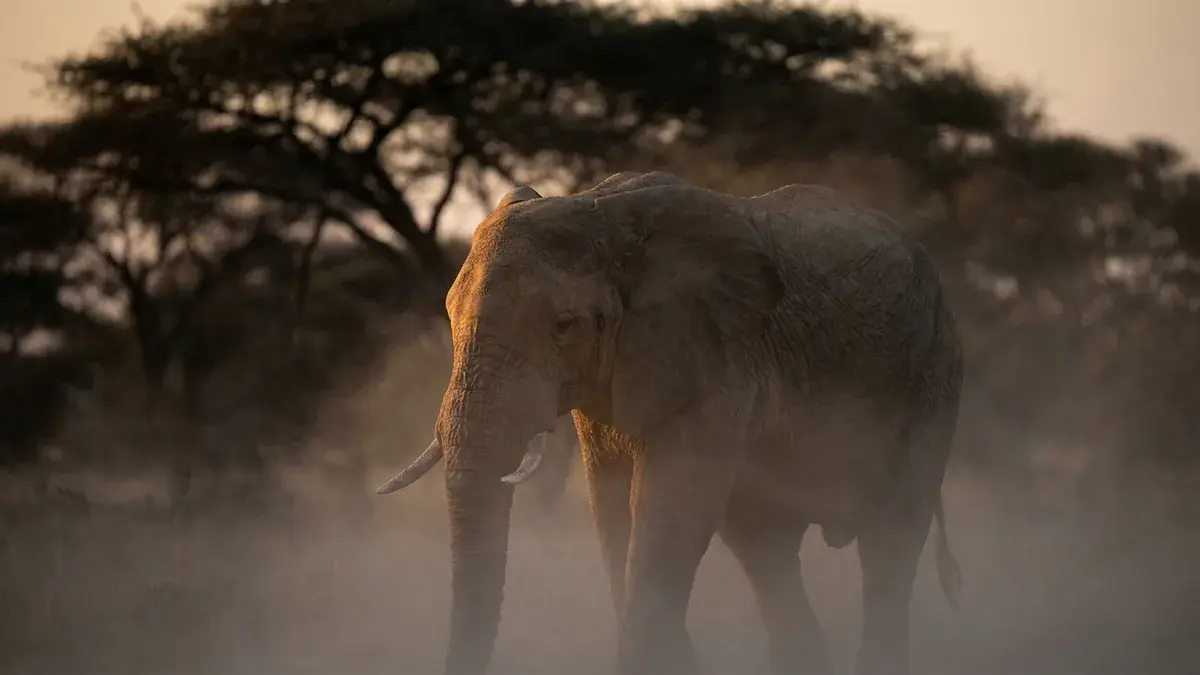
Elephants symbolize great strength in a gentle way, a powerful memory, and an unshakable devotion to family. They are proof that you can achieve great things without being aggressive. As a spirit, totem, or power animal, the elephant reminds you about your own family and friends, the people who mean a lot to you. You need to protect them and always carry them in your memory.
An almanac
- Core message
- Carrying others well through gentle strength
- Spirit animal
- Calls you to reconnect with family and elders
- Totem for
- Loyal, protective caretakers of a small circle
- Power animal
- Weighing conflict and restoring family peace
- In dreams
- Overcoming an obstacle or new family responsibility
- Cultural roots
- African, Hindu, Christian, and Celtic lore
- Herd structure
- Matriarch-led; daughters stay for life
- Conservation
- Endangered by 1980s ivory poaching; protected since 1990
Elephants are symbols of strength, memory, and devotion — especially to their loved ones. Wherever these animals show up in your life, expect a call to remember and love the people who make you who you are. Family elders and the family you choose beyond blood will appear important, inspiring moments of gentle strength.
Elephant Symbolism & Meaning
Elephants, those rare large mammals, are a delightful symbol of family ties and close relationships in general. Sturdy and slow-moving, these beautiful pachyderms are a reminder of the deep bond we share with all people. With so much strength and power, elephants don't need to get aggressive to show their force, so don't hesitate to bring them into your life when it's time to strengthen ties between family members, particularly elders and children. Traditions from around the globe add nuance: Elephants have been linked with self-restraint and piety by Danish chivalric orders, given shape-shifting powers by Sicilian legend, and offered up as a symbol of cooperation by African cultures; the Roman Pliny regarded them as nearly identical to us in temperament.
Elephant Spirit Animal
As an animal spirit, Elephant often shows up when the bond between close friends, family members, or relatives is faltering. It asks pointed questions: do you stay in touch with your loved ones? Are you truly present with the people you share your life with?
A mother elephant will bring water up from her own body to cool her baby during drought — a demonstration of how far this spirit animal's devotion extends.
Elephant also appears when an individual is in need of healing, especially regarding intimacy or sensuality. And if someone embarks on a research or science-focused journey, they should expect Elephant to be a constant companion. This spirit animal is intrigued by observant, curious people who are motivated to work toward a higher purpose.
Does Elephant fit you?
Tap the ones that sound like you — 6 traits, no right answer.
0 of 6 Nothing picked yet — start tapping.
Elephant Totem Animal
If an elephant was your totem, you probably took on responsibility earlier than most people. You probably like to take care of the oldest and youngest people in your group. Your protective instincts come on when people you love are in trouble. That is like an elephant herd protecting one of its own.
You like depth better than a lot of shallow acquaintances. You are loyal to a small group that you trust. You are good at moving obstacles out of the way, just like an elephant moves brush and finds food that someone buried.
Confidence, persistence, and following through is what you use to take care of your household or yourself.
Elephant Power Animal
When stress is high inside a family, consider the elephant your ally. No matter how strong the tension, this gentle giant will help you calmly weigh all sides before reaching a solution. You might even try calling upon the elephant when working on genealogy — either tracing your family line or looking for past-life connections that feel as if they're guiding present struggles.
In folklore, this animal is associated with wisdom hidden behind a stormy curtain of mist. It can also lead you safely through dense forest, guiding you through confusion and helping you untangle important decisions. Other traditions link the elephant to vitality and physical passion.
Across cultures
5 traditions — pick one to read its take.
Elephant Native American Symbolism
The North American Elephant never existed, so Native Americans borrowed symbolism from the Woolly Mammoth and a legendary beast related to it.
Several tribes told stories about a giant hulking carnivorous monster called the Stiff-Legged Giant Bear. They thought of African Elephants as similar.
Those who studied these stories have been able to connect some parts of the symbolism, but it's not all tidy. For example, the Stiff-Legged Giant Bear is described as hunting people, while Elephants feed only on plants. Also, some people say the monster doesn't have a trunk, though its build is otherwise Mammoth-like. There are tales of rabbits outsmarting this giant creature to save villages.
A different motif holds true across all these stories: elephants and mammoths represent ancestors who hold a kind of healing memory passed down through generations. After their tribe met African Elephants, the Cheyenne brewed a plant that they called Elephant's Ear into medicinal tea.
Elephant Celtic Symbolism
There is one striking incident of historical record, however: in 275 BCE Antiochus I of the Seleucid empire mustered war elephants for use against Celtic warriors then moving through the region. The Celts had never seen an elephant and were reportedly "horrified" by this new mode of warfare. This single experience provides Celtic tradition with a vivid meaning for elephant symbol: a stunning surprise.
Elephant Christian & Biblical Symbolism
Traditionally, the elephant was seen as a symbol of patience, wisdom, and self-control. It also stands for purity and chastity. And the animal's enormous size never tips into violence — elephants could easily overpower nearly anything they meet, yet elephants choose gentleness. You could say that elephants' strength reminds us of Christ's grace paired with real power.
Folktales about Noah's Ark add a lighter layer to the elephant symbol. One story says that elephants ate themselves big during the voyage. Another Jewish tale tells of all the creatures refusing to board Noah's Ark until a tiny mouse threatened them, proving that even mighty creatures have fears and could be inspired to take action by those fears.
Because of its size, elephant has been used as shorthand for anything big or vast or hard to grasp — like our understanding of divinity.
Elephant African Symbolism
Throughout much of Africa, the elephant is a symbol of royalty — it is often depicted as a king or queen among animals. It is also seen as an important peacemaking force, respected enough to mediate disputes between other creatures without dominating them.
The Ashanti culture revered elephants as reincarnated ancestral leaders, which imbued them with nobility and dignity. In Yoruba speech, elephants are likened to wise, prosperous humans. Akan culture in Ghana tells of the sky god Nyame creating three animals in particular — leopard, monkey, and elephant — each combining their powers to bring life into being. The African belief that humans can transform into elephants reinforces the idea that they bridge the gap between humans and animals through memory and compassion.
Elephant Far Eastern Symbolism
In Hindu mythology, Elephants are tremendous spiritual powers. In the Hindu worldview, Elephants hold up the corners of the earth and Ganesh — perhaps the most adored of all Hindu deities — carries an Elephant's head as a sign that clears obstacles and welcomes good fortune. People still pray to Ganesh whenever they need a path opened.
In Buddhist tradition, there is a myth about Buddha's mother dreaming that she was touched by a white Elephant before he was born. A Japanese tale echoes this one as well, depicting Buddha reincarnated as a red-eyed white Elephant. The Baku is another Elephant-headed creature in Japanese lore, seen as a dream eater, and the Makara is a hybrid figure connected with nurturing, watery qualities.
Japanese lore carries Ganesh tradition even further through Kangiten, an Elephant-headed deity venerated in Shingon and Tendai schools of Japanese Buddhism. Kangiten's most extreme shape shows a male and female pair — both elephant-headed — standing together in each other's arms. This version represents their relation to transformation: what seems destructive might become a boon with compassion.
In China, during the Ming dynasty, Elephants were also symbols of abundance for fertility rites. In India, Elephants were part of armies who rode into battle. A raised trunk was seen as an auspicious sign for them.
The themes of these many stories include memory, joy, and prosperity — and especially joy in babies or calves.
Elephant Tattoo Meaning
An elephant tattoo can symbolize a person's admiration of the animal's beauty or a deeper connection to their family history or a tribute to their own strength and gentleness. Elephants have an elaborate and visible way of mourning their dead that can also be interpreted as a symbol for grief.
Different designs have specific meanings: Ganesh tattoos symbolize obstacles and prosperity, while Baku represents someone who transitions between intuitive and rational thinking. The position of the elephant's trunk adds to the meaning. If it is raised, the tattoo may symbolize vitality and power, while a lowered trunk may convey sadness or fear.
For many people of African descent, an elephant tattoo represents their connection to their ancestry.
Elephant in Dreams
Dreaming of an elephant is telling you that obstacles are about to be cleared, often connected to family or a relationship. The meaning shifts depending on your cultural background. For example, it might signal good luck in some traditions, loss or grief in others. For Carl Jung, the elephant was a symbol for the Self as a whole.
If an elephant walks toward you in a dream, this can mean an abundance of good fortune is coming your way. If someone rides the elephant, for some Hebrew folk this may indicate that good news is coming soon. If there's a herd of elephants in your dream, this suggests leaning on family and community more. Dreaming of a baby elephant usually symbolizes playfulness or starting over. * If an elephant is injured in your dream, this can signal tension within your family.
Elephant Spiritual Meaning
The elephant is often known for carrying others. In the past, they used to carry kings and royalty, but it is the strength and dignity with which they do it that's the real point.
So much of the elephant's spiritual meaning comes from their carrying others. The strength they show carries people who need their support, without needing recognition for it. It's really about whose shoulders we all have on ours.
In most cultures around the world, elephants express grief through a mourning ritual: touching each other gently while one of them lies down dead and others surround them. They cover each other's bodies and stay there for several days before leaving them alone.
This ritual teaches us how to deal with grief in our lives without rushing away from it. It also gives us an important lesson about perception: what we think we know may be only a small part of what there is to know. We can learn more about who our loved ones are as they reveal themselves to us over time if we are patient with what we hear. Most importantly, though, is just being present while listening or caring for someone else without judging them too harshly right away.
Another parable that comes up often about elephants involves blind men touching different parts of one; only by putting all of these pieces together would anyone be able to make sense out of what they were seeing! The idea here is not only understanding someone else but also considering how your actions might affect those around you even when those consequences aren't immediately obvious right away...
Elephant Biology Behind the Symbolism
Before Elephant became a cultural symbol, scientists were documenting the behavior that seemed like the source for myths. In a wild herd, it's not the biggest male that leads but rather an elderly female — the matriarch — who stays in the middle with her daughters and granddaughters. The family, in other words, isn't just a friendly label put on the elephants; it's how the species survives.
To get their point across over long distances, elephants use infrasound and seismic vibrations far too low for human hearing. That lets a matriarch communicate directions or warnings through her group without causing too much of a racket. The myth of Elephant bearing hidden, ancestral knowledge becomes almost literal: she knows how to coordinate with other elephants on an extremely low frequency that most humans can't catch.
The physical difference in the world's Elephants teaches us another quiet lesson. In Asian herds, only males typically have large tusks; females either have small ones or none at all. Among African Elephants, both sexes typically grow tusks to similar sizes. Strength announces itself differently sometimes than what we usually expect.
Elephants can live up to seventy years in the wild, so their longevity is literally true as well as metaphorically true.
Frequently Asked Questions
What does the Elephant spirit animal mean?
The elephant's main traits are grounded strength and deep loyalty to family. Often, the elephant will appear when you need to pay more attention to your closest relationships and reconnect with those who support you the way blood relatives would. This could be an elderly relative, a mentor, or a chosen family.
What does it mean to dream about an Elephant?
Dreams about elephants often point to a challenge you're facing, especially one tied to a relationship or your need to step into some new responsibility. As psychologists and researchers use the term, an elephant can stand for the whole of who you are, though the exact meaning will depend on the context and details of your dream.
Is the Elephant a symbol of good luck?
Most world traditions agree on this. In Hindu and Far Eastern lore, Elephant brings good luck, success, abundance, and helps you clear obstacles. But in a few telling other cultures, Elephant is connected with loss or the passing of a leader.
Why is the Elephant especially linked to family and matriarchy?
A wild herd of elephants is headed by an older female matriarch, and females stay with their mothers, sisters, and daughters throughout their lives. It's because of this way of living that elephants have earned a reputation for showing a strong family loyalty that crosses generations.
Are elephants endangered, and does that shape their symbolism?
Yes. African elephant populations were devastated by ivory poaching in the 1980s, falling from around 1.3 million in 1979 to as few as 600,000 by 1989. CITES banned international trade in ivory in 1990. This history leaves a mark of vigilance and protection on Elephant's symbolism. It is as vulnerable as it is powerful and requires the same care from humans that it gives its herd.
Elephant also represents
Sources
Claims on this page were checked against these published sources.
- Elephant
Elephants are herbivorous and will eat leaves, twigs, fruit, bark, grass, and roots.
Read the source → - Elephant cognition
Elephants can also remember tone and recognise more than 20 words.
Read the source → - The pharyngeal pouch: An elephant's secret weapon for survival
The pharyngeal pouch is a specialized structure located behind the tongue in the upper throat of elephants. ... During intense heat, elephants use the water in their pouch to spray themselves and their calves, providing much-needed relief from the sun's relentless rays.
Read the source → - Natural History, Book VIII
The largest land animal is the elephant, and it is the nearest to man in intelligence: it understands the language of its country and obeys orders, remembers duties that it has been taught, is pleased by affection and by marks of honour
Read the source → - Order of the Elephant
The Order of the Elephant (Danish: Elefantordenen) is a Danish order of chivalry
Read the source → - Battle of the Elephants (Elephant Victory)
a military confrontation between the Galatians and the Seleucid Empire in central Anatolia around 275 BC. ... The stratagem worked, since the Galatians had never seen elephants before.
Read the source → - Ganesha
Although Ganesha has many attributes, he is readily identified by his elephant head and four arms. ... He is widely revered, more specifically, as the remover of obstacles and bringer of good luck; the patron of arts and sciences.
Read the source → - World elephant
a group of eight legendary elephants that appear in Hindu cosmology, serving as the guardians of the eight zones of the universe. ... there are four elephants who support the earth from the four directions from the netherworld
Read the source → - Maya (mother of the Buddha)
Soon after a white elephant, holding a white lotus flower in its trunk, appeared and went round her three times, entering her womb through her right side.
Read the source → - Baku (mythology)
are Japanese supernatural beings that are said to devour nightmares. ... The elephant's head, trunk, and tusks are characteristic of baku portrayed in classical era.
Read the source → - Ming tombs
A 7-kilometer road named the 'Spirit Way' (pinyin: Shendao) leads into the complex, lined with statues of guardian animals and officials
Read the source → - Stiff-Legged Bear
Stiff-Legged Bear/Big Man-Eater figures are a representation of mastodons or woolly mammoths ... Stiff-Legged Bear/Big Man-Eater is a carnivore that eats people ... Some southeastern Native American people used their native word for Big Man-Eater when they first saw African elephants
Read the source → - The Bestiary Elephant (Encyclopaedia Romana)
the elephant symbolized the paradox of chaste marriage and conjugal chastity ... were not concupiscent, just as Adam and Eve originally were in a state of grace before being tempted to disobedience by the fruit of the Garden.
Read the source → - Kangiten
a deva (ten) venerated mainly in the Shingon and Tendai schools of Japanese Buddhism ... a male-female couple (both with elephant heads) standing in an embrace in an iconographic depiction known as the Dual(-bodied) Kangiten.
Read the source → - Ivory trade
In 1979, the African elephant population was estimated to be around 1.3 million in 37 range states, but by 1989, only 600,000 remained. ... three months later in January 1990 when the decision was enacted, the international trade in ivory was banned.
Read the source →