Mammals · Spirit animal
Seal Spiritual Meaning & Symbolism
A graceful diver at home in two worlds, pairing deep intuition with grounded, playful resilience.
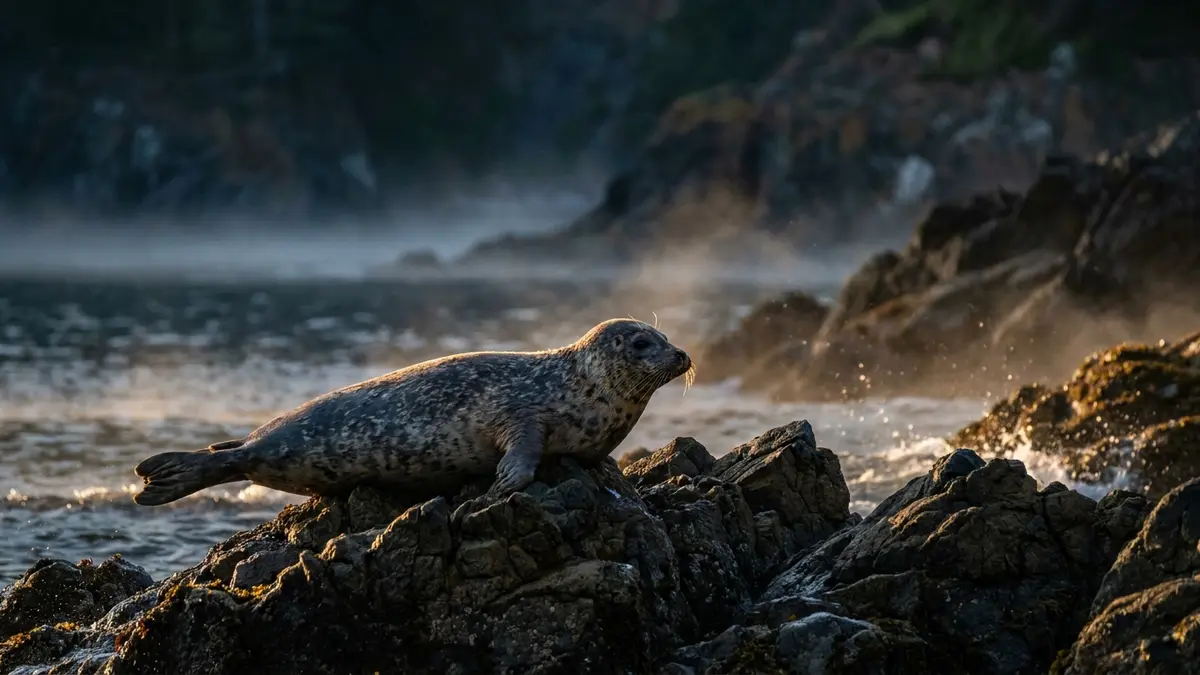
A seal, representing balance between logic and emotion, could show up as a spirit animal to help you find your own good judgment or intuitive strength. A seal is a powerful animal that restores your playfulness and optimism over fear and also reminds you that some things are simply beyond your control. In your dreams, seals usually signal a good omen.
An almanac
- Core message
- Hold two worlds — water and earth — at once without losing yourself
- Spirit animal
- Trust your instincts and stop resisting what you can't control
- Totem for
- Adaptable inner strength and balancing logic with emotion
- Power animal
- Reclaiming playfulness and steady optimism over fear
- In dreams
- Balance between emotion and logic; often a good omen for finances
- Cultural roots
- Native American abundance lore and the Celtic Selkie legend
- Also in myth
- Proteus's shapeshifting seal-herd in Greek lore, and a Norse seal battle between Loki and Heimdall
The seal, a water-dwelling mammal, spends most of its life at sea but always returns to solid ground to give birth. This is a split existence that makes the seal a natural teacher of how to feel deeply without losing one's footing. The seal is playful and quick-sensing and, with its thickly insulated body, is able to withstand the cold — all models of joy and emotional resilience. You can learn about the seal's role as your spirit guide or power ally here. You can also find out what dreams mean if you dream about a seal and how the seal appears in Native American and Celtic lore as well as astrology.
Seal Symbolism & Meaning
Many creatures spend time on land, others in the water, but seals are one of the few animals who need both environments to thrive.
That means their bodies are designed to hold things together in two very different ways. Just like seals can hold themselves up out of water, they can also blend intuition and stability in ways others can't.
They also have a talent for laughter. Spend some time near a group of seals and you'll find out that the clumsiest seals are usually the funniest ones.
Underwater, those clever whiskers point straight outwards so they can sense even tiny vibrations as they swim around and hunt for fish. Seals also have excellent hearing underwater. But it's even more impressive if you consider how hard it is for most creatures to hear at all underwater.
Their thick layer of fat insulates them against cold weather or anything else that might make life difficult.
True seals don't look like they're having a good time when they shed their outer coat — but then again, change isn't always pretty while it's happening. Other species do things differently so it isn't just seals who have this trait.
Seal Spirit Animal
When a seal shows up, listen to that sly one. First of all, it's making a point about all the chatter and advice that's swarming your life right now. The louder these voices get, the more certain you need to be about what you want.
This animal also represents the times when you can't control what's happening. All you can do is let the currents drift around you and see where they carry you. If it's a creative block that has you sitting on your hands, listen to the water underneath: Where will it pull you next? What images swim up from the deep?
Finally, this creature connects two worlds: earth and water. The connections between people are made of both trust and strong bones beneath; if there's ever trouble between two people, think Seal when figuring out how to move forward.
Does Seal fit you?
Tap the ones that sound like you — 6 traits, no right answer.
0 of 6 Nothing picked yet — start tapping.
Seal Totem Animal
Born with Seal as a totem, you carry an adaptable, quiet, unshakeable inner strength and an easygoing, friendly nature that can put any strange situation at ease. You tend to build toward your dreams and keep a lighthearted sense of humor about yourself.
Keeping a logical balance with your emotions helps you stay on course through rough times. Small setbacks tugging at your mood are reminders of your bond with water energy; you can reconnect with solid ground by breathing and then diving back in.
Seal Power Animal
Whenever work and obligations overtake your life, call on Seal to help you ease up. Seal can swim through stressful situations because it's aware of how living like that affects your mood and emotions. The spirit of Seal can take you from one place to another, replacing heavier thoughts with lighter ones.
This energy will bring back the child inside you, who knows how to have fun, no matter what happens. Call on Seal whenever you're afraid because its energy soothes anxious energy with steady optimism, allowing you to move forward instead of staying stuck in place.
If Seal is your power animal, then it's there to remind you that every day can be a new beginning.
Across cultures
2 traditions — pick one to read its take.
Native American Seal Symbolism
In coastal tribes in North America, the seal was a symbol of abundance. Inuit did not think of seal as vicious animals, but rather they were seen as gentle.
The Inuit tell a story about Sedna, who was cast out and clung to the edge of her father's kayak until he cut off her fingers. Each digit transformed into creatures of the sea so that Sedna might rule over them.
The Makah tell another story which involves two brothers. After reshaping the world for humans, they punished an early creature for theft. From then on, seal became known as an animal that provided its own food for its family.
Seal in Celtic Mythology
In Celtic tradition, seal shifters called Selkies are part of a legend that stretches from Iceland to Scotland. They wear the skin of seals in the water and leave it behind when they walk on land in human form.
According to folklore, if you steal a Selkie's skin, you can make them marry you. But they'll run off as soon as their skin is back, like they never left the sea.
Some Celtic stories tell about half-human, half-fish mermaids. They're also like wives in a romance story. And in Orkney legends, the Finfolk use magic to control the sea.
Stories about humans and these legendary creatures usually don't end well.
There's a story about Ursilla from Orkney. They say that if she cries seven times into the water, her partner will come back. The tale of Swan Maidens is similar. Also there's this number seven that comes up a lot.
The Conneely clan of Connemara says they have Selkie ancestors near Galway Bay.
Seal in Dreams
Seals in dreams vary widely in meaning. Whether you are meeting just one seal or a whole pack, the tone and behavior are important to understanding what they mean.
When you see a single, calm seal, it may be a sign that your business or finances are doing well. A few seals together suggest that you may be receiving financial or career help from others. A sick or struggling seal can represent worry and feelings that aren't being properly communicated. If you see a white seal, it could signify upcoming marriage, family bonds, or good news among friends.
Happy, playful seals can mean that there will be an adventure on the horizon, or that something positive is going to happen.
If a seal is swimming away from you, it may mean that an opportunity has slipped by because you didn't seize it. A biting or aggressive seal may indicate that some resentment or jealousy is building up in a relationship.
Spiritual Meaning of Seals
Seal can show you how to balance opposites — how to keep your feet on the ground while your spirit soars, or stay soft without being vulnerable. It's a reminder to be as playful as possible, to trust that delight is a good thing, not just a reward for work well done.
Seal has protection built into its thick skin.
A seal can float and dive beneath the surface at the same time; it's a reminder that you can be down-to-earth and ready for adventure without giving up one in favor of the other.
Seal in Greek and Norse Mythology
Long before the Selkie, Seal had its own place in Greek myth. Proteus, Poseidon's herdsman, was a shape-shifter with a talent for slipping away from trouble — a gift he put to use as the "Old Man of the Sea," sneaking off each noon to sleep among his flocks of seals on the shore. In The Odyssey, stranded and unmoored at sea, the hero Menelaus finds that his only way home is by wrestling shape-shifting proteus into telling the truth — a trick that wouldn't have worked if it weren't for Seal's power to change into every possible form.
This lesson of waiting out Proteus's cycles — holding steady as he ran through lion, serpent, panther, boar and more until he grew weary enough to simply state his prophecy and be done with it — seems in keeping with Seal's modern message: Sit with discomfort instead of trying to dodge it.
Though Norse legend doesn't often feature seals, one popular myth places a fight over Freya's jewelry in the form of Seals. In the now-lost poem called Húsdrápa, Loki and Heimdall duel over Brísingamen at a rock called Singasteinn. Each takes Seal's shape during the battle before Heimdall wins it back. It seems even gods found in Seal an excellent way to settle their differences.
Frequently Asked Questions
What does the Seal spirit animal mean?
Seal as a Spirit Animal shows up when you need to step back from the advice you’re getting, trust your own intuition, and stop fighting forces beyond your control. You’re probably going through a period when doing so will serve you better than resisting.
What does it mean to dream about a Seal?
If you dream about seals, it usually means the balance in your life between emotion and logic, and that seals often symbolize positive messages about business or financial matters.
What does Seal symbolize in Celtic mythology?
Selkies are a breed of Celtic magic creatures who can turn from seal to human. They live in the ocean and come to land to change, keeping their seal skin until they want to go back into the water. They explore ideas of freedom, being in captivity, and the conflict of two very different worlds.
What does Seal symbolize in Greek mythology?
In Greek mythology, Seal is associated with Proteus, Poseidon's herdsman. Proteus was always switching forms so he was called the "Old Man of the Sea." In Homer's epic The Odyssey, Menelaus dresses in sealskins to sneak up on Proteus and force a true prophecy out of him. Seal is a guardian of deep truths that only show up when you are ready.
What does it mean if you keep seeing seals in real life?
Repeated sightings of seals in real life are usually a gentle sign that it's time to take a step back and trust your own judgment. If you tend to overthink things, seeing seals could mean you've been overwhelmed by outside noise, and that it's time to turn down the volume and listen to what you already know is true.
Seal also represents
Sources
Claims on this page were checked against these published sources.
- Pinniped
Pups are typically born in the spring and summer months and females bear almost all the responsibility for raising them.
Read the source → - Sedna (mythology)
As she clings to the sides, he chops off her fingers and she sinks to the underworld, becoming the ruler of the monsters of the deep. ... Her fingers become the first seals and she becomes a mighty sea goddess.
Read the source → - Seal in Native American Indian Legends and Culture
In the Inuit culture, seals are symbols of innocence
Read the source → - Selkie
steals a female selkie's skin, finds her naked on the sea shore, and compels her to become his wife... will immediately return to the sea and abandon the children she loved
Read the source → - Proteus: A Complete Guide to the Old Man of the Sea
If Proteus had an official job, it would be as the shepherd of seals. ... The Old Man of the Sea could imitate the forms of any animal of the sea or of land. He even turned himself into running water, an enormous tree, and a flame. ... [Eidothea] could disguise Menelaus and three of his bravest men among the seals. Then they could take the god by surprise as he was sleeping. ... [Proteus] became in turn a bearded lion, a snake, a panther, a monstrous boar; then running water, then a towering and leafy tree; but we kept our hold, unflinching and undismayed.
Read the source → - Heimdall
the skald Úlfr Uggason composed a large section of his Húsdrápa about these events and that Húsdrápa says that the two were in the shape of seals
Read the source → - Elephant Seals: March - Catastrophic Molt
their fur and top layer of skin comes off in large patches
Read the source → - Seals, facts and photos
There are 33 species of pinnipeds alive today, most of which are known as seals.
Read the source →