Animal Facts
Elephant Facts & Trivia: Fascinating Things to Know
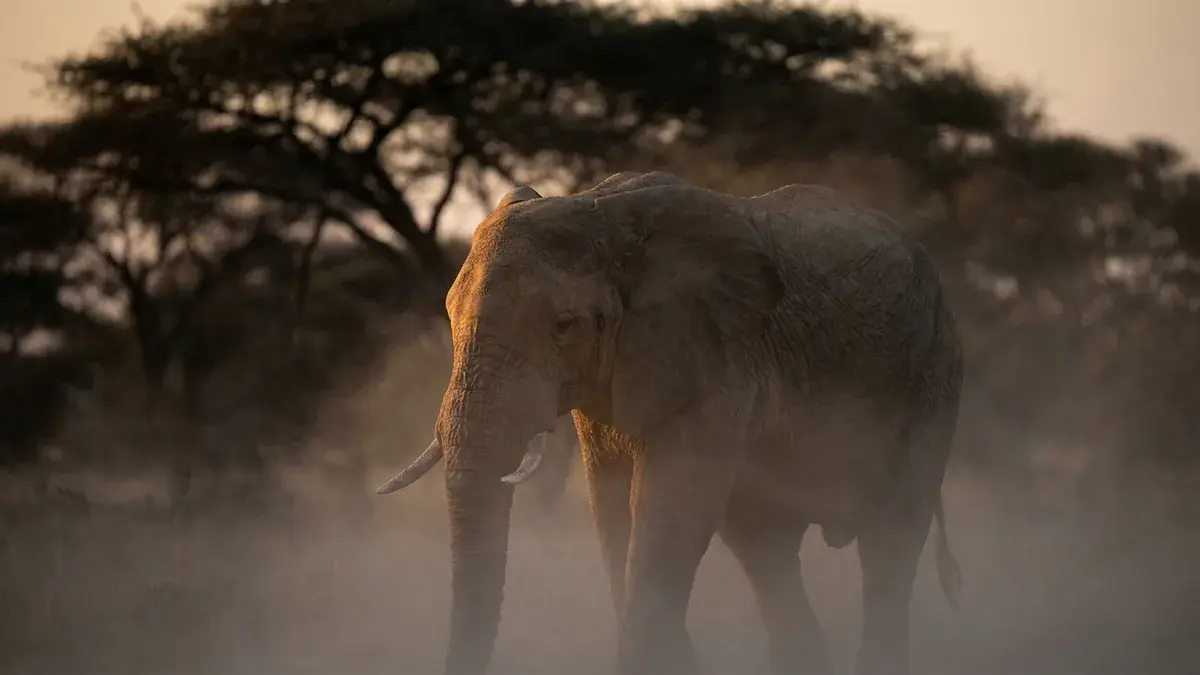
Elephants are the largest land mammals on Earth: the biggest individual ever recorded weighed roughly 24,000 pounds, and their trunks contain an estimated 100,000 muscles used for smelling, drinking, and grabbing. Despite their size, they sleep only 2 to 3 hours a day, usually standing up, and are known for an emotional life that includes humor, compassion, and mourning for their dead. Pregnancy lasts about 22 months, one of the longest of any mammal.
An almanac
- Lifespan
- 60–70 years in the wild
- Size
- Up to 24,000 lbs, 13 ft tall
- Diet
- Herbivore — grasses, roots, fruit, bark
- Found in
- Africa and Asia
- Gestation
- About 22 months
- Group name
- Herd
Few animals capture the imagination quite like the elephant — an enormous, deeply social creature with a memory as legendary as its size. Its trunk does more than most people realize, herd life runs on tight family bonds, and its emotional world turns out to be surprisingly deep. Here's a rundown of the facts, plus a look at how elephants have stomped their way into movies, music, and pop culture.
Fascinating Elephant Facts
Elephants come in two main varieties — African and Asian — and the African elephant is the biggest land mammal alive today, with the largest individual ever recorded weighing roughly 24,000 pounds and standing 13 feet tall.
You can tell the two types apart partly by ear size: African elephants sport ears about twice the size of their Asian cousins'. Both types typically live 60 to 70 years in the wild, and their social structure is built around family: females stay together in herds for life, while males strike out on their own around age 13.
The trunk is the elephant's signature tool — it can stretch up to 23 feet, houses an estimated 100,000 individual muscles, and handles smelling, breathing, trumpeting, drinking, and grabbing all at once. It's sensitive enough to judge an object's size, shape, and even temperature.
Elephants also have the sharpest sense of smell in the animal kingdom and carry the largest brain of any land animal, which may help explain their well-documented emotional range — researchers have observed elephants displaying humor, compassion, teamwork, self-recognition, tool use, playfulness, and even mourning for their dead.
A few more highlights worth knowing:
- Their tusks are actually stretched-out incisor teeth, used for digging up food and water and stripping bark off trees.
- Trumpeting calls can carry up to 5 miles between herd members.
- Pregnancy lasts an astonishing 22 months — one of the longest of any mammal.
- Despite their size, elephants only sleep about 2 to 3 hours a day, and usually standing up.
- A newborn calf already weighs around 200 pounds, wrapped in skin that can grow up to an inch thick.
- Their oversized ears aren't just for hearing — they help the animal manage its body temperature.
- They're strict herbivores, grazing on grasses, roots, fruit, and bark (peanuts, contrary to popular belief, aren't actually part of the menu).
- Fully grown elephants have essentially no natural predators.
- Males are known as bulls, females as cows.
On the conservation side, the picture is sobering: elephants are officially listed as threatened, roughly 20,000 African elephants were killed in a single year (2013), and poaching for ivory still claims about 100 elephants every day. Enforcement against poachers has reportedly been weak in places like Kenya.
Around 15,000 elephants are currently believed to live in captivity, and while fifteen countries have banned the use of wild animals in circus acts, the United States is not among them. Elephants have also historically suffered in the name of research and entertainment — including a widely cited case involving inventor Thomas Edison.
For the classification nerds: elephants belong to Kingdom Animalia, Phylum Chordata, Class Mammalia, Order Proboscidea, and Family Elephantidae.
Elephants in Movies, TV & Music
Hollywood has never been shy about putting elephants front and center. Animated favorites like Dumbo (1941) and Elmer Elephant (1936) go back to the earliest days of the medium, while Babar got both a 1960s short and a 1999 feature, Babar: King of the Elephants.
Later decades brought a mix of comedy, drama, and documentary takes: Operation Dumbo Drop (1995), Larger Than Life (1996), Elephant (2003), Elephant Tales (2006), Jumbo (2008), Water for Elephants (2011), Elephant White (2011), and One Lucky Elephant (2010), alongside documentary-style features like The Impossible Elephant (2001), The Eyes of Thailand (2012), and An Apology to Elephants (2013). Dr. Seuss's beloved pachyderm got his own big-screen moment too, in Horton Hears a Who! (2008).
Musically, elephants have inspired everything from orchestral pop to indie rock: Henry Mancini's instrumental "Baby Elephant Walk" became a standard, while The Strokes contributed "Elephant Song" and playwright/composer Nicolas Billon has a piece simply called "The Elephant Song."
Famous Elephants
Fictional elephants have become some of pop culture's best-known characters. There's Disney's floppy-eared Dumbo, the storybook favorite Elmer the Patchwork Elephant, and Horton from Horton Hears a Who!. Babar rules his own animated kingdom, while Colonel Hathi marches through The Jungle Book and Kala Nag serves alongside Kipling's characters in the same story world.
Manny brings gruff charm to the Ice Age franchise, and Rosie takes center stage in Water for Elephants. TV and comics have their own icons too — Ella from Ella the Elephant, Shep from George of the Jungle, Snorky from The Banana Splits Club, Stampy from The Simpsons, and Tantor from the Tarzan series.
And then there's the original celebrity elephant: Jumbo, whose sheer size in the 1800s was so famous that his name literally became the English word for "giant."
Frequently Asked Questions
How long do elephants live?
Elephants typically live between 60 and 70 years in the wild, one of the longest lifespans among land mammals.
How long is an elephant's pregnancy?
An elephant pregnancy lasts around 22 months, among the longest gestation periods of any mammal on Earth.
Do elephants have any natural predators?
No — adult elephants are large enough that they have no natural predators in the wild, though calves can occasionally be vulnerable.
More about the Elephant
More from Animal Facts



Not sure which animal is yours?
Consult the quiz