Mammals · Spirit animal
Moose & Elk Spiritual Meaning & Symbolism
The towering presence that teaches quiet strength, self-reliance, and trust in your own instincts.
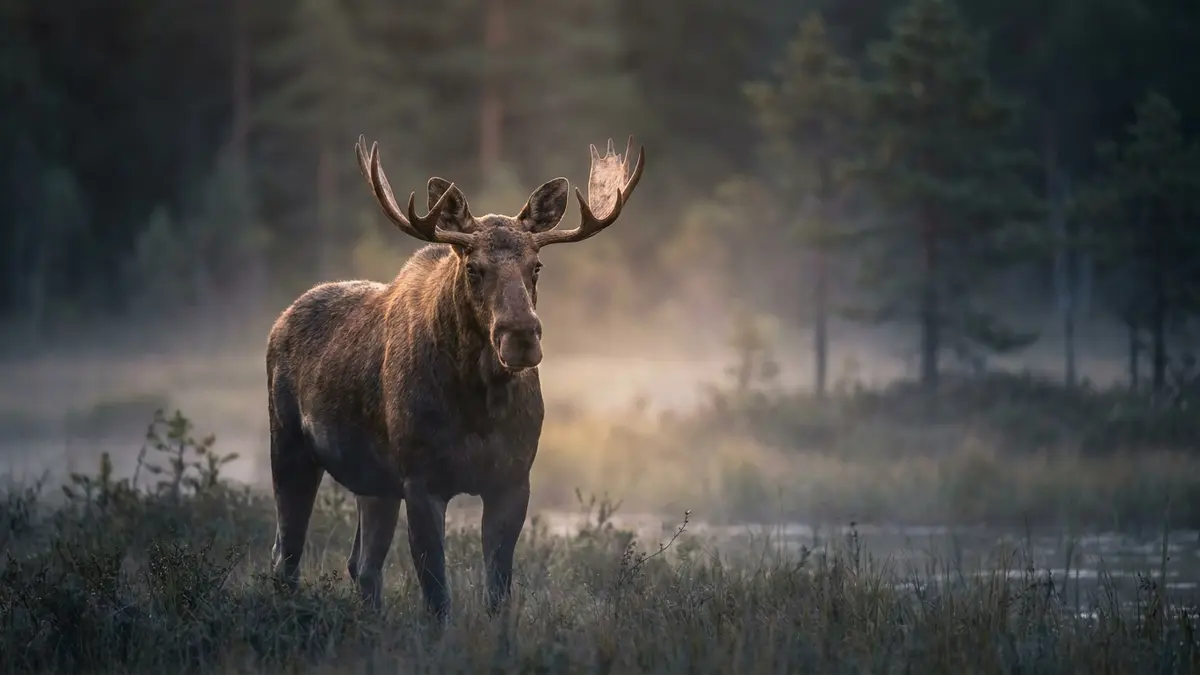
Moose spirit symbolizes self-confidence and awareness. It can be read as "learn to trust your instincts, protect the people you love, and know when to stand your ground and when to rest alone." When you see a moose in dreams, it's a signal that things are about to feel less predictable, so ground yourself and pay attention instead of getting caught off guard.
An almanac
- Core message
- Own your size and trust your instincts
- Spirit animal
- Courage, presence, and heightened awareness
- Totem for
- Protective, steady, quietly psychic people
- Power animal
- Rest, fresh perspective, and steady change
- In dreams
- Unpredictability ahead — stay grounded and alert
- Cultural roots
- Native American endurance symbol; Celtic giant of legend
- Also called
- Wapiti — Shawnee for "white rump"
- Siberian parallel
- Evenki elk-goddess Bugady Musun
Not many animals fill a forest clearing quite the way a moose does, though it’s called an elk in most of Europe. When one steps out from the undergrowth, it looms so large that the surroundings seem to bend around it. Its calm and steady presence seems to radiate a strong sense of family, of patience, and of strength tempered with wisdom.
Moose & Elk Symbolism & Meaning
Elk is a majestic animal of the north. Adults are typically about six feet tall, and weigh up to a thousand pounds. Only males have antlers, which are flat and wide.
Cow elks fiercely defend their young. So when people see an elk it often feels like their own sense of protection and family is close to the surface. But because young elks wander off on their own they also remind us of independence and individuality.
The most interesting thing about these animals, though, is that despite their size they are very good swimmers and fast runners. It's almost like they give us a balance between peacefulness and strength in the same creature. Their power and wisdom make them easily represented as loyal friends or sidekicks.
Moose & Elk Spirit Animal
The Moose rarely knocks before paying a visit. It's most likely to show up when you're about to face a situation that you've been avoiding, to give you courage and ask if your size or presence is intimidating anyone. It might also be encouraging you to take greater responsibility for your own actions, rather than following blindly what others are doing or saying.
The Moose and Elk have sense of smell, so it reminds you to go by instinct more than by overthinking. They have independently moving eyes.
Sometimes the Moose shows up when your body and diet aren't working the way they should. It's encouraging you to take better care of yourself so that your body will be stronger.
Does Moose & Elk fit you?
Tap the ones that sound like you — 6 traits, no right answer.
0 of 6 Nothing picked yet — start tapping.
Moose & Elk Totem Animal
In almost any circumstance, Moose people don't feel at all limited by their build, no matter how large or small. They embody strength and protection and are able to help those who need them even when their help isn't requested. They are generous with their sense of humor and know that humor heals more than words ever could. Moose people are known for being stubborn, but they also have the wisdom to persist towards their long-term goals. They have a naturally nurturing energy that soothes others like nothing else can. They move in and out of the background as necessary, seeing when they need to be seen and when they need to disappear. Some might describe them as clumsy, but it's really just a tenderness paired with charm, which only continues to grow over time along with their senses, particularly hearing and smell.
They sharpen and they mature into stronger people with an unbroken sense of intuition that allows them to pick up on what is happening around them.
Moose & Elk Power Animal
Call on this power animal when you feel ill-prepared for the role you're playing, or when you don't want to play it any more. It helps you step down off the stage or shift focus from your challenge to what's bigger and mightier than it, and brings a hushed calm to troubled waters.
It's equally useful for looking at things from fresh angles. It can also give you permission to rest, since solitude isn't selfish: it soothes your restless mind.
This power animal is there when you feel undersized, or need protecting. Don't think of yourself as weak, though: think of your power as quiet. That is its nature.
It can support you through changes and uncertain times. It can also help meet change or transitions with a steadiness that lets you stay calm and clear-headed rather than panicky.
If your instincts are feeling uneasy but things seem normal on the surface, that's a great reason to call on this energy. It'll bring things into focus and keep you pointed back toward your deeper purpose.
Across cultures
2 traditions — pick one to read its take.
Native American Moose & Elk Symbolic Meanings
The Cree regard the moose as a symbol of endurance and survival. The same symbol serves for clans in several Native American tribes, including the Chippewa and Menominee. Although moose hold huge importance for northern peoples, they appear less frequently in Native American folk tales than one would expect.
Among the Ojibwe, Cree, and other tribes of the north, the moose is often linked to resilience. A Wabanaki tradition from the northeastern woodlands describes this creature as a one-time monstrous being tamed by culture hero Glooskap.
Stories about a woman who longed for companionship — but wouldn't choose a suitor until she'd met every forest beast first — are widespread. The twist? This particular woman chose a bull moose for his strength, and her union with this animal gave rise to all of humanity. While there's no trace of this story in documented tribal traditions, the image persists: many people believe that moose spirit lives inside every human being.
Moose & Elk as a Celtic Symbol
The elk vanished from Celtic lands. They were once all over the place. It seems like the elk were even bigger back then — these giants had antlers that measured over fourteen feet across.
Some of those old stories say that Irish elk were as tall as two people put together. Either way, they sure were big.
Moose & Elk in Dreams
A moose or elk in your dreams often signals a significant change is about to happen in your life. It can leave you feeling like things are less predictable than usual, so pay close attention, stay grounded, and keep a level head!
- If the moose runs away in your dream, it might suggest that you're holding back or lacking the courage to face a challenge.
- Paying closer attention to your surroundings or relationships can help you to face challenges more calmly if this animal appears calmly listening.
- Standing its ground suggests that finding balance between being assertive and compromising with others is key.
- A moose near water may also symbolize emotional depths and caring for family as a core strength to draw upon when navigating change.
Moose & Elk Spiritual Meaning
A spirit animal, the moose teaches that intuition and practicality do not need to be enemies. When you move through the world with your life marked by confidence that comes from being whole in body and mind, your energy will flow with ease and with grace.
The Elk Mother of Siberia
The people of the Siberian taiga honored a goddess named Bugady Musun as the guardian of wildlife, who could take the form of either an old woman or a female elk. Bugady Musun was the mother of all animals and their protector. Even in Siberia, a female elk can seem both ferocious and tender. To call on such a figure is to seek strength and compassion — that combination, so often found in an Elk mother.
Why Two Names for One Animal
The word elk has a tangled history. And in North America, European settlers borrowed a separate word from Native American languages to avoid the confusion. They called it "wapiti," after the words for "white rump."
Wapiti does indeed mean white rump, and that's a nod to the white patch at the bottom of this animal's tail. Colonists first started using it in the early 1800s. But they also used "elk" for another kind of big wild mammal. Why do they have different names? Because the elk on this side of the Atlantic Ocean is not the elk that Europeans had known at home. And because European settlers had already been using "elk" for that mammal, they adopted this new word.
It's a confusing linguistic tangle! And that sense of confusion helps spiritually illuminate its own lesson: labels and names don't matter. On either side of the ocean, this animal remains essentially who it is: quiet, peaceful, and full of grace like an elk or wapiti or moose.
Antlers as a Symbol of Renewal
Only males grow antlers, and each year they shed them and grow them back from nothing. This requires a lot of energy, and they do it every single year, regardless. That's one of the striking renewal cycles in nature.
During the fall rut, bulls bellow across the wilderness. These calls both announce their presence and attract females during breeding season. The pairing of physical growth and vocal energy demands hints at a lesson: real renewal is rarely quiet or free. You can't just wait for your confidence, or a relationship, or a sense of purpose to rebuild — you have to get down to the hard work of putting the pieces back together.
Frequently Asked Questions
What does a Moose or Elk spirit animal mean?
The moose or elk symbolizes the opportunity to embrace your own power and trust your instincts, instead of continually shrinking yourself to make others more comfortable.
What does it mean to dream about a Moose?
People who dream about moose often face unpredictable circumstances ahead. Your dream may be telling you to stay grounded, alert, and ready to face the challenges straight on rather than running away from them.
Is Elk the same as Moose in spiritual symbolism?
Yes — the common name for this animal is Elk in Europe and Moose in North America, with their symbolism overlapping closely across traditions.
What does it mean to see a herd of Moose or Elk in a dream?
If you dream about a herd of moose or elk, it points toward harmony: either it signals the advent of a compatible romantic partner, or it encourages you to recognize and enjoy the closeness already present in your existing relationships.
What does a Moose or Elk crossing your path mean?
Some people think that when an elk or moose crosses their path, it's a sign that good things will come to them without much effort on their part. They believe they should stay open and receptive rather than second-guess these good things when they show up.
Why does this animal have two different names?
Because early European settlers called the smaller deer "elk" and mistakenly applied the same name to the larger animal Native Americans called "moose," confusion about which species is correctly called elk and which is correctly called moose has lasted from then until today. While Americans have adopted the Shawnee word wapiti for the animal Europeans still call an elk, elk remains a more common term in general usage.
Moose & Elk also represents
- Other animals that represent strength →Alongside Lion, Bear, Tiger, Elephant
- Other animals that represent freedom →Alongside Eagle, Horse, Hawk, Butterfly
- Other animals that represent wisdom →Alongside Owl, Elephant, Turtle, Raven
- Other animals that represent protection →Alongside Bear, Wolf, Dog, Elephant
Sources
Claims on this page were checked against these published sources.
- Moose
On average, an adult moose stands 1.4–2.1 m (4.6–6.9 ft) high at the shoulder.
Read the source → - Moose — Wildlife Viewing
these imposing creatures can run at speeds of up to 35 mph
Read the source → - Moose in Native American Legends and Culture
In Ojibwe and Cree traditions, moose are symbols of endurance and survival.
Read the source → - Irish elk
The largest recorded antlers spanned 4.26 meters (14.0 feet) from tip to tip, found on the holotype specimen at Barmeath Castle... These antlers reaching 40 kg (88 lb) in weight represent the most massive known among all deer species.
Read the source → - Bugady Musun
Bugady Musun was a Siberian goddess particularly revered by the Evenki people. She was the patron of wildlife and the guardian of animals.
Read the source → - Wapiti — definition and etymology
an Americanism dating back to 1805–10; from Shawnee wa·piti literally, 'white rump'
Read the source → - Why do bull elk shed their antlers each year?
Shedding antlers annually is a seriously high price for a bull to pay as it taxes their energy and calcium reserves... you might have recently heard bull elk bugling during the fall rut, or breeding season.
Read the source →