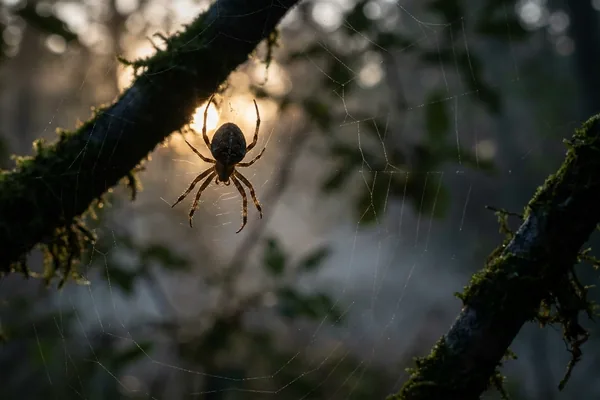
Insects · Spirit animal
Cricket & Grasshopper Spiritual Meaning & Symbolism
Two chirruping messengers of luck and voice: they teach you to trust your instincts, protect your song, and take bold leaps without losing your footing.
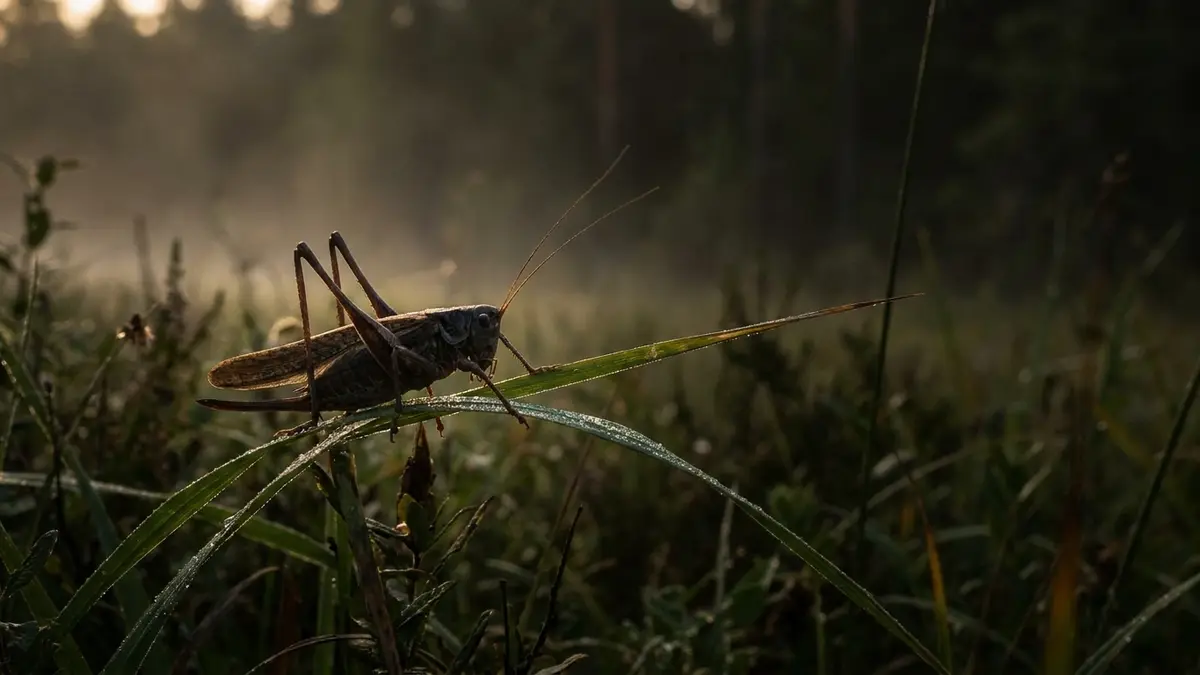
The cricket and grasshopper symbolize the energy of boldness. They both ask you to have faith and take that bold step forward. They both herald that new feeling of being open and fresh. Their quiet inner signals can help you become more perceptive, naturally express what you feel, and thrive in the dark hours of night.
They're also warning you. Ambition is good but when it gets out of control, it can upset your equilibrium, so work to keep yourself grounded in the light.
An almanac
- Core message
- Trust your intuition and speak your truth
- Spirit animal
- Fresh starts and bold, faith-driven leaps
- Totem for
- Perceptive, night-active, naturally expressive people
- Power animal
- Recalibrating your inner signal, uniting a group
- In dreams
- Trust your gut over daily noise
- Watch for
- Ambition curdling into swarm-like destruction
- Not to confuse with
- Cicada — the true insect of the 'immortal old man' Greek myth
- True locust trigger
- A serotonin surge turns solitary grasshoppers gregarious
Cricket and grasshopper go together in folklore. People think of them as both lucky visitors and gentle teachers. Their songs at night, fearless leaps, and finely tuned senses have earned them a place in traditions from native Americans to ancient China. Some call them spirit animals, totem animals, or power animals. They represent intuition and honest self-expression along with grounded ambition. And they're part of your dreams and your birth chart.
Cricket & Grasshopper Symbolism & Meaning
Crickets and grasshoppers belong to the same scientific order: Orthoptera. In folklore, people sometimes treat them as the same symbol, even though they are physically different. Seeing either insect at home or at work is considered good luck, while harming one intentionally is thought to reverse that good fortune into bad.
A cricket's long feelers detect even the smallest changes in its surroundings. This makes it strongly connected to increased sensitivity and an awareness of inner knowing. A grasshopper achieves something similar with shorter feelers. Both animals are seen as a bridge between the physical world and something beyond it — they provide a quiet connection to guides and higher wisdom. This connection is, however, closely connected to earthly matters, as both insects are intimately connected to the earth.
Because a cricket's song is mainly used for attracting a mate, seeing one often means you need to be honest about an important relationship in your life. Cricket folklore has also long associated their silence with danger: when they stop singing or chirping, this can mean that trouble is near.
Apart from simple good luck, crickets can also point you towards discovering your own true voice. Several pop culture references have helped this idea spread.
Cricket & Grasshopper Spirit Animal
When grasshoppers or crickets come to you, look forward to fresh starts and bold, faith-filled actions. They symbolize a time when you can trust your intuition more than ever. If your dreams feel prophetic or if your senses seem keen lately, this is the gift of these insects. Their appearance doesn't mean your imagination's running wild, but signals a time to listen more closely to that inner voice and take inspired action.
They'll also guide you toward grounded decisions instead of escapist fantasies and nudging you to strike a balance between mind, heart, and purpose — honoring impressions while patiently and wisely acting on them. If psychic information doesn't feel safe right now (or ever), find someone familiar with intuitive practices to help you process it.
Cricket is known for its powerful chorus at night where it sings openly and without fear — much like frogs. If it feels intimidating, breathwork can help.
Does Cricket & Grasshopper fit you?
Tap the ones that sound like you — 6 traits, no right answer.
0 of 6 Nothing picked yet — start tapping.
Cricket & Grasshopper Totem Animal
People with the cricket or grasshopper animal totem are typically highly perceptive, emotionally connected, and good at communicating their feelings, often through music or some other expressive outlet. Like their namesakes, people with this animal totem often come alive at night and overcome obstacles in a single bound rather than working around them.
Be careful when you're quiet, though — for this totem animal, silence usually means something is wrong. This is a good time to scan your surroundings for anything that's out of place. People you meet who are straightforward with you can expect honest answers from you in return. In this sense, many people with this totem animal often function as messengers, so it's important that you carefully consider the messages they receive and share.
This totem rarely settles for slow progress — people with this animal totem tend to make big leaps forward and quickly surpass their peers who are chasing the same goals. This drive can be a great strength for those who have this totem animal, but this energy also carries darker undertones of destructive swarming and upheaval. This is a reminder that even if people have ambitious goals, they shouldn't come at someone else's expense.
Cricket & Grasshopper Power Animal
If you ever feel like things aren't syncing up, Cricket & Grasshopper power allies are your go-to spirits when your inner radar feels off.
These allies can help all who work with energy fields — healing work, aura work, chakra work — or anyone who senses things in general. Together, they teach a lesson in how animals work to strengthen ecosystems as a whole.
When it comes to personal change, though, Cricket & Grasshopper show that any meaningful change can happen through group action. If you're ever leading a team — or any sort of group effort — these are the animal symbols you can rely on to get people tuned in and working towards the same thing.
Across cultures
2 traditions — pick one to read its take.
Cricket & Grasshopper in Native American Symbolism
Cricket (the insect) has a special place in the lore of Native American tribes. On one hand, some communities use its movements as a clue to where buffalo herds are headed next — so Cricket can be pretty practical. In many other cases, though, Cricket is cast as a symbol of good luck and perseverance.
For example, some South American tribes will be absolutely thrilled whenever a cricket shows up. Other, more northern tribes have the opposite idea, since they interpret crickets' entering the house as an ill omen.
Here's another case where Cricket's meaning has expanded. There's an extra-large (and not a true cricket) bug called the Jerusalem cricket.
The Hopi Native American tribe believes this bug has its own kachina spirit attached to it, which is part of their tradition about divine beings. Because of this tradition, people came up with some interesting names for the Jerusalem cricket: they gave it the name "Sösööpa". Some other names referred to the way it looks like it has a human head.
The term "Jerusalem cricket" probably comes from contact with Spanish-speaking Christian missionaries — it may have come from either a combination of words or through translation.
Cricket & Grasshopper in Far Eastern Symbolism
In China, crickets are pets: people enjoy their chirping songs. Cricket fighting is a traditional Chinese sport. You offer a cricket to someone as a gift of prosperity. In China, when crickets arrive, it's the right time to plant. When they disappear, it's time to harvest. Depending on where you are in China, crickets signal the start of summer or the start of fall.
Cricket & Grasshopper in Dreams
Seeing a cricket in a dream might tell you it's time to trust your gut instead of listening to the noise around you. Where the cricket seems to be in your dream will point you in the right direction:
- If a cricket jumps by or past you, that's encouragement to keep moving forward confidently.
- If a cricket chirps or sings, it means you have something to say.
- If the cricket is quiet or hiding, slow down, pay attention, and watch out for trouble.
- If you see the same cricket again and again, maybe it's time to check if there's someone or something you need to pay attention to.
- A black cricket means turn inward and rely on your own wisdom instead of getting advice from other people.
- A white cricket is often a sign that an old bond or love is coming back.
- A green cricket is all about stepping into a new chapter.
- If the cricket is dead or dying, that means luck or something stale has run out, and it's time to move on.
Cricket & Grasshopper Spiritual Meaning
Cricket and grasshopper both tell you to trust your gut and act on it. Their antennas are sensitive to things most people miss. Look to your intuition, too. It's worth paying attention to.
Remember that small, mysterious things can teach you important things. The song of these insects is a reminder of the power of expression, even when it's not easy. Just like with their famous leap over obstacles.
Cricket and grasshopper are known as lucky animals, which is an invitation to let yourself value the help they offer with a bit of respect. And seek a balance between your own quest for success and your ability to care for others.
Cricket, Cicada & Locust: Untangling the Insect Myths
The classical Greek myths often say that an immortal ancient man named Tithonus shriveled into a cricket, but the sources are specific: the god gave him eternal life without eternal youth, so he withered into a cicada, endlessly living and endlessly begging for release. If you look at the research on cicadas and crickets, you'll find they're not really close relatives — but they both make soft chirping sounds, and their wide insect families get mixed together online. Cricket & Grasshopper's own story is about the bold leaps of singing luck; the cicada's is about long life and a curse. If you go looking for Cricket's mythology and land instead on stories about someone else's insects, you may be mixing up your facts.
What happens when certain grasshoppers compete too hard? Their coloring darkens, their appetites intensify, they breed faster, they lose their single identity and start acting with wilder instincts. Under crowded conditions, just enough jostling can set off their chemical response to make them join wild throngs: the locusts — the same species as grasshoppers but in an entirely different state. The energy that lifts them in a single confident leap can curdle under competition to the destructive swarm this totem warns against.
A Cricket in Your House: One of the Oldest Luck Omens There Is
Cricket folkloric interpretations vary depending on their region, but generally speaking, if one has accidentally brought a cricket inside with them, the cricket is either there for good luck, or to warn you of something not-so-lucky.
In China, crickets have been kept in households as pets for over a thousand years. In China, they symbolize the arrival of summer and good fortune. People valued them for their chirping which was also seen as a blessing for the household.
The western interpretation is similar to Chinese folkloric interpretation. Crickets are considered lucky creatures and killing one specifically brings bad luck to your home. At any rate, they are considered symbols of prosperity and warmth.
If a cricket finds itself inside someone's home in autumn, it is believed it is just looking for warmth. Most people leave it alone out of respect.
Finally, in Japan Crickets aren't believed to be folkloric omens. Instead they're the sounds (like cherry blossom) that can be heard at the specific time of year and are part of a poetic tradition.
What Does It Mean When a Grasshopper Lands on You?
A grasshopper jumping to land on you asks for permission to take a leap forward. That's because grasshoppers have a spring-like structure in their hind legs that lets them jump long distances relative to the length of their bodies — and they jump forwards, not backwards.
In traditions that use it, grasshoppers are seen as leapers, both in the ground and in life. Most traditions read a grasshopper's landing as permission to take an important step — so you shouldn't read it as an encouragement to do whatever you feel like doing; read it as guidance on what exactly you should be doing.
A native tradition sees a landing grasshopper as a messenger who has something specific for you that needs to deliver. (Some traditions see it as a message of abundance and good harvest.) when the cicada is confused with the grasshopper, as often happens, it's probably from some confusion of translation.
Stay vs leave means opportunity vs opportunity isn't coming back.
Frequently Asked Questions
What does it mean when a cricket or grasshopper shows up in your home?
Most people in most folk traditions read crickets and grasshoppers as good omens. They see them as signs of happiness and, if you harm a cricket, you invite the opposite.
Why is Grasshopper linked with patience and being a beginner?
In the 1970s, a TV series called Kung Fu featured a student who was repeatedly called 'Grasshopper' by his wise teacher. This nickname remained shorthand for someone new to a skill.
What does it mean to dream about a cricket?
If you dream about crickets, you should take their appearance as a sign that your gut feeling or intuition is trying to tell you something. If the cricket is doing something specific in the dream, it will add an extra sense of urgency or confidence to the message.
Is the Greek myth about an old man turning into an insect really about a cricket?
This is a common mix-up. It's not actually about crickets at all. In the original classical story, Tithonus gets immortal but without eternal youth and eventually withers away into an insect that sings — a cicada, not a cricket.
Are crickets or their relatives mentioned in the Bible?
Locusts are, and they're kin to Grasshopper in the insect family tree. 'Locusts and wild honey' were food John the Baptist ate while surviving out in the wilderness, according to the Gospels. So that's one meal of Grasshopper food that's part of Christian tradition.
What actually turns an ordinary grasshopper into a swarming locust?
It's not a different species. It's the same grasshopper just acting differently. In certain grasshoppers, when the conditions are crowded and they get touched repeatedly by lots of other grasshoppers, their bodies make extra serotonin. Serotonin darkens the grasshoppers' coloring, boosts their appetite and breeding, and flips them from being solitary wanderers to being a swarming gregarious army — all just like in the totem's warning.
Is a Cricket in the house good luck?
It's believed that keeping a cricket in your house brings good fortune. This was common in China over a thousand years ago. In Europe, finding a cricket inside your house meant you were prosperous. Some people also believe it symbolized a happy household. A cricket that falls silent or leaves is taken as a warning that you're being visited by bad luck.
What does it mean when a Grasshopper lands on you?
It's as if a grasshopper wants you to leap forward without waiting for more information, because they're quite accomplished at jumping many times their body length and cannot jump backwards. And if the grasshopper stays, that's a decision already made. If it leaves immediately, it's like saying there's only a chance that won't wait.
Cricket & Grasshopper also represents
- Other animals that represent protection →Alongside Bear, Wolf, Dog, Elephant
- Other animals that represent creativity →Alongside Spider, Raven, Peacock, Hummingbird
- Other animals that represent luck →Alongside Ladybug, Rabbit, Koi, Elephant
- Other animals that represent intuition →Alongside Owl, Cat, Wolf, Raven
Sources
Claims on this page were checked against these published sources.
- Orthoptera
the order is subdivided into two suborders: Ensifera – crickets and close relatives; Caelifera – grasshoppers, locusts, and close relatives
Read the source → - Cricket (insect)
long slender antennae
Read the source → - Grasshopper
Caeliferans have fewer segments in their shorter, stouter antennae... [ensiferans have] antennae that can be much longer than the body and have at least 20–24 segments
Read the source → - Jiminy Cricket
The Blue Fairy appointed him to serve as Pinocchio's official conscience, tasking him with teaching the puppet to distinguish between good and evil.
Read the source → - Kung Fu (1972 TV series)
Patience, Grasshopper... the show aired... from October 1972 to April 1975
Read the source → - Cricket Legends, Meaning and Symbolism from the Myths of Many Cultures
Cheyenne hunters believed that crickets could predict the movements of the buffalo herds.
Read the source → - Tithonus
In later tellings, he eventually became a cicada (tettix), eternally living, but begging for death to overcome him.
Read the source → - Locust
No taxonomic distinction is made between locust and grasshopper species; the basis for the definition is whether a species forms swarms under intermittently suitable conditions. ... Increased tactile stimulation of the hind legs causes an increase in levels of serotonin. This causes the locust to change colour, eat much more, and breed much more easily.
Read the source → - Jerusalem cricket
The former genus is native to the Western United States and parts of Mexico, while the latter genus is from Central America. ... the term originated from a mixing of Navajo and Christian terminology, resulting from the influence Franciscan priests had on the Navajo language. ... The Hopi portrayed the insect as a spirit being kachina named Sösööpa who races
Read the source → - John the Baptist
clothing of camel's hair with a leather belt around his waist, and his food was locusts and wild honey
Read the source →