Insects · Spirit animal
Moth Spiritual Meaning & Symbolism
Faith in the dark, hidden intuition, and the pull toward the light
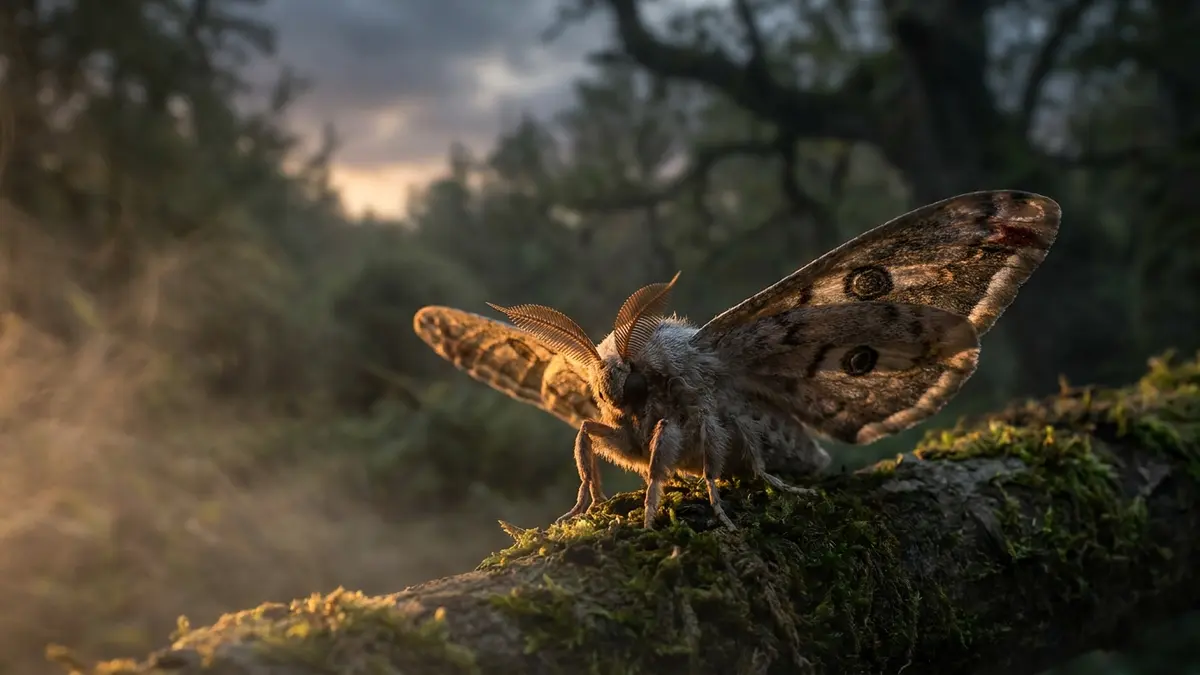
Moth, like so many animals, is associated with a few different things that it can represent in dreams or other appearances: blind faith, intuition, or perseverance in finding your way. In the case of moths, the message comes from those who have passed on, and the message brings you closer to your intuition and inner instincts. Moth encourages you to watch where you go and what you share with others as a result of this intuition and protection against those who aren't yet on the right path or haven't earned your trust. It takes strength, faith, and courage to do these things.
An almanac
- Core message
- Trust intuition even without proof
- Spirit animal
- Guards your privacy, sharpens intuition
- Totem for
- Hopeful, detail-oriented, selective people
- Power animal
- Reignites passion and honesty
- In dreams
- Signals an ending or transition
- Cultural roots
- Native American, Hindu, and Chinese ancestor lore
- Species diversity
- ~160,000 moth species vs 17,500 butterflies
- Skull-marked moth
- Death's-head hawkmoth wears a skull on its back
Long overshadowed by its flashier cousin the Butterfly, Moth has quietly carried its own deep symbolism for tens of millions of years, long before Butterflies ever took wing. As a creature of darkness drawn helplessly toward light, Moth speaks of blind faith, hidden intuition, and the courage to keep moving even without certainty. Here's a full look at what this night-flying guide teaches as a spirit ally, its place across world traditions, dreams, and the zodiac.
Moth Symbolism & Meaning
Moth gets far less respect than Butterfly, but research shows it was fluttering around 190 million years ago. Moth flits in the dark, so it's tied to secrecy, hidden knowledge, and the psychic senses most daylight animals never use.
In parts of Bolivia and China, Moth's sudden presence is a visit from someone who's already passed on. Its pull toward flames, which scientists can't explain, is a lesson in trusting your instincts, even when they bring danger.
Moth Spirit Animal
Moth appears as a spirit guide, often signaling that you need to pull back and be more selective about how much you share with other people. This spirit can help you figure out who deserves your open heart and trust and where the smart move is to keep the distance.
Moth understands how easily we get distracted by things that are shiny, sparkly and dangerous for us. It will nudge you toward safer ground when needed. It will also increase your intuitive senses as well as improve your insight into matters of the heart. Sometimes Moth shows up to help you acknowledge what part of yourself you've been avoiding.
Does Moth fit you?
Tap the ones that sound like you — 6 traits, no right answer.
0 of 6 Nothing picked yet — start tapping.
Moth Totem Animal
Moths serve as wonderful totems, each in its own way. Like Moths, you're likely to stay hopeful even in the face of darkness; others naturally gravitate toward you when darkness feels endless. And like Moths, you likely have a talent for sensing fine details others miss, and listening closely. As a Moth person, you tend to be selective about what clothing or company you prefer.
Many Moth-people feel pulled toward expressive movement and tend to notice the little wonders life brings. Many also hold a deep faith that serves them well—and as a Moth person, you probably need to guard yourself against chasing flames that lead nowhere good.
Moth Power Animal
Moths come to you when your truth is overdue, especially about feelings that you've been editing to make them fit into someone else's beliefs or desires. They also come to you when your passion has worn low. Moth power can brighten that spark back into action if you're willing to do the work.
Use Moth power when it's time to let go of what is no longer of use to you and move forward. It will also inspire you to appreciate the unique expression of your own personality and not just the one that other people might have a preference for.
Across cultures
3 traditions — pick one to read its take.
Native American Moth Symbolism
According to some tribes in California, you can make a sacred rattle from a cocoon that you found out in nature. Moths are brought into ceremonial practices to help with death, divination, and getting messages from beyond.
The Navajos have a story about Begochidi, the deity who was both male and female. Begochidi protected the Butterfly people and took care of them. After Begochidi left, the Butterfly people turned to their other family members for sex. They started behaving recklessly. That's when they transformed into Moths who fling themselves into flame.
Since incest was forbidden among these tribes, the story was also a warning to those with good morals never to be tempted by those pleasures.
Hindu Moth Symbolism
To understand the role of the moth in Hindu belief, you should know that Fire is the most revered of all natural elements, since it's capable of both creating things and destroying things in an instant. Fire is linked to Agni, a deity held to be immensely powerful. Agni is seen as being capable of bringing together the various gods in the Hindu pantheon and joining them as one.
Since Moths routinely fly straight into flame, Hindus have long imagined them as beings that can travel freely between worlds, helping souls to make their way through life and across death.
Far Eastern Moth Symbolic Meanings
China celebrates Tomb-Sweeping Day each April, the ancient ancestor-honoring holiday of Qingming. On that day, people visit their family graves and leave small offerings such as wine. Moths become most active during this time of year, and it was believed that ancestral spirits would move freely, checking in on their descendants.
It was common to believe that a moth landing on a picture of someone who has died means the spirit of the person is nearby and watching over their family.
Moth Dreams
Moths are often viewed as nature's messengers, and when they appear in a dream, they could be sending you a signal. Much like their gentle flutter in waking life, in a dream they often symbolize an ending — the completion of one chapter so that you can move on to the next. The direction they fly in and where they land can provide you more clues.
If a moth lands on your stomach, this could mean that you have a secret that you're struggling with sharing. If it lands on your forehead, it could be a suggestion that you trust your gut feelings — those intuitive hits that have been there all along, but which you've dismissed as coincidence.
An irritating moth suggests that there is someone in your life who has overstepped their welcome. And if the moth is flying steadily towards the sunbeam while overcome with obstacles, it may indicate to keep going strong — your answers are right around the corner.
If moths appear together in your dream, they may symbolize a mutual attraction — perhaps from someone within your personal life or from someone who wants to check in on your well-being.
Moth in Astrology & Zodiac
Moth isn't a featured animal in most Western or Celtic animal Zodiacs, but its symbolism can still match certain temperaments in folk astrology traditions that group people according to their animal guides. If Moth is your animal guide, you probably value intuition, privacy, and working behind the scenes rather than in the spotlight.
You navigate more by listening to your inner senses and trusting inner signals than by making firm plans and sticking with them. That means being extra careful when you feel like following a guiding light all the way to the end—it might be a trap.
Spiritual Meaning of the Moth
Moth lives in the dark, and its nighttime habits mark it as a messenger of secrets and the hidden mysteries of the soul. But as much as it teaches about the unseen, moth also cautions about letting intuition drive you into danger. How can you be sure you're flying toward a warm flame rather than a hungry fire? The moths' fluttering lesson is that you have to stay alert, tuned in to your subconscious even as you keep a wary eye on the world around you. To take risks, but not to leap into darkness.
Scent is how moths find each other and fall in love.
Moth Meaning in the Bible & Christian Tradition
Christian tradition reads Moth very differently from the psychic, ancestor-carrying guide found in Native American, Hindu, and Chinese lore, and it's worth knowing both sides of the story. In the Gospel of Matthew, Jesus warns, "Do not store up for yourselves treasures on earth, where moths and vermin destroy... But store up for yourselves treasures in heaven, where moths and vermin do not destroy" (Matthew 6:19-20). Here Moth stands for quiet decay — the way anything built only for the surface world eventually gets eaten through.
The Book of Job strikes the same note, describing a person who "wastes away like something rotten, like a garment eaten by moths" (Job 13:28), using Moth's slow, unseen damage as a metaphor for mortality itself.
Held next to Moth's role as a faith-guide in other traditions, the Biblical reading isn't really a contradiction — it's a caution about where you place that faith. Trust your intuition, yes, but don't let it anchor to things that were always going to fade.
Moth, Psyche & the Greek Word for Soul
Before Moth was associated with ancestral spirits or messages in Chinese or Indian lore, the Greeks fused this creature with the concept of psychē, which has several meanings in the Greek language. It can be translated as "soul," "life," or "spirit." In Greek, "psychē" was also the word for butterfly and moth. The ancient Greek myth told by the Roman author Apuleius involves Cupid, who falls in love with a mortal woman named Psyche. In the myth, Psyche is often portrayed in artwork with wings of a moth or butterfly, again reflecting the meanings of psychē.
Butterfly inherits the brighter side of psychē: its visible transformation admired by everyone. Moth carries the shadow side of psychē: the transformation that happens unseen at night.
A nod to these etymological roots next time you see a Moth reminding you that part of your soul's journey happens quietly and away from view.
The Silk Moth & the Legend of Leizu
According to legend, the wife of the mythic Emperor Huangdi discovers silk as a cocoon from a moth falls in. And what was discovered that morning? A single continuous thread, created by Bombyx mori, that has been so bred by humans for so long it has lost its ability to fly — ever! All it knows are master breeders helping it become gorgeous silken fabric to clothe everyone.
Later elevated to a goddess, Leizu is still venerated among the Chinese people as the Silkworm Mother. She receives folk devotion even today as her story adds a gentler side to moth mythology: patience with something fragile and unglamorous can spin threads worth an empire while darkly tending cocoons no one sees.
What a Moth's Color Might Be Telling You
Paying attention to a Moth's color is more intuitive than documented, but it's worth sitting with. Lighter colored Moths tend to be gentle, which many people find reassuring rather than eerie. Darker colored Moths often visit at endings or hard life changes. This might feel heavy when they first appear, but you should sit with that discomfort.
Brown and tan colored Moths are the most common, and they tend to carry a "stay grounded" message. Keep faith in the everyday things you rely on without noticing them.
Frequently Asked Questions
What does the Moth spirit animal mean?
The moth spirit animal is a symbol of intuition, hidden truths, and the courage to face the unknown like in a dark night with a glowing moon. It often appears during times when your surroundings or people in your life are too bright and showy, and you need to hide away while trusting your intuition.
What does a Moth symbolize spiritually?
Spiritually, a moth symbolizes blind faith. The moth is willing to keep moving without any proof that things will work out. The image of a moth also appears in many traditions, from Hindu to Chinese folklore, which link it to spirits of ancestors and messages passing between the living and the dead.
What does it mean to dream about a Moth?
Dreaming about a moth often indicates an ending or transition, typically involving feelings rather than literal change. The location of the moth (your stomach or your forehead) suggests something you've overlooked or an intuitive idea you should pay attention to.
What does the Bible say about moths?
The Bible uses the moth primarily as a symbol of decay, not of faith. In Matthew 6:19-20, Jesus warns against hoarding treasure on earth, because moths and vermin can destroy it. He encourages trust in things that endure beyond the physical world. Job 13:28 compares a fading body to 'a garment eaten by moths.'
What does it mean when a moth gets into your house?
A moth that flies into your house is often a friendly visitor, not an unwelcome pest. Some traditions consider it a way for someone who has passed on to say hello, especially if the moth lingers near a favorite picture or room. This might be as simple as an invitation to slow down and notice something you have been rushing by. It's perfectly okay; take it as an opportunity to stop and pay attention, not something to run from.
What's the difference between Moth and Butterfly symbolism?
A moth and a butterfly both grew from the Greek word psychē, which meant "soul." Butterfly took on the brighter meaning, for the soul work everyone sees when it emerges transformed. Moth took on the soul work that happens at night, in private, to be trusted rather than admired.
Where butterfly heralds change, moth cherishes the moments before.
Moth also represents
- Other animals that represent death →Alongside Raven, Crow, Buzzard & Vulture, Owl
- Other animals that represent love →Alongside Dove, Swan, Wolf, Seahorse
- Other animals that represent rebirth and change →Alongside Butterfly, Snake, Dragonfly, Frog
- Other animals that represent protection →Alongside Bear, Wolf, Dog, Elephant
Sources
Claims on this page were checked against these published sources.
- Moth
Moths evolved long before butterflies; moth fossils have been found that may be 190 million years old.
Read the source → - Lepidoptera
the females of most nocturnal species, including almost all moth species, use pheromones to attract males, sometimes from long distances.
Read the source → - Qingming Festival
The holiday recognizes the traditional reverence of one's ancestors in Chinese culture... During Qingming, Chinese families visit the tombs of their ancestors to clean the gravesites and make ritual offerings to their ancestors.
Read the source → - Agni
In the Hindu pantheon, Agni occupies, after Indra, the most important position... Agni is considered equivalent to all the deities in the Hinduism, which formed the foundation for the various non-dualistic and monistic theologies.
Read the source → - Hand Trembling, Frenzy Witchcraft, and Moth Madness: A Study of Navajo Seizure Disorders
According to traditional Navajo belief, seizures are the result of sibling incest, sexual witchcraft, or possession by a supernatural spirit.
Read the source → - Native American Indian Moth Legends, Meaning and Symbolism
moth cocoons are used as sacred rattles in some California tribes... In other tribes, moths are associated with death and ghosts and may bring messages from the spirit world.
Read the source → - Matthew 6:19-20 (NIV)
Do not store up for yourselves treasures on earth, where moths and vermin destroy, and where thieves break in and steal. But store up for yourselves treasures in heaven, where moths and vermin do not destroy, and where thieves do not break in and steal.
Read the source → - Job 13:28 (NIV)
So man wastes away like something rotten, like a garment eaten by moths.
Read the source → - Psyche (mythology)
Psyche (Ψυχή) has Greek origins, and is commonly translated as 'soul,' 'life,' and 'spirit.' It can also be translated as 'butterfly' or 'moth' (psukhai).
Read the source → - Leizu
Leizu is often depicted as the wife or concubine of the Yellow Emperor, Huangdi, and her legend states that she accidentally discovered the process of unwinding silkworm cocoons after one fell into her cup of hot water... she is deified as Shantzen... with the title 'Silkworm Mother' (蠶奶奶; Cán nǎinai).
Read the source → - Flight Muscle and Wing Mechanical Properties Are Involved in Flightlessness of the Domestic Silkmoth, Bombyx mori
Compared to most members in the genus Bombyx, domestic silk moths have lost their coloration as well as their ability to fly.
Read the source → - Unveiling the enigmatic world of moths: from ancient pollinators to whistling wonders
There are about 160,000 species of moths known to science. Compare that to 17,500 species of butterflies.
Read the source → - Death's-head hawkmoth
The death's-head hawkmoth is most commonly identified by the vaguely skull-shaped pattern adorning the thorax, the characteristic from which its common and scientific names are derived.
Read the source →