Mythical Creature
Werewolf Symbolism & Meaning
The shapeshifting beast within: raw instinct and civilized reason have to be integrated, not left at war.
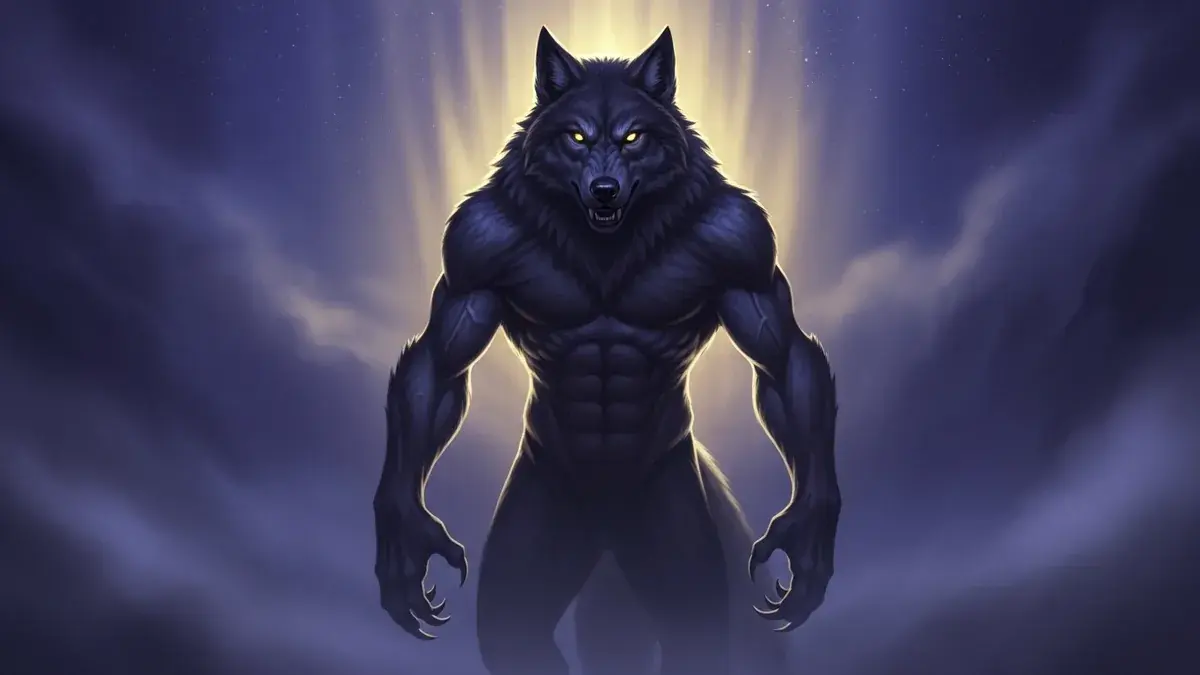
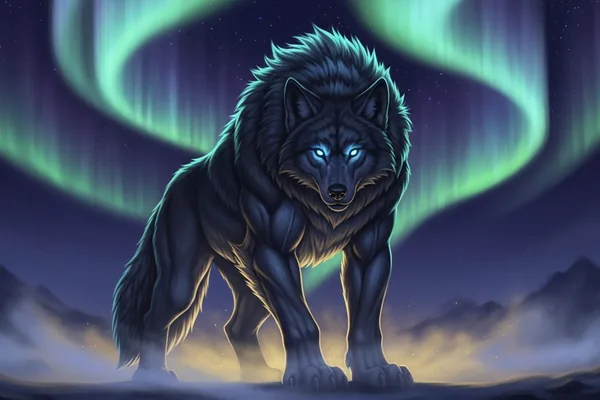
The Werewolf symbolizes the tension between civilized reason and raw, primal instinct. Its cyclical full-moon transformation connects it to recurring emotional surges, repressed desire, and the Shadow self. As a spirit or totem animal, it signals buried instincts pushing to the surface and calls for integration rather than suppression. In dreams, it points to a feeling of losing control, and it often marks the start of a new growth cycle.
An almanac
- Core message
- Integrate instinct with reason, don't suppress it
- Spirit animal
- Long-buried emotions pushing to the surface
- Totem for
- Intuitive, fiercely protective, instinct-driven people
- Power animal
- Confronting your Shadow side head-on
- In dreams
- Losing your grip on control; a new growth cycle
- Cultural roots
- Old English "Man-Wolf"; Greek Lycanthrope
- Named origin myth
- King Lycaon, turned wolf by Zeus
- Historic trials
- Peter Stumpp (1589), Gilles Garnier (1573)
The Werewolf takes its name from the Old English werwulf, literally "Man-Wolf," and goes by the Greek-rooted term Lycanthrope as well. This is not simply a wolf that changes shape; it is a person who, under a full moon, turns into a wolf-bodied creature ruled entirely by instinct. Across the many versions of the legend, one detail never changes: the transformation is total, and the human mind goes dark while the beast takes over.
Origins & the Nature of the Transformation
What sets the Werewolf apart from other legendary hybrids is the completeness of the change it undergoes. During the transformation, the person loses conscious control of themselves; the wolf-self takes over, chasing bloodlust and pure instinct with no restraint from the rational mind.
When the moon's pull fades and the human shape returns, what's left is usually shame, confusion, and regret over what happened.
Some of the oldest surviving references to this phenomenon come from the Roman writer Petronius and, centuries later, the medieval chronicler Gervais of Tilbury. In the oldest lore, becoming a Werewolf isn't a choice — it comes from a curse, a pact, a magic salve, or being born under the wrong sign, though the now-familiar idea of catching it from a bite came later and doesn't appear in the earliest myths.
That detail matters symbolically: the origin story itself is built on the idea of a cycle, one affliction passed down and repeated, echoed in the full moon's recurring pull that forces the change again and again.
From Totem Ally to Cursed Sinner
Stories resembling the Werewolf circulated across Europe well before the Middle Ages, but the character of the legend shifted noticeably over time. Once Christian moral frameworks took hold, the Werewolf increasingly came to represent a hidden, sinful nature lurking beneath every person's surface — the beast as a stand-in for temptation and moral failure.
Before that religious lens took hold, the same tales likely grew from something more practical: ordinary fear of wolves that preyed on villages, mixed with older traditions where people formed deep, almost spiritual bonds with animal allies.
In those earlier, pre-Christian traditions, turning into a wolf wasn't necessarily framed as a curse at all — it was closer to drawing on Wolf as a personal totem, a source of power to be worked with rather than an affliction to be feared.
Later folklore layered on the idea of a recurring ailment, one that closely resembles certain physical or mental conditions that cause cyclical, dramatic shifts in mood, behavior, or appearance — a resemblance some have pointed to when trying to explain where these accounts originated.
The Moon, Silver & the Symbolism of Emotional Extremes
Read psychologically, the Werewolf legend speaks to a very human fear: the fear of being overrun by feelings we normally keep buried. That reading gains weight once you factor in the Moon's traditional association with emotion, intuition, and the subconscious mind.
The Moon is the marker of our instinctive, primal undercurrents, and its role as the trigger for the transformation reinforces the Werewolf as a symbol of the wild, unfiltered self — the seat of raw feeling and, at its most unchecked, destructive urges.
Just as the legend follows a rhythm of eruption followed by a return to composure and then remorse, the symbolism carries a clear lesson: feelings deserve expression, but expression needs a container. Without some counterbalance to the surge of inner rage or desire, the outcome tends to be something you regret.
Popular legend says a Werewolf can only be stopped by a silver bullet, a detail that's largely a 19th- and 20th-century literary convention rather than ancient folklore. Since silver itself carries a long-standing lunar association in esoteric traditions, the connection lines up neatly: the same lunar force that unleashes the beast is also credited with the power to subdue it.
Fittingly, the Werewolf's traditional color palette runs to grey and silver, drawn both from wolf-like fur and from the metal said to bring the creature down.
In tarot, the Werewolf's themes line up with the Moon card, which speaks to cycles, hidden fears, and subconscious pulls, for much the same reason the creature itself answers to the moon's phases. The Temperance card fits alongside it too, since temperance and moderation are exactly the corrective force the Werewolf's emotional extremes call for.
Werewolf Spirit Animal
When the Werewolf shows up as a spirit animal, it often arrives during a period when your composure is being tested from the inside. You might notice long-buried feelings push to the surface, or find yourself pulled by instincts and hunches you can't quite explain, as if your usual calm, rational footing has started to slip.
If Werewolf is guiding you right now, the point isn't to silence either side of yourself. Integration is the real goal — there's no need to cut away the "wolf" to protect the "human." Its howl may simply be calling you back toward instincts you've neglected, so you can process old emotions and build strength to express your power in a new way.
Often the lesson arrives the hard way, through a swing toward extremes, before the real teaching lands: the middle ground between your intuitive, instinctive side and your reasoning, civilized side.
Werewolf Totem Animal
People who carry Werewolf as a totem tend to be intuitive, fiercely protective, and instinct-driven, with a kind of raw power that others can find intimidating. Moods can swing to extremes, and one of the central lessons this totem offers is learning to steer subconscious impulses rather than be steered by them.
- Sensitivity to the moon's phases may show up as noticeable shifts in mood or energy
- A pull to suppress your own distinctive gifts, along with repeated reminders to stay authentic even when others don't get it
- A strong pull toward the natural world, animal company, or solitude over crowded social settings
Over time, those with this totem often find that trying to mute their intensity doesn't work nearly as well as learning to channel it.
Werewolf Power Animal
Calling on Werewolf as a power animal means preparing to meet whatever surfaces from your subconscious head-on. Invoking Werewolf is really an invitation to face your own Shadow side, and while that can spark real healing and integration, it isn't effortless — it takes deliberate work.
Working with this power animal can mean confronting fears you'd rather avoid and being honest about emotions you normally keep private. Parts of yourself usually kept out of view may come rushing forward once you invite the Wolf in. On the upside, this same process can open the door to intuitive breakthroughs.
Claiming your instinctive power and desires this way asks you to stay grounded even as things get intense.
Werewolf Dreams
A Werewolf appearing in your dreams often points to a feeling of losing your grip on control. It may be your subconscious signaling that you're working too hard to bottle up certain emotions, or that you're anxious about what happens if your emotional side breaks loose.
This dream can also mark the start of a new growth cycle or a period of personal transformation, one where messy, unpolished feelings surface before you're able to lay down new foundations. In this sense, Werewolf dreams tend to nudge you toward facing and accepting the creative and emotional sides of who you are, and folding them back in.
The Myth of King Lycaon & the Word "Lycanthrope"
Behind the Greek half of the Werewolf's name sits one specific story, not a vague folk memory. In Ovid's Metamorphoses, the Arcadian king Lycaon tests whether his dinner guest is truly a god by serving him a meal laced with human flesh — in the most-repeated version, the flesh of his own son. The guest is Zeus. Disgusted at the deception, Zeus restores the boy to life and answers Lycaon's cruelty by burning down his hall and turning the king himself into a wolf: his cloak turns to bristling fur, his hands to paws, his voice thins into a howl.
That single myth is where lycanthropy gets its name (lykos, "wolf," plus anthropos, "man"), and the kind of transformation it is matters: not a gift, not a totem earned through kinship with the animal, but a punishment for violating the sacred bond between guest and host — a betrayal of trust dressed up as hospitality. Some ancient writers, Pausanias among them, tied the same king to a real mountain, Mount Lykaion, where a local ritual reportedly held that whoever tasted a certain sacrificial dish would likewise be changed into a wolf.
Read alongside the Old English werwulf, the two roots of the creature's name quietly disagree with each other. "Man-wolf" is descriptive, almost clinical. "Lycanthrope" carries the older charge of transgression and consequence — the sense that this shape was never simply put on, but earned through a broken trust that came due.
Vukodlak, Varkolak & the Werewolf's Many Names
Move east from the Greek and English traditions and the Werewolf starts to blur into something else entirely. Across the Balkans and much of the Slavic world, the creature goes by names built from the same root — vukodlak in Serbian and Croatian, varkolak in Bulgarian and Romanian folklore — both tracing back to a very old compound meaning roughly "wolf-fur" or "wolf-skin." In these traditions, becoming the beast is often described as literal skin-shedding: an evil spirit delivers a wolf pelt to the afflicted person, who wears it to roam by night and sheds it again at dawn to return to human shape. Steal or burn that discarded skin at the wrong moment, folklore warns, and the wearer is said to stay a wolf forever.
What makes this branch of the legend distinctive is how thoroughly it tangles with a different kind of monster. In much of the South Slavic world, the word for "werewolf" gradually became the word for vampire, a walking corpse that preys on the living. The wolf-shifting sense faded into the background in places like Serbia, Croatia, and Bosnia, even as it stayed more distinct further north and west. It's a reminder that the Werewolf was never a single fixed figure passed down unchanged; it's a shape different cultures poured their own fears into, sometimes merging it with their vision of the restless dead.
Farther north, Norse tradition offers yet another variant with a very different mood: the úlfhéðnar, "wolf-coats," warriors said to don wolf pelts and fight in a trance-like fury that blurred the line between man and animal. Unlike the shame-laced Werewolf of later Christian Europe, the úlfhéðnar's wolf-nature reads as a source of battlefield power rather than a curse to hide — closer to the older, totemic relationship with Wolf described elsewhere on this page.
The Real Werewolf Trials of Early Modern Europe
It's easy to assume the Werewolf lived only in stories, but for a stretch of the late 1500s and early 1600s, European courts prosecuted people as werewolves in earnest, often alongside the same waves of panic that fueled the witch trials. These cases weren't metaphorical: real defendants stood accused of real killings, and "werewolf" was treated as a literal legal charge.
The most notorious is Peter Stumpp, tried near Cologne, Germany, and executed on 31 October 1589 after confessing, under torture, to a string of murders. Stumpp claimed the Devil had given him an enchanted belt that let him transform into a wolf-shaped creature at will and back again by removing it. Decades earlier, in France, Gilles Garnier was burned at the stake in 1573 for killings he was accused of committing in wolf form, and in 1603 a teenage boy named Jean Grenier, who confessed to similar crimes, was ultimately judged insane and confined to a monastery rather than executed — an unusually merciful outcome for the era.
These trials matter to the symbolism because of what they reveal about the fear underneath the legend. Communities facing real, unexplained violence reached for the Werewolf to give that violence a shape and a name — a way to project the human capacity for cruelty onto a body that was, conveniently, no longer quite human.
Frequently Asked Questions
What does the Werewolf symbolize?
The Werewolf symbolizes the tension between civilized reason and raw, primal instinct. Its cyclical transformation under the full moon ties it to recurring emotional surges, subconscious desire, and the idea that repressed feelings eventually demand release. The deeper lesson is integration and moderation, not suppression.
Why is the Werewolf connected to the full moon and silver?
The Moon has long been associated with emotion, intuition, and the subconscious, which is why it's cast as the trigger that pulls the wolf out of the man. Silver carries its own traditional lunar association, and folklore extends that into its role as the one substance said to destroy a Werewolf.
What does it mean if Werewolf appears as a spirit or totem animal?
It usually signals that buried emotions or instincts are pushing to the surface and asking to be acknowledged rather than shut away. The guidance isn't to choose between your instinctive and rational sides, but to integrate them. Often the moderation comes only after you've first swung toward emotional extremes.
Where does the word "lycanthrope" actually come from?
It comes from the Greek myth of King Lycaon, who served human flesh to a disguised Zeus and was transformed into a wolf as punishment. The word itself joins lykos ("wolf") with anthropos ("man"), and unlike the more neutral Old English "werewolf," it carries the myth's original charge of betrayal and consequence.
Is a Werewolf the same thing as a vampire in folklore?
Not originally, but in much of the Balkan and South Slavic tradition the two blurred together over time. The word for werewolf (vukodlak, varkolak) gradually came to mean a vampire-like walking corpse in places like Serbia, Croatia, and Bosnia, even though other Slavic regions kept the wolf-shifter and the undead as separate figures.
Were there real historical trials for being a werewolf?
Yes. In the late 16th and early 17th centuries, several people in Europe were formally tried and, in some cases, executed after being accused of committing murders as werewolves, most famously Peter Stumpp near Cologne in 1589 and Gilles Garnier in France in 1573. These prosecutions ran alongside the era's witch trials and reflect real communal panic rather than pure legend.
Sources
Claims on this page were checked against these published sources.
- Werewolf
from Old English werwulf 'man-wolf'
Read the source → - Lycaon (king of Arcadia)
Disgusted, Zeus transformed Lycaon into a wolf, while Nyctimus was restored to life.
Read the source → - The history of werewolves
Etymology: "Lycanthropy" derives from Greek lykos (wolf); "werewolf" from Old English werwulf (man-wolf)
Read the source → - Wolves in folklore, religion and mythology
a feast in which the man who received the portion of a human victim was changed to a wolf, as Lycaon had been after sacrificing a child.
Read the source → - Vukodlak
South Slavic beliefs often conflate werewolves with vampires.
Read the source → - Peter Stumpp
Stumpp claimed the Devil gave him a magical "belt or girdle, which enabled him to metamorphose into" a wolf.
Read the source →