Mythical Creature
Cadmean Vixen Symbolism & Meaning
The uncatchable fox of Greek myth, teaching you to stop running from what you fear.
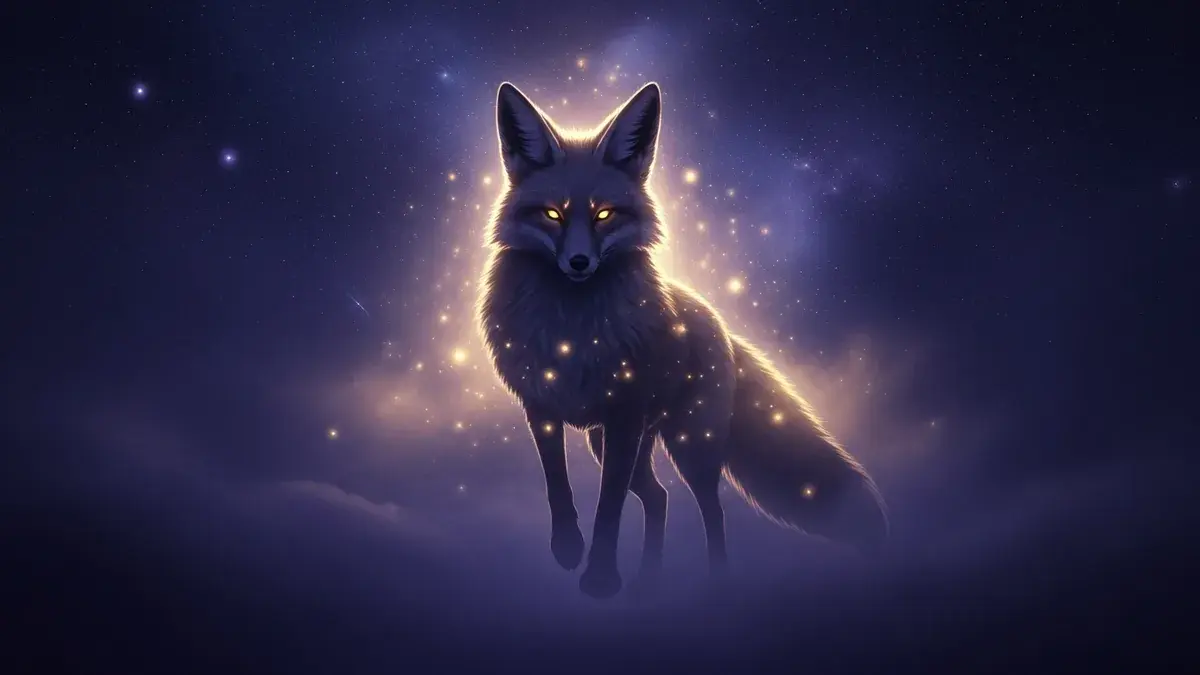
The Cadmean Vixen — the uncatchable Teumessian Fox of Greek myth — symbolizes speed, cunning, and an elusiveness so absolute it verges on divine will, since the gods decreed she could never be caught. As a spirit animal she shows up when you're stuck circling a decision or a fear, urging you to stop deliberating, stop running, and finally face what you've been avoiding.
An almanac
- Core message
- Stop running, face what you fear
- Spirit animal
- Stop deliberating, start moving
- Totem for
- Quick-witted, adaptable, protective people
- Power animal
- Owning your voice, demanding respect
- In dreams
- A thorny problem needing your instincts
- Cultural roots
- Greek and Roman myth (Teumessian Fox)
- Sacrifice cycle
- A citizen's son handed over monthly (Apollodorus)
- Global fox spirits
- Compare Japan's shapeshifting kitsune
The Cadmean Vixen — also known as the Teumessian Fox or Alopex Teumesios — comes from Greek and Roman mythology: a monstrous fox so fast and so clever that no hunter could ever lay a hand on her. Her whole legend turns on one paradox — an animal destined never to be caught. From that single idea comes everything she stands for, from swift movement and cunning escape to the harder work of facing a fear you'd rather outrun.
Symbolism & Mythic Origins
In the old stories, the Cadmean Vixen is described only in broad strokes — a ferocious, oversized female fox, roughly the size of a wolf, whose exact appearance the ancient writers never bothered to pin down. What mattered to them wasn't her look but her purpose: the gods dispatched her to the city of Thebes. Ancient sources say only that a vixen was sent to ravage the Cadmea, with later tradition sometimes crediting the order to Dionysus, though no surviving myth spells out the specific offense. Even her name preserves a trace of that origin: Teumessus was a real hill-town on the plain just outside Thebes, and it's from that place — not from any trait of the fox herself — that ancient writers called her the Teumessian Fox.
Rather than confronting the city directly, the Vixen terrorized the countryside, striking down farmers unless the Thebans handed over a child as sacrifice. In the fullest surviving account, Apollodorus's Bibliotheca, the arrangement was chillingly regular: every month, the Thebans exposed one citizen's son to the creature, a routine sacrifice meant to keep her from simply carrying off many more on her own.
The gods had built one rule into her existence — she could never be captured. That single decree makes her more than a monster: she becomes a stand-in for the untouchable, elusive quality of divine will itself, something that can bend fate but never be pinned down by mortal effort.
Desperate to end the slaughter, the Theban regent Creon struck a bargain with Amphitryon, who needed Creon's help for his own war against the Teleboans: Creon would join that expedition only if Amphitryon first rid Thebes of the vixen. Amphitryon, sensing the hunt was hopeless from the start, brought in reinforcement: Cephalus, son of Deion, and his hound Laelaps — a hound bound by its own divine decree to catch anything it chased. Laelaps carried her own pedigree of the impossible, too. By Apollodorus's account, she had first been a gift from King Minos of Crete to Procris, Cephalus's wife, before passing into her husband's hands, so two unbreakable divine guarantees — one belonging to a fox, one to a hound — were now on a collision course.
The result was a standoff with no possible ending: an unstoppable hound pursuing an uncatchable fox, neither one ever gaining or losing ground. When the chase reached the plains outside Thebes, Zeus stepped in and turned both creatures to stone, ending the pursuit rather than let it break the logic of fate itself.
Afterward, he lifted them into the night sky, where they remain as the constellations Canis Major (Laelaps) and Canis Minor (the Vixen), still facing off overhead.
The myth's themes of secrecy, contradiction, and two opposing forces locked together also echo the Moon card in tarot, which depicts a wild and a tame dog flanking a single road, with sun and moon both visible — opposing energies held in the same frame.
Cadmean Vixen Spirit Animal
The Cadmean Vixen tends to show up as a Spirit Animal guide exactly when you're stuck circling a decision instead of making one. If you've been replaying every possible outcome in your head until the choices blur together, she arrives with a clear message: stop deliberating and start moving. Time spent second-guessing is time you're not spending on your actual life.
She also tends to appear when you're caught in a situation you haven't fully admitted is a dead end — staying comfortable in a relationship that no longer serves you, or convincing yourself a dream career is impractical because of financial pressure.
Fear of failure keeps you frozen. The Vixen's message as a guide is simple: there's no better moment than now to choose your own happiness, release what's holding you back, and run from whatever threatens to trap you.
Her myth is rooted in retribution — the punishment the gods sent down on Thebes — so she can also appear when your current circumstances carry real karmic weight. Just as her attacks were consequence for a past wrong, her presence can be a nudge to look honestly at your own actions, so you're not inviting a similar reckoning, or so you can recognize the good karma already tipping in your favor.
Cadmean Vixen Totem Animal
People who claim the Cadmean Vixen as a Totem Animal tend to carry a sharp, quick mind paired with real charisma. Your humor and playful, trickster-like energy naturally draw others toward you, and your wit makes you a gifted problem-solver, often the person others turn to for a fix or a plan.
- You're adaptable — new environments and sudden change rarely leave you feeling boxed in
- You're a natural mentor — you enjoy passing along what you've learned, even while you keep chasing more yourself
- You're endlessly curious, treating life as an ongoing education and craving fresh experience
- You protect your boundaries — despite your easygoing nature, you turn fierce the moment someone oversteps what's yours
Cadmean Vixen Power Animal
Call on the Cadmean Vixen power animal whenever you need help owning your voice. She carries both feistiness and a real bite when the moment calls for it, and because she moves through her myth fully aware that capture was never in her fate, she models an unshakable certainty in who she is.
Her energy is especially useful when you want others to treat you with the respect you deserve. Her entire mission in the myth was to answer disrespect shown toward Semele, so invoking her as an ally can help you draw firmer lines around who gets your time and energy, surrounding yourself only with people who genuinely value what you bring.
Native American Fox Traditions
The Cadmean Vixen herself is a Greek and Roman figure, but fox spirits hold their own rich place across Native American traditions, and the parallel is worth drawing.
- Among the Severn Ojibwe and Cree, Fox-Woman, also called Old Lady Fox or Grandmother Fox, appears as a wise elder spirit who tests and guides a hero, as told in the story of Iyash and Old Lady Fox.
- Tribes of Northern California, including the Achumawi, Miwok, and Atsugewi, tell of Silver Fox (or Silver Gray Fox), a wise and benevolent creator figure credited with helping shape how people live after the world was formed.
- The Apache and Blackfoot tell stories of Fox stealing fire and delivering it to humankind.
- Among Andean peoples like the Quechua, Fox turns up as a trickster thief and something of a bad omen.
- For many Plains and Midwestern tribes, Fox is seen as clever and generally good-natured, turning adversarial only toward those who act arrogant or reckless.
Cadmean Vixen Dreams
Dreaming of the Cadmean Vixen often points to a thorny problem you're currently wrestling with, and the dream is nudging you to trust your own sharp instincts to work through it.
If the dream shows the Vixen mid-chase, still running, it may reflect a relationship or situation where you keep looping back to the same unresolved point, a signal to ask why you keep revisiting the past instead of living more mindfully in the present.
If you dream of the hound and fox both coming to a stop in their endless pursuit, take note of whatever you've been avoiding in waking life. That image is a cue that it's time to quit running, set your doubts aside, and finally turn to face what scares you.
Fox Spirits Beyond Greece: The Kitsune of Japan
The Cadmean Vixen is a distinctly Greek and Roman figure, but she's far from the only mythology built around a fox. In Japan, the kitsune plays a strikingly different role: rather than being fated never to change, a kitsune is defined by its ability to transform, gaining power and shifting shape as it ages.
Tradition holds that a kitsune can take on human form once it reaches a certain age, commonly said to be 100 years, though some tales say 50, and grows an additional tail for roughly every century it lives, with one, five, seven, and nine tails the most common counts in folklore. The more tails, the older and more powerful the fox.
Japanese tradition also splits kitsune into two moral camps: the benevolent zenko, who serve as messengers of Inari, the Shinto spirit of rice and prosperity, and the wilder nogitsune (or yako), who lean toward mischief and deception. Where the Cadmean Vixen's power comes from a single unbreakable fate handed down by the gods, the kitsune's power is something it earns and builds up over centuries. One fox is defined by a fate it can't escape; the other, by how far it can go on its own.
Frequently Asked Questions
What does the Cadmean Vixen symbolize?
The Cadmean Vixen symbolizes speed, cunning, and elusiveness — an untouchable quality tied to divine will. Because she can never be caught in her own myth, she stands for escapism, but also for the courage it eventually takes to stop running and face what pursues you.
Where does the Cadmean Vixen come from?
She comes from Greek and Roman mythology, where she's also called the Teumessian Fox or Alopex Teumesios. Ancient sources describe her as sent by the gods, with later tradition sometimes crediting Dionysus, to terrorize Thebes, though no surviving myth explains the exact offense. Her endless chase with the hound Laelaps ended with both turned to stone and placed among the stars as Canis Major and Canis Minor.
What does it mean to dream about the Cadmean Vixen?
It often suggests you're facing a difficult problem that calls for your own sharp insight. If she appears still running, it may reflect a repetitive, unresolved cycle in your life; if the chase finally stops, it's a signal that it's time to face whatever you've been avoiding.
How often did the Teumessian Fox demand a sacrifice?
According to Apollodorus's Bibliotheca, the fullest surviving ancient account, the arrangement was monthly: each month the Thebans handed over one citizen's son rather than risk the Vixen taking far more lives on her own. Later retellings often soften or skip this detail, but it's part of what made her reign over the Theban countryside feel so mercilessly routine.
Is the Cadmean Vixen related to Japanese kitsune or other fox spirits?
Not directly. The Cadmean Vixen belongs to Greek and Roman myth, while kitsune come from an entirely separate Japanese tradition, where fox spirits tied to the deity Inari can take human form and grow extra tails with age. The two traditions developed independently, but each one reaches for the fox to represent something outside the rules that govern ordinary creatures.
Sources
Claims on this page were checked against these published sources.
- Apollodorus, Library, Book 2, Chapter 4 (Perseus Digital Library)
persuaded him, in return for a share of the Teleboan spoils, to bring to the chase the dog which Procris had brought from Crete as a gift from Minos; for that dog was destined to catch whatever it pursued.
Read the source → - Teumessian fox
Zeus, faced with an inevitable contradiction due to the paradoxical nature of their mutually excluding abilities, turned the two beasts into stone... The pair were cast into the stars and remain as Canis Major (Laelaps) and Canis Minor (Teumessian Fox).
Read the source → - Fox in Native American Legends
Iyash and Old Lady Fox (Severn Ojibwe) - a hero passing a strange test to earn the advice of a wise Fox-Woman
Read the source → - Teumessus
Teumessus... a town in ancient Boeotia, situated in the plain of Thebes, upon a low rocky hill... the Teumessian fox, which ravaged the territory of Thebes.
Read the source → - Apollodorus, Library, Book 2, Chapter 4, Section 7
As the country suffered thereby, the Thebans every month exposed a son of one of the citizens to the brute, which would have carried off many if that were not done.
Read the source → - Kitsune
A kitsune may take on human form, an ability learned when it reaches a certain age—usually 100 years, although some tales say 50... Generally, a greater number of tails indicates an older and more powerful Kitsune... One, five, seven, and nine tails are the most common numbers in folktales... Benevolent foxes (zenko) are regarded as messengers of Inari, while wild foxes (yako or nogitsune) are often portrayed as mischievous or harmful.
Read the source →