Mythical Creature
Kelpie Symbolism & Meaning
The shapeshifting water horse who teaches you to stay afloat through emotional and financial storms.
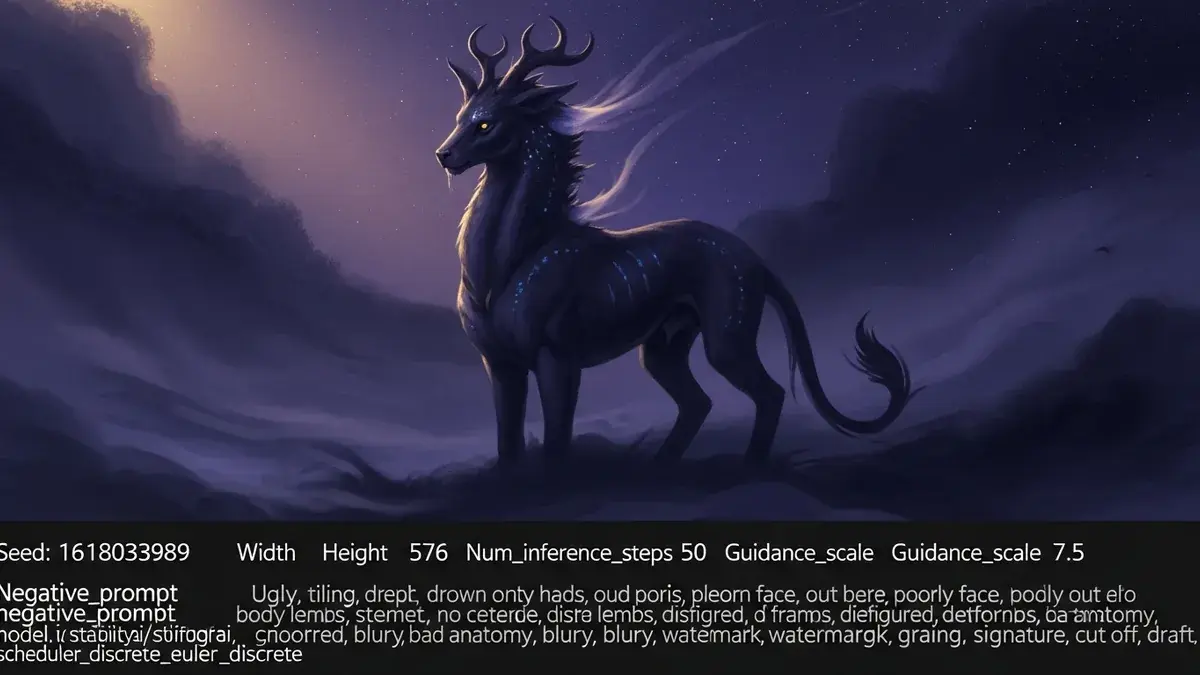
The Kelpie symbolizes the merging of opposites — order and chaos, land and water. It's tied to adaptability, emotional depth, and the duality of shapeshifting. As a spirit animal, it tends to show up when you need to stay emotionally buoyant through hard times, brace for a major transformation, or steady shaky finances — though it can also warn against deceptive appearances and temptation. In dreams, its meaning changes with its behavior: sometimes hinting at surprises, sometimes warning you to guard what matters most.
An almanac
- Core message
- Adapt and stay afloat through turbulence
- Spirit animal
- Face emotional or financial upheaval head-on
- Totem for
- Water-drawn, intuitive, adaptable souls
- Power animal
- Major transformations & money troubles
- In dreams
- Meaning shifts with the Kelpie's actions
- Watch for
- Deceptive appearances, too-good-to-be-true offers
- Literary nod
- Named in Robert Burns' 1786 poem
- Modern icon
- 30m steel sculptures in Falkirk, Scotland
If you're trying to steady your finances or brace for a wave of change, the Kelpie may be swimming into your awareness for a reason. This shapeshifting water horse of Celtic tradition carries lessons about staying buoyant when life turns turbulent and adapting when the ground underfoot shifts. Its folklore blends beauty with warning, one of the more layered mixes in Celtic myth.
Origins & Appearance
The Kelpie comes from Celtic and Irish folklore as a shapeshifting water spirit. Folklore most often describes it as a powerful black horse haunting Scotland's rivers and lochs, though some regional tellings give it grey or white coloring, or even a mane of serpents. Its name traces back to the Scottish Gaelic words "colpach" or "cailpeach," both meaning a young colt or heifer.
Like other composite mythical beings, the Kelpie's dual nature reflects the merging of opposites — order and chaos, land and water, the familiar and the unknowable. Physically, most traditions describe it as fully horse-shaped rather than part-fish, with one telltale sign of its true nature: its hooves run backward compared to an ordinary horse's. Its hide is cool and slick to the touch, and shows up in a few colors:
- Black — tied to mystery, the hidden self, and quiet authority
- White — associated with purity, safeguarding, and clarity
- Grey — a marker of ambiguity, balance, and things left unresolved
Horse symbolism runs so deep in Kelpie lore that reading up on Horse symbolism on its own can add to what the Kelpie means as a spirit guide.
The earliest known written record of the word for this mythological creature appears in the manuscript of an ode by the poet William Collins, composed sometime before 1759 and spelled "kaelpie." This shapeshifting water horse has been unsettling storytellers for well over two and a half centuries.
The Shapeshifter's Warning
Kelpies are said to haunt Scotland's pools and lochs, and legend holds that they can take on human form, most often to draw unsuspecting people toward the water's edge. In these tales, the creature acts as a trickster, luring its targets only to pull them under.
A telling detail survives even in its human disguise: the Kelpie's hooves remain hoof-shaped. Folklore reads this as a symbol of how hard it truly is to conceal one's real character, echoed in the old saying about someone "showing their hoof" when a darker motive slips into view. That same hoofed shape also drew comparisons in Christian tradition to depictions of the Devil.
Kelpies were said to inhabit many of Scotland's waters, including Loch Ness, home of its own famous resident. The creature shares kinship with several water spirits from other cultures:
- The Nixie of German folklore, a shapeshifting water spirit
- The Bäckahästen, a pale horse that appears in heavy fog near water and drowns those it lures, much like the Kelpie
- The Bunyip of Australian legend, known for aggression toward and drowning of its victims
Many scholars trace these Kelpie stories back to older rites involving offerings made to appease deities. But the tales also served a practical purpose passed down through generations: they kept children and the curious away from dangerous water, and warned young women against trusting unfamiliar men.
Elemental Symbolism
As a being rooted in water, the Kelpie is closely bound to the Water Element, which governs dreams, emotion, imagination, intuition, and openness to messages from the spirit world. Because it also shapeshifts and moves across land, it carries Earth Element associations too, tied to grounded power, authority, and stillness in the natural world.
Kelpie Spirit Animal
When emotions feel like they're pulling you under, or a relationship has grown heavy and complicated, the Kelpie Spirit Animal may show up to guide you through it. If you've been sidestepping unresolved feelings or sitting in a relationship that's lost its momentum, the Kelpie nudges you to wade into those emotional waters instead of avoiding them.
Because it dwells in water, the Kelpie also appears when you're on the edge of spiritual growth or in need of renewal, a sign that a shift in mind or spirit is coming. Its presence can also point you toward psychic gifts you haven't yet tapped into.
Since the Kelpie moves between water and land, it can also help you ground yourself and find balance, which is useful when you need sharp focus for demanding mental work. Part of its lesson is knowing when to let logic lead and when to let feeling take over.
Kelpie Totem Animal
Those born with the Kelpie as a Totem Animal tend to gravitate toward water, whether that means a home pool, a nearby lake, or frequent trips to the coast. The Water Element often runs strong in your personality: you're empathetic, emotionally attuned, and given to daydreaming.
"Go with the flow" could be your personal motto. People with this totem place high value on spiritual development and often become guides or sounding boards for others on their own paths. You tend to be sharp-minded and intuitive, and by adulthood you likely have real command over one or more intuitive or psychic abilities. Adapting to change comes naturally to you.
You may find yourself drawn to ancient wisdom, dreamwork, or divination, especially practices connected to water. Despite your fluid, adaptable nature, Kelpie people also carry a stubborn streak and real determination. You fight fiercely for the people and things you hold dear, and you move through life's currents by honoring their natural rhythm instead of resisting it.
Kelpie Power Animal
Call on the Kelpie as a Power Animal when a major life transformation is on the horizon. Whether you're moving through a rite of passage or bracing for sweeping changes in daily life, the Kelpie models how to move through difficulty by following the path of least resistance, and it lends the mental grit needed to handle whatever catches you off guard.
This power animal is especially useful when money troubles are weighing on you. In folklore, Kelpies are sometimes credited with keeping people from drowning. As an ally, the creature can show you how to keep your head above water during a financial squeeze, and ultimately help steer you clear of it altogether.
Greek Parallel: The Hippocampus
Though the Kelpie belongs to Celtic and Irish tradition, ancient Greece told of a similar creature: the Hippocampus, literally "Horse Monster," also known as the Sea Horse. It shares the Kelpie's basic form — the front half of a horse joined to the tail of a fish — and its legend spread well beyond Greece into Roman, Pictish, Phoenician, and Etruscan storytelling.
In Phoenician mythology, the tutelary god Melqart, patron of the city of Tyre, is depicted riding a winged Hippocampus alongside dolphins. Poseidon, god of the sea, even carried the epithet Poseidon Hippios, tied to legends of two Hippocampi pulling his chariot through the waves.
Kelpie Dreams
Dream imagery involving the Kelpie tends to shift meaning depending on its behavior:
- Swimming underwater — hints at surprises waiting for you in your waking life
- Emerging from the water — suggests you're successfully going with the flow, staying afloat during hard times, or gaining clearer insight into your emotions
- Standing as a horse near water — a caution to stay alert around offers or people that seem too appealing to be genuine
- Running into the water — may signal that you're about to be overwhelmed by a situation or a rush of feeling
- Running away from the water — points to a period where you need to guard more closely what matters most to you
The Magic Bridle & Taming Lore
Not every Kelpie tale ends in tragedy. Folklore holds that a Kelpie caught bare of tack — no saddle, no bridle — could be captured with a halter stamped with the sign of the cross, and once tamed this way, its immense strength could be turned to hauling millstones or other backbreaking work. The bridle itself was said to carry its own magic: whoever held it commanded the creature, and if the leather passed to someone else while worn as a person, it could just as easily transform a human into a horse.
One well-known telling has the Highlander James MacGrigor catching a Kelpie by surprise near Loch Ness and cutting off its bridle, the very source of its power and life, leaving the creature to try (and fail) to bargain its way back to freedom. A gentler version of the myth survives from Barra, where a lonely Kelpie took the shape of a handsome young man to court a girl, only for her to discover the bridle hidden while he slept, and rather than flee, he chose to become fully mortal so the two could marry.
These taming stories carry the Kelpie's lesson about mastery over instinct: the same wildness that can drown you can, with the right approach, be turned into an ally instead of an enemy.
Kelpie Cousins Across the British Isles
The Kelpie is the best-known member of a whole family of water horses scattered across the Celtic and Nordic-influenced isles, each shaped by its own coastline. In Scottish Gaelic, the creature is also called the each-uisge ("water horse"), a cousin often described as even more dangerous than the Kelpie proper. Wales tells of the ceffyl dŵr, the Isle of Man has its cabbyl-ushtey, and the Northern Isles carry their own variants: Shetland's shoopiltee and nuggle, and Orkney's tangie, whose name nods to the seaweed tangled in its mane.
Each of these regional cousins carries the same core warning, just dressed in local color: wherever cold water and old stories meet, some version of this shapeshifting horse tends to show up.
The Kelpies of Falkirk
The myth took a modern form in 2013, when sculptor Andy Scott completed two 30-metre-high steel horse heads on the Forth and Clyde Canal near Falkirk, Scotland. Named simply The Kelpies, the sculptures opened to the public in April 2014 as a monument to Scotland's horse-powered industrial heritage: heavy horses once did the hauling work that steam and steel eventually replaced.
That the tribute took the Kelpie's shape rather than an ordinary workhorse's shows how deeply this creature is woven into Scotland's sense of itself, equal parts danger, beauty, and quiet reverence for the water that shaped the land.
Frequently Asked Questions
What does the Kelpie symbolize?
The Kelpie is usually pictured as a horse that moves between land and water, and that dual nature is what it symbolizes: the merging of opposing forces. It's tied to adaptability, emotional depth, shapeshifting, and the tension between what shows on the surface and what's hidden beneath, along with themes of temptation and caution around deceptive appearances.
Where does the Kelpie come from?
The Kelpie originates in Celtic and Irish folklore, said to inhabit the pools and lochs of Scotland, including Loch Ness. Its name comes from the Scottish Gaelic "colpach" or "cailpeach," meaning colt or heifer.
What does it mean to dream about a Kelpie?
The meaning shifts with the creature's actions in the dream. Swimming underwater suggests upcoming surprises, emerging from water points to emotional clarity or staying afloat through hard times, and a Kelpie near the water's edge is often a warning against something that looks too good to be true.
Can a Kelpie be tamed or controlled?
Folklore says yes, under the right conditions. A Kelpie caught without its tack could be captured using a halter marked with a cross, and whoever held that bridle could command the creature's great strength. One famous tale even ends in the Kelpie choosing to become mortal and marry rather than return to the water.
Are there other water horses like the Kelpie?
The Kelpie has close cousins across the Celtic and Nordic-influenced isles: the Scottish each-uisge, the Welsh ceffyl dŵr, the Manx cabbyl-ushtey, and the shoopiltee, nuggle, and tangie of Shetland and Orkney. Each carries a version of the same warning about the danger hidden beneath calm water.
Sources
Claims on this page were checked against these published sources.
- Kelpie
may be derived from the Gaelic calpa or cailpeach, meaning 'heifer' or 'colt'
Read the source → - Hippocamp
coins minted at Tyre around the 4th century BC illustrate the god Melqart 'riding on a winged hippocampus, accompanied by dolphins'
Read the source → - Bäckahästen
a majestic white horse that would appear near rivers ... the horse would then jump into the river, drowning the rider
Read the source → - Bunyip
bloodthirsty predators of humans, particularly women and children
Read the source →