Mythical Creature
Chupacabra Symbolism & Meaning
The shadowy goat-drainer that warns you when your energy is being siphoned away.
The Chupacabra symbolizes energetic drain: the sense that your vitality, time, or emotional reserves are being siphoned away by hidden predators or unbalanced relationships. As a spirit animal, it pushes you toward assertiveness and firmer boundaries, and its vampiric bite ties it to both the physical (Earth) and the psychic (Air) sides of that drain. In dreams, it usually points to fear of the unknown or a boundary being tested.
An almanac
- Core message
- Guard your energy and set firm boundaries
- Spirit animal
- Signals energy being drained by others
- Totem for
- Direct, stubborn, intuitive people
- Power animal
- Balances assertiveness with endings
- In dreams
- Fear of the unknown or crossed limits
- Element
- Earth (blood drain) and Air (bite marks)
- First witness
- Madelyne Tolentino, Canóvanas, PR (1995)
- Real specimens tested
- Coyotes with mange, not cryptids
The Chupacabra, nicknamed the "Goatsucker," is a cryptid from modern American folklore that spread from Puerto Rico across the Americas. Its name translates from Spanish as "goat sucker" — a reference to the drained livestock blamed on its attacks. Beyond the campfire stories, it has come to symbolize energetic drain, hidden predators, and the pull toward firmer boundaries.
Origins & Folklore
The Chupacabra legend took shape in the mid-1990s, after a wave of livestock deaths in Puerto Rico left farmers finding goats drained of blood with no clear cause. From there, alleged encounters spread into the American Southwest, and reports have since turned up as far away as Chile, Maine, Russia, and the Philippines — though none of these claims has ever come with hard evidence.
- The name comes from "chupar" (to suck) and "cabra" (goat)
- Most reported sightings cluster in Puerto Rico and the southwestern United States
- Despite the goat-focused nickname, the creature has also been blamed for attacks on other livestock
- No sighting has come with solid corroborating proof, which keeps the legend in cryptid territory
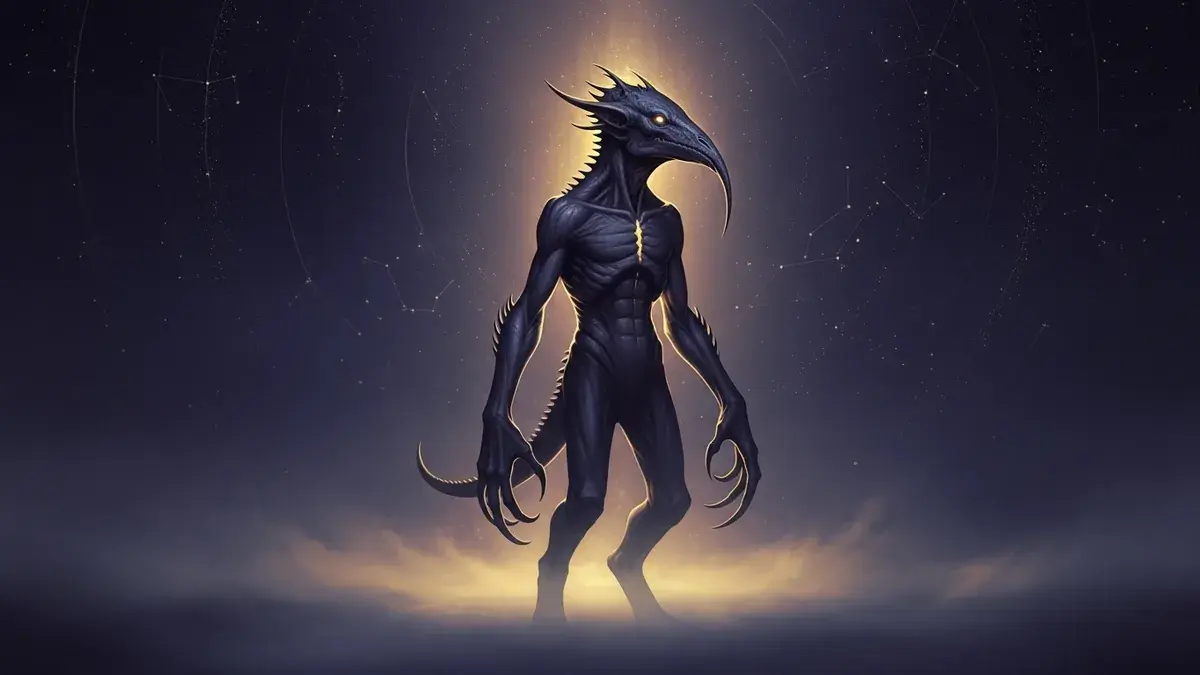
One of the earliest and most influential sightings has a name and place attached to it: Madelyne Tolentino, a Puerto Rican woman who described seeing the creature near her home in Canóvanas, Puerto Rico, in 1995. Her account — a bipedal creature roughly three feet tall with a ridge of spikes down its back — became the template most early tellings echoed. By 2000, though, the popular image had shifted almost entirely, from that spiny, upright figure to a four-legged, dog-like beast. Researchers attribute the change to mistranslations and repeated re-tellings in the press rather than anything about the creature itself — proof that even monsters get reshaped by the stories told about them.
What the Creature Is Said to Look Like
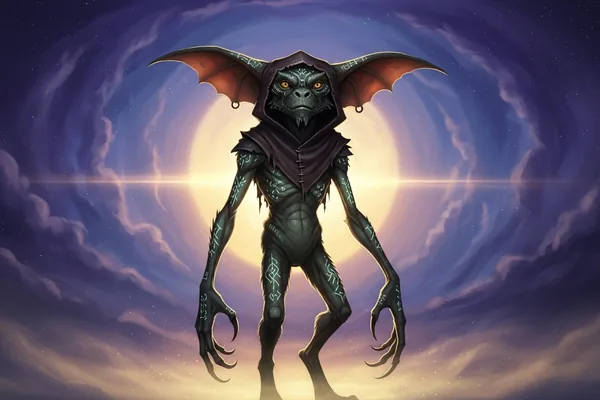
Descriptions of the Chupacabra vary so widely that the creature has taken on a shapeshifting, trickster-like quality in the folklore — no two witnesses describe the same beast. Some accounts mention leathery or scaled skin, while size estimates range from roughly four feet tall down to something closer to a small bear. It's frequently said to move in hopping bounds, more like a kangaroo than a typical four-legged predator.
One detail shows up consistently across tellings: a ridge of spines, or a visibly protruding spine, running from the neck down to the tip of the tail. Because the legend is so tightly bound to goats specifically, it's worth pairing this symbolism with the meaning of Goat as a companion animal for extra context.
The Vampiric Bite & Elemental Ties
The Chupacabra's signature act — draining blood from its prey — links it to vampire mythology, and accounts differ on what the wound actually looks like. Some witnesses describe two puncture marks like classic vampire lore; others insist the bite leaves three holes arranged in an inverted triangle.
That detail carries symbolic weight: consuming livestock and draining blood ties the creature to the Earth element, the physical, material world. But it also drains something less tangible than blood, which puts the Chupacabra between two planes: the body it feeds on, and the psychic or emotional reserves running underneath it. Either way, its defining trait stays the same — it siphons away vitality, whether that's physical stamina or emotional reserves.
Chupacabra as a Spirit Animal
When Chupacabra shows up as a Spirit Animal, it's often a sign that your responsibilities or relationships have been quietly draining your vital energy. It shows up to help you spot exactly where that drain is happening and nudge you back toward balance.
- Encourages assertiveness over passivity — it models the aggression that, tempered, becomes healthy self-advocacy
- Teaches you how to say "no" and hold that boundary without guilt
- Helps you recognize when you're giving too much of yourself away in a relationship, at the cost of your own well-being or self-esteem
- Sharpens your ability to spot predatory behavior in others before it costs you
- Models a reclusive, nocturnal nature: using privacy and a low profile protects your energy and feeds your intuition
- Offers the lesson of its own thick, leathery hide: developing a thicker skin so criticism and gossip roll off you instead of sinking in
Chupacabra as a Totem Animal
If Chupacabra is your Totem Animal, you likely speak your mind without much hesitation and aren't inclined to soften the truth for anyone's comfort. At your worst you can turn aggressive when pushed, but at your best you're assertive and direct, with a stubborn streak that makes you hard to sway once a decision is made.
That stubbornness, used wisely, becomes a genuine asset: it fuels focus, commitment, and follow-through. People with this totem also tend to have unusually sharp instincts and a strong connection to their own psychic senses, which makes them good at reading people — seeing past surface behavior to someone's real motives or hidden agenda. That same sensitivity often carries over into business and financial decisions, particularly around investments.
Chupacabra as a Power Animal
Turn to the Chupacabra power animal when you need to tame something wild in yourself — an unruly stubborn streak, or the fear of tipping from assertive into aggressive. This ally helps you find the right balance between the two.
- Supports you through difficult endings and reframes a painful conclusion into the clean slate it can become
- Helps shift your perspective so new opportunities born from an ending become visible and reachable
- Lends its speed, elusiveness, and sharp reflexes when you need to act quickly and turn a situation around
- Steps in when your own temperament is working against you: it encourages a temporary withdrawal so you can regain composure and control before acting again
Mexican Chupacabra Symbolic Meanings
In Mexico, many biologists attribute reported Chupacabra attacks on livestock to wild or domestic dogs, coyotes, foxes, or wolves suffering from mange, a condition that can leave animals looking hairless and unfamiliar. Other explanations point to sightings of the Xoloitzcuintli, the Mexican Hairless Dog, being mistaken for the cryptid.
These mistaken-identity reports give the Mexican strand of the legend its own symbolic flavor: false perceptions, illusion, elusiveness, and mysteries that resist a clear explanation.
Chupacabra Dreams
A Chupacabra lurking in shadow within a dream often points to a fear of what can't be clearly seen — uncertainty about hidden variables in your waking life. If the dream shows the creature mid-attack, it may point to an area where you're settling for less than you deserve instead of holding out for the best outcome.
- The creature represents the boundary between civilization and the wild, and what unfolds when that boundary isn't respected
- Dreaming of a Chupacabra attack may signal that someone is being reckless with your feelings, or is actively testing your limits
- Watching it bite a goat can symbolize a loss of innocence or purity — a relationship or situation moving from an idealized view toward a more realistic one
- Seeing yourself, or someone else, as its victim symbolizes something draining you on an emotional, physical, or psychic level
A Hollywood Twist: The Species Movie Connection
One of the stranger threads researchers have pulled on is how closely the earliest chupacabra description matches a creature that had, weeks earlier, appeared on movie screens. The 1995 science-fiction film Species featured an alien named Sil, designed by artist H.R. Giger — the same visual mind behind the creature in Alien — with a humanoid frame and a ridge of spikes down its back. Species opened in Puerto Rican theaters in July 1995, roughly a month before the island's earliest widely publicized chupacabra sighting, and the witness later confirmed in an interview that she had seen the film.
Investigators who studied the case have suggested that when she glimpsed something moving and indistinct near her home, her mind may have filled in the ambiguous shape with imagery she'd recently absorbed from the screen — Giger's spiky, otherworldly design becoming, in memory, a flesh-and-blood monster. It's a fitting footnote for a creature whose whole mythos is about things not being quite what they seem: even its origin story may be a case of illusion dressed up as encounter.
When a "Chupacabra" Carcass Turns Up: The Texas Specimens
More than once, someone has produced an actual body and called it proof. The most famous case is the Elmendorf Beast, a hairless, blue-skinned animal weighing about twenty pounds that was found dead near Elmendorf, Texas, in August 2004, with a pronounced overbite and no visible fur. A similar creature turned up years later near Cuero, Texas. In both cases, DNA testing — carried out at labs including the University of California, Davis and Texas State University — traced the animals back to ordinary coyotes (the Cuero specimen turned out to be a coyote-wolf hybrid); their strange hairless skin came not from cryptid biology but from mange, a disease caused by the Sarcoptes scabiei mite that strips an animal's coat and leaves the skin thickened and discolored.
Other carcasses recovered across Texas told the same story: the "proof" chupacabra sightings keep producing is, again and again, an ordinary animal made unfamiliar by suffering — a reminder that what looks monstrous from a distance is often just something wounded, worth a closer, more compassionate look before judgment.
Frequently Asked Questions
What does the Chupacabra symbolize?
The Chupacabra symbolizes anything that drains your physical energy or emotional reserves. Because its legend combines vampiric blood-draining with elemental ties to both Earth and Air, it represents drain on both the material and energetic/psychic level, alongside themes of hidden predators and the need for firmer boundaries.
Where did the Chupacabra legend come from?
The legend originated in Puerto Rico in the mid-1990s after farmers reported goats found dead and drained of blood. Sightings and attack reports later spread to the southwestern United States and other scattered regions, though no case has ever come with solid corroborating evidence.
What does it mean to dream about a Chupacabra?
Dreaming of a Chupacabra often points to fear of the unknown or a boundary being tested by someone reckless with your feelings. If the dream shows an attack or a victim, it can symbolize settling for less than you deserve, or something actively draining you emotionally, physically, or psychically.
Has a real chupacabra ever been captured or tested?
Several animal carcasses believed to be chupacabras have been recovered, most famously the Elmendorf Beast found in Texas in 2004 — a roughly twenty-pound, hairless, blue-skinned animal with a pronounced overbite. DNA testing traced it and a similar specimen found near Cuero, Texas back to ordinary coyotes (one a coyote-wolf hybrid) suffering from mange, a mite-caused skin disease, rather than to any unknown species.
Did a movie influence the chupacabra legend?
Researchers have pointed to a striking coincidence: the 1995 film Species, featuring an H.R. Giger-designed alien named Sil with a spiked back, opened in Puerto Rican theaters about a month before one of the earliest widely publicized chupacabra sightings. The witness later confirmed she'd seen the film, leading some investigators to suggest her memory of an ambiguous shape may have borrowed details from Giger's creature design.
Sources
Claims on this page were checked against these published sources.
- Chupacabra
Eight sheep were discovered dead in Puerto Rico, each with three puncture wounds in the chest area and reportedly completely drained of blood.
Read the source → - The Mythical Creature Known as the Chupacabra Walked Out of a Movie
Species was released in Puerto Rican theatres on July 7, 1995, a month before Madelyne sighted her mysterious creature.
Read the source → - Elmendorf Beast
a coyote with demodectic or sarcoptic mange and not originally hairless... Two similar carcasses were discovered in Texas and were found to be coyotes, suffering from very severe cases of mange.
Read the source → - Chupacabra legend and scientific explanation
a bipedal creature that was three feet tall and covered in short gray hair, with spikes out of its back... by 2000, this description shifted entirely—the creature became "canine" in nature, moving "on all fours" instead of standing upright.
Read the source →