Mythical Creature
Hippogriff Symbolism & Meaning
The union of rival bloodlines, soaring toward impossible goals through devoted, consummate love.
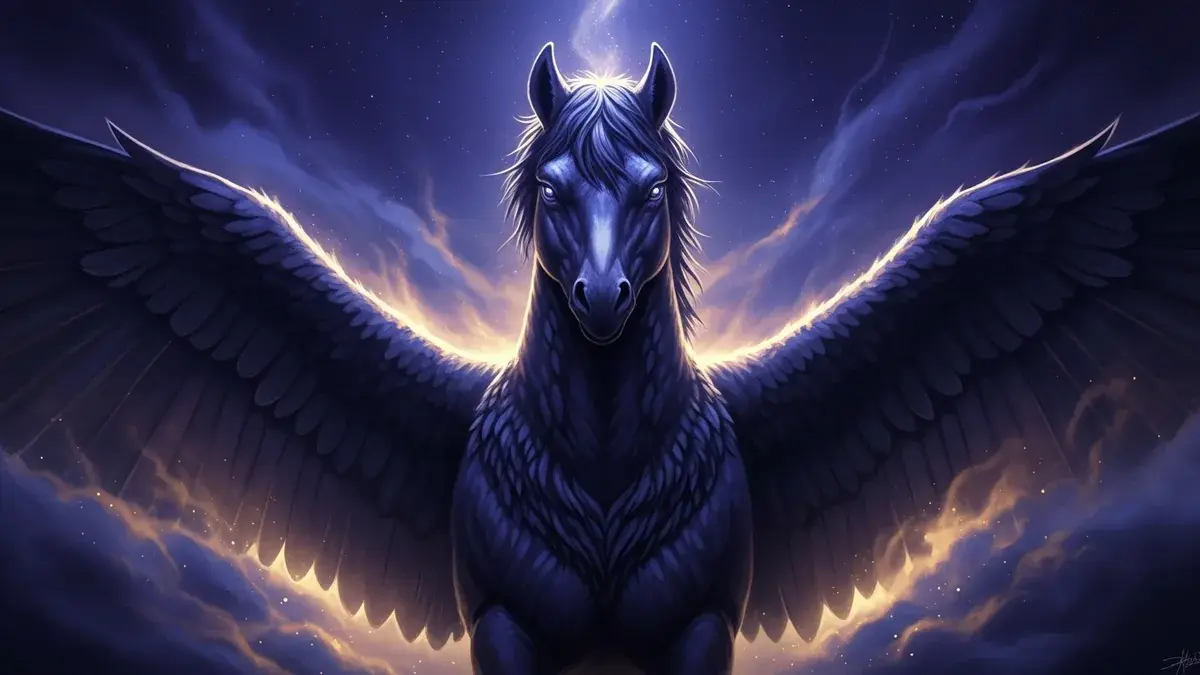
The Hippogriff symbolizes the union of opposing forces — masculine and feminine, air and earth. It represents consummate love triumphing over deep-seated conflict, since it was born from a Griffin and a mare, creatures traditionally seen as natural enemies. As a spirit animal, it signals achievement against impossible odds: pursue big dreams, and love others fully and openly.
An almanac
- Core message
- Love overcomes deep-seated conflict
- Spirit animal
- Achieving the seemingly impossible
- Totem for
- Loyal, protective, beauty-loving souls
- Power animal
- Overcoming obstacles, finding true love
- In dreams
- Meaning shifts with the creature's pose
- Element
- Air (eagle) and Earth (horse)
- Word origin
- Greek híppos + Italian grifo
- Named riders
- Ruggiero and Astolfo, in legend
The Hippogriff is a striking hybrid invented in Renaissance-era literature, born of a pairing mythology insists should never happen. Half Griffin and half horse, it carries two forces that were supposed to remain enemies forever, and that tension is why its story has so much to say about love, ambition, and reconciliation. Its very existence is treated as a small miracle in the old tales — proof that what looks impossible can still take flight.
Origins & Core Meaning
The Hippogriff, sometimes spelled Hippogryph, was invented in 1516 by the Italian poet Ludovico Ariosto in his epic Orlando Furioso — a chimerical animal with an unlikely family tree, drawn from older Roman literary imagery of impossible unions rather than from an actual ancient Greco-Roman myth. Its father is a Griffin, the classic lion-bodied, eagle-headed guardian beast, and its mother is an ordinary mare.
What makes this pairing so remarkable is that Griffins were traditionally regarded as natural predators of horses, not partners to them. A creature born from two bloodlines that were supposed to be locked in opposition became, in the old stories, a symbol of love and unity triumphing over deep-seated conflict.
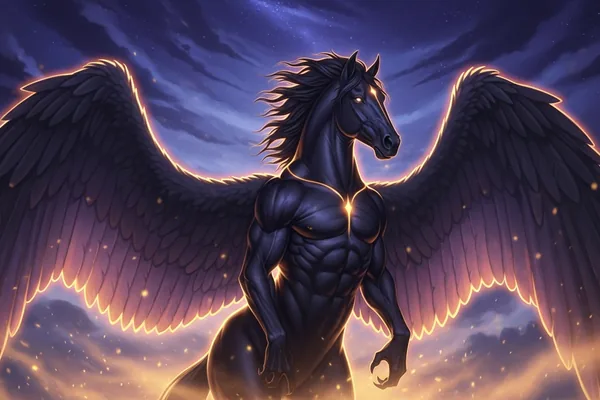
In form, the Hippogriff borrows selectively from each parent. From the Griffin side it keeps the feathered wings, the eagle's head, and wickedly sharp talons. But instead of a lion's hindquarters, it carries the body of a horse. The result blends two separate creatures into one, and that blend is where much of its symbolism comes from.
- Union of opposites — a hybrid identity that holds masculine and feminine forces in balance rather than conflict
- Air associations — through its eagle heritage and its reputed ability to circle the moon in flight, the Hippogriff is linked to intellect, swift decision-making, and a capacity for change
- Earth associations — through its equine heritage, it carries themes of grounding, stability, physical strength, abundance, and sensuality
- Triumph over impossibility — its very birth is framed as proof that what seems unattainable can still occur
The name itself is a compound coined for the creature: hippogriff joins the Ancient Greek híppos ("horse") with the Italian grifo ("griffin"). English readers met it slightly differently at first: John Harington's 1591 translation of Orlando Furioso rendered the creature as a "Griffith horse," and the now-familiar spelling only settled into English usage a few decades later.
Legends, Companionship & Folklore
Old tales describe sorcerers, wizards, and knights keeping the Hippogriff as a treasured companion, and heroes on a quest sometimes mounted the creature to travel at extraordinary speed through the sky. Even so, a Hippogriff is never truly tamed the way a horse might be broken to saddle, or so the old lore insists.
It shows itself only to those it judges worthy, and a rider experiences its presence only by its own choice — the Hippogriff allows the partnership; it does not submit to it.
That selectiveness is part of why it was so often treated as a trusted confidant rather than a mere mount. Its role in legend is protective: a guardian of people who demands real respect in return for its loyalty. Combined with its imposing build, this made the Hippogriff an emblem of beauty as well as resolve — a creature whose steadiness represents determination and the pursuit of lofty goals.
A medieval Latin phrase, "Jungentur jam grypes equis" — roughly, "now griffins are crossed with horses" — was used to describe something considered wildly improbable, a sign of how unnatural the Hippogriff's parentage was thought to be.
In Orlando Furioso itself, the Hippogriff carries two named riders through its adventures. The knight Ruggiero mounts it to rescue the captive Angelica, and later the paladin Astolfo borrows the creature from the warrior-maiden Bradamante to fly in search of Roland's lost wits, a quest that, fittingly, carries him all the way to the Moon.
That line about "griffins joined with horses" turns out to be older than the Hippogriff itself. It echoes a phrase from the Roman poet Virgil's Eclogue VIII, written some fifteen centuries earlier: "Iungentur iam grypes equis" — "now griffins will be joined with horses." Virgil used it as a stock example of the impossible, sung by a heartbroken shepherd insisting that unnatural unions like this would sooner happen than his lost love return to him. Ariosto's Hippogriff, then, gave literal form to a figure of speech that had already stood for the impossible for over a thousand years before a single feather of it was ever imagined.
Sacred Ties & Regional Lore
The Hippogriff's mythic parent, the Griffin, has a well-documented connection to Apollo, god of light, in classical Greek and Roman art: it appears as his companion and, in some depictions, draws his chariot. Local lore also places the Hippogriff's home near Céret, in what is now southern France.
Traditions differ sharply in how they read the creature's dual nature:
- Some folklore treats the Hippogriff as a symbol of consummate love, precisely because its parents were natural enemies rather than natural partners
- In some interpretations, Christian symbolism connects the Hippogriff to Jesus Christ and to the dual nature of the divine
- Other religious lore takes the opposite view: it casts the Hippogriff as a product of impurity, the offspring of a mare that mated outside her own kind with a Griffin regarded in this reading as a corrupt or "vile" creature
These conflicting interpretations show how the same hybrid birth could be read either as a triumph of love or as a transgression, depending on the storyteller.
Hippogriff as a Spirit Animal
Because its birth is treated as such a rare and improbable event, the Hippogriff represents achievement against the odds in spirit-animal lore. It's said to appear when you're facing a mission that feels overwhelming, with the message that nothing is truly impossible and big dreams are worth pursuing.
Since the creature embodies the joining of masculine and feminine divine qualities, it can also surface as a nudge to recognize that same sacred spark in the people around you, especially if you've been overly hard on yourself or have started feeling disconnected from those you love.
In matters of the heart, the Hippogriff is associated with new love arriving, an existing friendship deepening into romance, or a long-standing relationship that needs its passion reignited. Its guidance leans toward embracing others fully and open-heartedly, in keeping with its own origin story of love bridging supposed enemies.
Hippogriff as a Totem Animal
People who resonate with the Hippogriff as a totem tend to care about appearance and aesthetics, yet without being shallow about it: they look past surface presentation to the character underneath, in both themselves and others. They form deep emotional attachments to the people they love and are often looked to as an example of how to find genuine happiness in friendship and romance alike.
- Fiercely protective of the people they care about, and quick to open doors for a loved one pursuing a dream
- Easily trusted, often becoming the confidant or companion others turn to
- Drawn to beauty in nature and the arts, and to anything that engages the mind
- Philosophical yet well grounded, balancing big ideas with practicality
- Firm about personal boundaries, expecting the same respect they extend to others
- Calm under pressure, capable of fast, precise decisions even amid chaos
Hippogriff as a Power Animal
Call on the Hippogriff when you're working toward a goal and want help anticipating the obstacles that come with any meaningful pursuit. Its keen eyesight is associated with seeing situations from a fresh angle and getting past the smaller tests life throws in your path.
The Hippogriff is also invoked for matters of the heart: its own improbable parentage represents love overcoming the odds, which makes it a fitting ally when you're searching for a partner who feels impossible to find. Beyond romance, it supports humility, passion, compassion, honor, and a sense of humor in daily life.
Because the creature reveals itself only to those it deems worthy, and refuses to bend to outside control, it's also called upon when you need to stand your ground, demand respect, or resist simply following the crowd.
Hippogriff Dream Meanings
Dreaming of a Hippogriff carries different shades of meaning depending on what the creature is doing:
- A newborn Hippogriff suggests an unexpected surprise is coming, arriving when you least expect it
- A Hippogriff in flight points to a coming epiphany or burst of inspiration, and readiness to receive creative or intuitive guidance
- A Hippogriff on the ground may signal a need to get grounded and centered, or to hold firm on something
- A Hippogriff appearing in a vision generally can be a cue to look at someone through a different lens, so their deeper character becomes visible
- A Hippogriff on rocky or mountainous terrain symbolizes overcoming a serious obstacle, or reaching the end of a long, uphill struggle
Hippogriff in Modern Culture
The Hippogriff's old lore of pride, selectiveness, and earned trust found a vivid modern retelling in the Harry Potter books and films, where a Hippogriff named Buckbeak (later known as Witherwings) becomes a central character. Rowling's version keeps the creature's core personality trait intact: intensely proud, quick to react to insult, and entirely unwilling to be forced into anyone's service.
- Approaching one safely requires a bow: you maintain eye contact and wait for the Hippogriff to bow back before coming any closer
- Only once that respect is returned is a closer approach, or even flight, considered safe
- Wizarding law requires hidden, private care for any kept Hippogriff, which shows how wild and untamable the species remains even in a magical world
That etiquette is really the old legend in miniature: a creature that grants its trust only to those who approach it with genuine respect, never to those who try to command it outright. It's a detail modern audiences instantly recognized, because it maps almost exactly onto the Hippogriff's original folkloric character — proud, protective, and loyal strictly on its own terms.
Frequently Asked Questions
What is the Hippogriff's origin in mythology?
The Hippogriff comes from Greco-Roman mythology as the offspring of a Griffin and a mare, a pairing considered remarkable because Griffins were traditionally seen as natural adversaries of horses. That makes the creature's birth itself a kind of mythic anomaly.
What does the Hippogriff symbolize?
It represents the union of opposing forces — masculine and feminine, air and earth — along with consummate love, determination, and the achievement of goals that seem out of reach.
Why is the Hippogriff linked to love?
Because its parents, the Griffin and the horse, were regarded as natural enemies, the Hippogriff's existence became a folkloric symbol of love strong enough to bridge deep-seated opposition. The old saying about crossing griffins with horses, used to describe something wildly improbable, echoes the same idea.
What does the word 'Hippogriff' actually mean?
It's a compound coined for the creature itself, joining the Ancient Greek híppos ('horse') with the Italian grifo ('griffin'). Early English readers knew it under a slightly different name: a 1591 translation of Orlando Furioso called it a 'Griffith horse,' before the spelling settled into the hippogriff we use today.
Is Buckbeak from Harry Potter based on real mythology?
Yes. Buckbeak draws directly on Ariosto's Renaissance Hippogriff rather than being invented from scratch. J.K. Rowling kept the trait mythology always gave the creature: fierce pride and a refusal to be tamed, softened only by the ritual of a respectful bow, which mirrors the old lore's insistence that a Hippogriff only ever grants its trust rather than submits to it.
Sources
Claims on this page were checked against these published sources.
- Griffin
griffins were a great enemy of horses... [quoting Isidore of Seville] 'they are fierce enemies of horses.'
Read the source → - Eclogue VIII (P. Vergilius Maro)
Mopso Nysa datur: quid non speremus amantes? Iungentur iam grypes equis...
Read the source → - Hippogriff
In some traditions, the hippogriff is said to be the symbol of love, as its parents, the mare and griffin, are natural enemies.
Read the source → - Eclogue 8
impossible things will happen in consequence of Nysa's marriage
Read the source → - Pottermore's guide to Hippogriffs
wait for them to make the first move. Eye contact should be maintained. You should always bow ... will react quickly and decisively to anyone foolish enough to insult them ... taming a Hippogriff should only be attempted by an expert.
Read the source →