Mythical Creature
Harpie & Shrew Symbolism & Meaning
The storm-voiced women of wind and reckoning who refuse to be silenced.
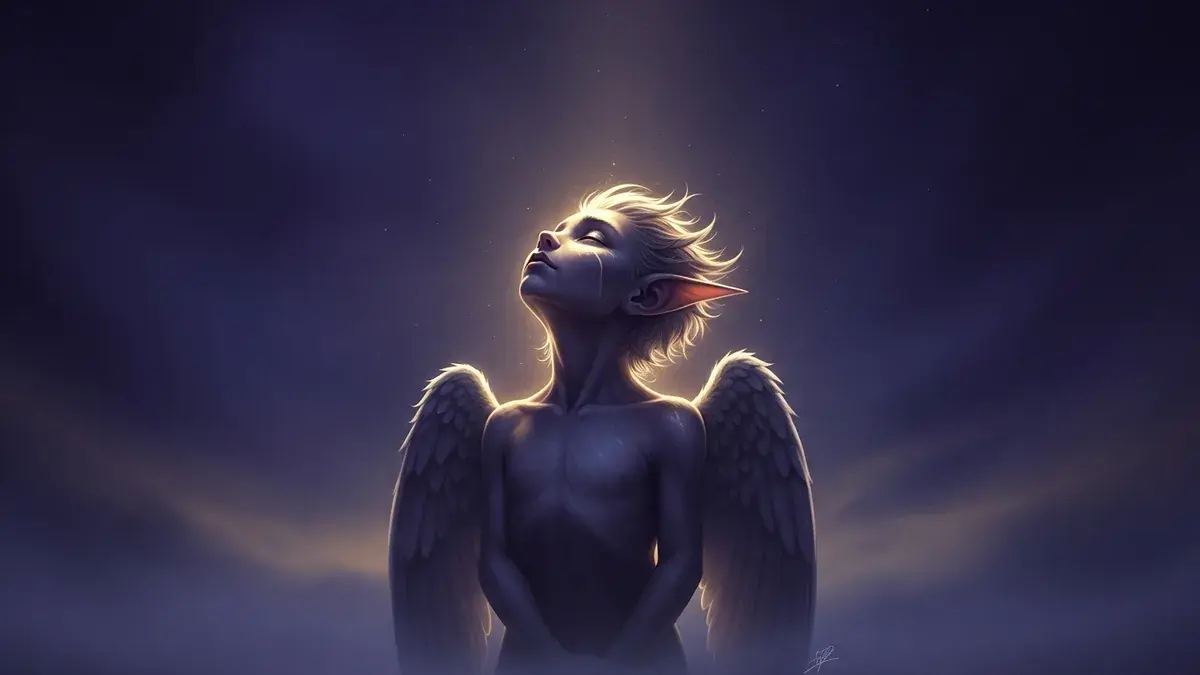
As a spirit animal, Harpie & Shrew symbolizes the fierce, unsilenced voice of a woman (or anyone) who channels rage and raw emotion into forceful, necessary change rather than suppressing it. Rooted in Greco-Roman myth and tied to the four winds, this figure is sharp-minded, assertive, and quick to sense injustice, with little patience for softening a message to keep others comfortable. When it appears, it's a sign to stop avoiding the storm gathering around or within you and use its force to speak the truth you've been holding back.
An almanac
- Core message
- Speak the truth others silence
- Spirit animal
- Storm-voiced, fierce, unapologetic power
- Totem for
- Sharp-minded, justice-driven truth-tellers
- Power animal
- Use sparingly to dismantle what must fall
- In dreams
- Trust your anger's urgent message
- Element
- Air — yellow and white
- Named Harpies
- Aello, Ocypete, Celaeno, Podarge
- Word root
- Greek harpyia — "snatchers"
Half woman, half bird, and wholly impossible to ignore, the Harpie occupies one of the more contested corners of Greco-Roman myth. Ancient writers couldn't agree on whether she was lovely or loathsome, and that disagreement is exactly what makes her symbolism worth unpacking. Paired here with Shrew — a name later used for fierce, outspoken women more broadly — this figure carries the charge of the four winds and the discomfort of a culture that didn't know what to do with female power.
Origins in Greco-Roman Myth
The Harpie appears across a range of classical sources, and no two writers pictured her quite the same way. Hesiod's account softens her considerably: he names two Harpies, Okypete and Aello, and describes them as beautiful young women with flowing hair, their bird bodies treated almost as an afterthought.
Aeschylus takes the opposite view, casting her as grotesque and monstrous, a hybrid form built to unsettle rather than charm.
That split matters. The Harpie wasn't a fixed figure; different eras and different authors kept redrawing her to fit their own anxieties. Virgil adds another detail, giving her clawed hands (talons rather than fingers), and describes her carrying off victims — often children — to a hidden home on the islands known as the Strofades. Crete also shows up in the tradition, with a particular cave associated with her presence there.
Behind these individual portraits sits a family tree worth naming. Hesiod's Harpies — Okypete and Aello — are joined in later sources by Celaeno ("the dark one"), added by Virgil, and Podarge ("fleet-foot"), already known to Homer. All are said to descend from Thaumas, a minor sea-god, and the Oceanid Electra, which makes the Harpies sisters to Iris, goddess of the rainbow. One sister carries messages between gods and mortals along a bow of light, while the others answer for the wind's less gentle moods.
Wind, Air, and the Four Directions
Because her body is largely that of a bird, the Harpie is bound up with flight and, more specifically, with wind itself. Some interpretations go further and treat her as a kind of elemental — not good, not evil, simply the raw force of moving air given shape. Under this reading, she becomes linked to the four named winds of classical tradition:
- Boreas, the North Wind
- Eurus, the East Wind
- Zephyrus, the West Wind
- Notus, the South Wind
Her color associations follow from this elemental root as well: yellow and white, the shades traditionally tied to the Air element in symbolic systems. Some tellings dwell only on wind's destructive side, the part that flattens and uproots, and skip over the fact that wind also clears the air, cools things down, and carries seeds to new ground.
A Monster Shaped by Fear of Women
It's worth naming plainly what's happening underneath these myths: the Harpie's reputation for ugliness and menace lines up closely with how ancient patriarchal societies treated women who used their voices forcefully. A being who is loud, assertive, and hard to control gets recast as frightening, even monstrous, regardless of whether her actions warrant it.
This pattern shows up in how blame gets assigned within the myths themselves. When children vanished without explanation, people often pinned it on Harpies, said to have snatched the child away to the Underworld. Other versions have Harpies acting as agents carrying out Zeus's commands rather than acting on their own.
Either way, she is a symbol of loss of control — a stand-in for whatever a fearful culture couldn't otherwise explain. Even the era's goddesses weren't exempt: by the time Ovid, Virgil, and Hesiod were writing, feminine power of nearly every kind had already passed through this same suspicious lens.
Reclaiming Harpie and Shrew Power
Read outside their original, fearful context, Harpies point toward something far more constructive: women (or anyone) who channel the Air element — intellect, imagination, creativity, speech, and teaching — into a forceful, undeniable message. If this energy resonates with you, it may show up as a pull toward writing something that challenges accepted ideas, or as an assertiveness that some find intimidating but that is nonetheless essential to what you're here to do.
The term Shrew works the same way. Beyond naming a small mammal, it has long been shorthand for an archetype of forceful, unapologetic women, a category that also covers the Furies. Like the reclaimed image of the Witch, Shrew and Harpie can be understood not as slurs but as descriptions of raw, warrior-like conviction.
The Furies (or Erinyes) fit neatly alongside the Harpies here: subterranean goddesses of vengeance and justice, tasked with punishing broken oaths, disrespect toward parents and elders, and violated hospitality — the social order more broadly, not one gender's transgressions alone. Some traditions also draw a line between this energy and the asteroid Lilith, associated with rebellion and creativity born from unfiltered emotion.
Harpie & Shrew as a Spirit Animal
When this spirit animal enters your life, it often signals that it's time to make room for rage and raw emotion rather than suppress them. A storm may be gathering around you, or already brewing inside you, and the instinct to fear that storm misses the point — the goal is to use its force to drive real change.
If you've been sitting on a challenge to the status quo, waiting for a more comfortable moment that never arrives, this spirit may show up precisely to name the tension you've been avoiding. It can lend you the sharpness and ferocity needed to get an urgent message across, especially if you've spent years being told to soften your voice or stay quiet.
When Harpie & Shrew energy arrives, trust the instinct telling you to speak the thing no one else is willing to say.
Harpie & Shrew as a Totem Animal
People who carry this totem tend to move through the world with a quick, sharp mind. As a child, you may have been the one who interrupted class to point out something that didn't add up — precocious to some adults, exasperating to others, but always driven by a genuine sense of justice.
You likely aren't built for easy popularity, and that's fine by you: what matters more is doing what you know is right, even when it means stepping outside your comfort zone. People with this totem tend to earn respect over time rather than instant affection, because their integrity holds steady even under pressure.
Harpie & Shrew as a Power Animal
Call on this power sparingly, and only once you're genuinely ready for change. When it enters your life, it can dismantle structures you'd assumed were permanent — but only because that collapse was necessary to move you forward.
Lean on this power, too, when you need to stay true to a message under pressure, drawing on the force of intense emotion, anger included, to push back against whatever status quo is holding you in place.
Harpie & Shrew in Dreams
Meeting these feathered figures of feminine power in a dream is often a cue to start listening to your own instincts. Anger and fear aren't comfortable to sit with, but the raw emotion behind them may be trying to reach you with something important — a message you need to deliver more forcefully than you have been.
These dreams can also point toward change that looks like destruction from the outside but is actually necessary movement forward. Just as nature holds both the calm sunset and the howling storm, the dream may be nudging you to stop avoiding the harder weather and let it push you toward growth.
The Curse of Phineus and the Wings of the Argonauts
One of the Harpies' most detailed appearances in myth has nothing to do with wind symbolism and everything to do with a very specific cruelty. Phineus, a seer-king, was punished by the gods with a curse crueler than blindness alone: every time food was set before him, the Harpies swept down and snatched it away or fouled what they couldn't carry, leaving him permanently, agonizingly hungry.
Relief came from an unlikely direction. Among Jason's Argonauts were the Boreads — Zetes and Calais, winged sons of the North Wind Boreas — who could match the Harpies wingbeat for wingbeat. They chased the tormentors off across the sea, a pursuit that ended only when the Harpies scattered for good, one plunging into a river called the Tigris and the other reaching the Echinades islands. Freed from the curse at last, Phineus could finally eat.
Virgil's Aeneid gives one of these same Harpies, Celaeno, a second scene to play, and it isn't kind either. When Aeneas and his fleet, fleeing the ruins of Troy, land on the Strofades and raid a flock of cattle there, Celaeno curses them with a prophecy: before they found their promised city, hunger will grow so severe that they'll be driven to eat the very tables they're dining from. It's an oddly specific, almost darkly funny detail to plant inside an epic about founding Rome, and it makes the point plainly: the Harpies' power was less about stealing a meal than about the message the hunger was made to carry.
The Real Shrew's Sacred Place in Older Mythologies
Long before Shrew became shorthand for a difficult woman, the small mammal held a genuinely sacred role of its own in ancient Egypt. Egyptians linked the shrew to Horus of Letopolis and honored it as a blind, nocturnal aspect of the falcon god, paired with the sharp-eyed ichneumon (mongoose) as his daytime counterpart. Together the two animals stood for sun and moon, day and night, sight and blindness resolved into one divine whole. Shrews were mummified and offered at animal necropolises across Egypt as part of this cult, treated not as vermin but as guardians of the god's more vulnerable, nocturnal half.
Across the ocean, Native American traditions tell their own version of an underestimated creature earning its place. In Miwok legend, it's a pair of shrews — not some larger, more obviously heroic animal — who manage to steal fire for the people, a detail that fits the shrew's long reputation for punching above its tiny weight. Inuit tradition tells a gentler origin story: Raven, the great creator figure, brings shrews into being simply as an act of whimsy, life added to the tundra for its own sake rather than for any grand purpose.
Both traditions land on something the reclaimed Shrew archetype already senses instinctively: ferocity and smallness were never opposites. The animal has spent millennia being underestimated, and just as often, quietly proving that underestimation wrong.
Frequently Asked Questions
Are Harpies good or evil in mythology?
Neither, consistently. Hesiod described some Harpies as lovely young women, while Aeschylus portrayed them as monstrous. Some traditions treat them as neutral wind elementals — forces of nature rather than moral agents, closer to a fierce storm than a villain.
Why are Harpies linked to the four winds?
Because a Harpie's body is mostly that of a bird, she was closely tied to flight and to wind itself. Some interpretations connect her directly to Boreas, Eurus, Zephyrus, and Notus, the classical North, East, West, and South Winds, so she is treated as a personification of moving air itself.
What does the term Shrew have to do with Harpies?
Beyond naming the small mammal, Shrew became shorthand for an archetype of assertive, outspoken women, a category that also included the Furies. Like Harpies, Shrews were maligned in a patriarchal context, but the label can be reclaimed as a marker of conviction and an unwavering voice.
Where does the word "harpy" come from?
It traces back to the Greek harpyia, meaning "snatchers," rooted in the verb harpazein, "to snatch" — the same root that gives English the word rapid. The name reached English by way of Old French and Latin in the late 14th century, and by around 1400 it had already picked up a second life as an insult for a greedy, grasping person, apart from the mythological creature itself.
Is the harpy eagle related to the myth?
Only in name. The harpy eagle is a real, very large bird of prey found in Central and South American rainforests, named after the mythological Harpies for its fierce reputation and formidable talons rather than any literal descent from them. It's one of the rare places where the myth's imagery migrated directly into modern biological naming.
Did ancient Egyptians see the shrew as sacred?
Yes. The shrew was linked to a blind, nocturnal aspect of the god Horus of Letopolis, paired with the keen-eyed ichneumon as his daytime counterpart. Shrews were mummified and offered at animal necropolises across Egypt, treated as guardians of the god's vulnerable night-side rather than as pests.
Sources
Claims on this page were checked against these published sources.
- Harpy - Wikipedia
the Harpyiai (Harpies) of the lovely hair, Okypete (Ocypete) and Aello, and these two in the speed of their wings keep pace with the blowing winds
Read the source → - Erinyes - Wikipedia
chthonic goddesses of vengeance in ancient Greek religion and mythology... the Erinyes, that under earth take vengeance on men, whosoever hath sworn a false oath
Read the source → - harpy (n.)
The Greek term literally meant "snatchers," likely connected to harpazein, meaning "to snatch." This root word also relates to the modern English term "rapid."
Read the source → - Figure of a Shrew, Ptolemaic Period
In ancient Egyptian mythology the shrew was closely associated with the ichneumon. The shrew represented the blind aspect of a solar deity whose complement, endowed with keen eyesight, was understood to be the ichneumon.
Read the source → - Messengers to the Gods
Shrew and mongoose mummies were buried with falcon mummies to protect the falcon (representing the god Horus) from the snake god Apep at night.
Read the source → - Native American Shrew Legends, Meaning and Symbolism
It is two shrews that steal fire for the people in Miwok legends... Raven creates shrews as an act of cheerful whimsy-- similar to butterflies in more southerly climates.
Read the source →