Mammals · Spirit animal
Zebra Spiritual Meaning & Symbolism
Individuality within community, balance between opposites, and a freedom that has never been tamed
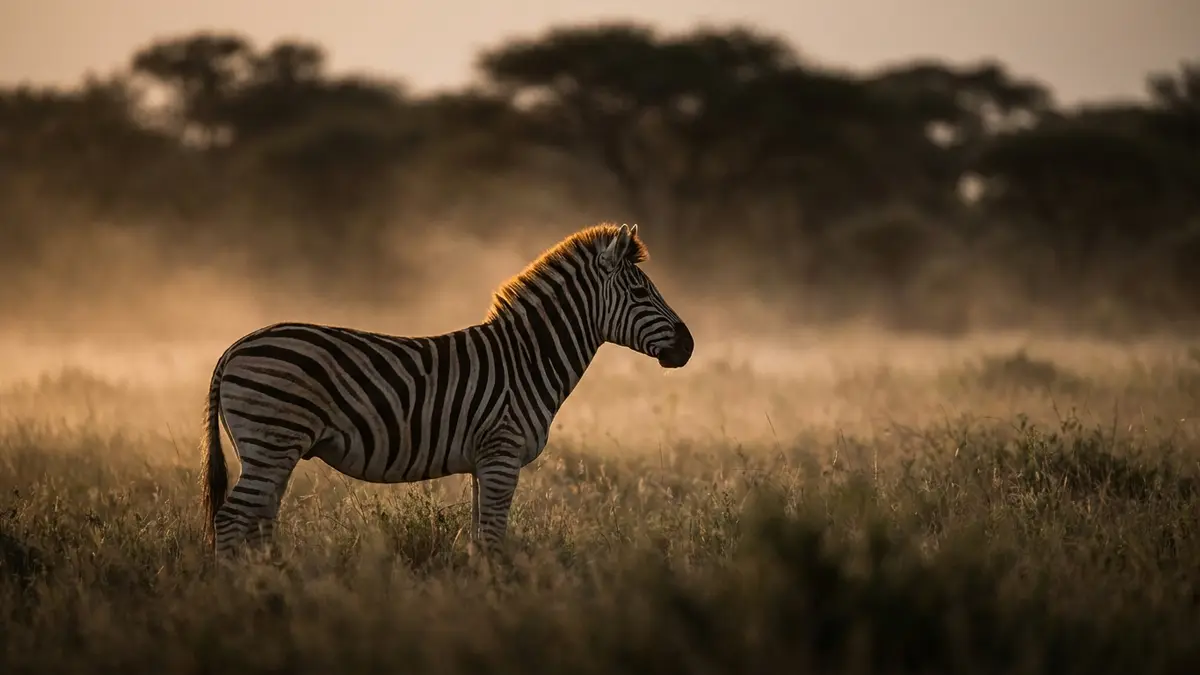
Zebras symbolize balance and freedom. In the spirit animal world, a zebra tends to show up when you need to consider something from a new angle, when fairness is important in a conflict, or when something chipping away at your independence. It often appears when life has tipped out of balance—usually due to work crowding out home and relationships.
An almanac
- Core message
- Belonging to a group without losing your individuality
- Spirit animal
- New perspective on a stuck problem; fairness in conflict
- Totem for
- Direct, team-oriented people who avoid the spotlight
- Power animal
- Restoring equilibrium and blending in without disappearing
- In dreams
- Life out of balance, often work crowding out home life
- Element
- Fire (Feng Shui)
- Species
- Plains, Mountain & Grévy's zebra
- Untamed by
- Capture myopathy, not just temperament
No animal has a personal identity as distinctive as the zebra, with its black-and-white coat that's as unique as a fingerprint. It probably explains why this quiet plains-dweller has become a symbol of individuality in a group. The black-and-white pattern also reflects the older idea that opposites can exist without canceling each other out. This is what it means when a zebra shows up as your spirit guide, totem, or power animal.
Zebra Symbolism & Meaning
"Zebra" comes from Latin roots with a hint of horse, which might shed some light on their symbolism.
The stripes certainly draw comparisons to yin and yang, alluding to balance in two opposite elements.
Since no two zebras share a pattern, they've become a kind of personal identifying mark, like nature's own version of a fingerprint.
While it's believed that zebras use those stripes for cover to hide from predators, it seems more likely they're used to scare off biting flies. This is because zebras aren't naturally shy about predators. They're social and active, don't appear to take the typical predator precautions like staying out of sight, and the stripes don't appear optimized for camouflage at all.
This lends zebra a different meaning, especially in the context of herds—the "Zebras post a sentry while others rest" pattern (in other words, shared vigilance) means zebras are typically thought of as balancing personal awareness with group safety. Without their collective effort to stay safe (including a leader of the pack and herds that act together), it's not likely zebras could do as well in the wild.
Like horses, zebras are fast and can be mighty kickers when threatened. Though zebra follows a strong matriarchal code of social behavior (with one male herd leader also overseeing), zebras' quick action and boldness represent that protection in balance with drive and defense from harm.
Researchers have provided some evidence that this fly avoidance theory is correct (more than other theories). When comparing horses and zebras in trials where horseflies approached both animals, the flies struggled to land on the striped coat. They bounced off or skidded away rather than sticking on as you would expect with an animal as solidly built as most horses.
Meanwhile zebras' unsteady defenses also played a role. Zebras instinctively jumped or flicked around far more often than horses would when bitten.
Zebra Spirit Animal
If zebra makes a spirit visit, it invites you to move past a familiar problem from a new angle. We stand so close to obstacles that we rarely see a way around them, but zebra points you toward that wider perspective.
Zebra nudges you to go for fairness and objectivity when negotiating a dispute or rocky relationship. If you're questioning your identity, zebra says it's time to fully claim your path instead of second-guessing it. Self-acceptance is the first step toward group belonging. Zebra shares horse energy and moves fast; if you've been idling in procrastination or gossip, zebra says it's time to get moving.
And if someone is trying to chain your freedom, zebra's answer is simple: break free, refuse the leash, and run toward your own autonomy.
Does Zebra fit you?
Tap the ones that sound like you — 6 traits, no right answer.
0 of 6 Nothing picked yet — start tapping.
Zebra Totem Animal
The zebra totem symbol is for people who thrive when they work together as part of a group or a team, but who aren't really interested in being the one to take charge and call the shots, which matches how zebras spend their time moving in groups. People with this totem are as direct as zebras, meaning you say what you mean and aren't into mixed messages or playing games.
If it comes down to it, you do try to compromise to keep the peace or get along with other people who seem to be competing with you. At some point, though, you're good at drawing a line in the sand if push comes to shove. For romantic relationships, people with your totem are too independent-minded for partners who want to control them or "tame" them.
You're at your best as part of a group solving a difficult challenge when everyone gets their fair share of work done instead of trying to compete with each other.
Zebra Power Animal
When your sense of balance has been disturbed, from others' demands or from too much on your plate, bring in zebra power. Zebra energy challenges you to regain that footing, instead of tipping over.
Zebra also helps you blend into a crowd for safety without completely fading out. It teaches the skill of being present without being obvious.
Call on zebra when tension is growing at home or in your community. Use this symbol as a starting point for meditation when you need a fresh perspective to work out a conflict.
Across cultures
3 traditions — pick one to read its take.
Native American Zebra Symbolic Meanings
Zebras are not native to North America, so they don't play a role in most Native American traditions. The few times they're mentioned, they're often talked about as something like: mental clarity, equilibrium, quick thinking, and self-assurance.
Zebra as an African Animal Symbol
Zebras are all over Africa, and that's where their symbolism is deepest. Botswana's national coat of arms has two zebras, and in the Ivory Coast, carved wooden masks mix lots of animals, including zebras, to talk about strength.
People tell all kinds of stories in Africa to explain the stripes on a zebra. The best-known one goes like this: The animals were just settling the land when a drought came. A big baboon decided that he owned all the land and water. When zebra got there and tried to get some water for his son, the baboon said he had to fight for it.
So zebra kicked at him. His kick sent the baboon flying away backward so hard that he lost all the hair on his rear end—so that's why you can see a bald patch there today. Zebra stumbled into a fire while running away and got burned by it—so there are burns on his coat now too.
After that day, zebra didn't go near water or open grassland again.
Far Eastern Zebra Symbolic Meanings
The zebra is associated with creative spark, composure, and originality in Feng Shui practice, and so it can be used to decorate spaces to welcome more of that fire element. This involves an image of a zebra or even a decorative pillow in zebra print.
In East Asian folklore, zebras don't carry very much symbolic weight outside of this decorative use.
Zebra in Dreams
The appearance of a zebra during a dream indicates your waking life has fallen out of balance, most commonly because work keeps eating into time spent on home and your relationships. The zebra foreshadows this need to address what you've been neglecting.
Zebras running away from you in your dreams are good signs. It means you can stick with the low-risk choices, even if some option looks more appealing, and trust that patience will lead you to a better outcome.
Dreams of grazing zebras portend an alteration in your life where remaining coolheaded is crucial.
Dreams about a herd of zebras moving as one suggest you should see the bigger picture and resist picking sides until you know the whole truth.
Zebra Spiritual Meaning
Zebras in mythology usually represent the idea that individuality and identity can coexist with belonging and togetherness. They come to symbolize the best of both worlds—standing firm in your own truth while still looking out for the people around you.
The zebra's striking black-and-white stripes tell us to hold onto both ends of something that seems opposed, like light and dark or self and community, without ever letting one side win out. The zebra gives you a reminder that strength is balanced, not just solitary.
The Three Zebra Species
Not all zebras go through the same experiences in life. Three different species live with their stripes: the plains zebra, the most widespread and smallest of the three, which is found across East Africa’s open plains and scrubby woodlands further south; the mountain zebra, recognizable by its gridiron pattern across its rump, which lives on rocky, arid hillsides in Namibia and Angola; and Grévy’s zebra, the largest of the trio, which wears the thinnest and most tightly packed stripes.
That last species carries an unexpected message for anyone drawn to zebra’s shared nature as well as its solitary expression. Plains and mountain zebras live their whole lives in close-knit herds that stay together, but Grévy’s zebras have no permanent herds and no lasting bond between males and females. If this variety of zebra has caught your eye, consider it a suggestion that your own style of freedom may include an equal dose of solitude or self-reliance.
All zebras have one thing in common: they all live their lives wearing a stripe pattern that is unique to each of them.
Why Zebra Can Never Truly Be Tamed
There's a very good reason why zebras are so hard to tame: their bodies do the taming for them. The best-known explanation used to be that zebras are just too mean to break. Scientists looking at the traits linked to taming have found that aggression and social structure aren't key factors in predicting whether a species is easy to domesticate, after all.
They think they've hit on the explanation: the thing that gives zebras the will to keep running is what makes them such a danger. When they're caught up in restraints, a surge of panic hormones might overwhelm their hearts and muscles, potentially even be fatal. Horses, shaped by hunting without many predators around, simply outgrew this nasty habit.
But when you see zebra as your spirit guide, it's not a metaphor about resistance for its own sake. Zebra's relationship with captivity was sculpted by millennia of predation: every part of its body was wired to run from danger. Freedom isn't defiance in the face of fate. It's a function of your very existence.
Zebra in Biblical & Christian Symbolism
Zebra never appears in scripture, since it's an animal of Africa, not the Near East. But that hasn't stopped modern Christians from reading spiritual meaning into its coat: white stripes stand for purity and black for hardship, so zebra represents a life that holds both at once. In a different sort of reading, believers look to the herd's social bonds. Zebra prefers company to solitude, and herds are tight-knit in their chosen diversity. This stands as more symbolism than doctrine, since it has no scriptural basis.
Frequently Asked Questions
What does a zebra symbolize spiritually?
A zebra symbolizes balance, individuality, and freedom. Its characteristic black-and-white stripe pattern shows all three.
What does it mean when a zebra appears in your dream?
Dreaming of a zebra often points to a life out of balance, usually because of the tension between work or obligation and personal time. A zebra running away from you suggests that you'll successfully resist the temptation to make a risky choice.
Is zebra a totem for introverts?
If zebra were a totem for introverts, you'd expect them to prefer supporting roles inside a group and value community and safety in numbers. Indeed, they do, but not at the expense of independence or personal space.
Are zebras mentioned in the Bible?
So, does the Bible mention zebras? No. The word “zebra” appears nowhere in the text, for one thing, since zebras are natives of Africa.
It's true that some modern Christians link the black-and-white patterning of zebras' coats to the idea of “purity meeting hardship”—but that's a secondary interpretation rather than anything that comes directly from scripture.
Why have humans never managed to domesticate zebra the way they did horses?
Previous explanations for why humans couldn't tame zebras cited aggressiveness, but recent research suggests a more likely explanation. Zebra retained a more pronounced stress response to predators than horses do, which made them vulnerable to a condition called capture myopathy. Horses have evolved to resist this condition, so they have been successfully tamed by humans in the past.
Are all zebra species the same, spiritually speaking?
No, not quite. Plains and mountain zebras form very tight family herds, which matches zebra's usual community-and-individuality reading as a totem. Grévy's zebra, on the other hand, forms no permanent herd at all and may be alone a lot. If a solitary Grévy's zebra has caught your attention, this could mean that self-reliance and a willingness to go it alone is your version of zebra's ideal freedom—perhaps not group belonging.
Zebra also represents
- Other animals that represent freedom →Alongside Eagle, Horse, Hawk, Butterfly
- Other animals that represent peace →Alongside Dove, Crane, Deer, Elephant
- Other animals that represent resilience →Alongside Cockroach, Camel, Salmon, Turtle
- Other animals that represent family →Alongside Elephant, Wolf, Penguin, Ant
Sources
Claims on this page were checked against these published sources.
- Zebra
The English name 'zebra' derives from Italian, Spanish or Portuguese... may originate from Latin equiferus ("wild horse")
Read the source → - Grant's Zebra
While most of the herd sleeps, a few members stay awake to stand guard.
Read the source → - Coat of arms of Botswana
On either side a zebra the dexter supporting a white elephant's tusk the sinister a green stalk of sorghum
Read the source → - Benefits of zebra stripes: Behaviour of tabanid flies around zebras and horses
striped surfaces prevented flies from making a controlled landing but did not influence tabanid behaviour at a distance
Read the source → - Zebra
Plains and mountain zebras are social herd animals, living in family groups... Grevy's zebras do not have a herd system, and males and females have no permanent bonds.
Read the source → - Why Were Zebras Not Domesticated? A Review of Domesticability Traits and Tests of Their Role in Ungulate Domestications with Macroevolutionary Models
species with a susceptibility for severe cardiac damage due to overexertion in response to capture were less domesticable... ancestral horses lost the vulnerability to capture myopathy consequent to a reduction in predation pressure
Read the source →