Mammals · Spirit animal
Polar Bear Spiritual Meaning & Symbolism
The patient sovereign of the ice, carrying quiet strength, solitude, and the wisdom to wait for the right moment.
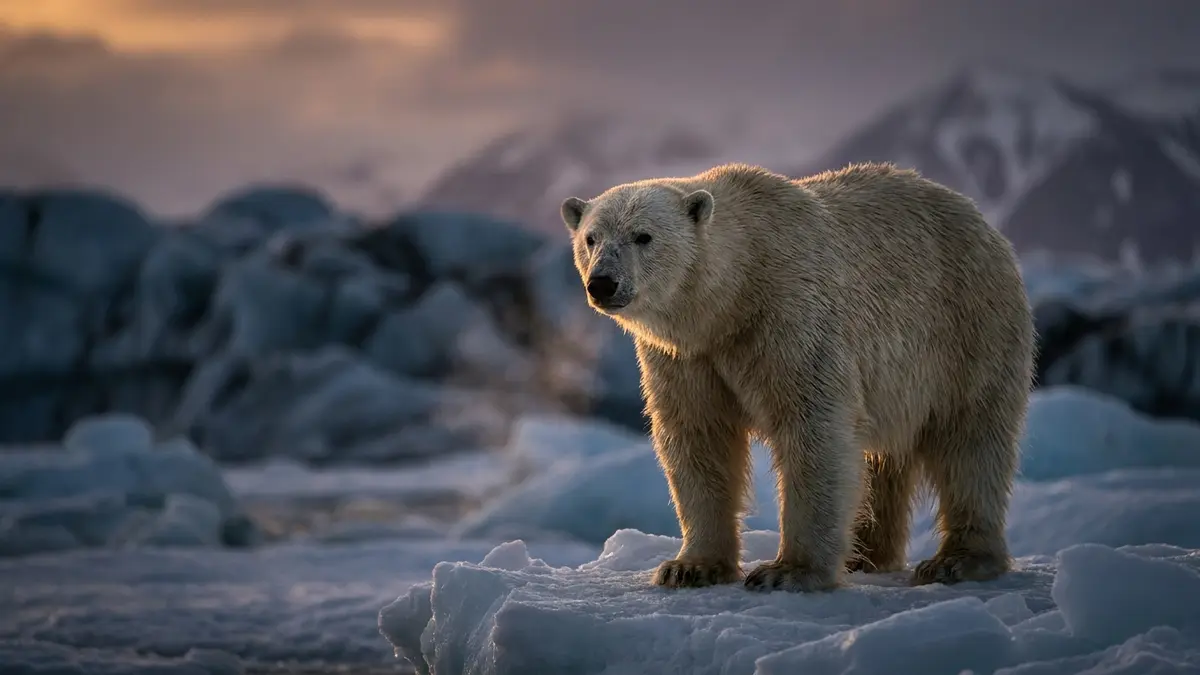
As a totem or spirit animal, the polar bear asks you to be strong yet calm and collected. It also calls on you to be patient and self-reliant.
Some people see a dream of a polar bear and take that as a sign of good luck on the way. Others look at it as a sign that something in them that has been long dormant is starting to stir.
An almanac
- Core message
- Power doesn't have to be loud
- Spirit animal
- Resolve during fear or fatigue
- Totem for
- Protective, patient defenders
- Power animal
- Astral travel and grounding
- In dreams
- Sign of good fortune ahead
- Cultural roots
- Inuit tradition, spirit Nanook
- Deep ancestry
- Split from brown bears ~340,000 years ago
- Shadow legend
- Nanurluk, the iceberg-sized sea bear
Few creatures can dominate a landscape like a polar bear can dominate the Arctic. The majestic and powerful white hunter with its snow-white coat has long attracted the fascination of people because of its traits that help it survive in the harshest terrain in the world: camouflage, patience, solitary strength, and its uncanny sense of direction.
Polar Bear Symbolism & Meaning
Polar bears are highly elusive animals. Their white coat helps them blend in with their environment of snow and ice, and they can spend a lot of time crouched low on moving ice floes to hide their shadows. These traits make the polar bear a master of timed appearances.
That's how polar bears hunt too: They'll wait silently for what can seem like hours and then attack at the right moment. The polar bear is a reminder that meaningful things take time to develop. Sometimes you need to disappear from sight for a while before you reappear at the right moment.
The polar bear can stand upright on its hind legs and has been observed assuming human postures. This has led some people to believe the bear's spirit can come back as a shaman or healer. Indeed, the ability of the polar bear to travel across frozen water and sometimes vast distances is symbolic of hardiness.
Some traditions hold that polar bears move across spiritual pathways that lead toward the north, a place associated with authority.
Polar Bear Spirit Animal
A polar bear comes to you as a spirit guide when you're afraid, anxious or exhausted. This bear fills you with the strength to face anything, letting you know that there's nothing to be afraid of. It can also serve as a guide through higher realms, transporting you safely across them.
When life gets busy and seems overwhelming, instead of turning to more distractions to drown out your fears and questions, this spirit guide reminds you that silence is just as powerful as noise. Taking time out from the busy world allows you to hear your own thoughts and figure out your priorities and desires for yourself.
The presence of a polar bear carries with it an inner authority that does not threaten but asserts its strength in a calm way. This same calming energy permeates those who spend time with the polar bear as a spiritual guide and leaves them feeling stronger and more confident, ready to pursue their goals without fear.
Does Polar Bear fit you?
Tap the ones that sound like you — 6 traits, no right answer.
0 of 6 Nothing picked yet — start tapping.
Polar Bear Totem Animal
A bear teaches the art of standing still and guarding what you own. This is not to say you're reckless. In the right circumstances, you'll fight. When you do, you'll do so tenaciously, if slowly, purposefully holding your position until your goals are achieved. We all get pushy sometimes, but given your patience and resourcefulness, few really get the chance to push you.
People with the bear as a symbol are gifted with a hidden, private side that fosters a mysterious quality to their character. Many women with this symbol are highly protective mothers who try to look after everyone around them.
Polar Bear Power Animal
Invoke Polar Bear as a power animal when you're preparing for astral or dream travel, or when you need help shifting form or fading from unwanted attention. Its close bond with ice gives it a special talent for freezing conflict in place, a useful ally when you need to pause a volatile situation until tempers cool.
Call on this power animal, too, when your inner stores feel depleted, physically, emotionally, or spiritually, since Bear helps you locate whatever nourishment you're missing. It's a strong companion for fasting or other disciplined spiritual practice, and it reconnects you to the earth's subtler currents when you need grounding.
Because water and ice run through its symbolism, Polar Bear also teaches you to work with both the gentleness and the ferocity of these elements; their force can dissolve stagnant patterns. Strategy, adaptability, and raw survival instinct round out its gifts.
Polar Bear in Native American Symbolism
Polar bears have been a big deal among northern tribes and Inuit. The animals aren't so much _creatures_ as they are spirits who teach people how to hunt. In some Native American traditions, the shaman will turn to polar bears for all kinds of things: courage, ability to change forms, and heightened intuition.
Among the Inuit, there's this figure called Nanook who is the spirit guide of all the bears. They say he's almost human in nature. People say that Nanook judges who gets a successful hunt. Different families have places for offering polar bear knives and tools to honor him.
According to other Inuit traditions, there's an even mightier bear-spirit known as Torngarsuk. He looks like an enormous glowing polar bear that moves between worlds. Nanook governs the hunt itself while Torngarsuk is considered master of the "helping spirits".
When shamans encounter Torngarsuk, they consider it a contact with the ice itself.
Polar Bear in Dreams
What does it mean to see a polar bear in your dreams? A polar bear often symbolizes the rousing of something dormant within you, often an important event in your life or path. Keep that in mind when interpreting dreams with polar bears — maybe it's an indication of something real you'll need to face soon.
If you have some negative people around, try and stay away from them. Polar bears are often seen as signs of good fortune.
It can also be interpreted as an encouragement to meditate and learn more about spiritual things, using the image of the polar bear itself as a sort of bridge to your subconscious.
Dreams where a polar bear appears may feature scenarios like these: - The bear standing upright and making eye contact with you, sometimes read as guidance - Watching the bear hunt patiently on ice, indicating favorable outcomes ahead - Being approached by a calm bear without aggression - A roaring bear or an embracing one, which can indicate different life chapters starting
Polar Bear Spiritual Meaning
The main lesson the polar bear teaches is that strength doesn't have to be loud. The polar bear survives the world's harshest climate by being patient, remaining camouflaged, and traveling alone when necessary. The polar bear acts decisively as soon as conditions align. If you see a polar bear, you might want to pay attention to the fact that sometimes power and strength don't need to be loud.
The spiritual message of the polar bear is also that resilience doesn't have to become bitterness. Endure hardship, but don't become hardened so you don't have compassion anymore.
Legends of the Ice: The Nanurluk
Not every bear-spirit in northern lore is benevolent. Among the Inuit of the Kugaaruk region of Nunavut, storytellers still pass down the tale of the nanurluk, a legendary bear said to be the size of an iceberg, living beneath the sea ice and hunting whales, seals, and unwary hunters alike. Unlike Nanook or Torngarsuk, who reward respect with good fortune, the nanurluk is the Arctic's indifferent, consuming power: this landscape, and this animal, can turn lethal without warning.
Reading this figure alongside Polar Bear's gentler medicine rounds out the symbol: the same strength that grounds and protects you can, left unchecked or disrespected, become overwhelming. Traditional tellings resolve the tale through a hunter's quick thinking rather than brute force, a detail that echoes the wider teaching that patience and cunning outlast raw force, even against something the size of an iceberg.
An Ancient Survivor: Polar Bear's Deep Roots
Genetic studies suggest that the polar bear split away from brown bears around 343,000 to 479,000 years ago, which seems like a short time for a species to evolve so radically. It adapted its body for swimming and its coat for camouflage, and its diet shifted almost entirely to seal fat. This adaptation occurred during one of the fastest such adaptations in a large mammal.
Spiritually speaking, though, the speed of that process strengthens the polar bear's meaning rather than complicating it. Even when you remake yourself entirely, your strength follows you.
If you're carrying this energy through a period of rapid change, let the polar bear's ancestry remind you that adaptation and resilience aren't opposites.
Frequently Asked Questions
What does it mean when a polar bear appears in your dream?
A polar bear in a dream usually indicates that some significant change or challenge is coming up in your life. It's usually considered a good sign rather than a warning, though you may be tempted to get distracted by negativity during this time. To manage the change, it's important to stay grounded and avoid negative emotions. One helpful method for staying grounded is meditation.
What is the spiritual meaning of the polar bear?
A polar bear symbolizes patience, self-reliance and quiet power. It teaches the importance of keeping your compassion when you're enduring challenges.
Polar bears often work behind the scenes, or go unnoticed, until they strike. It's an important message to learn.
Is polar bear a good totem animal to have?
Yes, having a polar bear as your totem can be very helpful. A person with this animal as their totem can be resilient, protective, and willing to stand alone for something they value. They can also be skilled at timing their actions rather than reacting on impulse. These people tend to have a private, intuitive side.
What does it mean to dream about a polar bear attacking you?
There are two main symbolic interpretations for a bear attack in a dream. Some people interpret it as an omen that something dangerous is coming your way if you don't pay more attention to things, while others see it as representing your own inner strength trying to come out. So maybe if you have this dream, you can try facing what's making you run instead of just running away all the time because that never really does anything for anything.
Was the polar bear ever considered for Canada's national animal?
Yes, Senator Nicole Eaton made the proposal in 2011. She said that the polar bear was a fitting national symbol. The beaver, Canada's official animal since 1975, kept its title, but the proposal showed how popular the polar bear has become as a national symbol.
Polar Bear also represents
- Other animals that represent strength →Alongside Lion, Bear, Tiger, Elephant
- Other animals that represent resilience →Alongside Cockroach, Camel, Salmon, Turtle
- Other animals that represent patience →Alongside Turtle, Heron, Spider, Ant
- Other animals that represent intuition →Alongside Owl, Cat, Wolf, Raven
Sources
Claims on this page were checked against these published sources.
- Polar bear
Constantine John Phipps formally described the polar bear as a distinct species, Ursus maritimus in 1774, following his 1773 voyage towards the North Pole.
Read the source → - Nanook
Nanook 'was the master of bears, meaning he decided if hunters deserved success in finding and hunting bears and punished violations of taboos.' ... they offered 'the bear's spirit weapons and other hunting tools if it was a male, and needle cases, scrapers...and knives if it was female.' ... 'Bears would stay away from hunters who failed to pay respect.'
Read the source → - Torngarsuk: The Inuit Deity of Sky, Death, and Underworld
Invoked for healing and protection, this deity holds a special place in the hearts and minds of angakkuit (Inuit shamans), who call upon Torngarsuk's power in their mediations between the physical and spiritual worlds.
Read the source → - Polar Bears Diverged from Brown Bears Fairly Recently
the two species diverged between 479,000 and 343,000 years ago
Read the source → - The Giant Bear: An Inuit Folktale
One of the most terrifying creatures to be found in traditional Inuit stories is the nanurluk, a massive bear the size of an iceberg that lives under the sea ice.
Read the source → - Beavers can't cut it as national emblem, but polar bears can, senator says
it's time to trade in a '19th-century has-been for a 21st-century hero.'
Read the source →