Mammals · Spirit animal
Wolf Spiritual Meaning & Symbolism
Fierce loyalty to the pack and an untamed need for freedom, held together by instinct.
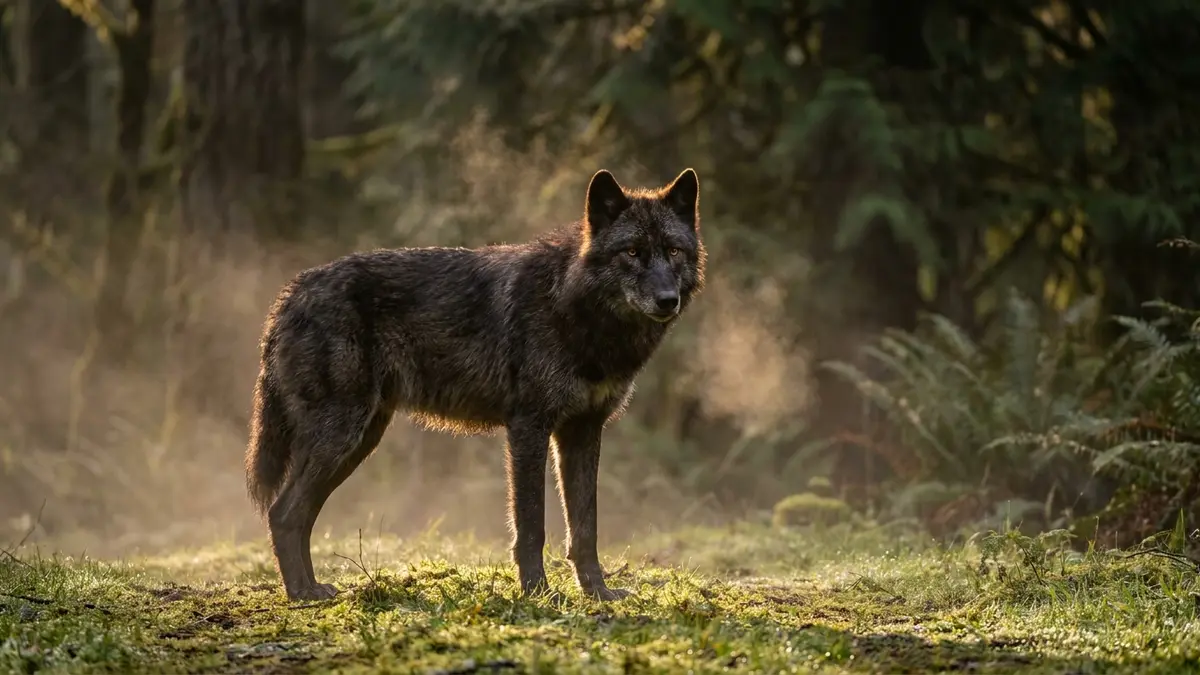
Wolf spirit animals embody loyalty, instincts and freedom. They appear when you feel the need to trust your inner knowing, protect loved ones, and balance closeness with independence. As totems they mark loyal, intuitive people who may be guarded after betrayal; in dreams, wolves can point to a boundary that needs defending.
An almanac
- Core message
- Loyalty and freedom in balance
- Spirit animal
- Trust your instincts, act on inner knowing
- Totem for
- Loyal, intuitive, independent people
- Power animal
- Confidence, boundaries and pathfinding
- In dreams
- Instinct, loyalty or a boundary to defend
- Cultural roots
- Native American, Celtic and Norse lore
- Sense of smell
- 200M+ scent cells — its sharpest sense
- Top speed
- 36–38 mph in short bursts
- Pack size
- Usually 5–8, sometimes dozens
- Mating
- Dominant pair often mate for life
- Wild lifespan
- 7–8 years (up to 20 in captivity)
- Conservation status
- Least Concern (IUCN); ~200,000–250,000 wild
The wolf is an animal that stirs feelings deep within us. On the one hand, it is a devoted family member; on the other, it is a symbol of untamed freedom — the loyal guardian of its pack and at the same time the lone hunter under the moon. That duality gives you some clues about why the wolf can be such an effective guide: it asks that we honor both our bonds with those around us and our independence from them.
Wolf Symbolism & Meaning
Wolf symbolism has three main ideas behind it: loyalty, instinct, and freedom.
Wolves live and hunt in closely knit packs, so they've always been a symbol of family, cooperation, and devotion. They're also symbols of the untamed wild — creatures that trust their senses and roam where they please.
The Wolf teaches us not to think of these qualities as opposites; you can belong somewhere without losing your freedom, and be independent without having to face life on your own.
Wolf Spirit Animal
For people who have a wolf spirit animal, that means they know how to listen to their instincts and act on them.
Wolf spirit animals often appear when our relationships or freedom are out of balance, so this could be warning us we're giving away too much, or holding others at too great a distance. This can teach us where loyalty meets independence.
Does Wolf fit you?
Tap the ones that sound like you — 6 traits, no right answer.
0 of 6 Nothing picked yet — start tapping.
Wolf Totem Animal
Wolf is an important animal spirit totem for people born with this animal as their spirit guide. They are faithful, intuitive, principled beings who protect those close to them without hesitation or second thought and read situations and people accurately most of the time.
They tend to become very distressed if they feel fenced in by rules that make no sense to them and they need freedom — either physically or creatively — so that they may roam. They also retreat into a guarded solitude when they feel as though people have betrayed them. Balanced, the Wolf makes for an excellent leader because of its natural trustworthiness.
Wolf Power Animal
Calling for Wolf's power-animal wisdom helps us trust our instincts and defend what matters to us. It gives us the confidence to stand by our own judgment, the courage to fight when we need to, and the loyalty to protect those close to us in times of stress or crisis.
Wolf can also help us find our way again after being lost. We all get turned around sometimes, and Wolf can show us which direction to head in order to reconnect with ourselves and come back to what really matters most to us.
Across cultures
3 traditions — pick one to read its take.
Native American Wolf Symbolism
Wolf symbolism is very powerful in Native American cultures, often representing qualities like courage, cooperation, devotion to community, the ability to teach others, and even pathfinding. Wolves are related to humans, so we should view wolves as fellow animals that should be respected but not feared. When you see a wolf, you may want to protect your tribe or walk your own path with integrity.
Wolf as a Celtic Animal Symbol
The wolf appears in Celtic lore as a wild animal with links to the cycles of the moon. The Celts saw wolves as forest guardians and guides who helped souls pass safely through the dark. Far from being villains, the Celts viewed wolves as protectors: loyal symbols of one's innermost nature.
Wolf in Norse Mythology
The great wolf Fenrir plays an important role in Norse mythology as a symbol of untamed, unstoppable force, while Odin kept two faithful wolves by his side called Geri and Freki. Wolf symbolism in Norse culture was therefore characterized simultaneously by immense power to be respected and unwavering loyalty freely given — strength and devotion spring from the same place.
The Lone Wolf and the Pack: What the Symbolism Gets Wrong
We're taught that there are two wolf archetypes: the dominant alpha wolf, and the lonely lone wolf. But those images grew out of research from decades ago that has been superseded by later studies.
First, let's talk about the alpha wolf. Back in 1947, a researcher studied wolves forced to live together without being able to relate to each other. That study became widely known and the term "alpha" entered the public consciousness as a result.
But later on, scientists realised this: in real wolf packs, nobody is alpha because everyone behaves with respect for family relationships — they're just following their parents around as if they were human kids. A mother-and-father wolf lead by hunting, feeding, and educating their young because those are the things that adults do; but once an offspring grows up and moves away to live its own life, that natural hierarchy dissolves.
It's like this: the pack is a family first.
Secondly, a lone wolf isn't usually lonely. In fact, they're often just moving between home territories in search of a mate, or leaving their birth pack so that they can live a full adult life. Wolves don't start living with other packs until after they have matured and leave to find their own place in the world.
It changes what we understand them to be: not permanent, dominant figures — or lone outsiders who can't get along. Instead, they're family units where all members are connected to each other, even when someone leaves so that they can find a new life for themselves elsewhere later down the line!
Black and White Wolf Symbolism
The black-coated wolf symbolism draws its shadow side from the unknown — which parts of yourself or situations have not been fully examined? Worth noting that the North American black coat traces to wolves that interbred with domestic dogs. The white wolf, however, carries an opposite charge: clarity and guidance, along with the sacred. It's a fitting emblem if you are crossing over from one place or person into another.
And finally, there's that common coat. Most wolves aren't black or white but mixed grey — hard to pin down. And that's often how we see them anyway: changing their appearance in every light and season. If you feel drawn by the wolf as a guide, perhaps the grey is a better emblem than the black-white contrast? It is adaptable, unshowy, not to mention difficult to categorise.
The Wolf Moon
The full moon in January is usually called the Wolf Moon. The name comes from the sound made by howling wolves. Wolves tend to breed in the middle of winter so it was probably about finding mates or staking their claim on territory.
Symbolically, this full moon marks when we are at our coldest and quietest part of the year. It asks us what is really important? What do you need before starting off again in the spring?
The Wolf Moon belongs to the theme of loyalty, family and sticking together to get through hard times (like the winter).
Wolf in Dreams
Dreaming of a wolf may reflect our instincts, loyalty and the boundaries we set ourselves. - If we dream of a calm wolf then it suggests you trust your instincts - A lone wolf shows that we need independence to be true to yourself. - An angry, threatening, wolf symbolises how we might react when our feelings are under threat - A pack or wolves in a dream tells us about our relationships with family, team mates and community. - And dreaming of a howling wolf may mean a message is trying to get out.
Wolf Spiritual Meaning
Wolf howls call people back to their instincts and true belonging. They teach that devotion doesn’t need a cage and freedom doesn’t require being alone. Following Wolf teaches us to trust our quiet inner knowing; to protect what we love; and to walk our own path with loyalty, and open eyes.
Wolf Symbolism in World Mythology
Among many cultures, including ancient Egypt, Rome, and early Turkic peoples, there are legends of a wolf caring for people. In ancient Egyptian mythology, Wepwawet — literally translated as "the opener of the ways" — was depicted with a wolf or jackal head. He was thought to guide pharaohs in battle and later guide souls through the afterlife.
The story of Rome's founding also involved a she-wolf, though this time it had nursed, not killed, abandoned infants Romulus and Remus in the city's Lupercal cave. This gentler image became a central symbol of Rome.
Among Turkic peoples, the legendary Asena found a wounded human boy, nursed him back to health, and later bore him half-wolf sons who founded the Ashina clan that would rule successive empires. Like many of these stories, Asena's legend shows how wolves could be seen as protecting rather than threatening.
Wolf Affirmations to Connect With Your Inner Wolf
Wolves, unlike many other animals, are pack hunters but will also happily roam alone. They teach us to trust our gut instinct even if we can't always explain it. We're loyal to the people in our tribe, whether it's just one person or our whole community.
If you have a wolf totem, remind yourself that it means:
- You know when to be with others and when you need time alone.
- You're loyal, but you don't lose yourself trying to please other people.
- You protect what you love without getting consumed by it.
- You trust your intuition even if you can't always put your finger on why.
The animal symbol's power is part of you already. It's the ability to hunt for whatever you need and choose your pack wisely. These aren't magic words — they're a reminder that you know exactly what to do.
Frequently Asked Questions
What does the Wolf spirit animal mean?
A wolf can symbolize loyalty, instincts, and freedom. If a wolf comes to visit in your life or meditations, it often means that you should listen to your intuitive guidance, protect the ones you love, and find a way to maintain close connections while also staying independent and free.
What is the spiritual meaning of seeing a Wolf?
If you see a wolf, it's a message from Spirit to pay attention to what you're feeling. This can mean going with your gut on things. Or maybe you need to reclaim the independence. Either way, trust yourself and stand up for what you believe.
What does a black Wolf symbolize?
A black wolf symbolizes intuition. It's a reminder that you don't have to look far for wisdom: All you need is an understanding of yourself, your own shadow side, and the power to overcome it.
Is the alpha wolf real?
Not in the way this term is usually understood.
The idea came from a study of captive animals done long ago (in 1947), and later on the biologist who made it popular tried to undo his mistakes. The truth about wild wolf groups is that they are extended family units led by breeding parents, not a hierarchy formed through dominance struggles.
What does a white wolf symbolise?
White wolves are associated with clarity, guidance and things that are holy. They're like the opposite of dark-wolf symbolism — you've heard about black wolves (the symbol of things that are shadowy or hidden)?
What is the Wolf Moon?
The Wolf Moon is an old term for January's full moon, because wolves are often heard "howling" at this time of year. They don't actually get much hungrier in mid-winter than other times, but their characteristic calls do relate to breeding season.
What is the 'Two Wolves' story and what does it mean?
It’s a simple fable about two wolves, sometimes said to have originated from Cherokee traditions (though its exact origin is unclear). It tells of an old grandfather telling his grandchild how there’s one wolf of anger and envy fighting with another wolf of love and loyalty inside every person. Asked which one wins the battle, the grandfather simply replies 'the one you feed.' As a lesson in totems, it’s fitting for Wolf: whichever instincts you keep nurturing grow stronger — and those are the ones that will end up leading your life.
Is the Wolf spirit animal connected to werewolf mythology?
No, werewolves and wolves are different but related. Werewolf stories go way back to ancient Greece. One says that Zeus punished a bad king by turning him into a wolf as punishment. This story is where the word 'lycanthropy' comes from, for shape-shifting into a wolf. But being human, and having free will, doesn't mean you need to be afraid of losing yourself or changing into something monstrous. The wolf spirit animal instead helps us tap into positive things in ourselves, like loyalty, instinct and freedom.
Wolf also represents
- Other animals that represent love →Alongside Dove, Swan, Seahorse, Penguin
- Other animals that represent freedom →Alongside Eagle, Horse, Hawk, Butterfly
- Other animals that represent protection →Alongside Bear, Dog, Elephant, Turtle
- Other animals that represent loyalty →Alongside Dog, Swan, Penguin, Elephant
Sources
Claims on this page were checked against these published sources.
- Wolf Ecology Basics
Wolf groups, or packs, usually include dominant male and female parents (breeding pair), their offspring, and other non-breeding adults.
Read the source → - Whatever Happened to the Term Alpha Wolf?
most wolves who lead packs achieved their position simply by mating and producing pups, which then became their pack.
Read the source → - Pack (canine)
Characterisation of wolves into dominance hierarchies of alpha, beta, and omega was based on behavioural studies of unrelated wolves in captivity, and this assemblage largely does not apply to natural wolf packs, which are familial units.
Read the source → - Wolf
some stay in the vicinity of the parental group, while other individuals may travel great distances of upwards of 206 km (128 mi), 390 km (240 mi), and 670 km (420 mi) from their natal (birth) packs.
Read the source → - Black wolf
wolves with black pelts owe their distinctive coloration to a mutation which occurred in domestic dogs, and was carried to wolves through wolf-dog hybridization.
Read the source → - Full moon
Winter Moons: Moon after Yule, Wolf Moon, Lenten Moon (1937 Maine Farmers' Almanac list of full-moon names).
Read the source → - Wolves in folklore, religion and mythology
wolves as role models who taught people how to hunt ... wolves are considered a medicine being associated with courage, strength, loyalty, and success at hunting.
Read the source → - Fenrir
[Fenrir] is a monstrous wolf in Norse mythology. In Old Norse texts, Fenrir plays a key role during the events of Ragnarok, where he is foretold to ... kill[] the god Odin.
Read the source → - Geri and Freki
In Norse mythology, Geri and Freki ... are two wolves which are said to accompany the god Odin.
Read the source → - Gray Wolf
Wolf packs typically have five to eight wolves, but packs with as many as 36 wolves have been reported. A wolf pack's dominant pair sometimes mate for life. They are typically the only wolves that mate within a pack.
Read the source → - Boopiest Snoot And So Much More
With over 200 million olfactory cells housed in the nose, the wolf's sense of smell is its most acute sense.
Read the source → - How Fast Do Wolves Run?
Wolves are not known for their speed but they can achieve 36-38 miles per hour in short bursts in pursuit of prey.
Read the source → - Wepwawet
God of war, royalty, and funerary rites... His worship centered at Lycopolis (Asyut) in Upper Egypt, a city whose name means 'city of wolves' in Greek.
Read the source → - Romulus and Remus
the twins were suckled by a she-wolf in a cave now known as the Lupercal.
Read the source → - Asena
a young boy who survived a battle; a female wolf finds the injured child and nurses him back to health... giv[es] birth to ten half-wolf, half-human boys... [one] establishes the Ashina clan, which ruled over the Göktürk and other Turkic nomadic empires.
Read the source → - Lycaon (king of Arcadia)
killed and cooked his son Nyctimus and served him to Zeus... Disgusted, Zeus transformed Lycaon into a wolf.
Read the source → - Wolf FAQs
Wolves howl to communicate with one another. They locate members of their own pack by howling... The howl is a clear warning to neighboring wolves to stay away.
Read the source →