Animal Dream Symbol
Wolf Dream Meaning: Dreams About Wolves Explained
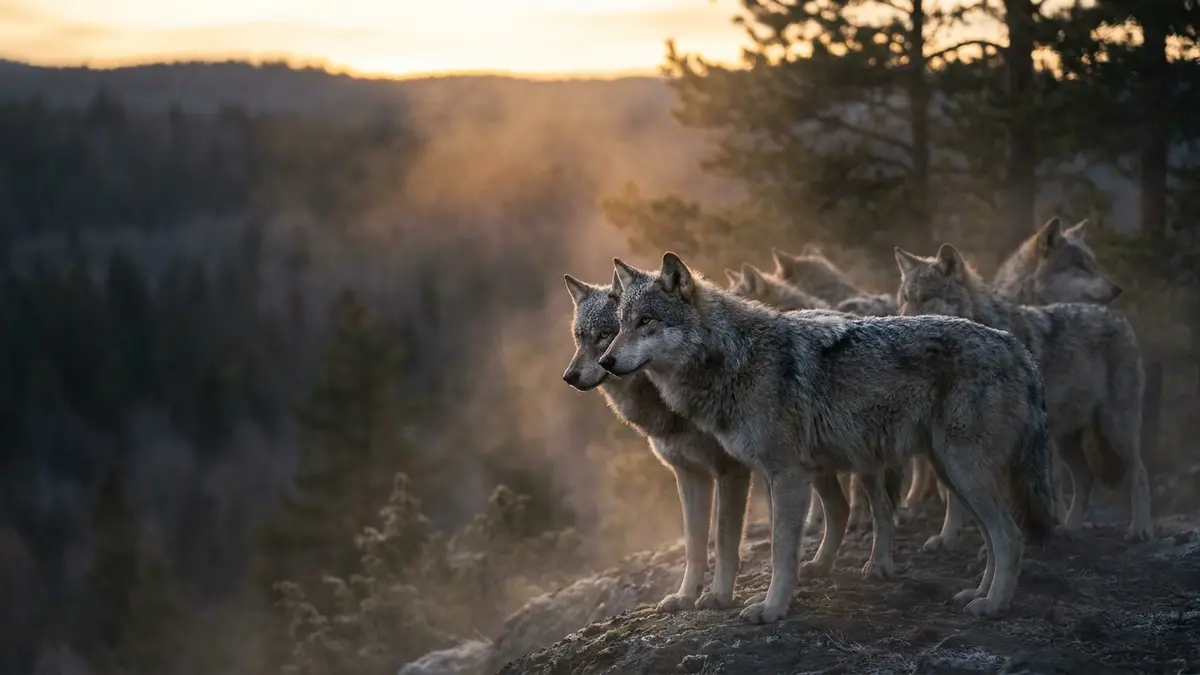
Dreaming of a wolf usually points to loyalty, protection, and the bonds you rely on, since wolves live and hunt in tight family units. A calm wolf beside you often reflects a trusted ally or partner, while a wolf glimpsed at a distance, or one that's stalking you, can mean you're craving closer ties or feeling cornered. Howling, shifting shape, or a lone wolf leading the way usually points toward wildness and instinct, and a nudge to reclaim your own confidence.
An almanac
- Core message
- Strength through connection, not isolation
- Spirit animal
- Guide and teacher (lone wolf)
- In dreams
- Loyalty, belonging, or feeling cornered
- Best qualities
- Loyalty, protection, sharp instinct
- Watch for
- Feeling like the easy target
- Cultural roots
- Native American traditions
- Norse myth
- Fenrir, the wolf fated to swallow Odin
When a wolf slips into your sleeping mind, it usually has something to say about loyalty, protection, and the people you rely on. Wolves live and hunt in tight family units, so your subconscious tends to borrow their image when it's working through the bonds around you: who you cherish, who you're missing, and sometimes who feels like a threat closing in. A wolf dream rarely shows up as random noise. It tends to arrive when belonging, instinct, or personal power are already live questions underneath the surface.
What It Means
A wolf in your dream is usually about connection. Real wolves are deeply social animals that travel and raise young together, so your mind tends to cast them when it's processing how supported — or unsupported — you feel by the people in your life.
A wolf trotting calmly beside you often represents someone you trust deeply, frequently a partner or someone who feels like true family. A wolf glimpsed only from a distance, half-hidden at the edge of the scene, tends to point the other way: toward a hunger for closeness you haven't found yet, or a relationship that currently feels out of reach.
Notice who else appears in the dream alongside the wolf, and just as importantly, who is missing. Dreams like this often map onto your waking sense of who has your back and who doesn't. Pay attention, too, to how much ground you cover in the dream: wolves are territorial by nature, and dream-wolves often show up right when you're testing or drawing your own boundaries.
Common Wolf Dream Scenarios
Wolf dreams tend to fall into a handful of recognizable patterns, each with its own shade of meaning.
9 scenarios — tap the one you remember
Symbolism & Message
Wolves in dream language nearly always circle back to strength held in relationship with others, rather than strength in isolation. Wolves hunt as a coordinated unit and typically target the weakest or most vulnerable member of a herd, so a dream where you feel hunted by them can be your mind's way of asking whether you've let yourself become the easy target — worn down, unguarded, or quietly convinced you can't fight back.
That same imagery turns empowering once you consider what it takes to stand your ground against a pack. It's often an invitation to find your footing again and stop letting circumstances corner you, taking back the confidence that makes you harder to prey upon.
Wolves also carry a charge of wildness — they resist domestication in a way dogs never have, so they show up in dreams exactly when you're brushing against the untamed, unscripted parts of your own life. That can look like an urge to break from routine, a pull toward instinct over logic, or simply an encounter with the unpredictable.
Spiritual Meaning
Across a number of Native American traditions, the wolf is honored as a guide and teacher — several tribes tell stories of wolves as skilled hunters whose behavior people studied and learned from. In that role, the lone wolf is thought to walk ahead of you, deeper into instinctive, intuitive knowledge about yourself and whatever situation you're facing.
In shamanic frameworks, the wolf is closely tied to the raw, unmediated force of nature itself. A dream wolf that seems skittish, feral, or lets out a long howl toward the moon is often read as a sign that you're standing at the wild edge of your own life — a threshold where untamed, unpredictable energy runs strong.
Rather than something to fear, this presence is usually read as encouragement: the wolf lends you its nerve to look a deep-seated fear in the eye.
Wolves in Myth and Scripture
Long before dream dictionaries existed, wolves were already carrying heavy symbolic weight in the stories cultures told about themselves — which is worth knowing, since those older layers of meaning often bleed into how a wolf dream feels even when you can't name why.
In Norse mythology, the wolf Fenrir was born to the trickster god Loki and the giantess Angrboða, and grew so fearsome that the gods bound him in a magical fetter — a binding that cost the god Tyr his hand when Fenrir realized he'd been tricked. At Ragnarök, the mythic end of the world, Fenrir is fated to break free and swallow Odin, the chief of the gods, whole. A dream wolf that feels enormous, inevitable, or like a force you can't out-maneuver may be tapping this same old current: a threat that grows precisely because it was chained up and denied rather than faced.
Rome tells the opposite kind of wolf story. According to the city's founding legend, the infant twins Romulus and Remus were abandoned by the Tiber River, and a she-wolf found them crying, nursed them at her own teats, and sheltered them in her den until human shepherds discovered them. That image — the wolf as fierce, unlikely mother — became Rome's own emblem, cast in bronze as the Capitoline Wolf. A dream wolf that nurses, shelters, or protects rather than threatens may be drawing on this same thread: ferocity turned into a form of care.
The Christian tradition leans harder into the wolf's danger. In the Gospel of Matthew, Jesus warns his followers to "watch out for false prophets, they come to you in sheep's clothing, but inwardly they are ferocious wolves" — the origin of the phrase wolf in sheep's clothing. A dream wolf that seems to be wearing a friendly disguise, or that shows up disguised as something harmless before its true nature slips through, often echoes this exact warning: someone or something in your life may not be what it appears.
Frequently Asked Questions
What does it mean to dream about a pack of wolves chasing you?
Being pursued by a group of wolves in a dream usually reflects a waking feeling of being outnumbered or cornered — by people, circumstances, or your own worries piling up. Since wolves instinctively go after the weakest target, this scenario often asks whether you've let yourself feel more vulnerable than you actually are, and whether it's time to stand firm rather than keep running.
Is dreaming about a black wolf a bad sign?
A black wolf isn't automatically ominous, but it often shows up when you're letting something questionable get too close — a person, habit, or influence that doesn't have your genuine interests at heart. If the wolf enters somewhere you consider safe, like your home, it's worth checking where your boundaries have gotten a little loose.
Why do I keep dreaming about wolves?
Recurring wolf dreams typically point to an ongoing theme your mind hasn't finished processing, most often around loyalty, belonging, or personal boundaries. If the wolf's behavior shifts from dream to dream — friendly one time, threatening the next — it's usually worth tracking those changes against what's actually happening in your relationships at the time.
What does it mean to dream about a white wolf?
A white wolf tends to soften the usual wolf symbolism into something closer to guidance than threat — many interpretations tie it to purity, clarity, or a wiser part of yourself. It can also point to solitude, since a white wolf often stands apart from the pack: a sign you're handling something alone that no one else quite understands, even if you're handling it well.
What does it mean to dream about killing a wolf, or a wolf attacking you?
Fighting off or killing a dream wolf usually reflects a confrontation with whatever the wolf represents for you — a fear, a person who feels threatening, or an instinct you've been suppressing. Coming out on top in the dream often mirrors real confidence that you can meet that challenge head-on, while losing the fight can be a nudge that the threat still has the upper hand in waking life.
What does it mean to dream about feeding a wolf?
Feeding a wolf in a dream, rather than being hunted by one, generally signals that you're consciously choosing which instincts or influences to nourish — a version of the well-known parable about two wolves fighting inside a person, where whichever one you feed is the one that grows stronger. It can point to a real decision you're making about which habits, relationships, or impulses deserve more of your energy.
Sources
Claims on this page were checked against these published sources.
- Wolf
The wolf's basic social unit is a mated pair accompanied by their offspring.
Read the source → - Wolves in folklore, religion and mythology
In most Native American cultures, wolves are considered a medicine being associated with courage, strength, loyalty, and success at hunting.
Read the source → - Fenrir
Fenrir, along with Hel and Jörmungandr, is a child of Loki and female jötunn Angrboða. ... Fenrisúlfr will eventually swallow Odin, killing him, though Odin's son Víðarr will subsequently kill Fenrir by tearing apart his jaws.
Read the source → - She-wolf (Roman mythology)
The she-wolf then arrived and lowered her teats to the crying babes, and licked them clean of the mud. ... the she-wolf rescued them and gently cared for them in or near the Lupercal
Read the source → - Matthew 7:15 (NIV)
Watch out for false prophets. They come to you in sheep's clothing, but inwardly they are ferocious wolves.
Read the source →