Mammals · Spirit animal
Bull & Ox Spiritual Meaning & Symbolism
The unshakable worker who turns raw force into steady, earned abundance.
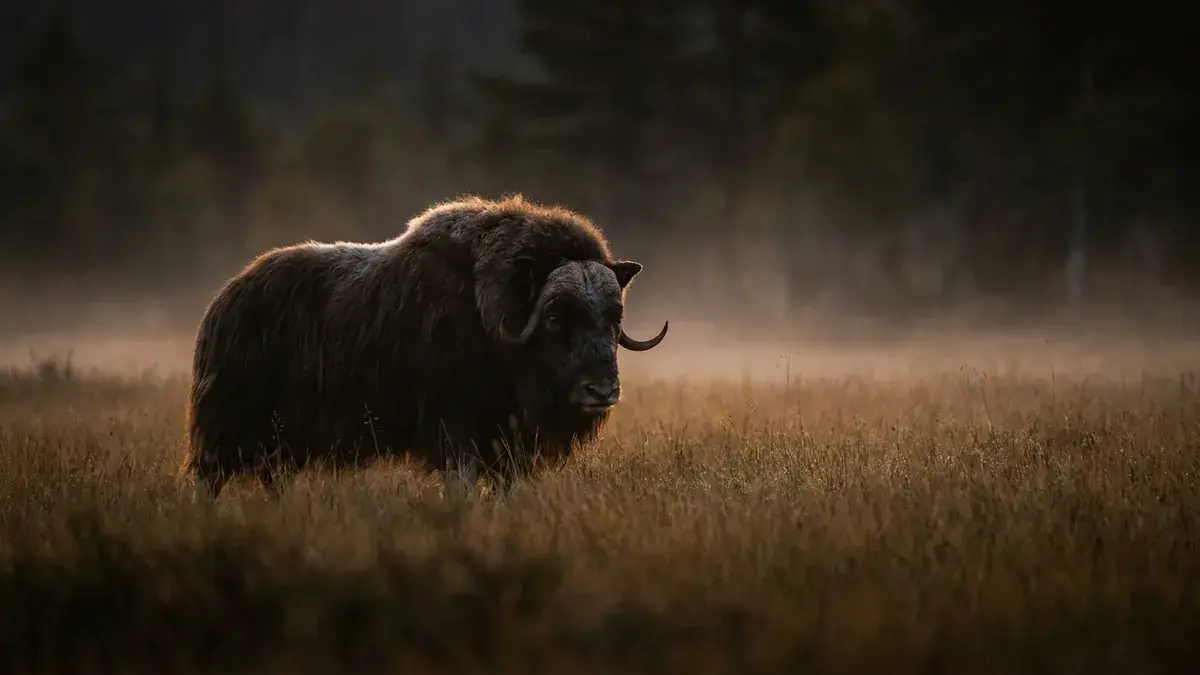
The bull and ox represent dependability and strength, along with humility, patience, and the power to bear your burdens without getting angry. As totems, they tell us to keep going. As spirit guides, they teach you how to be calm and finish what you've started. When you dream about a bull or ox, it usually means you've been working hard or working yourself up.
An almanac
- Core message
- Real power is patient
- Spirit animal
- Steady, persistent strength
- Totem for
- Endurance and sacrifice for others
- Power animal
- Yang energy and virility, especially for men
- In dreams
- Grounded effort or unresolved tension
- Cultural roots
- Greek myth, Celtic ritual & Chinese zodiac
- Western zodiac
- Taurus, the Bull (Apr 21 – May 21)
- Oldest depiction
- Lascaux cave paintings, ~17,000 years old
Across many cultures and across long histories, the bull and ox have been symbols of sturdy masculine strength and purposeful fertility that comes from toiling the land rather than conquering it.
These animals have a great deal of symbolic weight. This guide explains what the bull and ox mean as spirit animals, totem animals, or power animals, with myths, dreams, and zodiac roles behind their reputation.
Bull & Ox Symbolism & Meaning
Bull and ox are practically one figure in folktales and myths, symbols of masculine energy, fertility, and strong leadership. Oxen were also important early domesticated animals for farm labor, so they're symbols of provision. But their powerful build and temperament are so fierce that they had to be used carefully.
The horns of an ox curved like the crescent moon and the two became linked in lunar worship, sun and moon together. Bull-headed people could be stubborn leaders.
There was even a story about an ancient king named Minos who got in trouble by messing with giving the bull to Poseidon: the sea god demanded a bull to be sacrificed but Minos didn't give him one. He kept it for himself instead and offered a regular bull to Poseidon to make it look like he'd done it. By doing that, he ended up bringing disaster on Crete.
The truth here hasn't aged: don't overpromise what you can give — be humble with your gifts.
Bull & Ox Spirit Animal
The Bull or Ox has long been the spirit animal for persisting at a task in a straightforward, ordinary way, even when it feels boring and like it'll never amount to much. When you find your Bull, patience is important — it can be hard to learn this spirit's lesson, which is mostly about humility and persistence.
Ox energy focuses on planting you in a firm position from which you can see clearly without distraction. If you are already following someone else's instructions, your Bull encourages you to recognize your value and stick with the work. People who are guided by the Ox feel pulled toward volunteer or service-oriented work — they get reminded that others' circumstances are not always easier than yours.
Ox also reminds you that under all the heavy horns there is real gentleness. When the Bull's eyes look into yours, don't flinch, but allow it to dwell there until that message becomes clear: there is power in kindness. Here is strength that need not roll over other people in order to stand its ground. If something seems immovable, be willing to shift — and share the load with others as needed.
Does Bull & Ox fit you?
Tap the ones that sound like you — 6 traits, no right answer.
0 of 6 Nothing picked yet — start tapping.
Bull & Ox Totem Animal
Bulls and oxen stand for rock-solid endurance and a sense of duty, as you might imagine from the folk tale of Paul Bunyan and his loyal Blue Ox. Their qualities help you keep going through demanding work but don't do well with stalling. Once they've set out on a task, they expect everyone to finish it up as soon as possible.
People whose Bull or Ox totem inspires them are natural self-starters and tend to be comfortable in situations that require hands-on learning. It might take a lot of effort to convince them to build something new but, once the foundation is laid, it will feel strong, almost as though it had been there forever.
Usually this temperament is extremely even-keeled, with emotions held tightly in check. But when one of these animals erupts it can be quite dramatic, although intense moments of agitation pass quickly.
Since this animal also turns up in several zodiac traditions, many people carry their qualities from birth without ever consciously choosing them. This reminds you that even our most basic traits were given to us instead of being worked out over years.
Bull & Ox Power Animal
The bull is a powerful ally for anyone seeking to understand the use of yang energy — for men in particular. As guardian of the herd, it fiercely protects the vulnerable — especially the young.
When bulls become your power animals, you can use them for a boost of raw power. The bull's instinct for survival is almost unmatched; it is actually very few people who have faced full-grown bull face-to-face.
However, if you call on these power animals, you'll get it all, unfiltered. So be sure to make up your mind — it is not just a symbolic gesture. The raw energy can be overwhelming if you do not prepare.
Across cultures
2 traditions — pick one to read its take.
Native American Bull & Ox Symbolic Meanings
In Native American tradition, the ox and bull symbolize wealth, strength, courage, virility, and power.
The ox is known for its stubbornness and the bull for its willpower to persevere. These symbolic animals are tied to the physical world and this plane of existence. The ox and bull provide a solid foundation on which a person can lean to complete any task or belief system.
They will likely support your efforts to conceive a child as they are associated with fertility. The idea is to stay grounded and practical, drawing on your resources and making something out of what you have before running off after more things.
Bull & Ox as a Celtic Animal Symbol
Ancient Celts valued oxen for their calm strength and the stable prosperity they brought to households. As times grew hard, the bull and ox became protective symbols, thought to safeguard a clan's territory and wealth. In the Celtic region, the bull was particularly associated with solar energy.
In a special ritual, druids offered mistletoe from oak trees. They believed it had magical powers and was a cure for infertility. In this ceremony, people sacrificed one of the white oxen in hope of life-giving blessings from gods on mistletoe plants.
Bull & Ox Dreams
A bull or ox in your dreams is a symbolic reminder to look honestly at your resources. This animal ties closely to grounded strength and determination so its appearances usually do not point to random events. If you dream of a calm and grazing ox, it is a sign that you are happy with your steady progress, and that you are building something durable and resilient.
An agitated bull or charging ox points to pent-up frustration, while being yoked to an ox indicates the need for discipline or responsibility. A white bull or ox in your dreams asks you to look at sacrifice or at the purity of your intentions. An eye-to-eye meeting with a bull asks you to look beyond its strength into its gentleness.
Bull & Ox in Astrology & Zodiac Signs
The bull and ox appear in a lot of different traditions, but some of them are more legit than others. In ancient China, for example, there's a genuine zodiac that lists the ox as the second animal sign in a cycle that lasts twelve years. In Native American or Celtic zodiacs, there's no real documentation saying those traditions existed in ancient times. More likely they're just modern inventions made up to look like something old and mysterious.
In the Chinese zodiac, the year of the ox tends to reward long-term goals more than quick results. It helps people build things they're interested in over time, not just to race ahead all at once.
There's also a bull in western astrology, and it's pretty reliable too. Taurus is the second sign of the zodiac and it goes from April 21st to May 21st. It's earthy and stubborn and loving. It likes being comfortable and doing things that make you happy for a long time instead of suddenly changing everything in your life.
That slow-moving, stubborn energy comes up with the ox in a lot of different places: it means sticking with something until you finish rather than trying to speed through all your goals all at once.
Bull & Ox Spiritual Meaning
The Ox is not a very exciting animal, but if it enters your life don't brush it aside; the Ox knows there's value in patience and persistence.
If you're going through hard times, remember the Ox doesn't give up just because something isn't easy. If the heat is on or you've been dealing with stress too long, don't despair; sometimes you have to work harder for longer than you'd like before problems go away.
Wherever you can, don't carry a heavy load alone: it's good to talk things over and work with someone instead of by yourself. Even when doing something on your own, don't try to do everything at once. Sometimes taking things one step at a time makes more sense. Don't rush into things if you don't need to: best to get things done right than to get them done fast. Also remember that most problems take patience and persistence.
Bull & Ox in Egyptian and Hindu Tradition
People have worshiped bulls for thousands of years. Even before Celtic druids led oxen to the groves for mistletoe, the ancient Egyptians revered the living Apis bull in Memphis. Priests chose a bull with special markings and installed him with great ceremony. When the bull died he was mummified and buried like a pharaoh in a subterranean temple called the Serapeum.
Hindus consider Nandi to be one of Shiva's closest devotees. His statues alalways appear facing Shiva's, as if he were an eternal sentry. Many Hindus have asked for Nandi's blessings, telling their troubles to his horns or his ear.
Bulls and oxen have different spiritual roles. The ox watches over its master while also symbolizing strength and provision. It can be taken as an oracle or a living god giving omens to the mortal world.
Zeus, Europa & the Bull Behind 'Europe'
Zeus saw the Phoenician princess Europa and wanted to be with her. To get her alone, he turned himself into a white bull and invited himself into her herd. After mingling with the other cattle for awhile, Europa grew more comfortable with Zeus's presence and put a garland of flowers on his neck. She climbed up onto his back and rode him away from her family to the sea. As soon as she was well away from land, the bull dove in and swam all the way to Crete.
Back on dry land, Zeus finally revealed himself to Europa. The story ends with them having three children together.
The Greek myth about Europa says almost everything about bulls and being gentle through disguise. Power might not have its obvious outward trappings — it could even look like weakness or idleness — but its true influence runs as deep as earth herself.
The Bull in Cave Art, Language & the Stock Market
Bull symbolism didn't begin with formal religion — it began with prehistoric cave paintings. In cave paintings at Lascaux, in southwestern France, bulls loom over herds of horses and deer — some of the earliest depictions of the animal. Before anyone wrote down stories of the bull, someone painted it large. That gigantic size persisted in our language. To "take the bull by the horns" meant to face a difficulty directly from at least 1711; this website has always expected people to tackle problems, not turn away.
That same approach carried into financial markets. By 1714 people started calling an investor who bets prices will rise a "bull." They took this confident attitude directly from the animal's horns. Bull symbolism hasn't changed much between cave walls and trading floors: face difficulties head-on and push forward without shrinking away.
Frequently Asked Questions
What does the Bull or Ox spirit animal mean?
The bull is a symbol of patient, dependable strength. The bull teaches us persistence and humility and shows us the courage to hold our ground rather than force quick results.
What does it mean to dream about a Bull or Ox?
Dreams of bulls or oxen often point to grounded effort, provision, or unresolved tension. If the animal appears calm in the dream, the theme is that of grounded effort or provision. If the animal appears agitated in the dream, however, the theme is more likely to be that of unresolved tension.
Is the Ox a good power animal for men?
Yes — traditionally the Ox is considered an animal of yang energy. It's a symbol of virility and protective strength but its intensity should be respected rather than taken lightly.
What is the Egyptian god Apis?
In ancient Egypt, Apis was a bull worshipped as a god at Memphis with a cult that goes back to the 1st dynasty. Priests treated the animal's behaviour as an oracle. When Apis died, the priests mummified him and buried him underground with reverence equal to that bestowed on a pharaoh, in galleries known as the Serapeum.
Why is the bull sacred in Hinduism?
The bull Nandi is the sacred animal of Shiva and his close attendant and companion. Shiva rides on him, so you often see Nandi's statue facing the shrine. In temples where Shiva is worshiped, you often see Nandi right outside the shrine so he can watch over Shiva and take messages from devotees.
Why is a rising stock market called a 'bull market'?
If you're hoping prices will go up, the stock market is a bull market. Its name dates to 1714, when people used 'bull' to describe an investor making bets that the market would climb. People described the animal's forceful motion with its horns as a metaphor for that kind of investor, echoing the older phrase 'take the bull by the horns,' recorded in 1711.
Bull & Ox also represents
- Other animals that represent strength →Alongside Lion, Bear, Tiger, Elephant
- Other animals that represent protection →Alongside Bear, Wolf, Dog, Elephant
- Other animals that represent patience →Alongside Turtle, Heron, Spider, Ant
- Other animals that represent luck →Alongside Ladybug, Rabbit, Cricket & Grasshopper, Koi
Sources
Claims on this page were checked against these published sources.
- Ox
Oxen are thought to have first been harnessed and put to work around 4000 BC.
Read the source → - Cretan Bull
Deciding that Poseidon's bull was too fine of a specimen to kill, Minos sent the bull to his herds and substituted another, inferior bull for sacrifice.
Read the source → - Mistletoe
the only ancient writer to mention the use of mistletoe in this ceremony was Pliny the Elder
Read the source → - Ox (zodiac)
is the second of the 12-year periodic sequence (cycle) of animals which appear in the Chinese zodiac
Read the source → - Babe the Blue Ox
he is customarily accompanied by Babe the Blue Ox (French: Babe le boeuf bleu), his pet and working animal.
Read the source → - Apis | Egyptian deity, bull god, fertility
Apis was a sacred bull deity worshipped at Memphis in ancient Egyptian religion. The cult of Apis originated at least as early as the 1st dynasty (c. 2925–c. 2775 BCE)... When an Apis bull died, it was buried with great pomp at Ṣaqqārah, in underground galleries known in the classical world as the Serapeum.
Read the source → - Nandi | Deity, Bull, Shiva's Vahana
Nandi is a bull vahana ("mount") of the Hindu god Shiva, identified as the god's vehicle since the Kushan dynasty (c. 1st century CE). Most Shaivite temples have the figure of a humped white bull reclining on a raised platform and facing the entrance door of the shrine so that he may perpetually gaze on the god.
Read the source → - Europa | Titan, Zeus & Bull
The beauty of Europa inspired the love of Zeus, who approached her in the form of a white bull and carried her away from Phoenicia to Crete... she bears him three sons — Minos, Rhadamanthys, and Sarpedon.
Read the source → - Lascaux Cave
In a round dance, four large bulls tower above fleeing horses and deer, the relief of the walls serving to emphasise certain parts of the paintings. ... The paintings date to approximately 17,000 to 15,000 BCE during the Upper Palaeolithic period.
Read the source → - bull (n.1)
"boldly face or grapple with some danger or difficulty" is recorded by 1711 (Swift) ... Stock market sense "one who seeks to cause a rise in the price of a stock" is from 1714.
Read the source → - Taurus (astrology)
Taurus (...Latin for "bull") is the second astrological sign in the modern zodiac... The Sun transits this zodiac sign from approximately April 21 until May 21 in western astrology.
Read the source →