Mammals · Spirit animal
Badger Spiritual Meaning & Symbolism
The tenacious digger who stands its ground and unearths hidden truth.
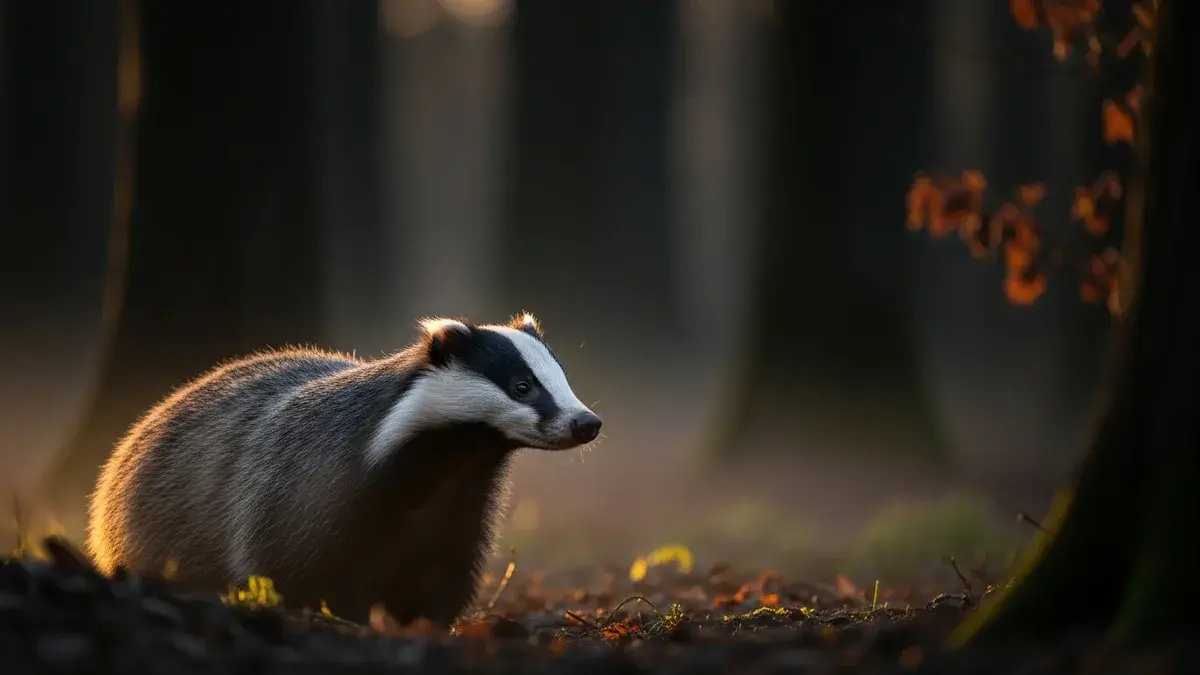
Badger is like an earthbound, low-to-the-ground, shy creature who prefers to avoid conflict but will fight fiercely when cornered. In people it represents qualities of digging underneath the surface of a situation until one finds hidden truths and then standing your ground once found. Badgers also defend their family with unshakable resolve.
An almanac
- Core message
- Earned strength through patience and readiness
- Spirit animal
- Step forward and stay self-reliant
- Totem for
- Organized, blunt, fiercely protective people
- Power animal
- Backbone, structure, and follow-through
- In dreams
- A coming luck shift or a hidden truth
- Element
- Earth
- Named for
- Lakota leader Sitting Bull, born "Jumping Badger"
- In literature
- Mr. Badger, the wise hermit of The Wind in the Willows
Badgers are low to the ground and have stocky frames. If threatened they will crush their opponents with their jaws. This may remind us that true strength does not need to be loud. Across human cultures, badgers symbolize quiet truth-telling, family ties, guarding a home without fighting, and a fierce stubbornness in defense of others.
Badger Symbolism & Meaning
The rounded body of a badger is built for serious business — dense muscle wrapped around a jaw made for fighting with total commitment. That's why Badger medicine means self-sufficiency to so many people, building inner grit when they need it most.
So you can think of them as excavators driven to dig for what's buried deep within both the Earth and themselves.
When you work with Badger medicine, it asks you if there's a story that has become your own, if you've claimed all the truth you hold inside. The same jaw that makes a badger so fierce also helps tell these stories. And Badgers are always patient in what they do — they keep their focus on the goal no matter how much work lies between them and it.
Badgers also have steady resolve. They know what kind of life they want to live, and they'll fight for it till it's theirs.
Badger Spirit Animal
If you see a badger, this may signal that you have taken on more than you are currently equipped to handle, but it is important for you to move at your own pace and not compare yourself to others. You have your own journey to take and should follow your own rhythm.
Badgers also carry the message of stepping forward even when you feel like shrinking away from visibility.
As badgers are known to be quite independent, they remind us of the importance of staying grounded and getting our ideas down. We may come up with great big ideas, but it's important to bring them into reality by working on them in a practical way.
Badgers' combative streak is carefully controlled: while this animal sometimes fights, it teaches you how to know when to fight for something and when just to rest instead.
Badgers also arrive as mentors in healing practices.
Does Badger fit you?
Tap the ones that sound like you — 6 traits, no right answer.
0 of 6 Nothing picked yet — start tapping.
Badger Totem Animal
If badger is your power animal, you arrange your life with an eye for detail. In fact, order feels like home, while disorder irritates. Time management comes naturally.
That said, outwardly you might seem like anyone else, even though inwardly a core of solidness waits to show itself. It's not long before it surfaces through speaking plain truths. There's no sugarcoating your messages, only direct statements about what matters. That directness can sting, and also tends to be helpful, encouraging.
If you're a badger person, expect to guard your family fiercely. Crossing boundaries around them will earn the wrath of real teeth.
And it often seems that something magical happens when plants are cared for by these people, maybe because many draw closer to nature spirits or garden work.
Finally, expect to find frugal ways that suit you; and a desire for alone time and solitude as sources of mental clarity.
Badger Power Animal
Badger energy is a great choice if you're timid in nature or don't like to tackle problems head-on. With Badger by your side, though, you'll stand up for what you believe instead of falling into ruts when things get tough. Working with this power animal will also make it easier to bond with others.
Badgers find their way around with scent instead of eyesight and always know exactly who they can rely on as part of their family group. Badger energy is especially helpful if you're disorganized and need more structure in your life. It's time to throw away the old stuff so things don't get backed up, since we only have a short amount of time here.
Badgers never give up until answers appear when they work on family history or other important research. With Badger energy as your guide, you'll stay focused and motivated while leading others through challenges.
Across cultures
3 traditions — pick one to read its take.
Native American Badger Symbolic Meanings
The Native American tradition regards badgers as emblems of untapped potential, creativity, and persistence, especially for those who struggle to finish what they've started or for people who lack willpower. A sighting of a badger's tracks is seen as good luck in this tradition. Badgers are also associated with independence.
In Lakota storytelling, badgers are classified as Earth animals. Many Native storytellers paint badgers as diligent, protective, and careful. The Pueblo people believe that the badger is the guardian of the southern direction in the circle of creation, and they associate it with red.
The Zuni tribe believes that the badger brings luck and healing properties to those who wear its stone fetishes. Badgers are also considered clan animals by both the Hopi and the Pueblo tribes.
Badger as a Celtic Animal Symbol
To the Celts badgers were known as broc, and they greatly admired these determined animals for their courage and persistence. According to a Welsh folk tale, Pwyll turns to a badger, who guides him through his dreams.
In other Celtic tales, though, badgers carried a darker reputation: when one shrieked it was seen as an omen of impending death or disaster, and crossing its path on the road had been considered to be unlucky - unless you were lucky enough to come across it first. Some gamblers also believed that carrying a badger's tooth would bring them luck at the card table.
Badgers' fat is said to have cured rheumatism in folk remedies. The Picts, however, held the badger in particularly high regard: their wise men called themselves brocan, and they wore charms made out of its hair for protection against witchcraft.
Far Eastern Badger Symbolic Meanings
Some cultures don't like to focus much on badger symbolism; if they have anything to say about a badger in their tradition, it tends to be positive. A feng shui symbol, for instance, associates the animal with joy and contentment: It comes from a Chinese character that sounds something like "gladness." In Japan, another culture that's not known for having badgers very often, there's actually a sort of monster called a mujina. The stories usually say it can change forms, into things like priests or lonely old women you meet on the road.
Badger in Dreams
Badger dreaming often hints at upcoming positive changes. When seen from above ground, a calm or healthy badger in your dream is a sign that you're soon going to get what you want or see things turn around for the better. If a badger appears angry and aggressive in your dreams, it may signal that you've been nagging someone else to get them to do something.
When a badger seems underground or hiding inside its burrow, this indicates that appearances might not be reality and you need to look deeper into what's really going on.
Dreams featuring Badgers are a request from your unconscious mind to examine the entire situation before reacting. It may also mean the time has come to reveal the hidden layers of a problem or situation.
Badger Spiritual Meaning
The badger represents strength earned from hard work. It avoids a fight when it can but fights tooth and nail if it must. The lesson here isn't to pick a battle, but to be ready if you have to fight one. Dig deep for what's true. When you find it, stand up for it.
Badgers are grounded, protective, and persistent, the result of endless efforts beneath the surface that pay off in the end.
Badger and Sitting Bull: A Name Earned Twice
In the Lakota tribe, being called "Badger" is more than just symbolic—it carries family pride. The Hunkpapa Lakota chief who history remembers as "Sitting Bull" was born with the name Ȟoká Psíče, meaning "Jumping Badger." He also had a private nickname that fit his careful and slow nature, called Húŋkešni.
But it wasn't until his teen years when Jumping Badger showed bravery in a raid against Crow warriors. Only then did he earn the name Sitting Bull that history would remember him by—a nod to staying grounded and strong through tough times.
It's fitting for a boy named after strength and patience to become a great leader remembered today as that same symbol of quiet steadiness in difficult moments.
Badger in Western Literature: The Wise Hermit of the Wild Wood
Kenneth Grahame's Badger is gruff and solitary and unbothered. But when the real trouble comes—he's the one everyone turns to for help: considerate, fearless, always ready to fight with you. His house suits him well, an ancient set built into the ruins of a lost Roman city, open only to family, not strangers. He is the strength that doesn't need to shout about itself.
Frequently Asked Questions
What does Badger symbolize spiritually?
The badger has traditionally been associated with many traits like strength and tenacity, being able to see below the surface of things, and knowing where and when to pick their battles. This is why it is a fitting mascot for anyone who needs help persevering through tough times.
What does it mean when Badger is your spirit animal?
If Badger is your spirit animal, you might be facing a challenge that leaves you feeling unprepared. Trusting yourself and staying true to your own path is far more rewarding than falling into line behind others.
What does it mean to dream about a Badger?
Dreaming of badgers often suggests that there’s going to be some kind of win or turnaround in your luck. If the badger is calm and healthy-looking, things will likely improve quickly; if it seems aggressive, you may have been pushing too hard on someone else recently; if it’s underground, look for hidden truths in your subconscious.
Why was Sitting Bull originally named 'Jumping Badger'?
Sitting Bull was given two names at birth: "Jumping Badger" (Ȟoká Psíče) and "Slow." He earned the nickname Sitting Bull during his teenage years after an act of bravery in a raid. We rarely see cases where real historical people share symbolic attributes with their actual name. This is a rare example.
Is Badger mentioned in the Bible?
The tabernacle had a thick skin covering made out of skins from an animal called a "tachash," which scholars are still not sure is a dugong, porpoise, or goat leather, and the old translation into English used the word "badger" for that.
Why do we say someone is 'badgering' us?
The verb "to badger" was borrowed from an older noun, which entered English in 1520s. The two are probably related by the animal's distinctive facial blaze of pale fur that resembles a badge.
The origin of the verb "to badger" appears to trace back to blood sports involving dogs set against cornered badgers. This use was recorded first around 1790.
Badger also represents
Sources
Claims on this page were checked against these published sources.
- Sitting Bull
He was named Ȟoká Psíče (Jumping Badger) at birth, and nicknamed Húŋkešni or 'Slow', an allusion to his careful and unhurried nature.
Read the source → - Mujina
In transformation, it is said that the possibilities of what the mujina could turn into were endless.
Read the source → - The Wind in the Willows
a firm but considerate animal, Badger embodies the 'wise hermit' figure
Read the source → - H8476 - tachash - Strong's Hebrew Lexicon (KJV)
probably of foreign derivation; a (clean) animal with fur, probably a species of antelope
Read the source → - Badger - Etymology, Origin & Meaning
'to attack persistently, worry, pester,' 1790, from badger (n.), based on the behavior of the dogs in the medieval sport of badger-baiting
Read the source →