Animal Dream Symbol
Badger Dream Meaning: Dreams About Badgers Explained
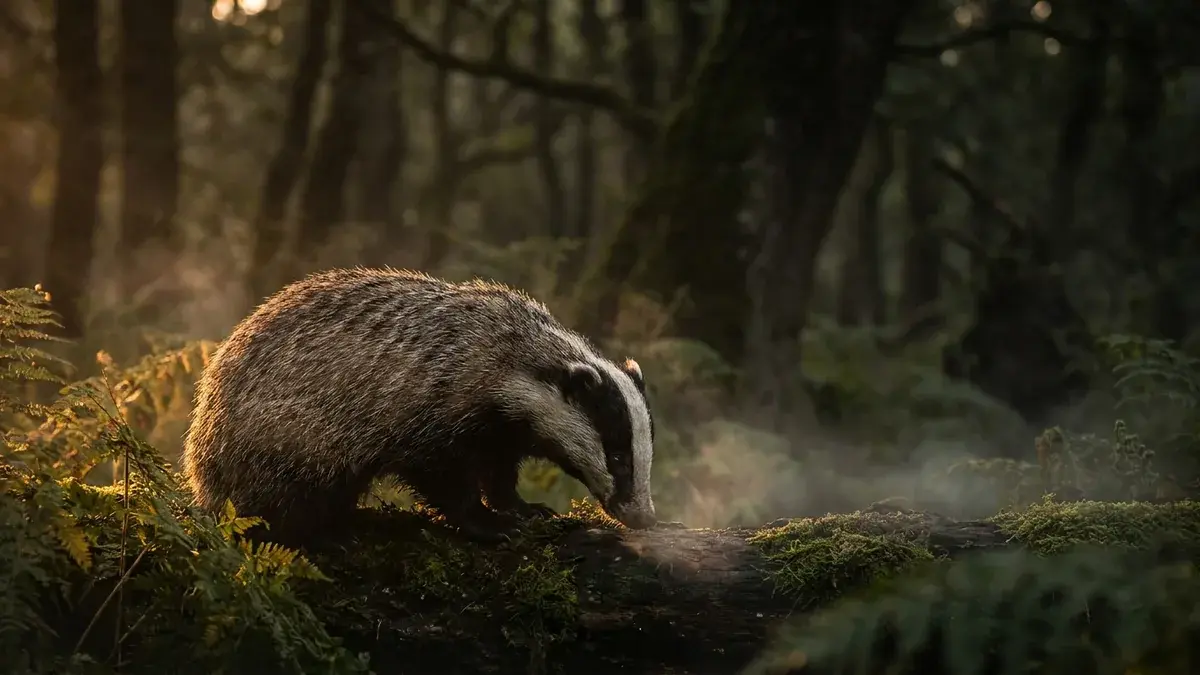
Dreaming of a badger points to unshakeable persistence, self-defense, and boundaries. This small but fierce night-digger tends to show up when tenacity, unfinished business, or the need to hold your ground (or instead withdraw and recharge) is weighing on you. Whether the badger in the dream is fighting when cornered, digging into its burrow, or pestering you the way its name suggests, the message usually comes down to reading the situation honestly and answering with whichever response actually fits: firm resistance or quiet retreat.
An almanac
- Core message
- Hold your ground, or withdraw and recharge
- In dreams
- Persistence, boundaries, unfinished business
- Best qualities
- Tenacity, self-reliance, quiet strength
- Watch for
- Self-directed nagging or rumination
- Spiritual roots
- Grounding and inner knowing, earth-centered traditions
- Honey badger twist
- Amplifies the call to bold, unflinching action
- Animal family
- Mustelidae — kin to otters, weasels, wolverines
- Winter survival
- Cycles of torpor, not true hibernation
A badger padding through your dream is rarely a throwaway image — this compact, thick-coated digger ranks among nature's most stubbornly persistent animals, and your sleeping mind tends to borrow that trait whenever tenacity, boundaries, or unfinished business are weighing on you. Whether the badger in your dream is calmly burrowing or baring its teeth at a threat, the message usually comes down to grit, self-defense, and knowing when to hold your ground versus when to pull back. Badgers are nocturnal, coming alive only after dark, so this dream often shows up exactly when something has been gnawing at you long past sunset and still needs an answer.
What It Means
A badger in your dreams represents unshakeable persistence — the kind of determination that keeps pushing long after most creatures would back down. Picture a small child locked onto getting a treat at the checkout line, refusing every attempt to redirect her until she either gets her way or wears out everyone in earshot. That relentless, single-minded push is the emotional register a badger dream speaks in.
This animal looks small and unassuming at first glance, then turns suddenly fierce the moment it feels cornered. Dreaming of a badger often arrives right when your waking life is asking you to make that same shift — from quietly tolerating a situation to actively protecting yourself once circumstances leave no gentler option.
It's also worth remembering that the verb "to badger" comes straight from this creature's reputation for hounding and pestering. So these dreams sometimes describe you pressuring someone else, being pressured yourself, or — very commonly — badgering your own mind with the same worry on an endless loop.
Common Badger Dream Scenarios
Badger dreams tend to cluster around a handful of recurring situations, each with its own shade of meaning.
9 scenarios — tap the one you remember
Symbolism & Message
Beyond persistence, badger dreams carry a strong undertone of self-reliance. Badgers are dedicated diggers that pour enormous effort into a secure home below the surface, which links them symbolically to grounding, stability, and the comfort of retreating somewhere safe when the world above feels too loud.
A dream in which a badger burrows or disappears underground can be read as encouragement to build that same kind of shelter for yourself: permission to pause, rest, and guard your energy instead of pushing forward no matter the cost.
At the same time, badgers rarely surrender ground without resistance. Accounts of badgers, honey badgers especially, that take on animals several times their size without flinching show the flip side of that grounding instinct: know when retreat genuinely serves you, but trust that real fight lives in you too, for the moments when backing down simply isn't an option.
Together, these two instincts — burrow and wait, or plant your feet and defend — describe a dreamer who's being nudged to read a situation honestly and answer with whichever response actually fits it.
Spiritual Meaning
In folk traditions and earth-centered spiritual frameworks, animals that live close to the soil — the badger among them — are often treated as messengers of grounding and inner knowing. Because the badger spends most of its life below ground and only emerges after dark, some traditions connect it with turning inward: trust instinct over overthinking, and look for your answers inside yourself rather than searching endlessly outside for them.
Many dream traditions also frame the badger as proof that quiet strength doesn't need an audience. It doesn't posture, threaten, or perform for onlookers. It simply persists, and when a real threat appears, it commits fully rather than half-heartedly.
Bring that badger energy into waking life and it reads as encouragement to trust your own resolve: you don't need to broadcast every struggle to prove you're handling it, and you don't have to abandon your position simply because somebody else is louder or pushier than you are.
Badger Across Cultures
Cultures with no contact with one another still landed on strikingly similar readings of this animal, which says something about how universally recognizable its energy really is. Among the Lakota Sioux, the leader remembered today as Sitting Bull was given the birth name Ȟoká Psíče — Jumping Badger — a name meant to carry the animal's tenacity into the child who bore it, long before he earned the name history now knows him by.
Japanese folklore took the badger somewhere stranger. The mujina, an old term for the Japanese badger, was cast as a shapeshifting trickster capable of slipping into human form to play tricks on travelers — more mischievous than menacing, closer to a prankster than a villain. It's a folk echo of the same quality dreamers keep bumping into: something that hides in plain sight, difficult to pin down until it decides to reveal itself.
Even geography got in on it. Wisconsin earned its nickname "the Badger State" after 19th-century lead miners dug shelters into hillsides that locals likened to the animal's burrows — though the badger only became an official state symbol in 1957, decades after the nickname had already stuck. It's a fitting footnote for a creature whose entire reputation is built on digging in and refusing to let go, in the ground and in the imagination alike.
Frequently Asked Questions
What does it mean to dream about a badger attacking you or fighting back?
This scenario usually reflects a moment in waking life where you're being pushed toward a genuine confrontation, whether with another person, a stressful circumstance, or your own doubts. Since badgers are famous for refusing to yield once cornered, the dream is typically less a warning and more a reminder that you have real fight in you, even if you feel worn down or unsure of yourself right now.
Why do I keep dreaming about something badgering or nagging me?
Recurring dreams built around being pestered or hounded often point to unresolved rumination — a worry, regret, or piece of self-criticism that keeps circling back instead of getting settled. If the nagging in the dream comes from a specific person or figure, it's worth checking whether that mirrors someone applying real pressure on you while you're awake, or whether it's really your own inner voice wearing that disguise.
Is dreaming about a honey badger different from an ordinary badger dream?
The core symbolism stays the same, but a honey badger tends to amplify the message. Because honey badgers are widely known for taking on far larger predators without hesitation, dreaming of one usually intensifies the call to fearlessness: whatever challenge you're facing calls for bold, unflinching action rather than a cautious, wait-and-see approach.
Is dreaming about a dead or wounded badger a bad omen?
Not typically — a dream badger that appears dead, dying, or wounded tends to mark an ending rather than a warning: a long, dug-in struggle finally losing its grip on you, or a version of yourself that fought hard and is now ready to rest. Read it alongside how the rest of the dream feels; a peaceful ending usually points to relief arriving soon, while a violent one may flag unfinished grief around the fight itself.
Does a badger dream mean good luck is coming?
Some folk dream traditions do read a badger as a luck omen that arrives after a stretch of hardship, but the steadier thread in badger symbolism is earned resolution rather than luck handed to you for free. The badger's "fortune" comes from having outlasted the problem, not from chance stepping in.
Are real badgers actually as fearless as their dream reputation suggests?
Largely, yes. Badgers belong to the mustelidae family — the same family as weasels, otters, and wolverines — and they're built to hold ground rather than flee, which is exactly why the animal became dream-shorthand for standing firm. Even their winter survival reflects that stubborn streak: instead of one long hibernation, badgers cycle in and out of short bouts of torpor, rousing themselves whenever conditions ease rather than staying dormant no matter what.
Sources
Claims on this page were checked against these published sources.
- European badger
They are crepuscular and nocturnal by nature.
Read the source → - Honey badger
It is known to savagely and fearlessly attack almost any other species when escape is impossible, reportedly even repelling much larger predators such as lion and hyena.
Read the source → - Sitting Bull
He was named Ȟoká Psíče (Jumping Badger) at birth, and nicknamed Húŋkešni or "Slow", an allusion to his careful and unhurried nature.
Read the source → - Mujina
Mujina is an old Japanese term primarily referring to the Japanese badger... the mujina is a notorious trickster, and enjoys using their shapeshifting to play harmless pranks.
Read the source → - How the badger burrowed into Wisconsin's identity
In lead mining, there were little holes that people started to dig in and sometimes abandon. And they were sometimes called badger holes, according to folklore professor Jim Leary... The badger was formally established as Wisconsin's state animal in 1957 through legislation.
Read the source → - American badger
The American badger is a member of the Mustelidae, a diverse family of carnivorous mammals that also includes weasels, otters, ferrets, and the wolverine... A badger may spend much of the winter in cycles of torpor that last around 29 hours.
Read the source →