Mythical Creature
Nemean Lion Symbolism & Meaning
The unkillable lion of Greek myth: strategy that outlasts brute force.
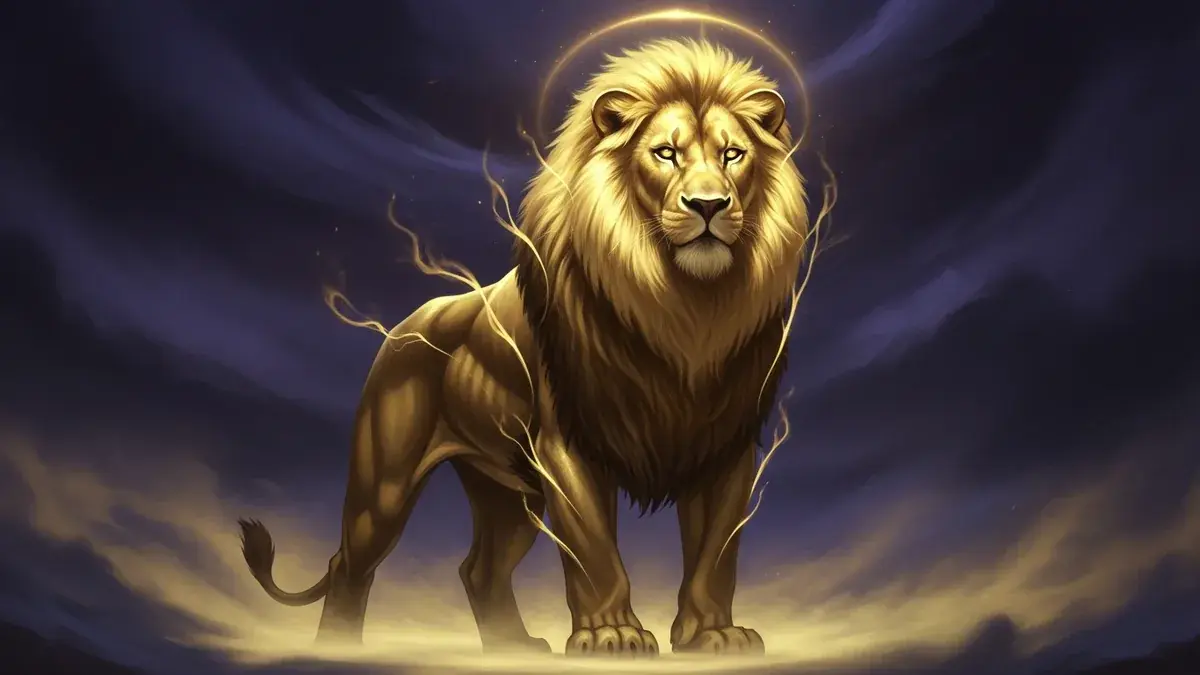
The Nemean Lion is about clever strategy beating brute force: no weapon could pierce its hide, so Heracles only won by dropping conventional tools and wrestling it hand to hand. As a spirit animal, it signals that it's time to thicken your skin against criticism, hold firm boundaries, and outmaneuver a stubborn problem instead of repeating an approach that isn't working. It teaches that true strength pairs raw power with cunning: knowing what drives an opponent counts for more than just overpowering them.
An almanac
- Core message
- Strategy over brute force
- Spirit animal
- Thicken your skin, outmaneuver challenges
- Totem for
- Protective, boundary-aware, reads people well
- Power animal
- Finding courage and clever leverage
- In dreams
- Reinforce boundaries, seek creative solutions
- Cultural roots
- Greek mythology (Labors of Heracles)
- Legacy in the sky
- Became the constellation Leo
- Its claws
- Sharper than any sword
The Nemean Lion is one of Greek mythology's most memorable monsters, best known as the first great test in the Labors of Heracles. Named for its home territory of Nemea, it looked like an ordinary lion but hid one unusual trait: a hide that no blade, spear, or arrow could pierce. The story isn't really about savagery so much as outsmarting an opponent who can't be beaten by force alone, which is why the Nemean Lion still speaks to anyone facing a problem that won't yield to the usual methods.
Origins and Mythology
Ancient sources disagree on where the Nemean Lion actually came from. The mythographer Apollodorus names it as the offspring of the monstrous Typhon, while Hesiod links it instead to Orthus and an unnamed monstrous mother (possibly Echidna). A separate tradition, recorded by later writers like Hyginus, holds that the lion was flung down to earth by the moon goddess Selene. Either way, the lion made its home in the hills of Nemea, a region in Greece, and terrorized the countryside, killing people and livestock and driving off would-be heroes who marched in with swords and spears, only to discover that none of their weapons could break the creature's skin. Every conventional attempt to fight it failed, and the lion's reputation as an unbeatable menace grew with each one.
When Heracles was assigned the task of killing the Nemean Lion as the first of his twelve labors, he quickly learned that his arrows bounced harmlessly off its hide. Rather than keep repeating a strategy that clearly wasn't working, he changed his approach entirely.
He cornered the lion inside its own den, which had two entrances, blocked one off, and wrestled the beast down using nothing but his bare hands and hidden strength. Afterward, unable to skin the lion with any ordinary blade, Heracles is said to have used one of the creature's own claws to do the job, since only the lion's claws could cut through its impenetrable hide. Some ancient accounts credit the goddess Athena with pointing him toward this solution after his own attempts with mortal blades kept failing, a detail that frames the lion's defeat as a joint effort between mortal grit and divine insight.
Symbolism and Meaning
The Nemean Lion's story carries a few different layers of meaning:
- Deception and social roles: The lion's trick of luring warriors by abducting women plays on old assumptions about gender and chivalry, and the story uses that trap to show how those expectations can be exploited.
- The limits of repeating the same approach: Every warrior who fought the lion the same way failed the same way. Its invulnerability to weapons makes the point that doing the same thing over and over while expecting a different result rarely works.
- Victory through unconventional thinking: Heracles only succeeded once he gave up tools of war altogether, which is why the story is often read as a call to break the mold and try what nobody else has.
- The value of getting close to a problem: Because the lion could only be beaten hand to hand, the myth suggests some conflicts can't be resolved from a safe distance. Sometimes facing an uncomfortable issue directly beats avoiding it.
- Strength paired with intellect: The Nemean Lion's mix of raw power and cunning echoes the Tarot's Strength card, where a figure calmly subdues a lion with her hand instead of force. Both stories make the same point: true strength includes understanding what motivates an opponent, not just overpowering them.
- Humility beneath invincibility: Even a creature that seems unbeatable falls in the end. It's a reminder to stay humble and aware of your own weak points, even while keeping up a strong exterior.
- A home with two doors: The lion's den had two openings, and Heracles sealed one to trap it. That detail reinforces the story's emphasis on strategy, and it also ties the lion to ideas of shelter and being grounded.
Taken together, these threads set brute force against clever strategy and come down on the side of strategy.
Nemean Lion as a Spirit Animal
When the Nemean Lion appears as a spirit guide, it often signals that it's time to thicken your skin. If criticism from others tends to wound you deeply, this creature offers the strength to hold your ground without retreating in fear.
The Nemean Lion also shows up when you need to outmaneuver someone rather than confront them directly, or when you need to understand what drives another person to win their support. The detail of Heracles using the lion's own claw to skin it, after his own blades failed, echoes the old idea that there's more than one way to solve a stubborn problem.
It can also point to using a person's own strengths or weaknesses to reach them. If you're looking for an indirect route to a goal, or a way past someone else's defenses, the Nemean Lion may be nudging you toward that creative workaround.
Nemean Lion as a Totem Animal
People who carry the Nemean Lion as a totem tend to have a natural instinct for reading others: they pick up on what motivates or unsettles the people around them. At the same time, they're often fiercely protective of their own inner world, and they keep their vulnerabilities guarded even from those close to them.
This totem can also bring a lesson in humility versus overconfidence. Those connected to the Nemean Lion may sometimes feel unbeatable, and staying grounded is an ongoing theme in their lives. They tend to be strong-willed and hard to shake with criticism or pressure, but the real work is figuring out where their boundaries truly are and being selective about who gets let inside them.
Nemean Lion as a Power Animal
Call on the Nemean Lion as a power animal whenever you need to find your own courage and face something intimidating head-on. Much like the old idea that the right lever can move the world, this power animal can help you find the precise angle or approach that finally makes a stuck problem move.
The Nemean Lion can also help you tune into what genuinely drives the people around you, so you can appeal to their real motivations instead of just pushing harder. It's a useful ally when you need to assert yourself without resorting to force, and when you're working out where your personal boundaries should sit: firm enough to protect you, but not so rigid that they shut out real connection.
Nemean Lion in Dreams
Seeing the Nemean Lion in a dream can be a nudge to reinforce your boundaries, or to notice where you've grown too relaxed or too comfortable avoiding conflict. It may be asking whether you're clinging to safety at the cost of growth.
This dream figure can also point you to a creative solution you haven't tried yet, or push you to reconsider what you actually believe strength looks like: raw force, or the kind of patient, clever persistence that finally wears down an impossible obstacle.
The Lion-Skin Cloak: Turning a Threat into Armor
Killing the Nemean Lion turned out to be only half the puzzle. Its hide was so tough that even after death, no ordinary blade could separate skin from body. Some ancient accounts credit Athena with stepping in at this point and telling Heracles to use one of the lion's own claws, since only the claws were sharp enough to cut through fur that had already defeated every human-forged weapon.
Once Heracles had the pelt, he didn't leave it behind as a trophy. He wore it as a cloak, with the lion's head fitted over his own like a helmet, and because the hide never lost its legendary invulnerability, it gave him a measure of that same protection. The lion-skin became Heracles' signature attire in Greek art: countless vase paintings and sculptures show him draped in it through battles with centaurs, encounters with gods, and the labors that followed.
Symbolically, the cloak is a specific kind of victory: rather than simply destroying what threatened him, Heracles absorbed it, and the very thing that once seemed unbeatable became a lasting source of his own strength. It's a reminder that a hard-won struggle can become armor, that the toughness you needed to survive a difficult season doesn't have to be set aside once that season ends.
The Nemean Lion Among the Stars: Leo
The Nemean Lion's story didn't end with its death and skinning. According to the myth, Zeus honored his son's first completed labor by lifting the lion into the night sky, where it became the constellation Leo, one of the twelve constellations of the zodiac.
There's something telling in this detail: even a creature defined by menace and an unbeatable hide was honored in the end, not simply erased from the story. For anyone drawn to the Nemean Lion as a spirit guide, this piece of the myth can be a reminder that hard chapters, even the ones that felt like a fight for survival, often become the fixed points that later help you find your bearings.
Frequently Asked Questions
What does the Nemean Lion symbolize in Greek mythology?
It symbolizes the limits of brute force and the power of strategy, since the lion's impenetrable hide could only be overcome by Heracles abandoning weapons and wrestling it by hand.
Why couldn't any weapon hurt the Nemean Lion?
According to the myth, the lion had supernaturally thick skin that no blade, spear, or arrow known to humankind could pierce, which forced Heracles to defeat it through direct, hands-on combat instead.
How did Heracles eventually skin the Nemean Lion?
Since ordinary tools couldn't cut its hide even after death, Heracles is said to have used one of the lion's own claws, the only thing sharp enough to pierce its skin.
Why did Heracles wear the Nemean Lion's skin afterward?
Because the hide kept its invulnerability even after the lion's death, wearing it as a cloak, with the head worn like a helmet, gave Heracles extra protection. It became his signature attire in Greek art, shown draped over his shoulders throughout the rest of his labors.
Is the Nemean Lion connected to the constellation Leo?
Yes. According to the myth, Zeus placed the lion among the stars as the constellation Leo to honor Heracles' first completed labor, giving the story a lasting place in the night sky.
What are the Nemean Games, and are they related to this myth?
The Nemean Games were one of four major Panhellenic athletic festivals in ancient Greece, held in honor of Zeus, with winners crowned in wild celery wreaths rather than olive branches. One tradition credits Heracles with founding or reviving the games after his victory over the Nemean Lion, though the more widely recorded origin ties them to funeral games for a child named Opheltes.
Sources
Claims on this page were checked against these published sources.
- Nemean lion
Apollodorus, however, depicts the lion as the offspring of Typhon... one tradition states the lion was 'sprung from' the moon-goddess Selene, who threw him from the Moon at Hera's request.
Read the source → - Apollodorus, Bibliotheca 2.5.1 (Frazer translation)
an invulnerable beast begotten by Typhon
Read the source → - Nemean Games
Heracles Connection: One tradition attributes the games to the hero after he defeated the Nemean lion... Opheltes Funeral Games: The more widely documented account states that the Seven against Thebes instituted these competitions as funeral games for Opheltes... held in honour of Zeus. Winners received wreaths of wild celery rather than olive branches.
Read the source →