Spirit Guides
How to See and Believe Your Spirit Animal's Message
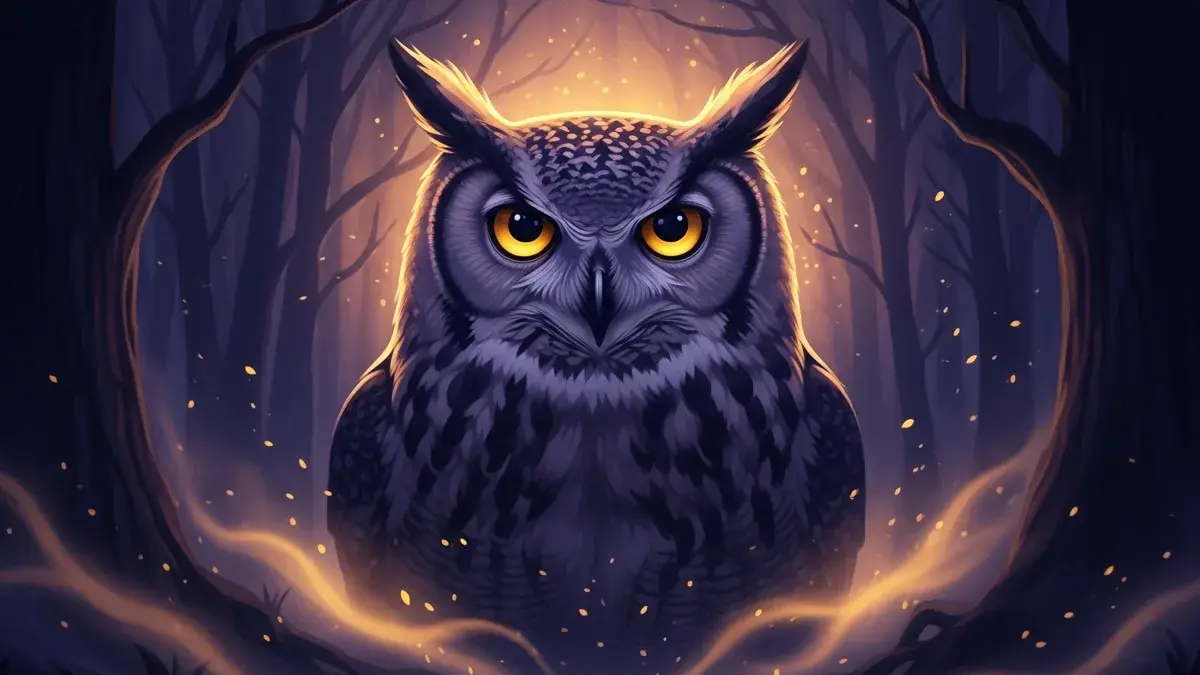
Most people miss their spirit animal's message not because it isn't clear, but because of "willful blindness" — an unconscious habit of avoiding a sign because acknowledging it would demand change or effort. This happens with both hard and wonderful messages alike. The fix is to notice your instinct to dismiss a sign, sit with it before rejecting it, and stay open to messages that don't immediately match what you expected to hear.
An almanac
- Core concept
- Willful blindness — avoiding a message to dodge change or effort
- Affects
- Both difficult AND beautiful messages
- Example story
- A client's swan spirit animal tied to her old "ugly duckling" nickname
- Key test
- If the message would require change, it's likely real
- Practice
- Sit with a message a day or two before dismissing it
- Psychology term
- "Synchronicity" (Jung) — meaningful coincidence without a provable cause
- Dream pattern
- Recurring animal dreams often track unresolved stress, per dream research
You've probably heard that spirit animals send us signs. What almost nobody mentions is that getting the message and actually letting yourself see it are two different things. Plenty of people receive a clear, meaningful nudge from an animal ally and still manage to look right past it, not because the sign wasn't obvious, but because some part of them didn't want to deal with what it meant. Here's why that happens, and what you can do about it.</intro> <parameter name="quickAnswer">Most people miss their spirit animal's message not because it isn't clear, but because of "willful blindness" — an unconscious habit of avoiding a sign because acknowledging it would demand change or effort. It happens with hard messages and wonderful ones alike. The fix: notice your instinct to dismiss a sign, sit with it before rejecting it, and stay open to messages that don't immediately match what you expected to hear.
Why We Miss the Message Even When It's Right in Front of Us
It sounds backwards, but people turn away from good news just as often as they turn away from bad news. Offer someone something genuinely valuable with zero strings attached, and a surprising number will scroll right past it without a second glance.
The same pattern shows up with spirit animal messages. An animal shows up in a dream, keeps crossing your path, or appears in a reading, and instead of leaning in, you shrug it off, forget it within the hour, or decide it "probably doesn't mean anything."
That's not a failure of the message so much as an ordinary human habit of avoidance. And that habit has a name.
What "Willful Blindness" Really Means
Willful blindness is a concept borrowed from the legal world, where it describes someone deliberately staying uninformed so they can't be held responsible for what they'd otherwise have to acknowledge. Outside a courtroom, it simply means choosing not to look at something because looking would demand a response.
Applied to spirit animal messages, willful blindness shows up as:
- Brushing off a repeated sign as coincidence so you don't have to think about what it's pointing toward
- Half-listening to a reading or meditation and then "forgetting" the part that hit closest to home
- Deciding in advance which animal you'd be comfortable with, and dismissing anything that doesn't match that picture
- Avoiding stillness or reflection altogether because quiet is when messages tend to surface
The tricky part is that once you truly see a message, you can't unsee it. And once you can't unsee it, you're left with a choice: do something about it, or sit with the discomfort of ignoring something you now know.
Many people, understandably, would rather not get to that fork in the road at all — so they avoid the message before it fully forms.
Even Beautiful Messages Get Turned Away
Willful blindness doesn't only protect you from bad news. It can just as easily block a message that would genuinely improve your life. Recognizing that you have real support, that you're capable of a better relationship, a stronger sense of self-worth, or a fresh direction in your career, means you now have to actually try. Change takes effort, and avoidance exists to dodge exactly that.
So it's entirely possible to receive a beautiful, affirming message from an animal ally and still push it away, simply because believing it would mean doing something differently starting today.
A Story Worth Remembering: The Swan Who Didn't Recognize Herself
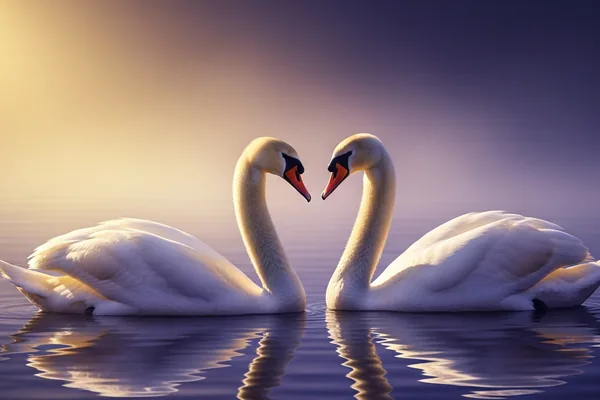
During a guided journey to connect with a client's spirit animal, a striking white swan appeared, clear and unmistakable. When the practitioner shared this, the client's first reaction was flat disappointment: it didn't resonate with her at all.
Rather than second-guessing the message or swapping in something the client might prefer to hear, the practitioner stayed with it and asked for clarification. The swan didn't back down — if anything, it became more insistent, confirming itself as spirit, totem, and power animal all at once.
When the client heard this a second time, something clicked. She admitted that her family had nicknamed her "the ugly duckling" for as long as she could remember. The swan wasn't a random symbol. It was a direct answer to a story she'd been carrying about herself for years — a story that had never actually been true.
That moment didn't erase years of feeling unworthy overnight. Undoing that kind of internal programming takes time, and it's different for everyone. But she left with something she didn't have going in: a symbol she could return to whenever the old "ugly duckling" narrative crept back in, and a starting point for seeing herself differently.
The lesson here isn't really about swans. It's that messages don't always arrive the way you expect, and dismissing one because it doesn't immediately "resonate" can mean walking away from exactly the insight you needed.
How to Open Yourself Up to the Message
If you want to get better at actually seeing and trusting what your spirit animal is telling you, try these steps:
- Notice your first reaction, then question it. If a sign or message makes you want to shrug and move on immediately, pause. That instinct to dismiss something quickly is often the willful blindness talking.
- Sit with a message before you reject it. Give it a day or two instead of deciding on the spot that it "doesn't apply" to you. Meaning often surfaces once you stop bracing against it.
- Ask what the message would require of you. If your honest answer is "change," "effort," or "admitting something uncomfortable," that's a strong clue the message is real, not that it's wrong.
- Don't pre-select the animal you're hoping for. Going in with a fixed idea of what you want to hear makes it easy to override or ignore a message that doesn't match your preference.
- Look for a personal thread, not a perfect fit. As with the swan story, a message can feel like a total mismatch on the surface while pointing straight at a nickname, memory, or belief that explains everything once you make the connection.
- Keep returning to stillness. Quiet reflection, meditation, or simply paying attention during the day is where most people notice these signs in the first place. Avoiding quiet is one of the easiest ways to avoid the message.
Keep Your Heart Open, Even When It's Hard
Not every message from your animal allies will be easy to hear. Some will ask you to look at a part of yourself you've been avoiding, or to admit that change is overdue. But a genuine message is never sent to hurt you.
It's offered because something in your life is ready to shift, and the animal showing up is trying to help you meet that shift with a little more clarity and confidence than you'd have on your own.
The goal isn't to force belief before you're ready. Just stay honest with yourself about when you're truly examining a message versus when you're quietly looking away from one.
Is It a Real Sign, or Just an Ordinary Animal Sighting?
Not every animal you notice is knocking on your door with a message, and learning to spot the real ones means learning to tell the difference. The signs that carry weight tend to share a handful of qualities that an everyday sighting usually doesn't.
- Timing that's out of place. A nocturnal creature wandering into view in broad daylight, or an animal appearing at a moment so specific it's hard to write off.
- Behavior that breaks the pattern. A solitary animal traveling in an unlikely pair, or one that lingers far longer than instinct would normally allow, watching rather than fleeing.
- Positioning that feels aimed at you. Crossing directly in your path, landing near your feet, or showing up in the exact spot your attention was already drawn to.
- Repetition across different channels. The same animal in a dream, then in conversation, then on a walk, within a short stretch of time.
None of these guarantee a message on their own. But when one shows up, it's worth pausing rather than reaching for the easiest explanation, because "it's just a coincidence" is often the very first move willful blindness makes.
When the Same Animal Keeps Showing Up in Your Dreams
Dreams are one of the most common places a spirit animal message tries to land, and a dream that repeats itself deserves particular attention. Dream researchers have long noted that recurring dreams tend to cluster around unresolved tension. Gestalt-oriented dream theory treats a recurring dream as a picture of "the person's current state of psychic imbalance," and broader research on the pattern finds that "recurrent dreams occur during times of stress and once the problem has resolved they will cease to recur." Carl Jung went further, seeing repeated dream material as part of what he called the integration of the psyche — the mind working, night after night, to fold something unresolved back into conscious awareness.
Applied to a spirit animal that keeps returning while you sleep, the pattern lines up almost exactly with willful blindness: the message repeats precisely because it hasn't been received yet. The dream isn't malfunctioning or being dramatic. It's doing what recurring dreams reliably do, circling back to whatever you haven't let yourself fully look at during waking hours. Once that thing is actually addressed, in the ordinary way real problems get addressed, the same research suggests the dream tends to quiet down on its own.
Frequently Asked Questions
Why don't I believe my spirit animal's message even when it seems clear?
This is usually willful blindness at work — a natural tendency to avoid fully acknowledging something because doing so would require change or effort. It happens with both difficult and wonderful messages, since believing either one asks something of you.
What should I do if a spirit animal message doesn't resonate with me at all?
Sit with it before dismissing it. As the swan story shows, a message that seems totally unrelated at first can turn out to line up with a memory, nickname, or belief about yourself that you hadn't connected to it yet. Give it time before deciding it doesn't apply.
How can I get better at actually noticing signs from my spirit animal?
Build in regular quiet time for reflection, question your instinct to shrug things off immediately, and avoid going in with a fixed idea of which animal or message you'd prefer. The signs tend to show up most clearly when you're not busy filtering them out.
What's the difference between a spirit animal, a totem animal, and a power animal?
The lines have blurred in modern spiritual practice, but the terms have distinct roots. A totem traditionally refers to a spirit being or symbol tied to an entire group, such as a family, clan, or lineage, rather than to one person alone. A spirit animal or power animal, by contrast, usually describes a personal guide meant for you individually. In practice, as in the swan story above, a single message can carry all three labels at once, since most people today use them somewhat interchangeably.
Can a spirit animal message actually come from someone who has passed away?
Many people who work with animal signs believe a loved one who has died can reach out through an animal encounter, especially one with unusual timing or an animal that had a specific meaning to that person. This isn't something that can be proven, so treat it as a comforting possibility rather than a certainty, and let your own sense of the moment guide whether it feels like that kind of message.
Is "meaningful coincidence" a real idea, or just superstition?
It has a real name in psychology: synchronicity, a term coined by Carl Jung to describe events that "coincide in time and appear meaningfully related, yet lack a discoverable causal connection." Jung didn't claim these coincidences prove anything supernatural on their own, only that the human mind is wired to notice and draw meaning from them. That's exactly why a repeated animal sign can feel significant even before you've decided what, if anything, you believe about spirit animals.
More from Spirit Guides



Sources
Claims on this page were checked against these published sources.
- Willful blindness
willful ignorance is when a person seeks to avoid civil or criminal liability for a wrongful act by intentionally keeping themselves unaware of facts that would render them liable or implicated
Read the source → - Totem
a spirit being, sacred object, or symbol that serves as an emblem of a group of people, such as a family, clan, lineage, or tribe
Read the source → - Synchronicity
a falling together in time, a kind of simultaneity
Read the source → - Recurring dream
recurrent dreams occur during times of stress and once the problem has resolved they will cease to recur
Read the source →
Not sure which animal is yours?
Consult the quiz