Spirit Guides
How to Heal Your Shadow Self With Spirit Animal Guidance
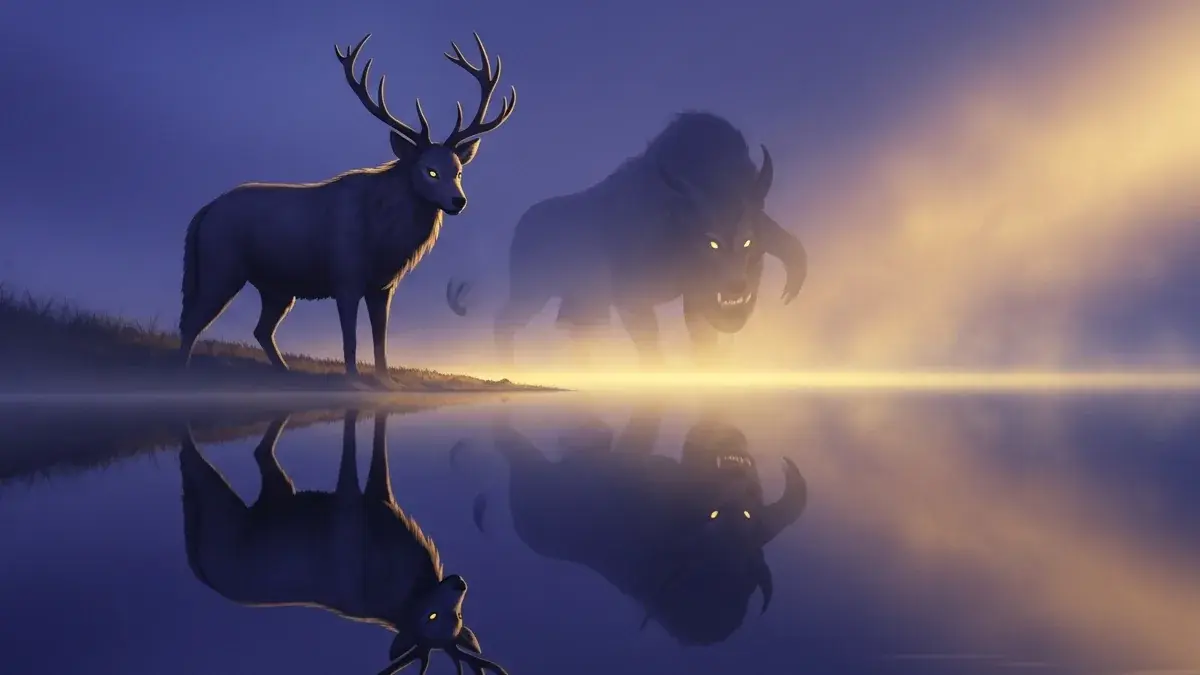
The shadow self is the part of your personality holding traits you've judged as unacceptable — plus, often, hidden talents you've never let yourself claim. Spirit, totem, and power animal guidance can soften this hard work by giving you an ally to meet instead of confronting yourself directly. A 7-step practice — tracking reactions, meditating with a guide, researching symbolism, and returning to self-compassion — helps you face shadow material gradually, without it replacing professional care.
An almanac
- Core concept
- Shadow self (Carl Jung) — hidden, unaccepted traits
- Hidden upside
- Golden shadow — buried talent and potential, not just flaws
- Role of animal guides
- Softens confrontation with your own reflection
- Practice
- 7 steps: track reactions → meditate → research → return to totem
- Important caveat
- Spiritual practice, not a substitute for professional care
- Persona origin
- From Greek theater masks — the face shown in public, not the shadow beneath
- Jung's own phrase
- Called the shadow "the animal side of our personality"
Most people want their animal guides to be gentle, glowing, and easy to love. But the guides that show up during real inner work aren't always fluffy or comforting — sometimes they're the creatures that make you flinch. That reaction usually points to something worth exploring: your shadow self. Here's what the shadow self is, why it matters, and a practical, step-by-step way to work with spirit, totem, and power animal energy as you face it.
What the Shadow Self Actually Is
The idea of the shadow self comes from psychiatrist Carl Jung. It's the part of your personality that holds everything you'd rather not look at — fear, envy, rage, shame, jealousy, deceit, ego, and anything else you've labeled unacceptable in yourself or others.
Different traditions have their own name for this same territory: a dark side, a fragmented soul, an inner demon, an attachment to ego. Many spiritual and religious frameworks describe a similar split between a 'higher' and a 'lower' or 'left-hand' path, and nearly all of them agree the hidden part needs to be acknowledged and worked through, not buried deeper.
The part that surprises people: the shadow isn't only made of things that are 'bad.'
The Golden Shadow: Your Hidden Potential
Jung believed most of what lives in the shadow is actually valuable — talent, creativity, and potential we've learned to hide right alongside our fears and flaws. This is sometimes called the golden shadow.
Just as you might disown your anger or jealousy, you can just as easily disown your own brilliance, ambition, or gifts — both get pushed into the same dark storage space. When that hidden light finally gets permission to come through, it can show up as art, healing, big acts of generosity, or work that genuinely changes lives.
Pain and unclaimed potential often live closer together than we'd expect — and releasing one can free the other.
Why Spirit Animal Guidance Helps With Shadow Work
Shadow work shows up under many names depending on who you ask — therapists and counselors call it inner-child or trauma work, Buddhist teachings frame it as releasing attachment to ego, some describe it as a kind of soul retrieval, and holistic practitioners often connect stored emotional weight to physical health.
Whatever framework you use, looking directly at your own reflection can be uncomfortable, even frightening or shameful. Bringing in an animal ally softens that encounter: instead of confronting your fear or anger head-on in a mirror, you let an animal guide meet you there, which often makes hard truths easier to receive, name, and eventually release.
Jung himself reached for animal language when he described the shadow — he called it 'the animal side of our personality,' the same instinctual layer that fuels both our destructive impulses and our creative fire. Animal guides aren't a decorative add-on to shadow work; they're following the same instinct Jung was pointing at all along.
A quick note: none of this replaces professional care. If you're dealing with real emotional or mental health struggles, please reach out to a licensed professional — this kind of inner work is a spiritual practice, not a substitute for medical treatment.
Why Bother Doing Shadow Work at All
When shadow material stays buried in your unconscious, it doesn't stay quiet — it tends to leak out sideways. Left unaddressed, it can fuel low self-esteem, addictive patterns, trouble connecting with others, chronic self-doubt, and all kinds of fear.
Because many of us were raised to punish whatever we judge as 'bad,' an unacknowledged shadow can quietly sabotage a relationship, a career move, or a goal — not because you consciously want to fail, but because some hidden part of you feels it deserves to be punished.
Some holistic traditions go further and link long-buried emotional patterns to physical health struggles: unmasking a shadow trait, in this view, can support the body as well as the spirit. Your core self doesn't need fixing, but the parts of your spirit that still carry old wounds may need attention.
The upside: people who do this work consistently describe a real sense of relief and freedom on the other side of it.
7 Steps to Facing Your Shadow Self With Animal Guides
- Track your emotional reactions for a week. Keep a simple daily log instead of a sprawling journal — for each strong reaction, note where you were, who was there, how you felt, and what you think triggered it. At the end of the week, look for patterns.
Whatever irritates you most in someone else is often a clue to a piece of yourself you haven't accepted yet.
- Get familiar with common shadow patterns. You don't need to become an expert, but spending some time learning about recurring shadow patterns (the protector who's really controlling, the hero who's really seeking approval, and so on) makes it much easier to recognize your own when they show up.
Meditation and dialogue
- Invite a spirit animal into a dialogue. Set a clear intention before you meditate — for example, asking for a guide who can support you through a specific pattern, one who represents that pattern, or one who reflects someone who triggers you.
During the meditation, let the animal step forward, thank it, and ask what it's here to show you. Give it time to 'speak' before you let the vision fade or the animal move away.
- Write down everything immediately afterward. Capture every detail you can remember — the animal's appearance, behavior, mood, any words or impressions, and how your own body and emotions responded.
- Research the symbolism with an open mind. Look into what that particular animal, its behavior, and any other imagery from the meditation might represent. Then sit with what you've found rather than rushing to a conclusion — let the insight settle before you decide what it means for you.
Power and totem animals
- Call on a power animal for courage. Once you've named a shadow pattern, invite a power animal to lend you strength for facing it. Remember that a power animal reflects a part of you — invoking one means connecting with that quality inside yourself while also drawing on the wider support of animal guide energy.
- Return to self-compassion through your totem animal. Your totem animal reflects who you are at your core: whole, balanced, and steady, even while you're doing hard work. When self-judgment creeps in, pause and invite your totem animal forward — let it appear in its healthiest, clearest form as a reminder that facing a shadow trait doesn't mean that trait defines you.
Be Patient With the Process
Shadow work isn't comfortable, and it isn't meant to be finished in one sitting. Some sessions bring clarity; others leave you with more questions than answers. That's normal.
- Revisit your emotional log periodically rather than treating it as a one-time exercise.
- Let each animal encounter stand on its own before searching for a tidy meaning.
- Return to your totem animal whenever self-criticism gets loud — it's there to remind you of your wholeness, not to judge you.
- Treat any strong dream or waking encounter with an animal guide as worth writing down, even outside a formal meditation.
Everyone carries some kind of shadow material. Choosing to face yours, gently and with animal allies at your side, is real work — and it gets easier with practice.
The Mask vs. the Animal Beneath It
Jung didn't just name the shadow — he named its opposite, too. He called the face we show the world the persona, a term borrowed from the Greek masks worn by actors on stage. The persona is the polished version of you: the one that shows up to work on time, says the right thing at dinner, keeps its temper in the meeting. It's not fake, exactly, but it's incomplete — a role, not the whole self.
The shadow is what the mask is hiding. And, fittingly, Jung himself didn't describe the shadow in cold clinical terms — he called it 'the animal side of our personality,' the same instinctual layer that fuels both our worst impulses and our creative fire. When you sit down to meditate with a spirit or power animal for shadow work, you're not stretching Jung's language into a metaphor. You're following it back to where he pointed it in the first place.
Seen this way, taking off the persona for a moment — setting down the polished, presentable self — is exactly what lets an animal guide step forward. The mask can't do shadow work. The animal underneath it can.
When a Shadow Animal Shows Up Uninvited
Sometimes you don't go looking for a shadow guide at all — one simply arrives, usually in the form of whatever animal makes your stomach drop. That reaction is the whole point: the creatures that unsettle you tend to carry exactly the message your conscious mind has been avoiding.
- Snakes and spiders often surface when you're resisting transformation or feeling tangled in a situation you can't fully see the shape of — both ask you to stop fighting the process and let it move.
- Vultures tend to appear around endings you're refusing to let go of; their whole nature is built around finding something useful in what's already dead.
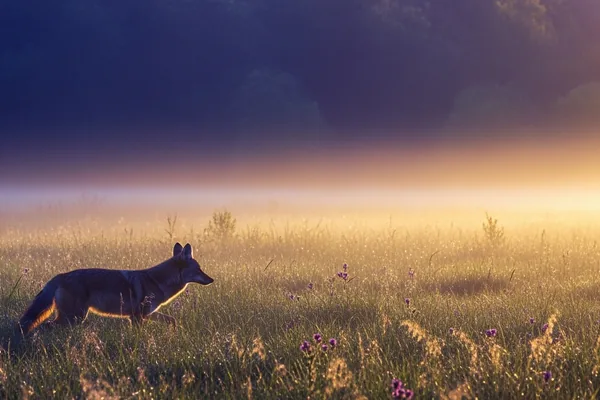
- Coyotes show up when a part of you is being clever in a way that isn't serving you — bending the truth, cutting corners, outsmarting people you should be leveling with.
- Scorpions and wasps often point to a defensiveness you've built up because you got hurt once and never took the armor back off.
- Owls and bats frequently arrive when you're being asked to trust senses other than sight — instinct, timing, or a truth you already know but haven't looked at directly.
None of this is a fixed dictionary — your own reaction to the animal matters more than any general meaning. But if a creature keeps returning, in meditation, in dreams, or crossing your path in ordinary life, treat the repetition itself as information: it usually means the lesson it carries hasn't landed yet.
Frequently Asked Questions
What is the shadow self in simple terms?
It's the part of your personality where you store traits you've judged as unacceptable — anger, jealousy, fear, deceit — along with, often, hidden talents and potential you've never let yourself claim.
Do I need a specific type of animal guide to do shadow work?
No. Any spirit, totem, or power animal that shows up during your practice can be relevant. What matters more is the intention you set before the meditation and how openly you receive whatever guide appears, even if it isn't the animal you expected.
Is shadow work a replacement for therapy?
No. Shadow work with animal guidance is a spiritual practice that can support self-understanding, but it isn't a substitute for professional medical or mental health care. If you're struggling emotionally, please reach out to a licensed professional.
Why do frightening or repulsive animals show up during shadow work?
Because your gut reaction is the clue: an animal that makes you flinch, recoil, or feel a sudden jolt of fear usually surfaces exactly the material your conscious mind has learned to avoid. The discomfort isn't a sign something's gone wrong — it's closer to a signpost pointing at what's ready to be looked at.
What does it mean if the same shadow animal keeps coming back?
A repeating shadow animal usually means the pattern it represents hasn't been fully faced yet, not that anything is broken. Rather than trying to make it stop, treat each return as another invitation to sit with the same question a little longer, from a slightly different angle than last time.
What's the difference between a shadow animal and a power animal?
A power animal typically shows up to lend strength, courage, or steadiness for a challenge you're already facing head-on. A shadow animal tends to arrive first, often uninvited, to surface the fear, wound, or disowned trait that needs acknowledging before that strength can actually take hold.
More from Spirit Guides

Sources
Claims on this page were checked against these published sources.
- Shadow (psychology)
Carl Jung characterized the shadow as the blind spot of the psyche.
Read the source → - Anattā
While often interpreted as a doctrine denying the existence of a self, anatta is more accurately described as a strategy to attain non-attachment by recognizing everything as impermanent.
Read the source → - Carl Jung's Theory of Personality
The term originates from the Greek word for the masks that ancient actors used, symbolizing the roles we play in public.
Read the source →
Not sure which animal is yours?
Consult the quiz