Spirit Guides
Popular Questions About Spirit Animals, Answered
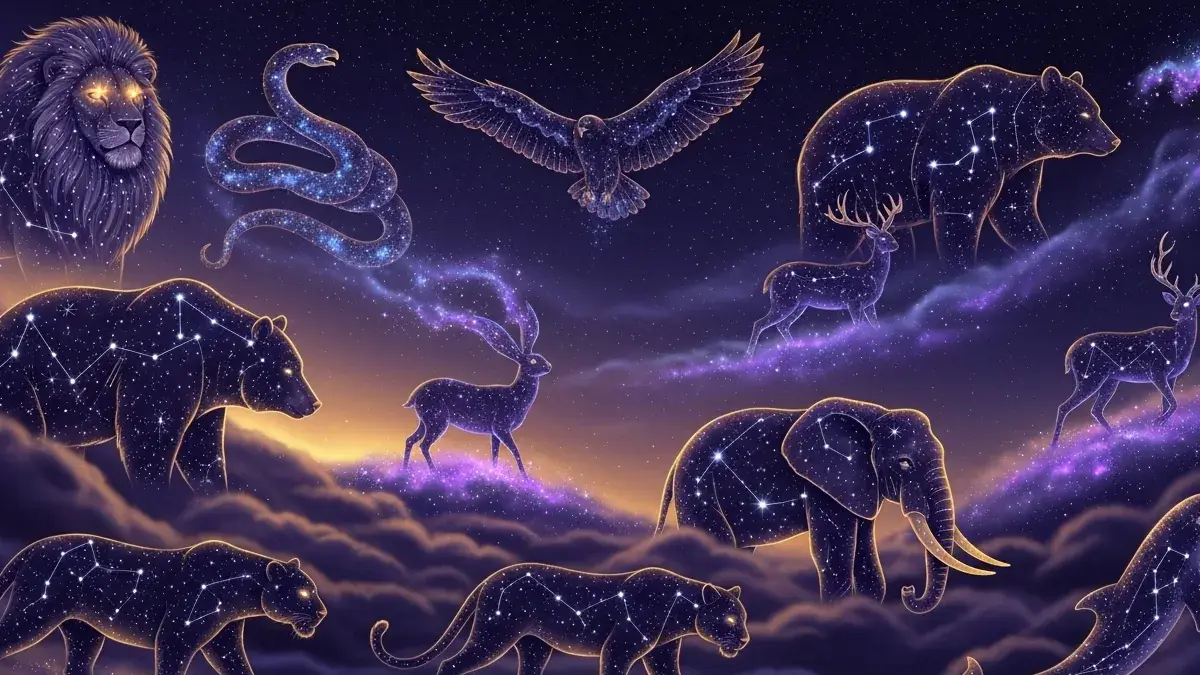
A spirit animal is an animal presence that shows up to offer support, comfort, or a lesson right when you need it — through meditation, or through an unexpected encounter that has nothing to do with wilderness. Most people have more than one over a lifetime, since different life stages call for different kinds of support, and a guide can stay for years or step back once its lesson is learned. When you're unsure whether an encounter is meaningful, trust the feeling of recognition rather than looking for proof.
An almanac
- How many you can have
- No limit — most people have several over a lifetime
- Where you can find one
- Anywhere; nature setting not required
- How to find one on purpose
- Quiet, guided meditation
- How long it stays
- Sometimes for life, sometimes it changes
- Seeing it appear dead
- Signals change, not a bad omen
- Term's real roots
- Living Indigenous clan/kinship traditions, not a shared universal system
- Totem vs. spirit animal
- Totem = traditionally a clan's shared emblem, not a personal guide
Once someone learns what a spirit animal actually is, the questions tend to arrive in waves. First come the basics — what does this even mean, and how do I find mine? Then, once an animal shows up, a whole new set of questions follows: is this real, why did it look hurt, and what is it trying to tell me? This guide gathers the questions that come up again and again and answers them in plain language, so you can move through your own spirit animal journey with a little more clarity and a lot less second-guessing.
What Is a Spirit Animal, Really?
People have looked to animals for guidance for as long as anyone can remember. Warriors once wore the hides or feathers of creatures whose strength they wanted to carry. Skywatchers named entire constellations after animals. Different traditions each have their own word for this same basic idea — a familiar, a totem, a power animal, an animal ally — and none of them are wrong.
For the purposes of this guide, think of a spirit animal as an animal presence that shows up specifically to offer help: support, comfort, a nudge, or a lesson, usually right when you need it.
You don't need a single "correct" definition to benefit from the practice. What matters more is noticing when an animal is showing up for you, and being willing to listen to what it's offering.
How Do I Know Which Animal Is Mine?
This is ultimately something only you can answer, but there's a pattern worth knowing: the right animal tends to show up in a way that fits exactly what you're going through, even if the connection isn't obvious at first glance.
Sometimes it's tied to a fear you're facing — a bold, vocal animal appearing right before you have to speak up for yourself, for example. Sometimes it's tied to a memory or a person you miss, showing up as reassurance that a loved one is still close by.
If an animal keeps crossing your path, or shows up clearly in a dream or meditation, notice what else is happening in your life at that moment — the animal and the timing usually go together.
How Do I Actually Find My Spirit Animal?
A quiet, guided meditation is one of the most reliable ways to meet your spirit animal on purpose rather than waiting for a chance encounter. If you're willing to set aside even a few minutes, a short meditation practice can turn into a meaningful, repeatable ritual.
If sitting still and meditating isn't your style, that's fine too — plenty of people meet their spirit animal without ever formally meditating for it. The animal will still find its way to you.
Do I Need to Be Out in Nature to Find One?
It's easy to assume you need a mountaintop, a waterfall, or some dramatic wilderness setting for a spirit animal to appear. It isn't a requirement. Spirit animals show up in ordinary places just as often — at home, at work, wherever you happen to be.
You're part of nature no matter where you're standing, and quieting your mind and paying attention matters more than your surroundings. An unexpected encounter in the most ordinary setting can carry just as much meaning as one on a mountaintop.
Can I Have More Than One Spirit Animal?
Yes — this is one of the most common questions people ask. Most people end up with more than one spirit animal over the course of their life, for a simple reason: what you need support with at one stage of life is rarely what you need decades later.
A few things worth knowing about having multiple animal guides:
- Your needs change with your moods, your seasons, and your circumstances, so it makes sense that different animals step in at different times.
- Some animals stay with you for a lifetime, showing up again and again no matter what you're facing.
- Others come for a single chapter — a specific fear, a specific loss, a specific decision — and then step back once that chapter closes.
- If several animals show up together, or the same animal appears in a group or pack, the number itself can carry its own meaning worth exploring separately.
There's no ceiling on how many spirit animals you can have, and no rule that says you need to pick a favorite.
Does My Spirit Animal Stay With Me for Life?
Sometimes, yes. Other times, no. Animal guides seem to accept change more easily than people usually do.
If you sense an animal guide pulling back or fading from your awareness, trust that timing. Thank it for what it gave you, and stay open to whatever comes next. A new guide arriving to take its place is usually a sign that you've grown past what the last one was there to teach you, not a loss to mourn.
What If My Spirit Animal Scares Me or I Don't Like It?
Not every message arrives wrapped in comfort. Spirit animals show up because some part of you is calling out for help, and sometimes what you need to face is uncomfortable.
A few things can help you make sense of an unsettling encounter:
- Notice the animal's condition. An animal that appears sick, injured, or in distress is often less about the animal itself and more a mirror of something in your own life that needs attention or change.
- Consider what that animal represents to you personally, not just in general — the same species can carry very different weight depending on your own history with it.
- If the animal displays a clear gender, ask what that might represent in your current situation, since it's often tied to a specific relationship you're working through.
- Remind yourself that a spirit guide won't hand you more than you can face. A frightening appearance is usually an invitation to look closer, not a warning to run.
How Do I Know It's Real and Not Just My Imagination?
This doubt shows up for almost everyone at some point, especially after a meditation or intention-setting session that seems to "produce nothing." The honest answer is: trust and patience matter more than proof.
If an animal doesn't appear right when you expect it to, that doesn't mean you don't have a spirit guide — it usually just means the timing wasn't right yet. Try not to dismiss a quiet, subtle encounter as "just your imagination" simply because it wasn't dramatic.
The feeling of recognition when the right animal does show up is often the clearest signal you'll get, and it's worth trusting that feeling rather than talking yourself out of it.
What Is My Spirit Animal Trying to Tell Me?
Spirit animals don't reserve their messages for a select few, and they don't require a specific language, background, or belief system to reach you. They tend to communicate in whatever way already makes sense to you — through a phrase you'd naturally use, an image tied to something you already love, or a moment that lines up with something you were just thinking about.
When trying to decode a message, it helps to ask:
- What was happening in my life right before this animal appeared?
- Does this animal connect to a memory, a person, or a feeling I already associate with it?
- What is this animal known for, and does that quality match something I need right now?
The more specific and personal the connection feels, the more likely you're reading the message correctly.
Why Did I See My Spirit Animal Appear Dead?
Seeing your spirit animal lifeless — in a dream, in a story, or even in real life — can feel unsettling, but it isn't a bad omen in itself. Animals in spirit form don't seem to fear change the way people do, so this kind of image usually points to change arriving in your own life rather than anything to be afraid of.
Treat it as a signal to pay closer attention to what's shifting around you, rather than a warning of loss.
Bonus: How Do I Actually Use What My Spirit Animal Teaches Me?
Meeting your spirit animal is only the first step — the real value comes from carrying its lessons into daily life. Here's a simple approach to make that integration stick:
- Write down the encounter as soon as possible, including how the animal behaved and how you felt, before the details fade.
- Look into what that animal is generally known for and compare it honestly against what's happening in your life right now.
- Pick one small, concrete action inspired by the animal's qualities — courage, patience, playfulness, persistence — and practice it that same week.
- Keep a small reminder of the animal somewhere visible, so the lesson stays present instead of fading with the memory.
- Revisit the encounter periodically. Its meaning can deepen or shift as your circumstances change, and that's normal.
Where Does the Term "Spirit Animal" Actually Come From?
This term carries more weight than most people realize when they first pick it up. The casual, pop-culture habit of calling a favorite snack or a celebrity your "spirit animal" isn't rooted in any single ancient tradition — it's largely a New Age borrowing that got marketed as wisdom "learned from Native American" belief, even though its exact origins are murky and contested.
For many Indigenous communities, the real thing this phrase gestures toward is far more specific and far less casual. Among the Eastern Shawnee, for instance, clan and kinship systems tied to animals are still very much alive, and naming a child after an animal — sometimes guided by a dream or a community need — comes with real ceremony behind it, not a passing feeling. The Heiltsuk Nation's animal crests are rooted in mythology describing a distant past when humans could change into the animals of their crest. These are living, specific cultural systems, not a shared universal template anyone can borrow freely.
That context matters here because this guide uses "spirit animal" in its looser, modern sense — a personal, felt sense of connection to an animal presence — not as a claim to any particular Indigenous tradition. Using the term thoughtfully means holding both truths at once: your own experience of a meaningful animal encounter is real and worth honoring, and it isn't the same thing as, or a replacement for, the specific clan and kinship systems it borrowed its name from.
Is a Spirit Animal the Same Thing as a Totem Animal?
Not quite, even though the two words get used interchangeably almost everywhere online. Totem comes from the Ojibwe word doodem, and in its original, traditional sense it names something collective — an emblem belonging to an entire family, clan, or tribe, not a single person's private guide. A totem marks who your people are; it isn't chosen through a personal meditation session.
What most modern writing calls a "spirit animal" — a personal guide that shows up specifically for you, at a moment that matters to you — is closer to what's sometimes called a tutelary spirit or personal spirit guide in neoshamanic and New Age practice, which borrowed "totem" as a convenient label for that individual relationship. So when you hear someone use "totem animal" to mean their own private spirit guide, know that they're using a borrowed, personalized version of a word that traditionally described something shared by a whole community, not an individual. Either word works fine for describing your own experience — just know the distinction exists if you ever want to look deeper into where it came from.
Frequently Asked Questions
Is it normal to have a spirit animal that doesn't match my personality at all?
Yes. Spirit animals often show up to offer what you need rather than to reflect who you already are. An animal that seems nothing like your personality may be there to teach a quality you're currently missing, not to describe your character.
What should I do if two different animals seem to be showing up at the same time?
Having multiple spirit animals is common, so this isn't a conflict to resolve. Try to notice whether each animal is tied to a different area of your life or a different need, since they may simply be supporting you in different ways at once.
How long does it usually take to find a spirit animal through meditation?
There's no fixed timeline, and it varies widely from person to person. Some people meet a guide on their first attempt, while others need several sessions before anything becomes clear. Patience matters more than speed here — trust that the right timing will come.
Can a mythical or fictional animal, like a dragon or a unicorn, be my spirit animal?
Plenty of people do feel a strong pull toward mythical creatures, and that pull is worth taking seriously as a feeling. Many traditional views of spirit animals, though, center on creatures that have actually lived and drawn breath, which is part of why some guides draw a line at real animals only. There's no single right answer here — treat a pull toward a mythical creature as meaningful information about what you need, whether or not you also go looking for a living animal alongside it.
Is it disrespectful to say something is my "spirit animal" casually, like a food or a celebrity?
It's worth pausing on. For many Native communities the language of personal animal connection is tied to specific, living clan and kinship traditions, not a throwaway compliment, and hearing it applied to a coffee order or a meme can feel like it flattens something real into a punchline. Using the term with a little more care — for an experience that actually felt meaningful to you, rather than as a joke — costs nothing and respects the traditions the phrase borrowed its name from.
How many times does an animal need to appear before I can call it a spirit animal?
There's no set count to hit. A single encounter that stops you in your tracks can matter just as much as an animal that crosses your path five times in a week. Pay more attention to how strongly the moment registers with you and what else is going on in your life than to tallying repeat sightings.
More from Spirit Guides

Sources
Claims on this page were checked against these published sources.
- The Term 'Spirit Animal' Means More Than Your Favorite Animal
In theory, it's quite harmless if white teenagers want to say their spirit animal is a wolf, but in practice it goes along with dehumanizing us, so no wonder we do not appreciate it.
Read the source → - Totem
contemporary neoshamanic, New Age, and mythopoetic men's movements not otherwise involved in the practice of a traditional, tribal religion have been known to use 'totem' terminology for the personal identification with a tutelary spirit or spirit guide
Read the source →
Not sure which animal is yours?
Consult the quiz