Spirit Guides
7 Ways Your Spirit Animal Can Make You a Powerful Psychic
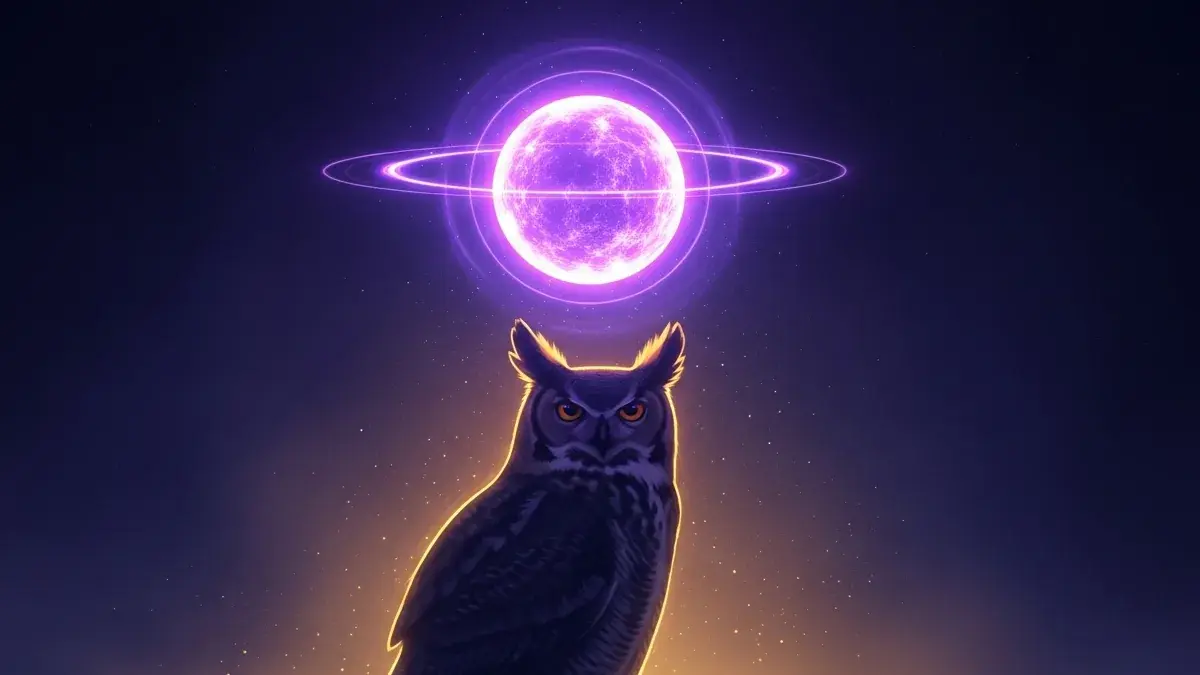
Connecting with your spirit animal through meditation, dreaming, or shamanic journeying is itself a psychic exercise. It teaches you stillness, opens the unconscious mind, and trains you to read symbols and trust your gut, the same skills behind all five clair senses: clairvoyance, clairaudience, clairsentience, clairalience, and clairgustance. Work with your animal guide directly, and your intuitive abilities grow over time.
An almanac
- Ways Covered
- 7 psychic-building practices
- Clair Senses Trained
- Clairvoyance, clairaudience, clairsentience, clairalience, clairgustance
- Core Skills
- Stillness, gut instinct, symbol reading
- Practice Methods
- Meditation, dreaming, shamanic journeying
- Best For
- Beginners and aspiring psychic mediums
- Sixth Clair Sense
- Claircognizance (clear knowing)
- Research Precedent
- Duke's Parapsychology Lab, est. 1935
If you've spent time practicing shamanic journeying or working with animal spirits, you already know something that surprises most newcomers: meeting your spirit animal is a psychic experience. Whether your animal ally shows up in a dream, appears in a meditation, or meets you on a journey, what's happening is a form of telepathic contact. Your energy and theirs overlap for a moment, and something real passes between you.
That moment is also a training ground. Every time you connect with your spirit, totem, or power animal, you exercise the same muscles that make someone a strong psychic reader. Below are seven ways that relationship can grow your intuitive gifts, whether you're brand new to this work or already wondering if shamanic practice or professional readings are in your future.
1. They Teach You the Value of Stillness
Meeting your spirit animal, whether through meditation, dreaming, or a guided journey, almost always starts with quieting your mind and body. An animal guide could technically show up in the middle of a busy day, but the odds go up a lot when you're calm and receptive.
Watch animals in nature (fish aside) and you'll notice they pause constantly before an important decision. They read the wind, scan the horizon, or wait for the right moment to act. In that pause, they take in the information that matters most, and humans work the same way.
Slowing down opens up the space you need to notice the subtle signals that count as psychic information. Stillness isn't passive. It's how you tune the receiver.
- Build a short daily stillness practice, even five minutes counts.
- Notice how your best intuitive hits tend to arrive when you're not rushing.
- Treat pauses during meditation as data-gathering moments, not empty gaps.
2. They Help You Access Your Unconscious Mind
Meditating, dreaming, sitting quietly, or journeying to meet your animal guide all have the same effect: they slow you down enough to dip below conscious thought and into the unconscious mind. That matters more than it sounds like it should. Research on how the brain processes information has found the unconscious handles a huge volume of input every second, while the conscious mind manages only a small fraction by comparison, so most of what your mind works with happens below your normal awareness.
The unconscious is also where fears, buried emotions, and anything you'd rather not look at directly tend to live. Spirit animal work gives you a gentle, guided way to approach that material. As you process and release what's been hiding down there, your confidence and openness to your own psychic impressions tend to grow.
- Journal right after any meditation or journey, even fragments matter.
- Expect old fears or emotions to surface, and let them. Don't push them away.
- Notice that confidence in your intuition tends to grow as you clear out what was blocking it.
3. They Show You How to Read Symbolic Language
During a reading, a journey, or a spirit animal meditation, it's common to be shown symbols rather than plain words. Guides tend to communicate this way because symbols already live in your own personal library of meaning, so it's easier to work with images you already understand.
Picture, for example, a dolphin swimming toward a woman in a flowing floral dress with her eyes closed. Water often represents deep emotion, a dolphin can point to your inner child, and flowers suggest growth or love, with the specific type adding more nuance. Closed eyes might mean there's something the person isn't ready to face yet.
Breaking a scene like this into its parts, the animal, the setting, the gesture, the details, is something you can practice every time your spirit animal appears to you.
- Write down every symbolic detail you notice, not just the animal itself.
- Ask what each element (color, setting, action) might mean on its own before combining them.
- Build your own personal symbol dictionary over time, since your associations matter as much as general ones.
4. They Show You How to Trust Your Gut Instincts
Non-human animals generally don't overthink. When it's decision time, they act on instinct, worth paying attention to since the human body is built for that same kind of fast, wise response.
Many people assume psychic information only arrives through the head, via the crown or third eye. But your gut has a large nervous system of its own that talks to your brain constantly. That may be part of why "trust your gut" has stuck around as advice for so long: it may be more literal than most people realize.
Say an elephant, an animal often associated with leadership, shows up right as you're weighing whether to step into a leadership role. That's not just a pretty image. It's likely a nudge to trust the instinct already telling you to go for it.
- When a spirit animal appears, ask what instinct or decision it might be pointing toward.
- Practice noticing physical gut reactions, not just mental analysis, when you face choices.
- Let animals associated with courage or leadership remind you to act on what you already sense is true.
5. They Teach You to Trust Your Clairvoyance
Clairvoyance simply means clear seeing. When your spirit animal appears, there's usually no question about which animal it is. The challenge is trusting what you saw. It's common to walk away from a meditation and immediately doubt yourself, wondering if you really saw that giraffe or raven or just imagined it.
Consider how animals rely on sight. Birds of prey are famous for spotting movement from long distances. If a hawk can trust what it sees that far away, you can extend the same trust to the images showing up in your own inner vision.
Cats carry an especially long history with this kind of trusted, watchful sight. Ancient Egyptians believed cats were magical creatures that brought good luck into a household, and Bastet, the cat goddess, was said to be the only deity who could take feline form. The penalty for killing a cat, even by accident, was death, and grieving families mummified their cats and shaved their own eyebrows as a mark of mourning. None of that proves a cat's stare carries psychic power, but it shows how long humans have trusted a clear, unblinking gaze as a symbol of seeing what others miss. That's the same quality you build every time you trust your own clairvoyant flashes instead of blinking them away.
There's also a deeper form of seeing worth exploring: merging your awareness with your animal guide so completely that you perceive the world through their senses for a moment. This kind of union has been part of shamanic practice for a long time.
Try it in a safe meditative state. Don't be surprised if it becomes one of the more memorable experiences of your practice.
- Don't second-guess the first image that comes through, write it down before you talk yourself out of it.
- Practice with a single trusted animal guide before attempting a full sensory merge.
- Treat repeated appearances of the same animal as a sign to trust, not dismiss, what you're seeing.
6. They Teach You Clairaudience and Clairsentience
Clairaudience is clear hearing. In a group meditation, it's not unusual for someone to react out loud because they've just "heard" a rhino, elephant, bird, or whale make a sound. It's startling, and it's also a genuine psychic hit.
Animals tend to be direct communicators. A growl, a bark, a cry, a call: these are honest signals, and other animals respond to them as truth without overanalyzing. When you're listening for psychic messages, the same principle applies. Listen to receive, not to formulate a response.
Animals also pick up sounds and frequencies far beyond typical human hearing, a good reminder that your own psychic hearing can be trained with practice.
Clairsentience is clear feeling. Animals are anecdotally reported to grow anxious or act strangely before a seizure or a natural disaster, even though scientists haven't pinned down a reliable mechanism behind it. Your animal spirit guides can help you feel into situations the same way, before they fully unfold. Let those feelings surface and trust them as real information instead of dismissing them, and you'll move through uncertain moments with more grace.
- Notice sounds or "heard" words during meditation and record them immediately.
- Practice listening without planning your response, both with people and during psychic work.
- Pay attention to unexplained gut feelings about upcoming events, and track whether they turn out to be accurate.
7. They Teach You Clairalience and Clairgustance
Clairalience is clear smelling. Clairgustance is clear tasting. Animals are famous for their acute senses of smell and taste. Some can detect scent from miles away, and certain fish rely on taste buds spread across their bodies to find food in murky water where sight is useless.
These senses matter especially in mediumship, connecting with loved ones who have passed on. If you look to spirit animals known for smell or taste as guides, you can strengthen your own ability to pick up on these subtler forms of psychic information.
It's common during a reading to suddenly catch the scent of someone's favorite meal or perfume, or even taste something connected to them, as a form of validation that they're still present in some way. For people who are grieving, this kind of confirmation can be deeply comforting.
If you want to keep developing your shamanic and psychic mediumship skills, your spirit, totem, and power animals are reliable guides for the work. They connect with you, support you, help you heal, and inspire you along the way.
- Pay attention to any unexplained smells or tastes that arise during meditation or readings.
- Consider which animals known for smell or taste might serve as guides for this specific sense.
- Treat these sensory hits as valid psychic data, not random distractions.
The Sixth Clair: Learning to Trust Sudden Knowing
Alongside clairvoyance, clairaudience, clairsentience, clairalience, and clairgustance is a sixth psychic sense worth naming: claircognizance, or clear knowing. This is the moment you simply know what your spirit animal means, all at once, with no image, sound, smell, or taste attached to it. You're not interpreting a symbol or reading a sensation. The meaning just arrives fully formed, the way a name sometimes surfaces before you've consciously tried to remember it.
Claircognizance can feel less dramatic than seeing a hawk mid-meditation or catching a phantom scent during a reading, which is exactly why it's easy to dismiss. There's no vivid moment to point to, just a quiet certainty. But that quiet certainty is still data. If your fox spirit guide appears and you instantly know, without working it out, that it's asking you to be more strategic this week, that's claircognizance doing its job.
- Notice thoughts about your spirit animal that arrive as complete certainty rather than a slow realization.
- Don't discount an insight just because you can't trace the logical steps that led to it.
- Practice distinguishing a claircognizant download from ordinary wishful thinking by checking whether it feels neutral and clear, not emotionally charged.
What Serious Researchers Have Actually Studied
Working with a spirit animal can feel like a private, unprovable thing, so it helps to know that the broader question, whether living beings can sense more than their five physical senses explain, has been studied formally for nearly a century. In 1935, parapsychologist J.B. Rhine secured funding to establish the Parapsychology Laboratory on Duke University's East Campus, a facility built specifically to test claims of extrasensory perception under controlled conditions. Rhine and perceptual psychologist Karl Zener developed the now-famous 25-card ESP deck, five each of a star, circle, cross, wavy lines, and square, and ran thousands of trials, including the Pearce-Pratt series (1933-1934), which tested whether distance weakened a person's intuitive hits.
That research was aimed at human telepathy, not animal spirit guides specifically, and the scientific community has never fully settled the debate it started. Still, a real university lab spent decades taking the question seriously rather than dismissing it outright. When you journal a spirit animal encounter and try to verify later whether the message held true, you're running a small, personal version of the same experiment: treating an intuitive hit as a claim worth testing, not just a feeling to shrug off.
Frequently Asked Questions
Do I need a spirit animal to develop psychic abilities?
No, but the relationship can speed up your growth. Connecting with a spirit animal through meditation or journeying naturally trains the same skills, stillness, symbol reading, trusting your senses, that underlie strong psychic development.
What if I can't tell whether what I'm sensing is real or imagined?
This is one of the most common hurdles. Write down what you see, hear, feel, smell, or taste immediately, before you second-guess it. Trust your first impression the way animals trust their own senses. It's a skill that builds with repeated practice.
Which psychic sense should I focus on first?
Start wherever your spirit animal experiences naturally show up. If you tend to see vivid images, lean into clairvoyance. If you hear sounds or words, work with clairaudience. Let your existing strengths guide where you focus your practice.
What is claircognizance, and how is it different from the clair senses I already have?
Claircognizance is clear knowing: a piece of intuitive information that arrives as instant certainty rather than through an image, sound, feeling, smell, or taste. If your spirit animal's message shows up as a flash of understanding you can't quite trace back to reasoning, that's this sixth sense at work, and it's just as valid as anything you see, hear, or feel.
Why are cats so often linked to psychic power and the spirit world?
The association runs deep historically, not just spiritually. In ancient Egypt, cats were considered magical creatures believed to bring good luck, and the goddess Bastet was the only deity believed able to become a cat. Killing one, even by accident, was punishable by death, and grieving owners mummified their cats and shaved their eyebrows in mourning. That centuries-old reverence for a cat's watchful, unblinking gaze is a big part of why the animal still reads as psychically alert today.
Is there any real research behind the idea that intuition or psychic senses exist?
Yes, though it remains scientifically contested. Duke University ran a dedicated Parapsychology Laboratory starting in 1935 under J.B. Rhine, testing extrasensory perception with controlled card experiments for decades. It never produced consensus proof, but it shows the underlying question has a real research history rather than being pure invention.
More from Spirit Guides


Sources
Claims on this page were checked against these published sources.
- Enteric nervous system
The enteric nervous system in humans consists of some 500 million neurons ... it normally communicates with the central nervous system (CNS) through the parasympathetic ... and sympathetic ... nervous systems, [but] is capable of operating independently of the brain and spinal cord.
Read the source → - Bird vision
An American kestrel can see a 2–mm insect from the top of an 18–m tree ... Some large eyed raptors (Wedge-tailed eagle, Old world vultures) have a 2 times higher spatial resolution than humans.
Read the source → - Catfish
Many larger catfish have chemoreceptors across their entire bodies (especially the barbels), which means they 'taste' anything they touch, and 'smell' any chemicals in the water. ... 'In catfish, gustation plays a primary role in the orientation and location of food.'
Read the source → - Infrasound
whales, elephants, hippopotamuses, rhinoceroses, giraffes, okapis, peacocks, and alligators are known to use infrasound to communicate over distances—up to hundreds of miles in the case of whales ... The roar of the tiger contains infrasound of 18 Hz and lower.
Read the source → - Unconscious mind
Cognitive research reveals that individuals automatically register and acquire more information than they are consciously aware of or can consciously remember and report.
Read the source → - Joseph Banks Rhine
In the fall of 1935, Rhine secured funding to support the establishment of the Parapsychology Laboratory on the East Campus of Duke University, as a facility separate from the Psychology Department. ... The result was the well-known ESP cards (originally called Zener cards), a 25-card pack with five each of a star, a circle, a cross, a set of wavy lines, and a rectangle (later changed to a square).
Read the source → - Cats Rule in Ancient Egypt
Egyptians believed cats were magical creatures, capable of bringing good luck to the people who housed them. ... Only one deity, the goddess named Bastet, had the power to become a cat. ... Cats were so special that those who killed them, even by accident, were sentenced to death. ... When the cats died, they were mummified. As a sign of mourning, the cat owners shaved off their eyebrows, and continued to mourn until their eyebrows grew back.
Read the source → - Can animals predict earthquakes?
consistent and reliable behavior prior to seismic events, and a mechanism explaining how it could work, still eludes us.
Read the source →
Not sure which animal is yours?
Consult the quiz