Animal Facts
Panther Facts & Trivia: Fascinating Things to Know
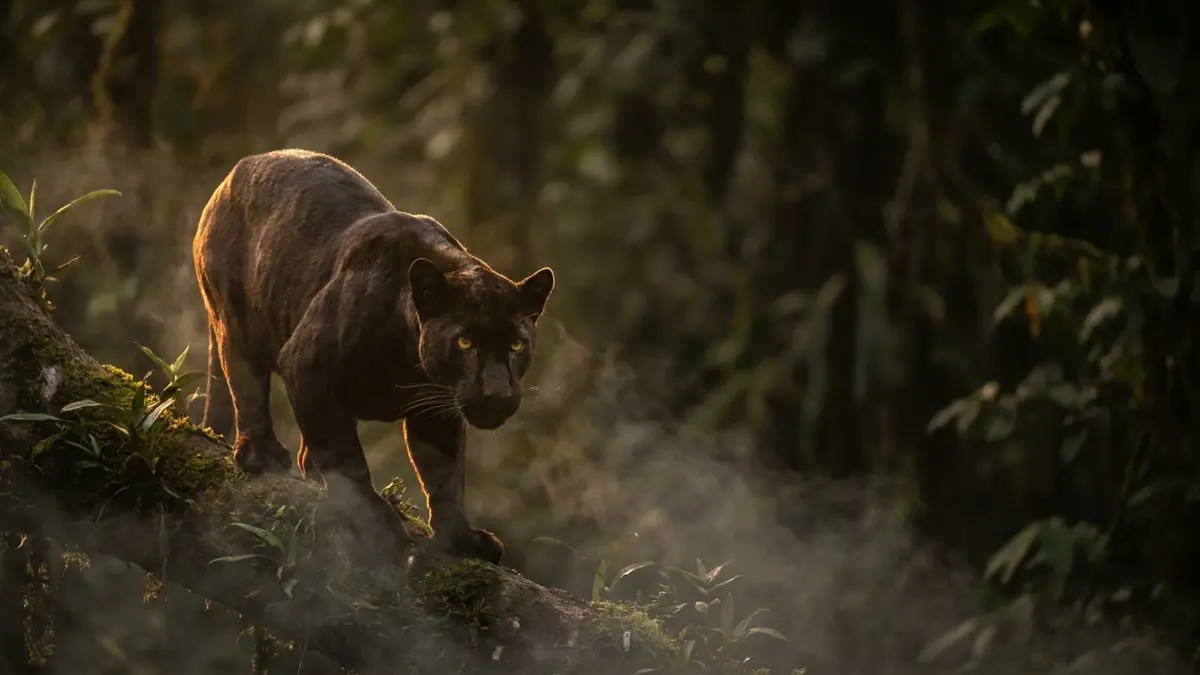
"Panther" isn't a single species. It's a common name that usually points to melanistic (black-coated) leopards and jaguars, plus the Florida panther, and together they range across the Americas, Africa, and Asia. Panthers also have the vocal anatomy to truly roar, something smaller cats can't do, and the black panther is known as one of the smartest, most formidable hunters in the Americas. The Florida panther is the opposite case: it's one of the rarest mammals on Earth and a major conservation priority.
An almanac
- Size
- Among the largest big cats
- Found in
- Americas, Africa & Asia
- Habitat
- Forests, swamps & grasslands
- Coat
- Dark brown to black
- Species
- No fixed count (a common name)
- Fun fact
- Can roar, unlike smaller cats
Say the word "panther" and most people picture a sleek black shadow moving through the jungle. But the reality is more layered: it's an umbrella name for several big cats that share dark coats and a reputation for power, and the real details behind that reputation hold up on their own.
Fascinating Panther Facts
Panthers rank among the heavyweight champions of the cat world, and they back up that size with a voice to match — unlike smaller cats, they can actually roar rather than just meow or chirp. The black panther in particular has earned a fearsome reputation across the Americas as a smart, highly capable hunter, while its Florida cousin sits at the opposite end of the spectrum: it's one of the rarest and most at-risk mammals on the planet today.
Geographically, panthers turn up on three different continents, and because it's a common name rather than a taxonomic group, there's no fixed species count under the panther umbrella. Their coats run from deep brown to solid black, and they've adapted to thrive in dense woodlands, wetland swamps, and open grassland alike.
- Built for power: among the largest big cats, with the vocal cords to roar rather than purr
- Reputation: the black panther is considered one of the smartest and most formidable hunters in the Americas
- Conservation status: the Florida panther is critically endangered, one of the rarest mammals alive
- Global range: found across the Americas, Africa, and Asia
- Diversity: no fixed species count — a common name, not a taxon
- Coat colors: dark brown through black
- Habitat: forests, swamps, and grasslands
- Covering: fur
- Classification: Kingdom Animalia, Phylum Chordata, Class Mammalia, Order Carnivora, Family Felidae
Panthers in Movies & Music
Hollywood has borrowed the panther name more than once, though not always for an actual panther. The bumbling detective comedy The Pink Panther hit theaters in 1963 and turned its title into a household name, while the 1995 drama Panther told a very different, grittier story.
Musically, composer Henry Mancini wrote the instantly recognizable "Pink Panther" theme, one of the most famous jazz-inflected film scores ever recorded.
Famous Panthers
A few panthers have become real pop-culture icons. The animated Pink Panther — the suave, silent cartoon cat from the film series of the same name — is probably the most recognizable of the bunch. Bagheera, the wise black panther who watches over Mowgli in The Jungle Book, brings a different, protective energy to the archetype.
Marvel's Black Panther has given the animal itself a modern cultural boost too, with the hero's imagery often described as blending fierce strength with a nurturing, protective quality.
Frequently Asked Questions
Is "panther" one single species of animal?
Not exactly. "Panther" is a common name, not a taxonomic group, so there's no fixed species count behind it. It's used as an umbrella term for several dark-coated big cats: usually melanistic leopards, melanistic jaguars, and the Florida panther, which is actually a puma.
Can panthers actually roar?
Yes. Panthers have the vocal anatomy for a true roar, a trait only a handful of big cats share, and it's part of why they're seen as such formidable predators.
Why is the Florida panther considered endangered?
The Florida panther is one of the rarest mammals on Earth, and that makes it a major conservation priority. Other panther populations are more widespread, found across forests, swamps, and grasslands.
More about the Black Panther
More from Animal Facts
Not sure which animal is yours?
Consult the quiz