Birds · Spirit animal
Turkey Spiritual Meaning & Symbolism
The humble bird that carries the harvest on its back and teaches you to trust your own worth.
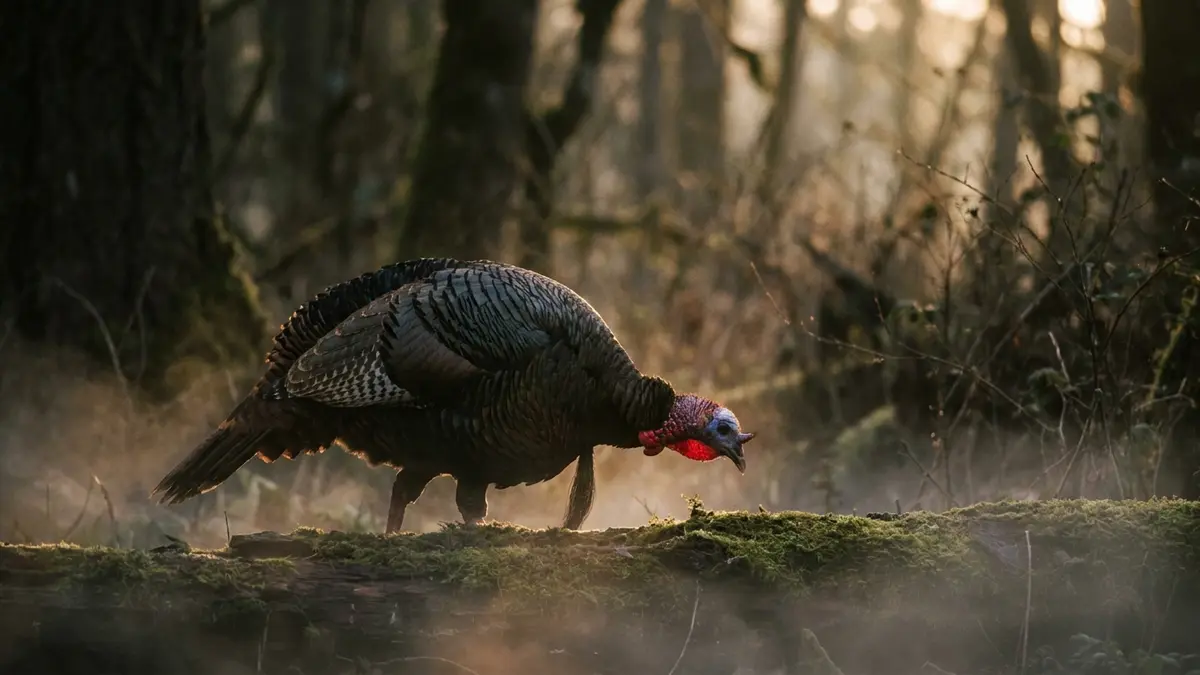
Turkeys symbolize abundance and harvest and a reminder to be generous and trust yourself. When they show up in dreams, they're likely to appear when you're going through a period of abundance or growth.
An almanac
- Core message
- Give freely, trust your own worth
- Spirit animal
- Quiet generosity, steady self-belief
- Totem for
- Generous, family-centered people
- Power animal
- Steadies your nerve, guards the flock
- In dreams
- Growth and coming abundance
- Element
- Fire
- Sacred to
- Aztec Chalchiuhtotolin, Hopi Koyona Katsina
- Native range
- North & Central America only
The turkey is rarely celebrated or honored, but it's certainly a major bird when it comes to the symbolism of animals. This grounding, honest animal has fed, clothed, and nourished humankind for centuries. Because of its down-to-earth nature, it is a potent spiritual guide. The most important messages when the turkey shows up for you are that it's okay to give from your own strength, and you need to stay connected with the ground beneath your feet.
Turkey Symbolism & Meaning
Turkey's reputation as an unglamorous bird hides a deep well of spiritual power. Many Native American origin stories credit Turkey with teaching early people how to grow corn and stand firm against dark forces. One well-loved tale describes a great flood in which every creature fled to higher ground carrying something precious.
Turkey, last to run, secretly tucked seeds and pods into its feathers so the world could replant after the waters receded. The extra weight nearly drowned it, and the long, straining stretch of its neck to stay above water is said to explain why turkeys have such long necks and a rough, gobbling voice today.
Onlookers mocked Turkey for appearing to save only itself, until the seeds spilled out and its sacrifice was revealed. Because of stories like this, and centuries of humans depending on turkeys for meat, feathers, and bone tools, this bird's symbolism ties closely to Mother Earth, harvest, and abundance.
Turkey is linked to autumn, the season it flocks together after summer hatchlings mature, and to the fire element, which governs passion, transformation, and the courage to burn away what no longer serves you.
Turkey Spirit Animal
Turkey is your spirit animal if:
• You believe in yourself. You can be a seed carrier, as they say. • You quietly give to people around you who are struggling. • You are able to take care of yourself even if you help people around you.
When you see a turkey, you might notice it carries some gifts. Other people might have a hard time asking for help. If you get a gift like this, it is a sign that someone made sacrifices to open a door for you.
You should look at the resources around you and take care of them. This is what turkey does. Turkey is also a symbol of abundance.
A turkey also reminds you to look at the way you live your life now. What food are you eating?
Does Turkey fit you?
Tap the ones that sound like you — 6 traits, no right answer.
0 of 6 Nothing picked yet — start tapping.
Turkey Totem Animal
Born under the Turkey totem, you're generous, you're selfless, and you have a gift for making others happy. Family, friends really mean a lot to you. You spend time enjoying nature and get nourished by being outdoors. You can sometimes attract people who don't give back to you what you give them, which is something to work on.
If you feel scattered or overwhelmed, going outdoors helps clear your head. Being generous isn't just something that comes naturally to you, it's what keeps your mental batteries charged up. You're happiest when making everyone around you happy.
Turkey Power Animal
Benjamin Franklin famously groused, in a private 1784 letter to his daughter, that the Bald Eagle had "bad moral Character," praising the Turkey instead as "a much more respectable Bird" and a true native of America, even though he never actually campaigned to make it the national symbol. He went further still, calling Turkey "a bird of courage" that "would not hesitate to attack a grenadier of the British guards who should presume to invade his farm yard with a red coat on," a boast anyone who has faced down an angry Tom Turkey, puffed up and charging like a small tank, can easily believe.
Call on Turkey as a power animal when you feel disconnected from your true self. Turkeys possess remarkable survival instincts, weaving and darting unpredictably to shake off predators; it can look like panic, but the bird always knows precisely where it's headed.
Lean on this energy when your own path feels erratic but your inner compass is actually sound. Turkey also protects its flock without flinching, so it lends you backbone when facing spiritual or interpersonal threats. If you're trying to become a more active, trusted part of your community, or want to mend a rift with the people around you, Turkey opens that door.
It also reassures you that guiding or mentoring someone else is worth doing, even if you feel unsure of your own qualifications.
Native American Turkey Symbolism
The turkey plays an important role in many Native American traditions. In the Shawnee, Navajo, and Zuni tribes, there's a Turkey Clan. The turkey is also important to the Creek people. Special feathers are used in rituals.
According to local folklore, the turkey can play different roles. Sometimes it's a trickster or a bashful creature, and sometimes it's a rain spirit that can tell the future. There's even an Aztec myth that describes a flood caused by a monkey who couldn't follow orders.
Turkey In Dreams
Dreaming of a turkey generally indicates growth, whether personal or in a project, and optimism for the future. If you see the turkey look away from you, something may be clouding your judgement and making you less sure. If the turkey turns around, good luck and new opportunities could be coming your way. If you give away turkeys in a dream, this means that you have plenty to share with others and your generosity will be recognized.
Dreaming of a dead turkey shows that someone might be trying to make fun of your ideas or beliefs. You should protect your feelings by not taking what they say too seriously. Dreaming of a flying turkey suggests that you may receive some well-deserved recognition or promotion at work soon. A caged turkey could mean that you feel trapped in certain situations right now – it could help to think about what's holding you back from doing what you really want.
Feeding a turkey means that luck and success are coming your way! However, if the turkey pecks at you in your dream, there may be times when you need to put aside your own needs to help someone else.
Finally dreaming of a white Turkey is often interpreted as being surrounded by positive people who will support any changes or risks taken during this period; whereas Black Turkey often signals hesitation over potential rewards!
Turkey Spiritual Meaning
Turkeys are powerful spirit animals that often represent family, gratitude, and generosity.
Whether you work with a wild turkey spirit guide, honor a turkey totem, or call on a turkey power animal in times of need, these beautiful birds can help you release negative thoughts and embrace gratitude and generosity in your life. They can also remind you of your own value, especially in the face of outside doubt.
In spiritual symbolism, turkeys can teach you to give generously from the heart and remain rooted in gratitude, even when life gets hard. They know how to ground themselves to the Earth while also connecting with the sacred perspective from above. This is a balance that is valuable to seek for those who feel “in-between” worlds or torn between “down-to-Earth” friends and family members and the world of spirituality.
Turkey Gods & Sacred Spirits
Turkey's spiritual resume includes at least one full-fledged deity. The Aztec people honored Chalchiuhtotolin, the "Jade Turkey," a nahual (animal disguise) of Tezcatlipoca, the great god of night and sorcery. As Chalchiuhtotolin, Tezcatlipoca ruled over disease and plague, yet the same feathered form could just as easily cleanse a person of guilt and clear the way for a fresh start. It's a striking reminder that Turkey's medicine cuts both ways: the bird that carries sickness can just as easily carry the cure, depending on how honestly you meet it.
Further north, the Hopi people welcome Koyona, the Turkey Katsina, one of the many spirit-beings understood to bridge gods and mortals, capable of bringing rainfall, healing, fertility, or protection when properly honored. Koyona is considered an uncommon katsina, appearing specifically at First Mesa alongside other bird katsinas during the Mixed Dances of late spring, a quiet, specialized presence rather than a headline performer.
Taken together, these traditions suggest Turkey has never been a background bird. Whether ruling disease and redemption in Mesoamerica or arriving rarely but meaningfully in Hopi ceremony, Turkey's sacred role has always carried real weight, even when the bird itself stays humble.
Why Is It Called a "Turkey"?
When English speakers first started using this word, they used it for a different kind of bird in Africa, which had been brought to England from the Ottoman Empire. When an American version of that bird appeared in England, they kept the word "turkey." Of course, it's not really a turkey at all.
This new bird in the Americas was domesticated in Mexico more than 2,000 years ago and exported to Europe through Spain by 1519. But what's interesting is how quickly this happened.
The word eventually took on another sense. By the 1920s, people would sometimes call a show that turned out badly a "turkey" show. And then soon afterward people started using it to mean any kind of big mistake or bad thing that had happened.
It's ironic when you think about it: this bird was recognized as one of the most spiritually important birds on earth thousands of years ago — and then people started using its name to describe anything that was stupid or failing.
Frequently Asked Questions
What does Turkey symbolize spiritually?
Turkey is a symbol of abundance, harvest, and generosity. It is also a reminder to trust in yourself, even if others may misunderstand your intentions or motives.
What does it mean when a Turkey Spirit Animal appears to you?
When a turkey appears to you, it's saying that the season for giving and receiving is at hand. It could be time to give some energy or help to the people around you, and at the same time, stay open to surprising gifts and opportunities that might come your way.
What does dreaming about a Turkey mean?
Most dreams of turkey signify progress and abundance; however, the details count: giving away a turkey signifies generosity, a dead turkey warns of criticism aimed at your ideas.
Is the turkey mentioned in the Bible?
The turkey isn't mentioned in the Bible. This is because it's native, so it was geographically unknown to the people living in the Biblical world.
However, this doesn't mean that they are any less popular with modern Christians as a symbol of feasting and gratitude. That association probably comes from the later tradition of Thanksgiving here in America.
What does a black or white turkey mean in a dream?
White turkeys signify that the life you're living is peaceful, and full of people who support your growth. Black turkeys are a warning, signaling that you need to stop delaying the change that could actually improve things.
Where does the phrase "talk turkey" come from?
The phrase "talk turkey" comes from a slang use of "turkey" that developed in the early 20th century, meaning an unsuccessful effort, or a meaningless show. The phrase takes its meaning from this usage: it means talking plainly and honestly, without fussing or pretense.
Turkey also represents
Sources
Claims on this page were checked against these published sources.
- Turkey Mythology (Native American Indian legends and folklore about turkeys)
Several tribes incorporated turkeys into their clan systems, including the Creek (Pinwalgi clan), Shawnee, Miami, Navajo, and Zuni (Tona-kwe clan).
Read the source → - Chalchiuhtotolin
Aztec god of disease and plague ... In Nahuatl, the name means "Jade Turkey" ... Tezcatlipoca's nahual
Read the source → - Hopi Pueblo Koyona Turkey Katsina Doll by Roy Tawahongva
the Turkey Katsinas appear in the kivas with the other bird katsinas at night or during the Mixed Dances of late spring. He is not a common katsina and appears at First Mesa only.
Read the source → - Kachina
a link between gods and mortals ... a powerful being who, if given veneration and respect, can use his particular power for human good, bringing rainfall, healing, fertility, or protection
Read the source → - Turkey (bird)
The forests of North America, from Mexico (where they were first domesticated in Mesoamerica) ... Turkeys were likely first domesticated in Pre-Columbian Mexico ... Turkeys were first exported to Europe via Spain around 1519 ... Turkeys arrived in England in 1541.
Read the source → - turkey
Clipping of turkey-cock and turkey-hen, originally denoting the guinea fowl, an African bird that was first imported to Europe through Turkey, but there is some controversy over the origin.
Read the source → - Benjamin Franklin to Sarah Bache, 26 January 1784
is besides, (though a little vain and silly tis true, but not the worse emblem for that) a bird of courage, and would not hesitate to attack a grenadier of the British guards who should presume to invade his farm yard with a red coat on ... the first of the species seen in Europe being brought to France by the Jesuits from Canada, and served up at the wedding table of Charles the ninth.
Read the source →