Mammals · Spirit animal
Tasmanian Devil Spiritual Meaning & Symbolism
Fierce voice, tender heart, and the discipline to know where to draw the line
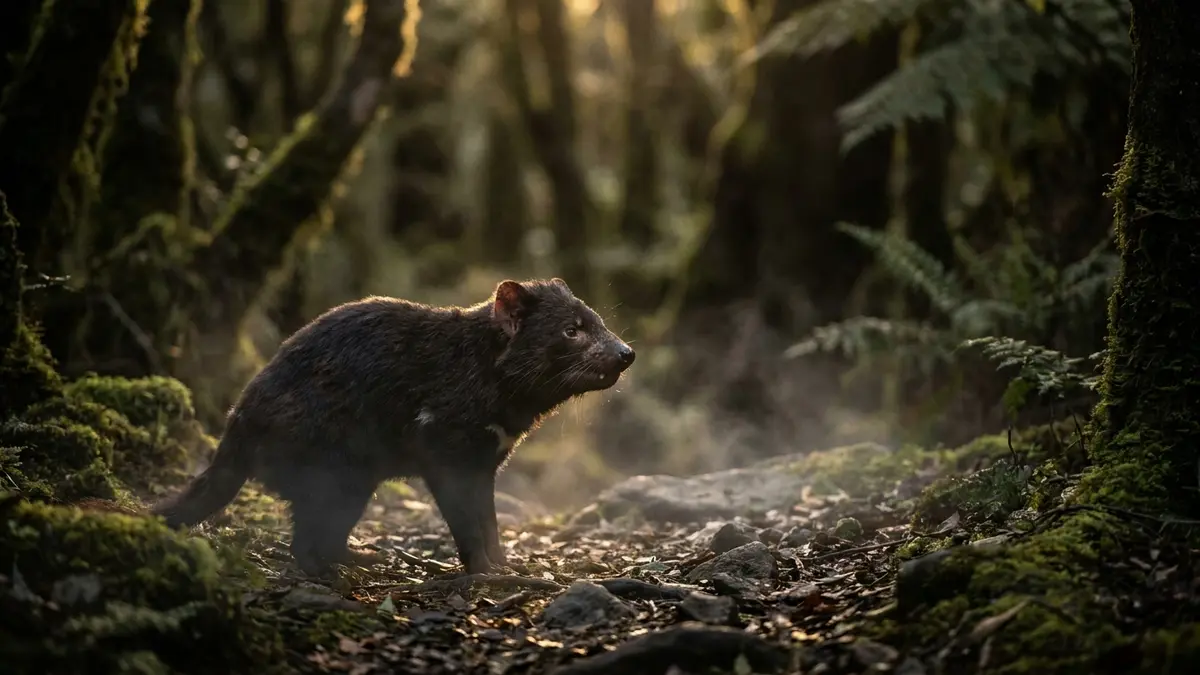
Called on as a spirit animal, the Tasmanian Devil symbolizes an unmistakable voice paired with firm boundaries — proof that a gentle-looking creature can still be fierce enough to protect what matters. It shows up when you're facing a confrontation that feels bigger than you: the message is that you already have what's needed, and that composure beats combustion. It asks you to hold ferocity and tenderness together, independence and awareness together.
An almanac
- Core message
- Fierce voice, tender heart, firm boundaries
- Spirit animal
- Face conflict with quiet confidence
- Totem for
- Blunt, strong-willed truth-tellers
- Power animal
- Rein in temper, restore self-command
- In dreams
- Anger from incomplete information
- Watch for
- Holding grudges, quick temper
- Name origin
- 'Beelzebub's pup' — named for its screams
- Aboriginal name
- Purinina (palawa kani)
- Today
- Largest carnivorous marsupial alive
Before Tasmanian Devils became cartoon whirlwinds, they were real dog-sized marsupials, and they were loud. That refusal to be ignored, along with the contrast between their soft, round faces and their savagely powerful bite force, make up the heart of their symbolism.
Tasmanian Devil Symbolism & Meaning
The Tasmanian Devil gets its reputation from a single sound: its startling screech, loud enough to inspire the name of an animated character. Aside from the noise, it climbs and swims mainly to escape being eaten, and marks its territory with a pungent odor that comes from glands near its tail.
Its mottled coat lets it hide in shadow or scrub, which means that the animal stands for setting boundaries. It can move fast but has the strongest bite relative to its size of any living mammal.
Tasmanian Devils stay with their mate just long enough for her to have a baby, then move on; and though young compete for her milk, they also fight for priority. Denning in one place for years ties this animal to earth, home, and stability. Its head-whiskers and nose make it almost psychic about its surroundings.
Tasmanian Devil Spirit Animal
If the Tasmanian Devil shows up for you, it's a sign that you're facing down a confrontation you don't feel ready to handle. Maybe your own inner battles are what have to be overcome.
This spirit animal reassures you: you have everything you need to win through whatever challenges lie ahead.
It tells you to think carefully, to be direct and honest, and to tackle what's blocking your path.
It's also a warning if you tend to explode with anger. Instead, save your energy for when it matters — save it up for the bigger problems.
Another part of its message is that sometimes running away is better than fighting. It's okay if you missed your chance or didn't have the right information or feel pressure from every direction. The key is being patient and choosing not to react — sometimes, forgiveness comes before revenge. This animal prefers control over rage; gather the facts before acting.
Does Tasmanian Devil fit you?
Tap the ones that sound like you — 6 traits, no right answer.
0 of 6 Nothing picked yet — start tapping.
Tasmanian Devil Totem Animal
People with the Tasmanian Devil totem speak plainly. They will tell you exactly what they think, and they don't try to soften their words. If you have this totem, other people may see you as being rude or judgmental.
You can be stubborn. You don't like it if other people criticize your ideas or abilities. If you believe something to be true, then no amount of arguing will persuade you otherwise.
People who carry this totem are usually quite good at communicating their ideas in ways that are easy to understand. They say exactly what they mean, and it's clear that they're not trying to confuse people or give mixed signals. When someone decides to ignore the Tasmanian Devil person's advice, he or she does so at his or her own risk.
But — holding grudges isn't a strong point for Tasmanian Devil people.
People with this totem need to remember that forgiving other people is an important part of getting over problems and moving on.
Some people need help calming down before moving on from arguments.
Tasmanian Devil Power Animal
Ask the Tasmanian Devil to help you as a power animal if your temper needs help keeping it under control. If you think about it, you'll see what triggers your angry reactions. Then you can learn to use your temper to pay attention rather than be controlled by it.
Working with this ally teaches you to respond on purpose rather than on impulse. Plus, when motivation flags or confidence dries up, the Tasmanian Devil can show you how to revive yourself and continue on course.
Tasmanian Devil Symbolism in Australian Lore
Tasmania is well known as the home turf of the Tasmanian devil, one of that island's most recognizable symbols. Even though no single Aboriginal legend connects to this animal, people recognize it as an important element of Tasmania's cultural and natural identity.
People familiar with the voice of the Tasmanian devil associate that sound with leadership. The animal has a large presence in local culture, working almost as a mascot. Locals, conservation groups try to protect this small carnivorous marsupial from threats posed by disease and habitat pressure. This threat has been named and timed: Devil Facial Tumour Disease was first documented in 1996 in Tasmania's northeast.
Since then, the disease has spread throughout much of Tasmania and has driven population declines as high as 80 percent in some areas. It has also carried with it a heavy title: the Tasmanian devil is now Earth's largest surviving carnivorous marsupial, so its survival matters for more than just Tasmania's future.
Tasmanian Devil in Dreams
Seeing a Tasmanian devil in a dream often means that anger — either yours or someone close to you — has been triggered by incomplete information, so stop to get the whole story before reacting.
- A devil with its back turned is a sign that you’re suppressing your true feelings, ignoring your fears, and this might cut you off from your life’s purpose.
- A devil moving confidently toward you is an indication of personal power. It suggests that now is the time to take action in pursuit of a goal.
- A screeching devil calls for vigilance. It warns you to protect something important by speaking bluntly so there can be no confusion about your intent.
- A defensive posture in a dream of a Tasmanian devil might be the right time to learn more about what’s at stake and how to strengthen your boundaries.
Tasmanian Devil Spiritual Meaning
The Tasmanian Devil combines ferocity with vulnerability, representing a lesson about when to fight and when to back down. This spirit animal encourages you to stay true to your voice, protect your territory, and stop apologizing for boldness that comes from honesty, not cruelty.
However, the Devil also cautions against letting your emotions run wild. Even the toughest warriors need rest, gentleness, and forgiveness. Peace and survival are not mutually exclusive.
Why It's Called a 'Devil'
Long before the cartoon whirlwind existed, European settlers gave this animal its name for a much older reason: they heard it before they ever saw it. Nights on the island carried its far-off screeches and growls, and settlers, certain something infernal was loose in the dark, branded it Beelzebub's pup. Early naturalists went further, filing it under scientific names like Sarcophilus satanicus and Diabolus ursinus, and the animal was left with a reputation for viciousness it never fully earned.
That mismatch between the sound and the source is worth sitting with. The voice arrived long before the truth of the creature did, and the label stuck for good. Anyone who's ever been misread for their own directness will recognize the pattern — a startling noise gets mistaken for menace, when really it's just an animal, or a person, refusing to stay quiet. The devil's actual Aboriginal name, purinina in the palawa kani language, carries none of that hellish weight: how a thing sounds and what it actually is are two separate stories.
The Scavenger's Wisdom
Most of the Tasmanian Devil's food is carrion that's already dead. That's what Tasmanian Devils do! It is the ultimate scavenger animal. It has a bite force that makes its jaw so strong that it can crush right through bone and cartilage to reach food that has already been left behind.
The Tasmanian Devil hunts by scavenging for carrion that other animals have abandoned.
So for all these reasons, the medicine of this animal will be about using what's already there instead of chasing after things that aren't right there in front of you. Instead they think about where they can find food or closure even though others have abandoned them already.
Frequently Asked Questions
What does the Tasmanian Devil symbolize spiritually?
Tasmanian Devils symbolize the unmistakable voice of someone with clear boundaries: a gentle demeanor that is fierce enough to protect what's important, with composure often serving better than confrontation.
What does it mean when a Tasmanian Devil appears in a dream?
When a Tasmanian devil appears in a dream, it probably means anger that comes from an incomplete understanding of things, that stems from denied emotions, or the hope for success on projects related to personal power.
What kind of person has the Tasmanian Devil as a totem animal?
Direct, quick minded, and hard to be talked out of an opinion, with a will that rarely bends but which would benefit from working on forgiveness.
Why is the Tasmanian Devil called a 'devil'?
European settlers gave it the name 'Beelzebub's pup' because of its unearthly screeches and growls. They also called it a devil, based on scientific classifications like Sarcophilus satanicus. But Tasmanian aboriginals call the animal 'purinina,' which has no association with the devil.
Is the Tasmanian Devil a solitary or social animal?
Both. The Tasmanian devil is usually solitary, so it will go off on its own to den and hunt alone. But it also can be very social, because as many as a dozen Tasmanian devils can gather around a carcass and sort out rank by posturing and making specific vocalizations without really fighting.
Tasmanian Devil also represents
Sources
Claims on this page were checked against these published sources.
- Tasmanian devil
The Tasmanian devil has the most powerful bite relative to body size of any living mammalian carnivore
Read the source →