Mammals · Spirit animal
Warthog Spiritual Meaning & Symbolism
The tusked, thick-skinned survivor of the savanna, built on situational courage, self-sufficiency, and pride in an unpolished exterior.
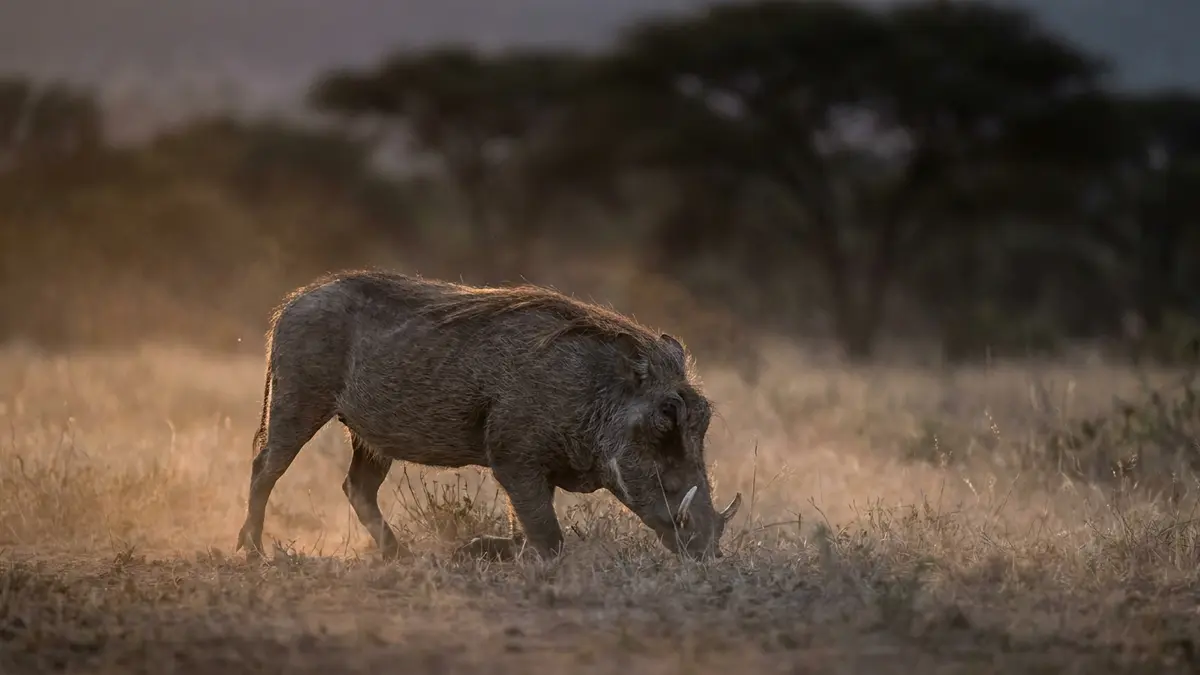
When the warthog appears, it's all about situational courage and strength, self-sufficiency, and pride in a rough exterior. The spirit animal of the warthog favors flight over fighting but will strike decisively when it feels truly cornered. It also has a way of protecting us from harm and having inner worth shining through even though the outside may seem a bit rough. This symbolism often appears in dreams that are asking us to handle conflict with logic rather than raw emotion.
An almanac
- Core message
- Toughness and gentleness can coexist
- Spirit animal
- Stop stalling and face fear head-on
- Totem for
- Driven, protective, solitude-loving people
- Power animal
- Facing fear when feeling boxed in
- In dreams
- An avoidable conflict; need for solitude
- Cultural roots
- East African folklore (Lion, Elephant tales)
- Scientific name
- Phacochoerus africanus — Greek for "wart-pig"
- Lifespan
- 7–11 years wild; up to 21 in captivity
The warthog wears its history on its face in the form of its upward-curving tusks and its thick, wart-like plating, protective features built for both mealtime brawls and brawls during mating season. Wandering the open grasslands of Kenya and Ethiopia and climbing as high up as Mount Kilimanjaro, the warthog is a pig-family relative of the boar. However, it may seem tougher than it actually is; it's a mostly peaceful animal that knows when to run and when to fight.
Warthog Symbolism & Meaning
The warthog has two sharp, forward-pointing tusks and bumpy armor plating on its face. The tusks aren't just tools for digging and chewing but also serve as weapons in fights. In fact, the name 'wart hog' comes from those 'wart-like' bumps.
The warthog prefers wide-open spaces. It's mostly a herbivore, but it will consume meat if nothing else is available.
If threatened, the warthog will run away rather than fight. It can sprint at speeds of up to 30 mph! If cornered and forced to fight, a warthog can slash with its tusks and teeth.
Another interesting thing about warthogs is how they can go without water for long periods of time – sometimes even months! Also, these animals like to move into abandoned aardvark burrows to live in them – they're practical but not lazy. Interestingly enough, when moving into their new home they do so rear-first so that the entrance of their home is pointed at them rather than behind them... Just in case.
One interesting thing about this animal is its ability to allow oxpecker birds onto its body so they can pick parasites from its skin without harming it; this shows both trust from one creature to another as well as a beneficial partnership between species!
Warthog Spirit Animal
The warthog spirit animal makes an appearance when it's time to stop delaying and start acting. When you see it, it's a sign you should take advantage of the opportunities that are around you. It also shows up when you have a difficult situation that you've been putting off. These situations can be emotional or they might be dealing with larger issues in your life.
The warthog spirit animal can also mean that there's a challenge coming that is bigger than yourself or one that involves your family or friends. In the business world, the warthog represents going out on your own by starting your own business or working for yourself instead of someone else.
On the other hand, seeing a warthog might mean that you're too self-conscious about your looks or about how other people perceive you. In this case, the warthog is trying to tell you to focus on inner qualities instead of outer appearance.
Does Warthog fit you?
Tap the ones that sound like you — 6 traits, no right answer.
0 of 6 Nothing picked yet — start tapping.
Warthog Totem Animal
The warthog symbolizes persistence. Those born under the warthog are goal-driven and stubborn. They value effort over luck, and you'll see them working hard toward their goals.
Despite that focus, these people are often caring and generous. The hardships they've overcome have built up an emotional shell around them. This protects them from showing their more sensitive side to others, but those close to them know that a nurturing kindness lies beneath that outer toughness.
Warthog people are happiest working toward their goals alone. To recharge, they find solitude restorative. They can seem standoffish to others, but they welcome close friends into their lives.
Those who have the warthog as a totem animal have an innate protectiveness of vulnerable people, children especially, although they're usually keen to avoid confrontations themselves.
Warthogs also show a side of tenderness — to animals and children alike — that can surprise others. There's a wild streak in there too, which can also come as a surprise!
The appeal of these people is in how they combine gentle protectiveness with mischievous enjoyment of new experiences. This can make it hard for them to fit in with the crowd or conform to others' ideas about what is "normal". But you'll find these free-spirited traits in their sense of humour and natural love of playfulness.
Warthog Power Animal
The warthog is a powerful spirit guide if you're feeling boxed in and need help from a protector. Or it might be especially helpful if the pressure is on because of your home or family. One great thing about working with this ally is that it encourages you to face your fears directly instead of hiding from them, which can be scary but necessary to do once in a while. The warthog's greatest gift is helping you face fears, as well as showing up when you need it most to help protect yourself or someone else in danger. It also understands what it feels like to be mocked for how you look or come across, so if this happens to you regularly it can offer guidance on how not give those comments any power over your life anymore.
Warthog in African Folklore
The warthog has shared many landscapes with humans for a long time, and folklore about it carries true ethical weight along with a reminder of the link between our species and the wild. From pop culture we are best acquainted with the warthog as Pumbaa from The Lion King, though this name isn't exactly flattering: in Swahili, Pumbaa means negligent or careless or foolish. Yet older tales go deeper. For example, one story says that these animals feed on bendy knee joints because long ago a warthog tried to outwit a lion by bluffing that he was building a den that was about to collapse on the lion. But the lion was smarter and saw through it: sparing the warthog's life only on condition that he stay humbled forever after, on his knees.
Another story tells of how long ago the warthog had the finer tusks and lent them to an elephant for a single night's celebration. Ever since then, the elephant kept those prized tusks while leaving the short tusks to the warthog. A third story says that once a vain warthog who showed off in front of a grumpy lion ended up earning his ugly rough face. He fled straight into a napping porcupine's quills during all of this prideful posing around, and now got no sympathy for his boastfulness from other animals.
These stories have one thing in common: They all teach that looks aren't always what matter most.
Warthog Dreams
If you dream about a warthog, it often reflects a conflict with someone, though the conflict doesn't necessarily need to happen. Stay calm and reasonable and you can avoid resentment. Here are some common variations of this dream:
- Seeing a relaxed warthog peacefully grazing, often means you want some peace and quiet after hearing too many opinions from others.
- Having an aggressive warthog with its tusks is a reminder about how hurtful words can be, for example, because they were based on gossip or envy. It may help to put some distance between yourself and the person who said them.
- If the warthog runs away from something in your dream, it may mean that giving yourself time to rest is better for now than directly confronting whatever is troubling you.
Warthog Spiritual Meaning
The warthog spiritual meaning tells us that tough and gentle can go hand in hand.
Warthogs' thick skin is not a sign of coldness, but rather of resilience and strength against hardship. It tells us that the warthog believes in earned resilience, a confidence built not through luck but through perseverance against hard conditions.
The warthog teaches us that competence and character say more than appearances ever could. Let its spirit remind you to work steadily towards your goals; be courageous when necessary, and take comfort in your own skin.
Warthog Family Life & the Sounder
A Warthog family is called a sounder, a small band of mothers and young that forages, rests, and stands guard together while adult males peel off to live largely alone outside the mating season. This arrangement mirrors the totem's dual nature: fierce independence balanced by an unshakable loyalty to whichever circle you've chosen as your own.
Gestation runs five to six months, and a mother typically raises two to four piglets from a litter that can run as large as eight, then shelters them within the sounder's watchful ring until they're sturdy enough to fend for themselves. In the wild, this whole arc plays out fast: a Warthog lives only 7 to 11 years, roughly a third of the 21 years it might reach in captivity, which only sharpens the guide's point about not stalling on what matters.
Read as medicine, the sounder is a reminder that endurance was never meant to be a solo project. Even an animal built for solitary toughness still leans on a tight, trusted circle to raise the next generation and watch the horizon for danger.
Frequently Asked Questions
What does the Warthog symbolize spiritually?
Spiritually, the Warthog symbolizes the ability to run away from danger and only fight when absolutely necessary; the courage to take a few hard knocks and keep pushing through; and the idea that appearances have nothing to do with who someone really is.
What does it mean when a Warthog appears in your dream?
A dream about a Warthog is often a warning that you should be careful about getting into an avoidable argument or fight. This could mean that you should stay calm instead of acting from anger.
If a Warthog is attacking you in your dream, it can mean that you have been on the receiving end of gossip or other harmful talk.
What kind of person has the Warthog as a totem animal?
Someone with the Warthog Totem may be hardworking and goal-driven. They are fiercely protective, especially of family and anyone vulnerable, and value solitude for clarity. They are playful nonconformists who resist being tamed by other people's expectations. They have a tough exterior and real tenderness beneath it.
Why do warthogs kneel down while they feed?
Warthogs kneel while grazing, folding their front legs and shuffling on their wrists. Their calloused pads begin to form before birth, at all the joints involved in this knelt feeding technique.
In folklore, a lion humbled a warthog onto its knees, making the same point we can take from this habit: even an armored and tusked survivor of the wild needs to become humble and unglamorous at times to do necessary work.
What is a group of warthogs called?
Groups of warthogs are called sounders, made up mostly of related females and their young. Adult males wander alone outside of breeding season. The sounder is a totem cue for the Warthog person, who is fiercely self-reliant, yet can benefit from leaning on a trusted circle.
Is the Warthog considered a truth-seeking spirit animal?
People do say that the warthog knows what's real and can find its way even if its vision is poor. It feels its way with its strong nose instead of getting distracted by what it sees with its eyes, and people read that as following truth-seeking instinct.
Warthog also represents
- Other animals that represent strength →Alongside Lion, Bear, Tiger, Elephant
- Other animals that represent protection →Alongside Bear, Wolf, Dog, Elephant
- Other animals that represent resilience →Alongside Cockroach, Camel, Salmon, Turtle
- Other animals that represent intelligence →Alongside Crow, Raven, Dolphin, Fox
Sources
Claims on this page were checked against these published sources.
- Warthog
largely herbivorous, but, like most suids, opportunistically eat invertebrates or small animals, even scavenging on carrion
Read the source → - Warthog facts
When startled or threatened, warthogs can be surprisingly fast, running at speeds of up to 30 miles an hour.
Read the source → - Phacochoerus africanus
Males usually disperse after 2 years of age and become solitary or form bachelor groups. A sounding usually consists of females and their young.
Read the source → - Pumbaa
pumbaa (v.) means 'to be foolish, silly, weakminded, careless, negligent'
Read the source → - Why the Warthog Goes About on His Knees (A Traditional Zulu Story)
The lion was not hungry, so he ordered him to stay on his knees instead of eating him... That is why, to this day, you will see Warthog feeding on his knees
Read the source → - Why is the Warthog So Ugly?
the warthog insulting a nearby lion who chased him back to his home, and he ran headlong into an awakened, defensive porcupine... they all came to laugh, and no one helped pull out the quills
Read the source → - Common warthog
When feeding, they often bend their front feet backwards and move around on the wrists. Calloused pads that protect the wrists during such movement form early in the development of the fetus.
Read the source → - Phacochoerus
From Ancient Greek φακός (phakós, “lentil bean, wart, mole”) + χοῖρος (khoîros, “pig”).
Read the source →