Amphibians & Reptiles · Spirit animal
Salamander Spiritual Meaning & Symbolism
Regeneration without drama: shed what is broken and trust that it grows back.
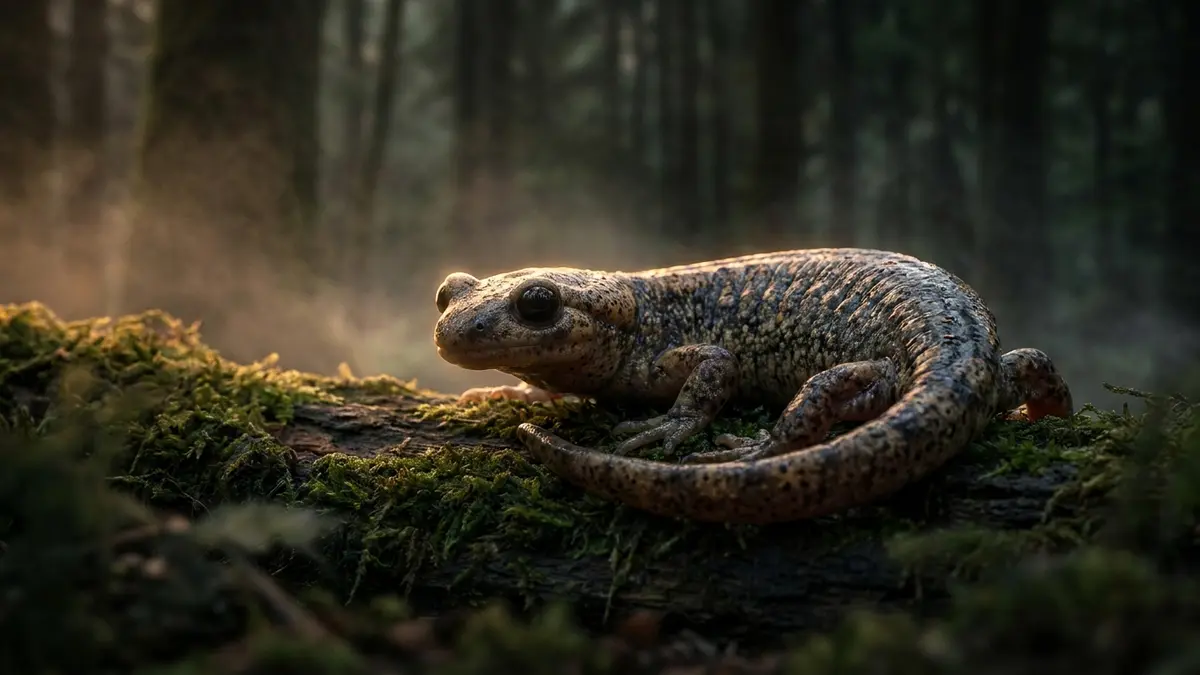
Salamander spirit-animal symbolism rests on regeneration and quiet transformation — the confidence to shed what's broken, whether a tail, a habit, or a hard season, and trust that it will grow back. It usually shows up when something in your life needs gentle adjustment rather than a full overhaul, nudging you toward flexibility, a calmer awareness of change, and more trust in your own intuition. Its long folkloric ties to fire and protection back this up: resilience without drama.
An almanac
- Core message
- Regeneration through quiet transformation
- Spirit animal
- Signals it's time to adapt, not overhaul
- Totem for
- Quietly trustworthy, intuitive people
- Power animal
- Rebuilding after loss, seizing good timing
- In dreams
- Survival, renewal, release, intuition
- Cultural roots
- Ancient fire lore; European heraldic protection symbol
- Aztec myth
- Axolotl = Xolotl's last disguise while fleeing sacrifice
- Toxin defense
- Some newts pack tetrodotoxin rivaling a pufferfish's
The salamander is a small, smooth-skinned amphibian, known in folklore as a fire spirit and an omen of rain, and also as a creature that can literally rebuild itself. When you're facing change, these characteristics of resilience and mystery are worth paying attention to.
Salamander Symbolism & Meaning
Over 600 salamander species exist, from those barely half an inch long to Japanese giant salamanders reaching nearly five feet long. Some salamanders breathe through gills, some through bare skin.
But while they've been painted as fire creatures for a long time, their real defense comes from how well they've adjusted to living in cooler, damper environments — they secrete fluids that repel predators. Those outer defenses belie a fierce inner strength: some species can even secrete tetrodotoxin in their skin (as much as would kill several adults) — a concentration so high that they even outpace pufferfish for potency. The salamander's tenderness is not a weakness but a choice; it would not have survived this long otherwise.
Salamander Spirit Animal
If the salamander guides you, it means it's time for an adjustment. But not a radical overhaul. A slight shift in your life towards a slightly different version of yourself. You may have felt off balance lately. The salamander is telling you to accept that change is the only constant. It also says to be careful when reading your surroundings wisely, when change may be around the corner, and to feel it calmly instead of scrambling.
There's an even quieter undercurrent: a psychic sensitivity you've been carrying within that wants to surface. The salamander is letting you know it's time.
Does Salamander fit you?
Tap the ones that sound like you — 6 traits, no right answer.
0 of 6 Nothing picked yet — start tapping.
Salamander Totem Animal
People who are born with a salamander totem are reserved and trustworthy, the kind of person others confide in naturally. They are comfortable living in between one time and another, at dusk rather than noon, between being spoken and unspoken. Very early on they will have noticed that things change and shifts happen in life.
Change has no effect on a salamander totem person. Transformation is just what happens in life, as in the old Taoist saying that resisting changes only creates suffering. When things do go wrong, instead of avoiding it, the salamander totem person regenerates, wiser than before.
The night suits them best because they rely on their senses more than seeing. As well as this pull towards environmental care that reminds them of the importance of looking after nature.
Salamander Power Animal
Salamanders can help you climb back up from rock bottom after you've suffered a major setback. They can help you handle things like grief, loss, or the end of a relationship.
When life has dealt a heavy blow, they can help you sort through your emotions and feel ready to move forward into something new.
They'll help you find the right balance between work and family, making it easier to build stronger relationships with your partner and kids.
If you ever find yourself stuck in a rut where you feel paralyzed by indecision, try reaching out to a salamander and see if they can help you get back on track.
Folklore & Philosophical Salamander Symbolism
The salamander, real or mythological, has long been associated with fire. Pliny the Elder and Aristotle both reported that its body cooled fires—Pliny additionally said that salamanders could poison fruit by winding around tree branches.
In Jewish tradition the salamander was born of fire, and its blood could grant immunity to burns. Medieval bestiaries went further still, drawing winged and satyr-like versions. But then came Renaissance artists who made the creatures look more like salamanders—particularly Leonardo da Vinci, who claimed they fed on fire alone—and Paracelsus, who elevated them to fire elementals. In Celtic heraldry they represented protection.
Far Eastern Salamander Symbolic Meaning
Chinese giant salamanders are called "baby fish" because they make a sad sound when they're threatened.
In Japanese art and stories, giant salamanders are very important. People believe they inspired the Kappa, a story spirit that is often shown living in rivers and ponds.
Japan celebrates them with a yearly festival on August 8th.
Salamander in Dreams
Dreams of salamanders can symbolize survival and renewal. Dreaming of a salamander emerging from fire means you've survived a time of setbacks, whereas dreaming of a quiet, sleeping salamander foretells insights. Often a quick-moving salamander calls you to take action, and losing your tail in a dream can mean you need to release something that's hindering your success.
Salamander Spiritual Meaning
Salamanders make a good symbol of personal growth. Their power stems from a few simple facts. They don't need to yell when they transform — it happens quietly, gradually, as if they were shedding a tail until new skin grows.
The confidence that whatever you lose in life can be gained back is very important, whether or not other people will think that you've changed.
Salamander and the Aztec God Xolotl
The salamander has a prominent role in Mesoamerican mythology. In the Aztec story, Xolotl was the dog-god of twins and those born with unusual bodies, and he served as a psychopomp who guided souls to the underworld.
He once helped shape humankind by bringing bones stolen from the realm of the dead. But when the gods came together to die, Xolotl tried to escape. Instead of facing his destiny, he hid first as twin stalks of corn, then as a plant called maguey.
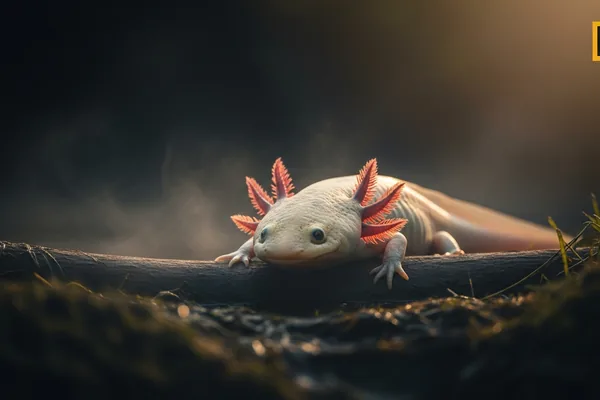
When both disguises were discovered, he changed yet again and turned into a salamander. This is the very same creature still called axolotl today.
The gods still caught him and sacrificed him along with the other gods. Even though Xolotl’s final disguise was his least dramatic one, it ended up being the one with the deepest capacity for renewal.
In addition to being able to regrow its tail, an axolotl can regrow its brain or heart and it can stay in its larval form for its entire life while still reproducing. In fact, regeneration appears to be a theme that runs through salamander symbolism more broadly.
Frequently Asked Questions
What does the salamander symbolize spiritually?
Because salamanders can regenerate lost limbs and spontaneously shed their tail, they’re frequently regarded as symbols of regeneration, adaptability, and resilience. The particular capacities that salamanders have for these feats symbolize the ability to overcome all kinds of trials—without losing your core self.
Why is the salamander associated with fire?
The associations between salamanders and flames have been around since the time of Pliny the Elder, through ancient and medieval writers like him and Paracelsus. The association likely originated from noticing the animals hiding in rotting logs—which might be used as firewood—and bolting out when firewood was tossed onto a hearth.
What does it mean to dream about a salamander?
If you dream of a salamander, it can point to survival and renewal after a difficult time. How the salamander acts in the dream can tell you whether the meaning is about changing direction or releasing what's been holding you back. The dream can also point to a new insight that will come soon.
What Aztec god is connected to the salamander?
The axolotl — a Mexican salamander that never fully develops into a land animal — takes its name from Xolotl, the Aztec god of twins and death. According to legend, Xolotl changed into an axolotl in order to escape the sacrifice that would mark the start of the fifth sun.
Are salamanders poisonous to touch?
Many are, although very few are poisonous enough to cause serious problems when casually touched. Most of them secrete mild skin toxins as a kind of defense. A few species carry far more, however, including some members of the Pacific newts (in the genus Taricha). Learn its wisdom with the respect that it deserves.
Is seeing a salamander good luck or bad luck?
Neither, in the classic sense of a good omen or bad omen. You're seeing it as a nudge, not as a verdict. The salamander has been associated with protection and quiet resilience for a long time. So it's better read as reassurance that you're equipped to handle whatever change is coming than as a warning to steer clear of it.
Salamander also represents
- Other animals that represent death →Alongside Raven, Crow, Buzzard & Vulture, Owl
- Other animals that represent rebirth and change →Alongside Butterfly, Snake, Dragonfly, Frog
- Other animals that represent protection →Alongside Bear, Wolf, Dog, Elephant
- Other animals that represent resilience →Alongside Cockroach, Camel, Salmon, Turtle
Sources
Claims on this page were checked against these published sources.
- Salamander
There are about 760 living species of salamander.
Read the source → - Salamanders in folklore
Pliny offers the frigidity of their bodies as an alternate explanation to why the salamander can extinguish fire, considered implausible. ... an animal like a lizard in shape and with a body specked all over; it never comes out except during heavy showers
Read the source → - Japanese giant salamander
The well-known Japanese mythological creature known as the kappa may be inspired by the Japanese giant salamander. ... There is a giant salamander festival every year on August 8 in Yubara, Maniwa City, Okayama prefecture to honour the animal and celebrate its life.
Read the source → - Xolotl
Xolotl makes his first attempt to escape by turning into a double maize plant. When he is discovered in that guise, he turns into a doubled maguey plant, and when that transformation fails to conceal him, he turns into a salamander still known today by its Nahuatl name, axolotl.
Read the source → - The skin microbiome facilitates adaptive tetrodotoxin production in poisonous newts
Rough-skinned newts (Taricha granulosa) use tetrodotoxin (TTX) to block voltage-gated sodium (Nav) channels as a chemical defense against predation... certain populations possess high quantities of TTX relative to other TTX-laden species including pufferfishes and blue-ringed octopuses... In some populations, individual newts possess enough TTX to kill several adult humans.
Read the source →