Insects · Spirit animal
Caterpillar Spiritual Meaning & Symbolism
A patient shape-shifter whose slow, hidden work inside a cocoon becomes wings, luck, and quiet proof that timing beats hurry.
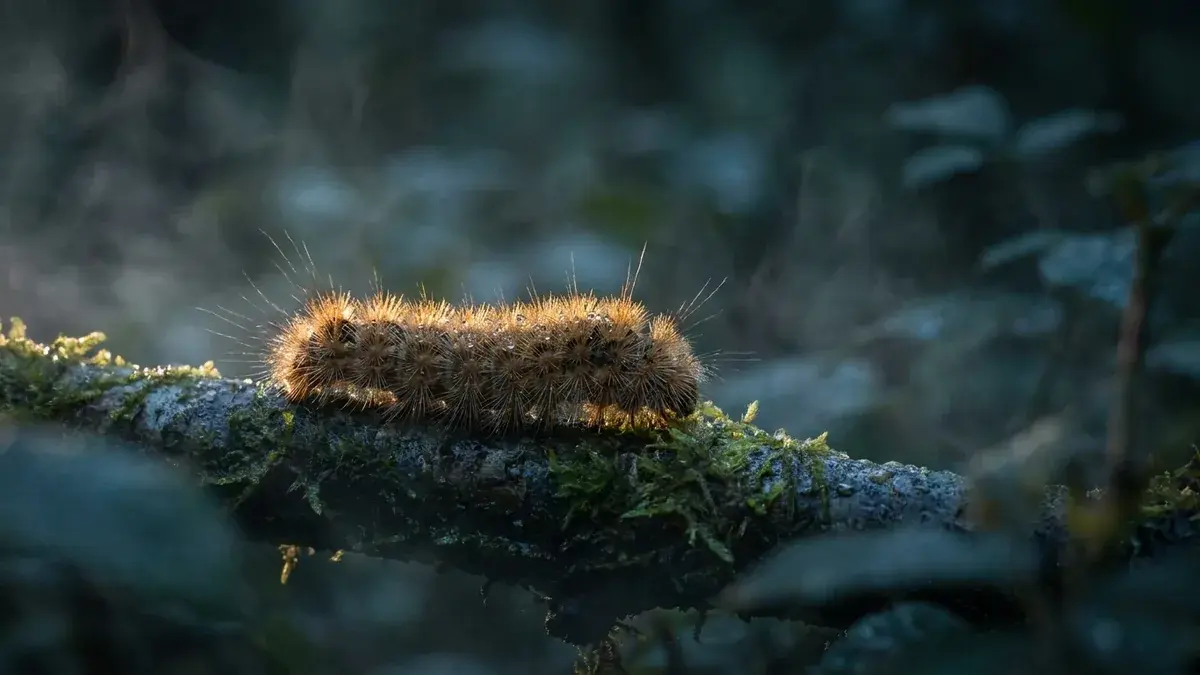
A caterpillar appears when an important change is about to happen. It means you are working hard to make it happen, and now the reward is about to come.
Caterpillars transform themselves into butterflies, a powerful symbol of change and optimism. Don't rush, and trust that good changes will come. Also, don't be too impressed by things at first glance.
Sometimes a caterpillar dream means that someone close to you might not be acting honestly.
An almanac
- Core message
- Trust timing you can't rush
- Spirit animal
- Quiet groundwork about to pay off
- Totem for
- Patient, instinctive, unhurried people
- Power animal
- Guarding something still forming
- In dreams
- Warns of nearby dishonesty
- Cultural roots
- Navajo, Hawaiian, African, Greek myth
- Folk weather test
- Woolly Bear's bands 'predict' winter
- Physical defense
- Camouflage, warning colors, toxic hairs
The caterpillar's entire life is about becoming a beautiful new creature. It crawls, eats. Inside its little chrysalis it recycles every cell in its body, making a new skin specially designed for winged flight. Every stage of the process shows us there's more to the world than what we can see right now.
Every people has their own stories about how animals got their forms. Some Native stories tell of a Navajo kind of caterpillar that also holds very sacred tobacco medicine. The caterpillar is featured in Hawaiian and Greek stories too.
That secret, hidden potential of every cell, that powerful energy at the center of your being—it makes sense that so many traditions think of the caterpillar as a symbol of transformation. When this animal shows up as your Spirit Guide or totem, it's saying your season for change is coming up soon.
Caterpillar Symbolism & Meaning
A caterpillar's outward life is mundane and boring, but that's how it's supposed to be — it's in there doing the real work so that when the time comes for the cocoon stage, its body can be completely reorganized and transformed into a butterfly.
The patience required for such a metamorphosis is telling. Some caterpillars blend in perfectly with the foliage to stay hidden and stay out of trouble, while others have loud warnings painted on their sides. But even those that have color bands going down their backs (the well known Woolly Bear variety) don't rely on those at all: instead they're used as a yard stick to read the coming weather!
When butterflies take to the air after emerging from their cocoons, they too become a symbol of optimism and fresh starts in peoples minds.
Caterpillar Spirit Animal
When you see Caterpillar, it's a sign that a season of hard work is almost over. Something big you've been working on for months or years is about to take flight, and although the future looks kind of blurry and uncertain, it's time to get ready.
If you've been stuck in old ways of thinking, this symbol is probably for you. Remember that big transformations take different amounts of time for different people. You can't speed it up or slow it down—you can only let yourself accept it.
Caterpillar comes up for you right before good things happen, like a bonus or being recognized for all your hard work. But it might also warn you against people who just say nice things to you without giving you real help.
Does Caterpillar fit you?
Tap the ones that sound like you — 6 traits, no right answer.
0 of 6 Nothing picked yet — start tapping.
Caterpillar Totem Animal
People who have caterpillar as their totem move at a calm and unhurried pace in life, and it's not hard for them to adjust to sudden changes because they're used to the way transformation feels. Those who have this totem often carry a good instinct about what's happening around them, from the kind of weather that'll happen down the road to what sort of figurative change is coming up. They don't panic when big changes are taking shape; instead, they look for ways to slow things down so that they can make good decisions for themselves.
Your strength is patience. You know that whatever gifts you have will show themselves eventually. You don't always want to rush the things you're growing, so you wait until you're ready before you share them with everyone.
You rely on your instincts more than you rely on other people's advice. Caterpillars only have twelve light-sensing eyes, but they don't see images the way human eyes do. They use their instincts instead, and you might find yourself doing something similar: living in ways that make sense to you, even if they seem strange to other people.
Since your most vivid life stages are the shortest ones, you try to protect your time. Your appetite is plenty big.
Caterpillar Power Animal
Call on Caterpillar to help you protect a new idea or plan. Imagine it's a cocoon, and Caterpillar will protect your project from criticism until you think it's ready for the world to see.
Some people need this kind of protection around an idea or plan. That's okay. The insect's cocoon may be very safe, but it can also feel lonely.
Call on Caterpillar when you need to step back from the noise of daily life and see how things look from the outside. This ally will give you the patience to wait until you feel ready to make your decision, just as the caterpillar would wait until its wings are ready.
If Caterpillar helps you take that important first step, your transformation is only beginning.
Caterpillar in Native American Symbolism
The tobacco hornworm doesn't show up much in Native American folklore, but the Navajo are a notable exception. They've given this caterpillar sacred status within their Tobacco Medicine as thanks for an insect that helped drive off water monsters and healed a poisoned hero.
One famous story tells of how people climbed up from a former world to escape constant conflict. Before they could fully finish this climb, they needed to bring with them some special bundles of light. That was when the tobacco hornworm burst into action, breathing smoke across those bundles and causing them to grow into giant pillars of light.
Caterpillar in Hawaiian, African & Greek Mythology
Hawaiian tradition tells of Kumuhea, who was a minor god of caterpillars and the son of a war god. Kumuhea married a mortal woman, but could only meet with her at night because by day he stayed in his caterpillar form. Curiosity finally led the woman to look at him directly in daylight, but when she saw his true form she got so frightened that she made him angry, and he gobbled up all the jungle's leaves until the other gods saw what was happening and split him into countless caterpillars.
In African folklore, the San people tell of ǀKaggen who was a trickster-creator who appeared most often as a praying mantis but also could transform into a caterpillar. In Greek mythology, Io moths are named for Io, a priestess in Argos who was loved by Zeus and turned into a cow.
Caterpillar in Dreams
In dreams, caterpillars usually hint at dishonesty. People in your life may not be showing you what they really want.
The dream's details can tell you more. Here are some common symbols and what they mean.
A caterpillar wrapped inside a cocoon is a hopeful sign. It means you'll have success, make new friends, and fix problems.
If you see caterpillars falling, that suggests you missed a good chance to grow because it wasn't what you wanted.
Sometimes you might gather up cocoons or bring a caterpillar home with you. That means that your relationship is blossoming into a deep and strong connection.
If caterpillars seem to be moving by themselves, maybe you're going to move to a new house or job soon.
You may see dreams about different-colored caterpillars too. They symbolize different things:
- Yellow: Energy
- Red: Passion
- Blue: Calm
- Green: Connected to nature
- Brown: Grounded
Sometimes dreaming about being trapped inside a cocoon can be upsetting.
There are also other signs in this type of dream:
- Dreaming of caterpillars that never turn into butterflies mean either too little growth or someone who's not mature enough for certain responsibilities.
- Dreams about seeing someone else transform into a butterfly suggest uncertainty about big changes coming up. If the person ended up becoming one after completing their transformation, worry less because everything will be okay in the end.
- Seeing many tiny egg-like objects (i.e., eggs) could mean there are many quiet changes that need attention when ready; these are fragile, so don't rush anything.
Finally, killing these insects can sometimes represent how we destroy opportunities by making poor choices which hurt us later down the line!
Caterpillar Spiritual Meaning
At the core of the meaning of the caterpillar is a demand: trust that you're on a well-timed path even when nothing feels like it's happening.
Every crawling, eating, or waiting inside your cocoon is hard work. It's very tempting to think that nothing visible is happening. But the caterpillar is calling you to let go of an old version of yourself, just as it sheds its old body, and to do that with faith, not fear.
It also urges you to pay attention to things other than what's right in front of you. The antennae of caterpillars help them figure out what's going on in their environment.
When the wings finally show up, that's your signal that all the time waiting was valuable and not wasted. It was absolutely necessary.
Frequently Asked Questions
What does it mean when a caterpillar crosses your path?
It means that a period of private preparation is coming to an end, and something that's been developing inside you is ready to be shared with the world.
Is seeing a caterpillar considered good luck?
In English folklore, finding a caterpillar in your garden is supposed to be lucky. The Hindu Brihadaranyaka Upanishad uses the image of a caterpillar going from one blade of grass to another to describe the soul passing into a new body.
What does dreaming about a caterpillar mean?
Dreams about caterpillars are common, and they often signify hidden or ill-disguised unpleasantness. If you see a caterpillar inside a cocoon, good times are coming up.
If you dream that the caterpillar changes into a butterfly, Your worries will resolve well.
Do woolly bear caterpillars really predict how bad winter will be?
It's an old saying rather than a good forecast: according to tradition, woolly bears have 13 segments just like the 13 weeks of winter, and if their black bands are bigger, then the weather is going to be rough. But according to the National Weather Service, woolly bears' coloring depends on their age and species and what they've eaten — those things don't say anything about the weather. But all the same, some towns hold Woolly Bear festivals in the fall.
What does it mean to dream about killing a caterpillar?
Dreaming about killing a caterpillar is often viewed as a warning that you’re stifling your own growth, cutting off chances to progress in life, relationships, or even yourself. This isn’t caused by outside forces but by self-sabotaging behaviors already in progress.
Caterpillar also represents
- Other animals that represent death →Alongside Raven, Crow, Buzzard & Vulture, Owl
- Other animals that represent rebirth and change →Alongside Butterfly, Snake, Dragonfly, Frog
- Other animals that represent patience →Alongside Turtle, Heron, Spider, Ant
- Other animals that represent luck →Alongside Ladybug, Rabbit, Cricket & Grasshopper, Koi
Sources
Claims on this page were checked against these published sources.
- Caterpillar
the number of stemmata (simple eyes); the sawfly larvae have only two, while caterpillars usually have twelve (six each side of the head).
Read the source → - Pyrrharctia isabella
if a Pyrrharctia isabella's brown band is wide, winter weather will be mild, and if the brown band is narrow, the winter will be severe.
Read the source → - Native American Caterpillar Mythology
Tobacco Horn Worm (a sphinx moth caterpillar) helps the people by driving away water monsters in the Navajo emergence myth, then reappears later to cure the poisoned culture heroes... the hornworm caterpillar was valued for its powers over tobacco medicine.
Read the source → - Hawaiian Mythology (Beckwith) — Ku Gods
Kumu-hea (or Mo'o), son of the god Ku ... is the god (aumakua) of the cutworm. He marries a girl, but comes to her only at night, for by day he is a worm (or mo'o).
Read the source → - Woolly Bear Caterpillar Forecasting
the woolly bear caterpillar has 13 segments to its body, which traditional forecasters say correspond to the 13 weeks of winter.
Read the source → - Late-instar monarch caterpillars sabotage milkweed to acquire toxins, not to disarm plant defence
monarchs cannot only cope with cardenolides by means of a resistant Na+/K+-ATPase but are also famous for sequestering cardenolides in their body tissues as a defence against predators
Read the source → - Stinging Caterpillars
Some species have hollow, stinging hairs with poison glands at the base. These special defensive hairs (called urticating setae) can puncture the skin and release venom. ... This venom produces a painful burning sensation and inflammation in many people.
Read the source →