Mammals · Spirit animal
Bear Spiritual Meaning & Symbolism
Grounded strength that protects fiercely, then knows exactly when to rest.
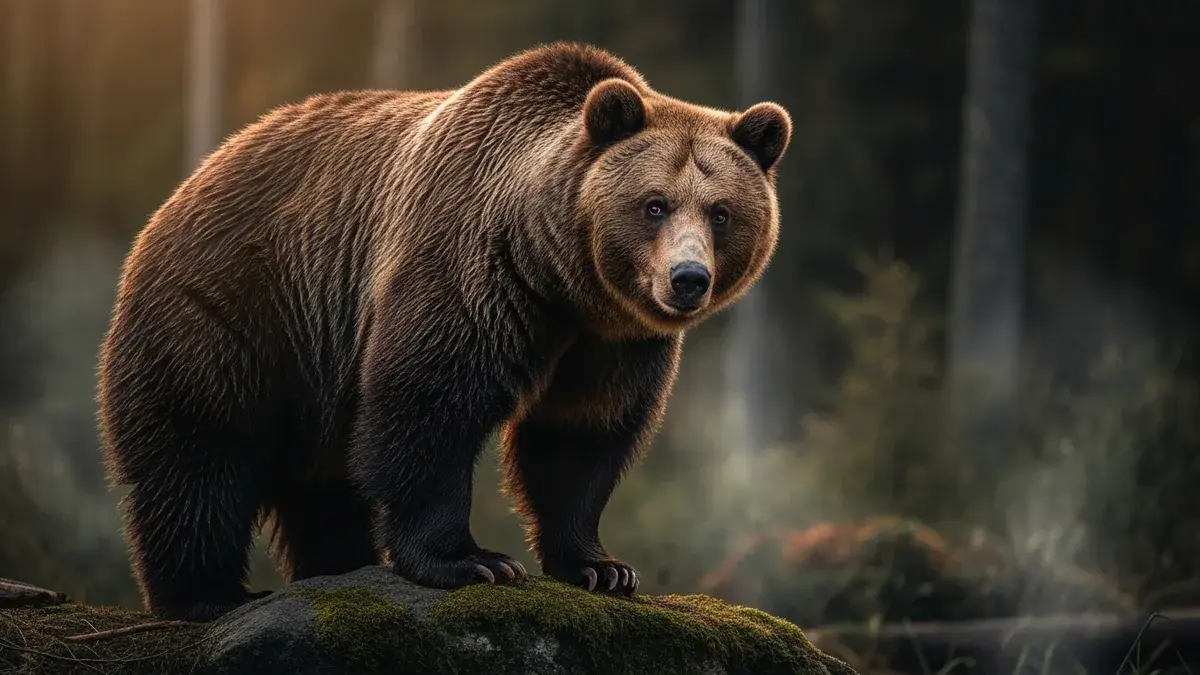
Bear represents a calm strength balanced by an ability to pull away when necessary. If the bear is your spiritual guide or a dream animal, it helps renew your confidence and hone your instincts for protecting what really matters in life. When bear appears, it suggests time may be due to take a step back and recover before continuing.
An almanac
- Core message
- Stand firm, then rest
- Spirit animal
- Courage and steadiness in hardship
- Totem for
- Natural protectors and healers
- Power animal
- Sharpens instinct and balance
- In dreams
- Reclaiming your space or voice
- Cultural roots
- Native American, Celtic, Norse, Far Eastern
- Living species
- 8, worldwide
- Hibernation
- Up to 100 days, no waking
A bear is one of the most respected animals in the natural world, representing courage and steadfastness. Just like the ancient rulers with whom it is often associated, bears show their strength without bragging about how much they can do, taking regular breaks along the path toward accomplishing goals, and always ready to meet challenging situations without flinching away. As your spirit guide, totem animal, or something else for which you've developed a special connection, bear asks you to draw on its traits when facing your own difficulties—a reminder not to be boastful, to make time to recover during stressful situations, and never to run scared into problem-avoidance.
Bear Symbolism & Meaning
Few animals carry as layered a message as Bear. A mother bear defending her cubs is nature's clearest picture of protection, so Bear often shows up for parents anxious about shielding their children from harm. More broadly, Bear lends raw strength to anyone who feels worn down: hardship should be met head-on, not endured quietly.
If you've been softening your opinions to keep the peace, Bear's nudge is to speak plainly — its bulk alone earns respect. Shamanic traditions across Siberia and North America long treated Bear as a wise elder, and Vikings wore bear pelts into combat to borrow that ferocity.
Bear's winter sleep teaches the value of slowing down and guarding your privacy. Han-dynasty China's devotion to Bear grew into a national totem, and Japan's Ainu considered it a god in an animal's coat.
Bear Spirit Animal
When bear is your personal symbol or your totem, expect a burst of strength and tranquility to get through any trouble coming your way. This energy stays with you even after things calm down again, so pay attention to its ways.
Bears are fierce protectors. They put up an awesome fight in their natural element, which helps you do the same when challenges come knocking on your door. But you don't always have to go toe-to-toe with something tough—it’s okay if you'd rather just hang out, eat lots, and bide your time. Enjoy bear energy—see how receptive you can be to the deep reserves of emotional support that bear symbolizes.
Does Bear fit you?
Tap the ones that sound like you — 6 traits, no right answer.
0 of 6 Nothing picked yet — start tapping.
Bear Totem Animal
If a bear is your totem animal—whether it's through genetic selection or your personal preference—you're probably familiar with the feelings that come along with this spirit guide. You've learned grit early on and grown comfortable with its close cousin, leadership.
You have no problem handling setbacks head-on, either, because adversity doesn't usually make you squeamish. In fact, you've got plenty of gravel in your jeans and are ready for anything life throws your way. In public, you'll likely be viewed as someone who commands attention, although sometimes your confidence can lead to an unnecessarily defensive stance.
Bear-totem people tend to work in the field of healthcare, especially those associated with restoring the physical, psychological, or spiritual side of others. But you may want to think twice before doing this full-time, considering how much of yourself you offer this kind of service. Instead, remind yourself to set aside time in order to restore your own energy now and then.
Another aspect worth acknowledging to anyone around you: Your temper, while more or less always ticking along like some quiet old clock, has a tendency to emerge quickly once set into motion.
Bear Power Animal
When your intuitive sense gets all foggy, get in touch with your bear power animal to sharpen your awareness. You'll see what you're good at--things you might have overlooked. Let go so you can connect with those abilities.
They're bowlegged to help them balance up high--in trees.
Across cultures
4 traditions — pick one to read its take.
Native American Bear Symbolism
Traditions held by many North American tribes assert that Bear carries powerful spiritual powers relating to protection and healing. To this day, Zuni people keep special idols called fetishes for their luck. To some of them, Bear is also a guardian of the direction of the west. Stories across the continent tell of Bear as a wise judge. Various clans associated with Bears can be found among the Hopis and Creeks, Hurons, Algonquians, and Chippewas.
Bear in Celtic Tradition
In Celtic mythology, Bear is associated with the great goddess Artio, whom hunters called on for help when searching for prey. They considered Bear sacred because it represents strength and power. In winter solstice celebrations, people asked the Great Bear to guard them during the dark season. One god called Cernunnos often appeared beside a bear. Clan warriors believed being connected to bears meant victory over their enemies because they could be strong and patient enough when needed.
Bear in Christian & Biblical Symbolism
References to bears in the Bible come with a mix of meanings — bear has been used as a symbol and to show something menacing.
One example that shows good came early in the Old Testament, when King David preserved his flocks by defeating and driving away attacking predators including wild beasts.
In most other references, bear takes on more serious implications.
Bear in Greek & Roman Mythology
Greek and Roman myth traces Ursa Major and Minor to Callisto, a companion of Artemis who broke her chastity vow after Zeus tricked her, was banished once pregnant, and was turned into a bear by a jealous Hera — Roman versions swap in Jupiter and Juno. Artemis also loved and accidentally killed the hunter Orion, whose constellation still sits near the Bear's. Atalanta, abandoned as an infant because her father wanted a son, was reportedly nursed by a grieving mother bear, a detail that ties human and bear fates together in this folklore. This folklore often casts Bear as a moral judge, rewarding virtue and punishing excess.
Bear in Norse & Northern European Lore
Norse warriors known as berserkers worked themselves into a battle trance modeled on a wild bear's fury, fighting in bear pelts to intimidate opponents before a blow was struck. Odin was said to take Bear's form on visits to the mortal world, and Scandinavian kings, including Knut II of Denmark, claimed descent from Bear as proof of their right to rule. The Sami believed Bear could cross between physical and spirit worlds. Finnish legend echoed this through the bear god Otso, bound by rules against harming humans, while Slavic tradition paired Bear with the god Volos and honored hermits like St. Seraphim, who befriended wild bears through gentleness.
Volos, also called Veles, ruled as a chthonic god of the underworld, cattle, and magic, and Bear stood alongside the wolf, serpent, and owl as his sacred animals — creatures that moved comfortably along the boundary between the living world and the dead. After Slavic lands turned Christian, Volos's darker side was folded into demon-figures, while his protective, wealth-guarding role quietly passed to Saint Blaise and Saint Nicholas in village folk practice.
Bear in Far Eastern & African Traditions
Far Eastern lore often elevates Bear to near-royal status: one ancient Chinese emperor earned the nickname "Bear Emperor" for keeping them at court, and Feng Shui still places bear figures near entrances as masculine guardians. Japan's Ainu call Bear "Kamuy," meaning god, and consider it the greatest of the deities said to visit earth in animal form, while the Panda has come to symbolize abundance and unhurried living.
Korea's founding myth goes even further, casting Bear as the mother of the nation itself. A bear and a tiger both prayed to become human; the god Hwanung gave them garlic and mugwort and told them to avoid sunlight for 100 days. The tiger gave up, but the bear endured and transformed into the woman Ungnyeo, who married Hwanung and gave birth to Dangun — the legendary founder of Korea's first kingdom, Gojoseon. Few origin myths anywhere hand Bear that much creative power.
African folklore leans more cautious — East Africa's Nandi Bear is a cryptid predator blamed for livestock attacks, and since bears aren't native there, sightings are mostly credited to hyenas today.
Bear in Dreams
Bear dreams could show something different depending on your culture. Generally, dreaming about Bear points toward taking back what you've let slip away. For instance:
A non-hostile bear signals that you've kept enough power over whatever has you worried. Leading a bear off-stage might mean tensions easing without direct action by you. Black bears ask you to turn within and do some soul searching. Pure-white bears signal more than usual notice to possible dangers.
Bear in Astrology & Zodiac
The Native American bear sign is associated with grounding and protective energies. This constellation also forms part of the skies seen by many peoples around the world, and for them bears a significance connected to strength, courage, and masculinity. For the Celts this same group of stars corresponds to the month associated with alder trees and with types of people whose spirit exemplifies restlessness.
Bear Tattoo Meaning & Folklore
Beyond mythology, bears appear in everyday life—and on flesh—in surprising ways. For example, researchers find that black bears are often thought of as dangerous creatures who represent obstacles to freedom, especially in the history of slavery in the American south.
Popular depictions also include everything from cartoons to the haunting lyrics in Game of Thrones' famous bear song. In both imagery and tattoos, bears embody the strength and warmth that their lineage demanded.
Spiritual Meaning of Bear
One theme throughout all this is protecting yourself and defending those weaker than you. That protection can go beyond fighting--it could also involve withdrawing into hibernation or anything else that helps people thrive in their environment. Another thing was bears being shown with hungry eyes, ready to gobble down their next meal, whether it's real food or an adventure! These creatures show how important it is both to seek out fresh experiences whenever possible while still honoring times when resting is crucial for staying healthy. Finally, there seems to be a link between bear guardianship over younger animals (which they do sometimes) and humans caring for our planet.
Bear Biology: Where the Symbolism Comes From
Bears have made their symbolism clear through their behavior all across the world. Of the eight living bear species, each displays the solemn, calming presence that anchors this symbolism everywhere. Their strong noses guide them tirelessly through forests, mountains; their pace never hurried, they travel in full awareness of the magic of earth and everything around them.
Even more famously, the bears spend time hibernating. Bears go dormant—digesting fat stored over the fall, slowing their metabolisms—for up to three months straight during cold seasons. They wake each spring refreshed, ready to see the world again.
Among so many lessons to carry through every culture, maybe the best one: healing. Osha-root chewing bear pastes bring relief, Alaska's brown bears swallow entire sedge plants to cleanse themselves of parasites caught through the winter season—all serving as examples.
The Spirit Bear: A Real White Bear, Not Just a Myth
Not everything you hear about mythological creatures is really just made-up — take the Kermode bear, also called the spirit bear, for example. Though this particular type of black bear may have some magical flair, he's very much genuine. These bears are distinguished from their neighbors thanks to a recessive gene variation with the power to whiten an animal's coat. So despite its otherworldly coloration, the Spirit Bear's normal features will always remain the same.
While other faraway lands might fall under the spell of the polar bear in winter, instead locals seem more inspired by Canada's answer to being both endangered and brave in nature — the Spirit Bear. There's even official provincial recognition.
Frequently Asked Questions
What does a Bear spirit animal mean?
A bear spirit is likely to show up when you need renewed courage and determination in order to get past an extremely difficult task or setback. You're going to have to stay calm at such times—you'll find all the willpower you need if you just take a quiet moment alone with yourself!
What does it mean when a Bear appears in your dreams?
This varies based on context. Generally speaking, if the bear is laying down calmly and isn't threatening, this means that you have the tools necessary to deal with some problem already. If the bear is aggressive or trying to attack you, something is wrong and you might want to figure out what and try to fix it before the situation gets worse.
Is Bear a good omen or a bad one?
Bear is usually thought of as a wise, strong protector. But because of their large size and fierce energy, people sometimes worry that Bear might be bringing adversity instead of protection.
Do bears really act as their own healers, the way folklore claims?
Some sources say brown bears really do act as their own healers. For example, there's the tradition that some can chew osha root into a paste to stop itching caused by insect bites. In Alaska, bears supposedly swallow the plant sedge during the spring to wash parasites out of their digestive tract that they might've picked up while they slept through winter.
Is the Spirit Bear (white bear) a real animal or just a myth?
Real. The white Kermode bear, or spirit bear, really does exist. It's a true subspecies of black bear found on a remote stretch of coast where some individuals carry a rare gene for a white fur that resembles snow. It has made the bear a spiritually important animal among the Gitga’at tribe whose land it inhabits. The B.C. Government named the Kermode bear their official provincial mammal.
Bear also represents
- Other animals that represent strength →Alongside Lion, Tiger, Elephant, Bull & Ox
- Other animals that represent protection →Alongside Wolf, Dog, Elephant, Turtle
- Other animals that represent healing →Alongside Snake, Deer, Dog, Bee
- Other animals that represent patience →Alongside Turtle, Heron, Spider, Ant
Sources
Claims on this page were checked against these published sources.
- Zuñi Fetiches
Black Bear, thou art stout of heart and strong of will. Therefore make I thee the younger brother of the Mountain Lion, the guardian and master of the West
Read the source → - Throwback Thursday: The Fetish Carvers of Zuni
Traditionally, they depict powerful animals important in Zuni (A:Shiwi) beliefs that have powers to protect or aid their owners.
Read the source → - Bear
Bears of northern regions, including the American black bear and the much larger grizzly bear, hibernate in the winter.
Read the source → - Hibernation
Hibernating bears are able to recycle their proteins and urine, allowing them to stop urinating for months and to avoid muscle atrophy.
Read the source → - Berserker
In battle, the berserkers were subject to fits of frenzy. They would howl like wild beasts, foam at the mouth, and gnaw the rims of their shields.
Read the source → - Bear worship
The Ainu people, who live on select islands in the Japanese archipelago, call the bear 'kamuy' in the Ainu language, which translates to mean 'god'. Many other animals are considered to be gods in the Ainu culture, but the bear is the head of the gods.
Read the source → - Iomante
the god assumes the guise of a brown bear to visit the human world
Read the source → - Callisto (mythology)
Juno then took the opportunity to avenge her wounded pride and transformed the nymph into a bear.
Read the source → - Artemis
Artemis, ever eager to prove she was the better archer, unwittingly shot Orion, killing him.
Read the source → - Atalanta
At birth, Atalanta was taken to Mount Parthenion to be exposed because her wealthy father had desired a son.
Read the source → - Artio
Artio was a bear goddess in the religion of the ancient Celts.
Read the source → - Cernunnos
an antlered god (often aged and with crossed legs) associated with torcs, ram-horned (or ram-headed) serpents, symbols of fertility, and wild beasts (especially deer).
Read the source → - Elisha
Elisha cursed them in the name of Yahweh and two female bears came out of the forest and tore forty-two of the boys.
Read the source → - Bible (King James) / 1 Samuel 17:36
Thy servant slew both the lion and the bear: and this uncircumcised Philistine shall be as one of them
Read the source → - Saint Seraphim of Sarov
Saint Seraphim feeding a bear outside of his hermitage (from lithograph The Way to Sarov, 1903).
Read the source → - Nandi Bear
reports of the Nandi bear were misidentified hyenas, specifically the spotted hyena.
Read the source → - Yellow Emperor
He then became a farmer and tamed six different special beasts: the bear
Read the source → - Anishinaabe clan system
The Nooke group was responsible for defense and healing. Though today the Bear Clan has all merged into a single clan known as Nooke, at one time the Bear was the largest
Read the source → - Zoopharmacognosy
North American brown bears (Ursos arctos) make a paste of Osha roots (Ligusticum porteri) and saliva and rub it through their fur to repel insects or soothe bites. ... Alaskan brown bears will swallow whole Carex leaves in the springtime to ensure the complete expulsion of parasites during their hibernation.
Read the source → - Dangun
Hwanung gave them twenty cloves of garlic and a bundle of mugwort, ordering them to eat only this sacred food and remain out of the sunlight for 100 days. ... the bear persevered and transformed into a woman named Ungnyeo. ... Hwanung ... married her, and she gave birth to their son, Tan'gun Wang'gŏm ... called the kingdom Joseon.
Read the source → - Kermode bear
A single, nonsynonymous nucleotide substitution in the MC1R gene causes melanin to not be produced. ... White Kermode bears are not albinos, as they still have pigmented skin and eyes. ... The Tsimshianic-speaking peoples ... know this bear as moksgmʼol. ... became British Columbia's official provincial mammal in 2006.
Read the source → - Veles (god)
Veles ... chthonic god of the underworld ... associated with cattle, earth, waters, and magic. ... sacred animals include the bear, wolf, snake, and owl. ... After Christianization, Veles split into dual identities: identified with demonic figures ... while his benevolent aspects merged with Saint Blaise and Saint Nicholas in folk practice.
Read the source →