Mammals · Spirit animal
Bat Spiritual Meaning & Symbolism
The night's quiet navigator, using unseen senses to find truth hidden in the dark.
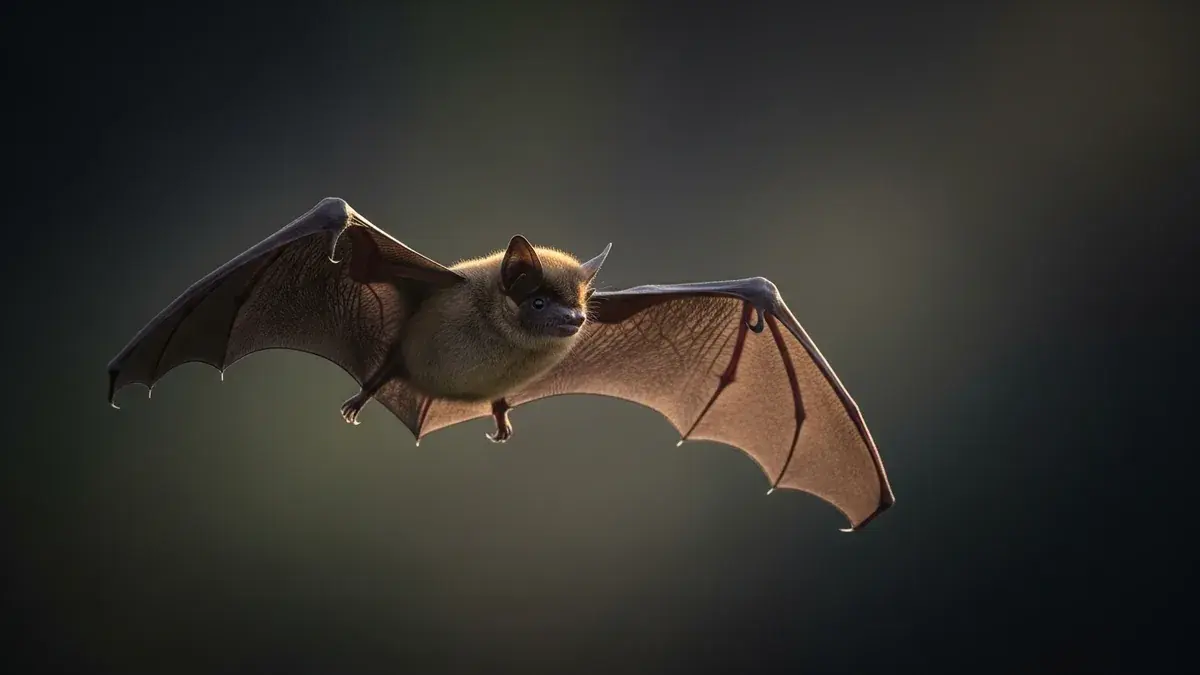
If you have Bat as your spirit, totem, or power animal, it means you should pay attention to gut feelings and fears you're trying to hide. Bats often appear just before big changes in our lives, like losing a job, breaking up with someone, or giving up on some deeply held belief. If they come to you in dreams, they're probably trying to tell you there are parts of yourself you need to explore or deal with. But they don't always mean bad news; maybe there's some big change coming for which you'll be ready because of this bat encounter.
An almanac
- Core message
- Sense hidden truths; treat darkness as renewal
- Spirit animal
- A real transition or ending is underway
- Totem for
- Perceptive, hard-to-fool, deeply social people
- Power animal
- Facing buried fears and hidden patterns
- In dreams
- Untapped potential or an avoided fear
- Cultural roots
- Native American, Maya, Celtic & Far Eastern lore
- Only flying mammal
- True, sustained flight — no other mammal manages it
- Ancient lineage
- Fossil record stretches back roughly 52–56 million years
Bat - few creatures carry an unfair reputation! The poor thing is so often feared just because it carries out many of its activities at night time. There is something socially very useful about getting up when other people want to sleep. Bats find peace and understanding in having others around with whom they might share what they discover in the dark, being able to interpret what they sense beyond their vision. This positive attitude toward the mysteries of the night is important; shadow areas are likely to be full of meaningful information. Knowing how to deal with the unknown wisely has nothing to do with trying to avoid the dark altogether or demonizing its mysteries. This section looks at how the meaning behind bats as spirit guides fits with this theme.
Bat Symbolism & Meaning
Bats carry one of the most misunderstood reputations of any animal on Earth. Their nocturnal lifestyle and scary behavior made them targets of many of humanity's superstitions for centuries. Some call Bats guardians of the night because their mothers give birth to babies just like humans do. Traditionally they've been seen as messengers between living beings and the spirits who inhabit other worlds.
Bat Spirit Animal
Tapping into our inner bat—the nocturnal winged mammal—lets us see things we don’t normally pick up on and trust our instincts even when there isn't good evidence for them.
Nocturnal winged mammals also let us know (often without literal drama) that something familiar has ended so that new identities can emerge.
Our mortal existence can scare us into not facing what’s in front of us—but once we go ahead anyway, we start noticing things we’d never noticed before.
Does Bat fit you?
Tap the ones that sound like you — 6 traits, no right answer.
0 of 6 Nothing picked yet — start tapping.
Bat Totem Animal
Bat personalities read people with extraordinary accuracy, often spotting problems before anyone else. That social insight also helps Bats steer conversations away from touchy subjects without offending others.
When other people get hang-ups they have trouble talking about, Bats seem more tolerant and accepting than most. They don't even mind having to change course in a social gathering — they'll do what needs to be done so that nobody leaves feeling irritated.
Those qualities make Bats a great choice to run projects, welcome newcomers into a community, or just clean up messes.
Bat Power Animal
Calling to the Bat Power Animal can be called upon when excavating old patterns which have been hidden from yourself due to the shadows which keep us from seeing them clearly within ourselves. During our lives we all keep some things deep inside, treasures and scars alike, and part of finding personal fulfillment means examining these. Instead of being afraid, let Bat light the path of accepting this journey and learn to trust your inner voice which will guide you along the way.
Across cultures
6 traditions — pick one to read its take.
Native American Bat Symbolism
Native Americans sometimes see bats as helpful guides through dark times, showing people how to leave behind their struggles or fears so they can heal. Bat-guides might fool us with tricks and play games to confuse our senses. We sometimes act on things we _think_ we see without really knowing what's real and important.
Pueblo Indians watch the flying patterns of bats. The people of the Navajo call Bat "the brave one" because he was willing to take food to winter-god.
Bat in Celtic Mythology
In Celtic lore, bat's upside-down roosting position is seen as symbolic of rebirth through transformation, especially during Samhain (Halloween), which involves huge bonfires naturally drawing numerous bats into the festivities. In folklore, meeting a bat can have unfortunate consequences. For example, Irish and Manx folktales tell of Shape-shifting spirits who sometimes take the form of bats to carry out their malevolence against unsuspecting travellers. One such harmful Bat-based creature was Tehi Tegi, an enchantress who would shift into a Bat after changing her faithful steed.
Bats in the Bible
Early Christians held bats in low regard. Old Testament dietary law declared bat unfit to eat. It was even considered unclean and could be bad luck or represent 'forbidden' desire.
Sudden appearances of bats in Early Europe at once had cultural associations with neglected holy places. We might take this opportunity as encouragement to look carefully into our own lives for lost enthusiasms or unused opportunities.
Bat in Norse Mythology
In Norse myth, bats are often paired with owls as related night creatures. In old Danish, those animals sometimes shared a common name which literally meant “night-flappers.” The Norse believed that each had the ability to foretell death. Both could also place someone in thrall to their will—a glimmer of an idea that centuries later produced the vampire.
Far Eastern Bat Symbolic Meanings
Across East Asia in general, Bat symbolism generally inverts wildly, marking good fortune and long life. Chinese people associate five bats with the "Five Blessings." These include wealth, health, virtue, longevity, and a peaceful death. Hence, pictures of just such things decorate entryways to invite prosperity. In Japan, bats often appear paired with peaches for pretty much the same purpose.
Bats have gentler associations in Hinduism, too, linking up neatly with Maa Lakshmi, the Goddess of Wealth. A plague in northeastern India ended only when local folk tale credits Bats with settling nearby, a trend that continues to today. Protection of these little critters remains standard practice to this day there, lest locals somehow damn themselves by mentioning bat-related evil omens around bedtime.
Bat in Greek and Roman Mythology
In ancient Greece and Rome, people weren't sure whether Bat is a bird or another type of creature, but its nighttime habits set it apart and made some mythologists liken it to death. For instance, three women have been transformed into Bats because of their misbehavior; these creatures travel to Hades at night (as portrayed in Homer's Odyssey). But Bat is also seen as magical in different ways. On one hand, Bat appears confused about its family, flying around between mice and birds before getting shunned. Yet at the same time, Bat lives apart from others.
Bat in Maya Mythology
In Maya mythology, bats appear as symbols of fertility, charged with the protection of crops like corn, and as messengers traveling between the spiritual and human realms, including stories where shaman transform into bats. The deity known as Camazotz (death-bat) embodied these ideas of night, sacrifice, and the underworld; also, the Zapotec people worshipped an analogous bat-god, and across Mesoamerican cultures, the bat represented themes of night, death, and sacrifice.
Bat in World Folklore
Folkloric depictions across Africa frequently show Bats as a clever trickster. For instance, one tale pinpoints a shifty rival for leading Bat on nighttime excursions. In a Tanzanian legend a shape-shifting entity known as the Bat-Wing Spirit is mentioned. Meanwhile, another intriguing myth tells how Bat upended a basketful of moonlight, thereby bringing about an unwanted level of twilight darkness.
In earlier human societies, particularly Middle Eastern cultures some millennia past, legendary descriptions emphasized vengeful devil-like beings with feathered wings who would drain away life forces from mortals during their slumber. These sinister demigods form part of an ancient genesis blueprint which later molded elements intrinsic to vampire lore as we know it today. Yet intriguingly real, living Vampire Bats do indeed exist amongst the wider population; however comprising only three separate species out of over 1,500 known safe variants worldwide.
Bat Tattoo Meaning
Bats signal something mysterious or changeable, not fear of death. They're sometimes paired up—two bats usually mean 'good long life,' while five can represent good fortune. This is more likely on Japanese-inspired tattoos, but any bat design suggests a person comfortable with exploring what other people find scary.
Bat in Dreams
A bat dreamscape is rarely as menacing as it initially seems—just your unconscious humorously poking at you right? Usually, it indicates unused prospects or a concern you've conveniently sidestepped: • A bat gliding over you: an opportunity or apprehension which demands further contemplation. • A jet-black Bat: purge depressive nuisances prior to their lingering detriment becomes insurmountable. • A milky-white Bat: serenity, discontinuation, or a sorrowing event that necessitates thorough mulling-over. • Feeling "as blind as a bat": acquire more information regarding inconspicuous events prior to leaping blindly into irrational conclusions.
Spiritual Meaning of Bats
Bat embodies the ability to be comfortable when things get dark.
Not only that, their mystical explorations transport them into other worlds besides our own. Just like how mythology describes Persephone taking trips to the Underworld, so does bat evince familiarity with esoteric territory; namely, its appearance within certain tarot cards such as "the hanged man".
Whenever it appears, consider it indicative of deeper truths just beneath your everyday life experiences; ones perhaps requiring patience before being fully understood.
Bat in Aboriginal Australian Mythology
The Kulin people of Australia told stories about a mythical creature called Balayang, or Bat. Balayang was the brother of another mythic hero named Bunjil, which means Eagle Hawk.
Bunjil wanted Balayang to move with him to the drier interior; when Balayang said no, Bunjil got mad and ordered some smaller birds to go torch Balayang's home, turning everything black.
Another piece of legend suggests that Balayang actually was kind and generous, bringing some women from beneath the surface of a waterhole in which they'd been hiding.
Bat Facts Behind the Myth
Strip away the scary stories people made up about Bats, and you'll find something that shouldn't even be possible in nature: a creature with wings strong enough to stay aloft. Bats owe their aerial stunts to ancient beginnings (the oldest fossils in the family come 56 million years ago). By now, Bat has managed to colonize nearly all parts of the globe except Antarctica, which puts the species into second place behind mice/rats in number of species alive today. Those numbers scream one central teaching—namely, the value of patient accumulation rather than flashy performances that don't pay off.
Frequently Asked Questions
What does a Bat spirit animal mean?
Bats signal a genuine transition taking place; whether it’s a job, relationship, home, or a shift in beliefs. As a spirit animal, bat teaches us how to navigate such transitions well and see past our fears.
What does a Bat in your dreams mean?
Bat dreams often point to untapped potential or a fear you’ve avoided instead of taking straight on. Specific details change their meanings: A bat soaring high up represents some unexplored possibilities, whereas one approaching your face is a message to deal with some cold facts head on.
Is Bat a good omen or a bad one?
Does the bat mean good luck or bad luck? The answer to this question depends heavily on which part of the world you're talking about. In most western societies, bats are associated with things like death and witchcraft. Not so in China, Japan or much of India where people believe that the bat is a lucky creature; a signifier of good fortune, prosperity, and long life.
What does it mean when a bat crosses your path?
Bat symbolism involves many themes—transition, reflection, personal truth—which makes Bat encounters a useful hint that something significant is going on that warrants our attention. They’re also symbols of night, which typically represents times of change in the realm of nature and perhaps also in your life. So if you notice a bat flying across your path, consider taking a moment to reflect on the direction you’ve been moving in—and perhaps taking note of an inner sense you might have already had—that you want to shift your focus in another direction. In other words, this could be a gentle reminder that your instincts are already noticing how things are changing, even if you haven’t paid much attention to them yet.
What does it mean to find a dead bat?
People freak out over finding dead Bats more than they should because they've got ideas of Bats all wrong. It doesn't matter if you have them fluttering around your house: most traditions agree that seeing or hearing a living Bat means you're going through some transition right now. Finding one dead — there's a change happening in your life, and there's no point worrying because this transition will happen without you having to do any heavy lifting on it.
Bat also represents
- Other animals that represent death →Alongside Raven, Crow, Buzzard & Vulture, Owl
- Other animals that represent rebirth and change →Alongside Butterfly, Snake, Dragonfly, Frog
- Other animals that represent protection →Alongside Bear, Wolf, Dog, Elephant
- Other animals that represent intuition →Alongside Owl, Cat, Wolf, Raven
Sources
Claims on this page were checked against these published sources.
- Bat
Yes, bats are placental mammals that give live birth. The article states they are "placental mammals".
Read the source → - Vampire bat
Three extant bat species feed solely on blood: the common vampire bat (Desmodus rotundus), the hairy-legged vampire bat (Diphylla ecaudata), and the white-winged vampire bat (Diaemus youngi).
Read the source → - Camazotz
Camazotz is formed from the K'iche' words kame, meaning 'death', and sotz', meaning 'bat'.
Read the source → - Bats in culture
In Mayan mythology, the deity Camazotz was a bat god. 'Camazotz' translates to 'death bat' or 'snatch bat'.
Read the source → - Minyades
Dionysus punished them by changing them into bats, and their work into vines.
Read the source → - Minyas (mythology)
the Minyades (three daughters transformed into bats)
Read the source → - Five blessings
the five blessings are: Longevity, Wealth, Health and composure, Love of virtue, Peaceful death in old age.
Read the source → - Balayang
Balayang was a brother of Bunjil the eaglehawk, but lived apart from him. ... They set fire to the bat's country and Balayang and his family were scorched and turned permanently black.
Read the source →