Animal Facts
Tiger Facts & Trivia: Fascinating Things to Know
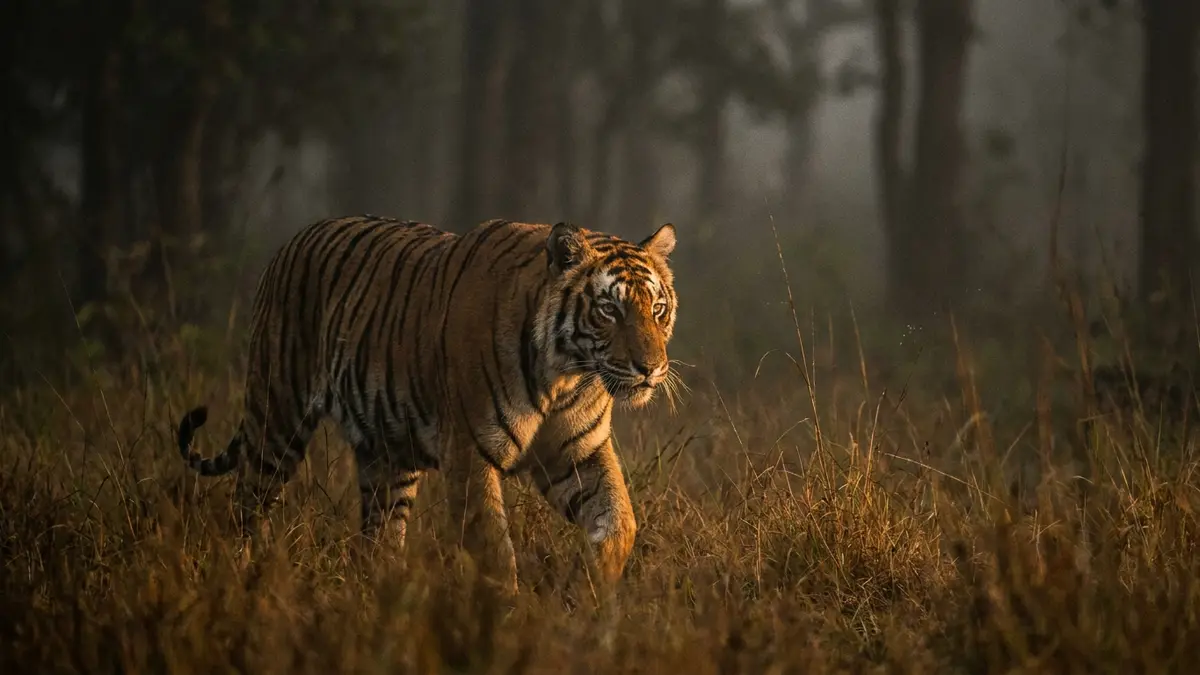
Tigers are the largest wild cats on Earth, with bodies stretching up to 9.2 feet plus a 2-3 foot tail, yet only 3,000 to 4,500 remain in the wild today. Three subspecies — the Caspian, Javan, and Bali tigers — have already gone extinct, and the species is classified as endangered. They've also left a mark on movies, TV, and music, from Shere Khan in The Jungle Book to Survivor's Eye of the Tiger.
An almanac
- Size
- 4.6-9.2 ft body + 2-3 ft tail
- Lifespan
- 10-15 years in the wild
- Diet
- Deer, wild pigs, buffalo, antelope
- Found in
- South/Southeast Asia, China, East Russia
- Wild population
- Estimated 3,000-4,500
- Conservation status
- Endangered
Few animals command a room like the tiger. As the biggest of all wild cats, it prowls across a shrinking range of Asian forests and grasslands, hunting alone and leaving a footprint on pop culture almost as large as its actual footprint. Here's a look at what makes this striped predator so hard to forget.
Fascinating Tiger Facts
Tigers are the largest member of the cat family on Earth, and their biology backs that up. A tiger's body alone can stretch from roughly 4.6 to 9.2 feet long, with another 2 to 3 feet of tail trailing behind.
They're carnivores through and through, relying on deer, wild pigs, buffalo, and antelope to fuel that huge frame. In the wild, a tiger typically lives around 10 to 15 years.
Their family tree tells a sobering story: three subspecies — the Caspian, Javan, and Bali tigers — have already gone extinct. The tigers still around today are classified as endangered, with an estimated 3,000 to 4,500 remaining in the wild, scattered across South and Southeast Asia, China, and the far east of Russia.
A mother tiger carries her cubs for about 103 days before giving birth to a litter of 3 to 4.
- Size: the largest wild cat species alive, with a body length of roughly 4.6–9.2 feet plus a 2–3 foot tail
- Diet: deer, wild pigs, buffalo, and antelope
- Range: South and Southeast Asia, China, and East Russia
- Lifespan: 10–15 years in the wild
- Wild population: an estimated 3,000–4,500
- Gestation: about 103 days, producing litters of 3–4 cubs
- Conservation status: endangered, with the Caspian, Javan, and Bali subspecies already extinct
- Classification: genus Panthera, in the kingdom Animalia, phylum Chordata, class Mammalia, order Carnivora, and family Felidae
Tigers in Movies, TV & Music
Tigers have prowled across screens for decades. Older titles like Voodoo Tiger (1952) and Harry Black (1958) gave way to documentary-style features such as India: Kingdom of the Tiger (2002) and the experimental short Tiger Child (1970). The species has also been reimagined twice on film through Rudyard Kipling's story, first in the 1967 animated The Jungle Book and again in the 2003 version, while Life of Pi (2012) put a tiger at the emotional center of its survival tale, and The Tiger (2014) kept the genre going.
Musicians have been just as drawn to the tiger's ferocity and flair. Survivor's Eye of the Tiger is probably the best-known example, but the list runs much deeper: Abba sang simply Tiger, Duran Duran doubled up on Tiger, Tiger (as did The Sadies), and Pink Floyd went epic with When the Tigers Broke Free.
Add in Beck's Paper Tiger, Joni Mitchell's Taming the Tiger, Neko Case's The Tigers Have Spoken, The Killers' Neon Tiger, The Boo Radleys' Ride the Tiger, Lulu's I'm a Tiger, Bootsy Collins's Fear Da Tiger, and Soledad Brothers' Cage That Tiger: musicians across nearly every genre have found something to work with in this animal.
Famous Tigers
Tigers turn up again and again among fiction's most recognizable characters. Shere Khan stalks through The Jungle Book as its menacing antagonist, while Tigger bounces through the Hundred Acre Wood in Winnie the Pooh as the exact opposite: pure bouncy joy.
Bill Watterson's comic strip Calvin and Hobbes gave the world Hobbes, a stuffed tiger who springs to life in his young owner's imagination. Disney's Aladdin has Rajah, Princess Jasmine's loyal pet tiger, and Kung Fu Panda brought Master Tigress into its ensemble of kung fu-fighting animals.
Frequently Asked Questions
How big do tigers get?
A tiger's body typically measures 4.6 to 9.2 feet long, with an additional 2 to 3 feet of tail. That makes it the largest cat species in the world.
How many tigers are left in the wild?
There are an estimated 3,000 to 4,500 tigers remaining in the wild, and the species is classified as endangered.
What do tigers eat?
Tigers are carnivores that primarily hunt deer, wild pigs, buffalo, and antelope.
More about the Tiger
More from Animal Facts
Not sure which animal is yours?
Consult the quiz