Animal Facts
Otter Facts & Trivia: Fascinating Things to Know
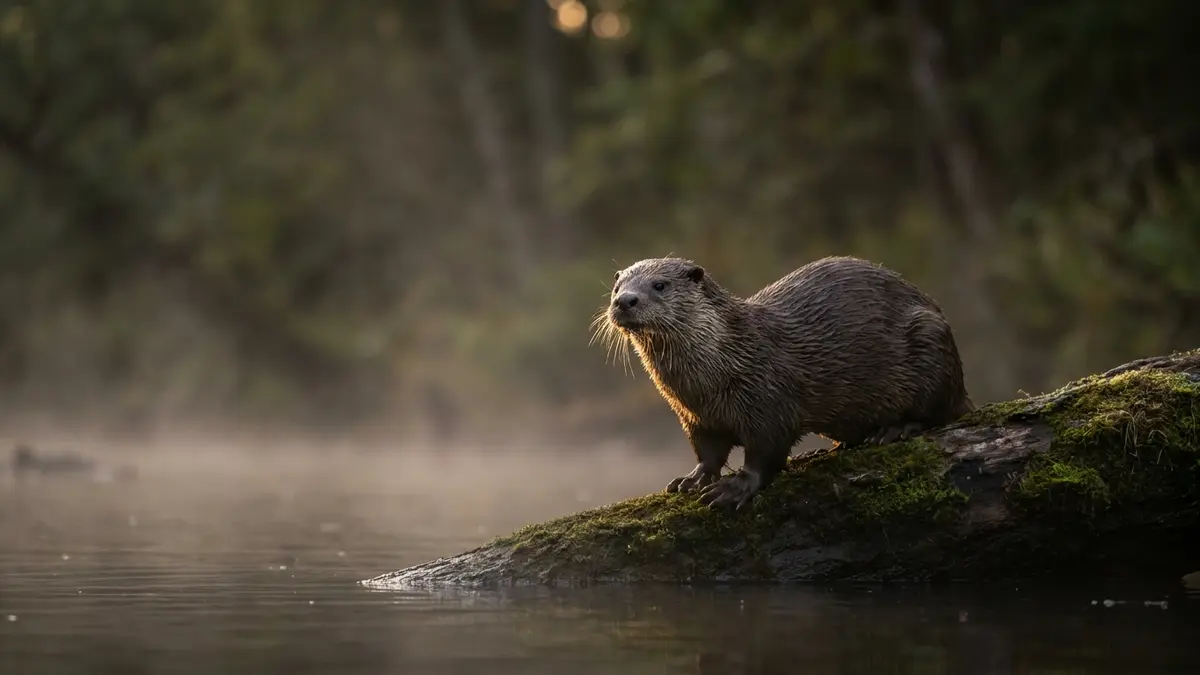
Otters have the densest fur of any mammal on Earth — about a million hairs per square inch — and some species can dive over 300 feet chasing prey. There are 13 recognized otter species spread across nearly every continent, and sea otters are so at home in the ocean that they can spend their entire lives without ever coming ashore.
An almanac
- Species
- 13 recognized species
- Found in
- Nearly every continent
- Diet
- Carnivore (Order Carnivora)
- Size
- Up to ~100 lbs
- Fun fact
- Fur packs ~1 million hairs per sq inch
- Top dive depth
- 300+ feet
Otters have a reputation as the goofballs of the animal kingdom. Underneath the floating-and-holding-paws routine, though, is a tough, wide-ranging mustelid built for a life split between land and water. Here's what actually makes them remarkable, plus where they've turned up in film, music, and story.
Fascinating Otter Facts
Otters belong to the weasel family (Mustelidae), grouped in the subfamily Lutrinae. They're built for an amphibious lifestyle — just as comfortable paddling through a river as hauling out onto a bank. There are 13 recognized species found across nearly every continent, and although they share a basic body plan, size and habits vary a surprising amount from one to the next.
- They split their time between water and land rather than committing fully to either.
- Scientists count 13 distinct otter species worldwide.
- Wild populations turn up on almost every continent.
- All four feet are webbed for swimming.
- Each foot carries five toes.
- A grown otter's mouth holds 32 teeth.
- The largest individuals can approach 100 pounds.
- Some can dive to depths beyond 300 feet in search of food.
- Otter fur is the densest of any mammal on Earth.
- A single square inch of that coat can pack in roughly a million individual hairs.
- Multiple otter species are currently considered endangered.
- Sea otters are so at home in the ocean that they can spend their entire lives without ever coming ashore.
Taxonomically, they sit under Kingdom Animalia, Phylum Chordata, Class Mammalia, and Order Carnivora — so despite the playful reputation, they're classified alongside the animal kingdom's hunters.
Otters in Movies & Music
Otters have shown up on screen and in song more than a few times. On film, they've starred in documentary-style titles like Saving Otter 501 (2013) and Survival Tales of the Wild: Sea Otters (2011), and earlier decades gave us Tarka the Otter (1979) and Ring of Bright Water (1969), both adapted from well-known otter stories.
Younger audiences may know Emmet Otter's Jug-Band (1977), and there's also a lighter, kid-focused entry called Cute & Cuddly Critters: Tinker the Otter (2002).
Musically, otters have inspired their own small songbook, including If I Were an Otter (2013), Ollie the Otter (2011), and The Music of Emmet Otter's Jug-Band Christmas (2011). Songwriters, it turns out, have found them just as charming as filmmakers have.
Famous Otters
A handful of otters have become characters in their own right. Flash headlines The Odyssey of an Otter, while Sweeting appears in the novel The Demon Breed. Lottie is a familiar face in Return to the Hundred Acre Wood, and Tarka the Otter — the namesake of the 1979 film — comes from a 1927 novel that made the otter a literary favorite.
Frequently Asked Questions
How many species of otter are there?
There are 13 recognized otter species, found across most continents rather than confined to any single region.
Why is otter fur so special?
Otter fur is the densest of any mammal — a single square inch can hold about a million hairs, which helps trap warmth and keep them insulated in cold water.
Do otters ever leave the water?
It depends on the species. Many otters move freely between land and water, but sea otters are so adapted to ocean life that they can go their whole lives without setting foot on shore.
More about the Otter
More from Animal Facts
Not sure which animal is yours?
Consult the quiz