Animal Facts
Jaguar Facts: Bite, Black Coats and Fish Diets
In one Brazilian reserve, jaguar scat held more caiman and turtle than mammal remains.
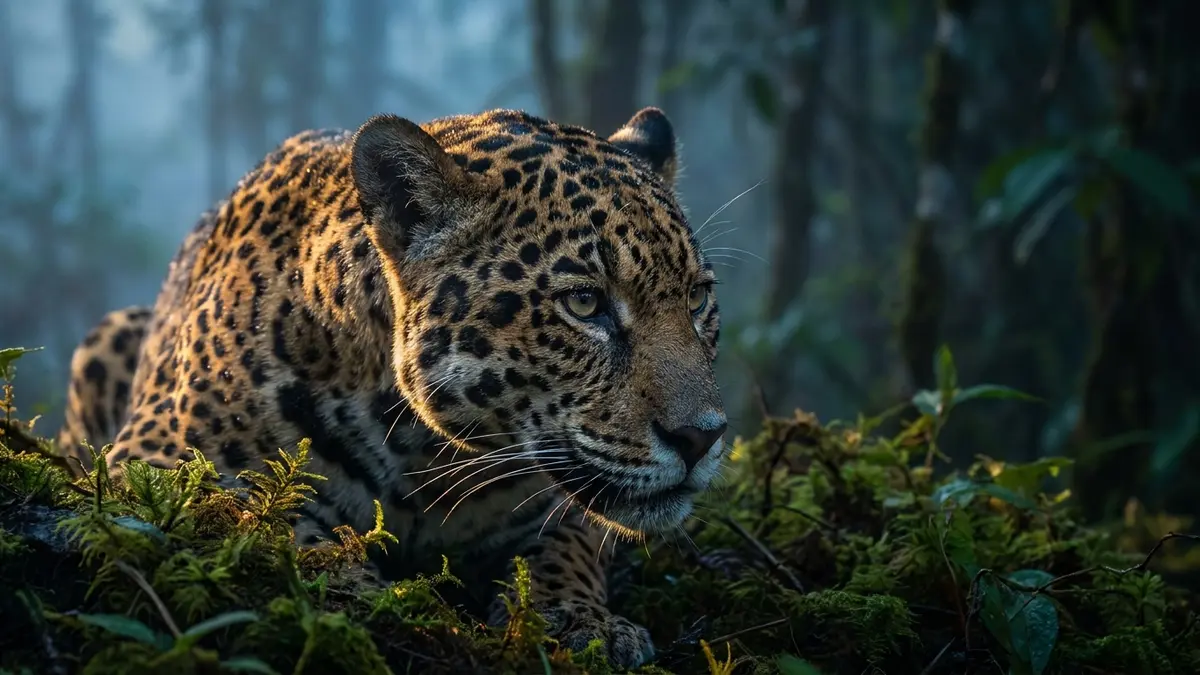
The jaguar (Panthera onca) is the largest cat in the Americas and the third largest in the world, behind the tiger and the lion, weighing 57-113 kg. U.S. Fish & Wildlife credits it with the strongest bite of any cat in the Western Hemisphere and calls it the only cat on this side of the globe that can roar. It now occupies 51 percent of its historic range, and of 34 recognised subpopulations only the Amazonian one, at 57,000 to 64,000 animals, is rated Least Concern.
An almanac
- Scientific name
- Panthera onca (Linnaeus, 1758)
- Weight
- 57-113 kg (126-249 lb); females usually 10-20% smaller than males
- Body length
- 112-185 cm (3.7-6.1 ft), plus a 45-75 cm tail
- Range
- Southwestern U.S. and Mexico to northern Argentina; U.S. Fish & Wildlife puts it at 19 countries - 51% of its historic range
- Conservation status
- IUCN Near Threatened; CITES Appendix I; US Endangered Species Act: Endangered
- Global population
- About 173,000 (modelled estimate, Jedrzejewski et al. 2018); trend declining
- Lifespan
- About 13-14 years in the wild; median 18 years in AZA-accredited zoos
The jaguar is the largest cat in the Americas and the third largest in the world, behind only the tiger and the lion. It is also the cat most often described in borrowed terms. The bite record it gets handed belongs to a narrower category than people quote, the black ones are not a separate animal, and the leopard it is confused with lives on a different set of continents.
What actually separates a jaguar is what it does with its jaws and its feet. On smaller prey it crushes the skull outright; it can empty a turtle shell without breaking it; and in parts of Brazil's Pantanal its diet is mostly aquatic, built around caiman, turtles and fish rather than deer.
The arithmetic is less comfortable. The species holds 51 percent of the range it once covered, and of 34 recognised subpopulations only the Amazonian one is rated Least Concern. Everything below is drawn from the cited sources, and where the popular version is wrong, it is flagged rather than smoothed over.
Jaguar facts
- Third largest cat on Earth. The jaguar is the largest cat in the Western Hemisphere and the third largest overall, behind only the tiger and the lion (San Diego Zoo Wildlife Alliance).
- The bite superlative is narrower than the version you have heard. The line repeated everywhere is "strongest bite of any big cat", full stop. The careful federal wording limits it: jaguars have the strongest bite of any cat in the Western Hemisphere, and they are the only ones on this side of the globe that can roar. The jaguar's real distinction is force relative to its body size, plus what it does with that force - biting through bone and shell rather than setting an absolute record.
- Skull bite for small prey, throat bite for large. On smaller prey the jaguar crushes the skull, biting the head or striking it with a forepaw, and its canines pierce the skull outright - the only large cat whose canines do this. Large prey are killed by a throat bite.
- It eats turtles without breaking the shell. A paw is inserted between the top (carapace) and bottom (plastron) and the turtle's insides are scooped out, leaving the shell intact.
- More than 85 prey species recorded. The list runs from peccaries, deer, tapirs and capybaras to cattle, caimans and turtles.
- At Taiama the diet is mostly aquatic. At Taiama, analysis of 138 scat samples found aquatic prey dominant: 55 percent contained aquatic reptiles such as caiman or turtles, 46 percent contained fish, and just 11 percent contained mammal remains.
- The densest jaguars yet recorded. A 2021 study estimates that Taiama Ecological Station, in Brazil's northern Pantanal, hosts the highest jaguar density yet recorded - about 12.4 animals per 100 square kilometres, nearly triple some of the next-highest estimates elsewhere.
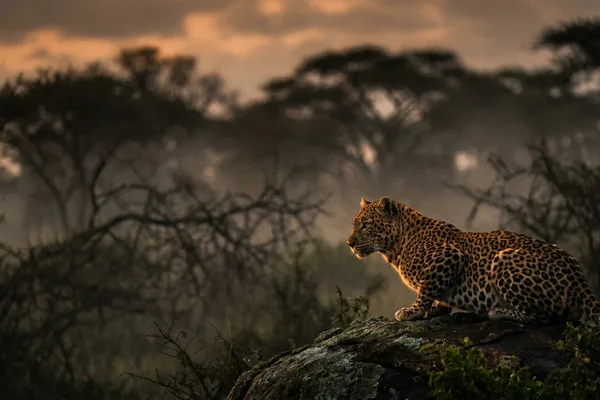
- Look inside the rosettes. Leopards also have dark rosettes on a tawny coat, but a leopard's rosettes are hollow; a jaguar's usually enclose one or more smaller black spots.
- No two coats match. Each jaguar's spot pattern is unique - its own personal ID - which is why researchers can identify individual cats from trail-camera photographs.
- Black jaguars and black leopards get there by different genes. Melanism in jaguars is determined by the dominant form of the MC1R gene, versus a recessive form of a different gene, ASIP, in leopards. Melanism occurs at broadly similar rates in jaguars and leopards - Panthera puts it at around 10 percent in each - though the frequency varies sharply by habitat, running higher in moist forest and near zero in open or temperate country.
- Built for long swims. Jaguars have large, rounded paws that are useful for swimming large distances. In seasonally flooded forests like the Amazon, they survive by swimming from tree to tree to hunt canopy-dwelling monkeys and sloths.
- Half the historic range is gone. The jaguar now occupies only 51 percent of the range it historically covered (IUCN SSC Cat Specialist Group).
- One secure subpopulation out of 34. Of 34 recognised jaguar subpopulations, only the Amazonian one is classified Least Concern. Every other subpopulation is Endangered or Critically Endangered.
- The Amazon holds the biggest single population. Estimated at 57,000 to 64,000 individuals, it is the largest jaguar subpopulation anywhere.
- Overwhelmingly a Latin American cat. More than 99 percent of the jaguar's range lies in Central and South America, and jaguar breeding in the United States has not been documented in more than 100 years; the few males seen north of the border are believed to have dispersed from core populations in Mexico.
- Genetically continuous from Mexico to Argentina. The jaguar has genetic continuity throughout its existing range - the only large carnivore in the world of which that is true.
- The name misfires twice. "Jaguar" may derive from yaguara, an Amazonian word meaning "any larger beast of prey" - not the poetic "he who kills with one leap" repeated all over the internet, which has no support in the reference literature. The San Diego Zoo fact sheet glosses the epithet onca as a Greek word for "a lynx"; more standard references derive it from Portuguese onca, itself traceable to Latin lynx. Either way the name points at a lynx, an animal the jaguar is not.
- Cubs are born blind and woolly. One to four cubs are born with coarse, woolly fur and closed eyes, which open between 3 and 13 days old.
Myths about jaguars
"A black panther is its own species of big cat." There is no species called a black panther. A black panther in the Americas is a jaguar; in Africa or Asia it is a leopard. In jaguars the black coat comes from a dominant variant of the MC1R gene, while in leopards it comes from a recessive variant of a different gene, ASIP. Melanism occurs at broadly similar rates in jaguars and leopards - Panthera puts it at around 10 percent in each - though the frequency varies sharply by habitat, running higher in moist forest and near zero in open or temperate country. In strong light you can still make out the rosettes underneath.
"Jaguars and leopards are basically the same cat, and jaguars live in African jungles." Jaguars live only in the Americas, from the southwestern U.S. and Mexico south to northern Argentina; U.S. Fish & Wildlife puts the range at 19 countries. Leopards live in Africa and Asia, and the two never meet in the wild. The quickest field test is the rosettes: a jaguar's have smaller black spots inside them, a leopard's are hollow. Jaguars are also stockier, with a broader head, deeper chest and shorter tail.
"Like almost every cat, jaguars avoid water." Jaguars are among the most aquatic big cats alive. They are seldom far from a river or lake, they swim between forest islands during floods, and at Brazil's Taiama reserve the diet is dominated by aquatic prey: of 138 scat samples, 55 percent contained aquatic reptiles such as caiman or turtles, 46 percent contained fish, and just 11 percent contained mammal remains.
"A contented jaguar purrs like an oversized house cat." It cannot. Jaguars are one of the four roaring cats - lions, tigers, leopards, jaguars - whose partially ossified hyoid bone and flexible larynx produce a roar and rule out true purring, which needs continuous vibration on both the in-breath and the out-breath. Cheetahs and pumas purr; the snow leopard, though also a Panthera, neither roars nor truly purrs, producing chuffs, meows and purr-like sounds. A jaguar's common call is a hoarse, repeated coughing bark.
"Jaguars vanished from the United States long ago." Individual male jaguars still cross the border from Mexico into Arizona, and the U.S. maintains roughly 640,124 acres of designated jaguar critical habitat in Pima, Santa Cruz and Cochise counties. What is genuinely gone is a breeding population: no jaguar reproduction has been documented on U.S. soil in more than 100 years, and the cats seen here are dispersing males from core populations further south.
The jaguar in culture
Jaguars carried religious weight in Mesoamerica long before they carried logos. The British Museum catalogues a Maya "Jaguar God of the Underworld", and among the Aztecs jaguar warriors formed an elite military rank earned only in battle. Jaguar pelts and jaguar thrones were royal and elite regalia in Classic Maya courts, strongly associated with rulership.
The name later migrated into branding. Britain's S.S. Cars Ltd. became Jaguar Cars Ltd. in 1945, shedding initials that had acquired an unfortunate wartime association. On 30 November 1993 the NFL awarded its 30th franchise to Jacksonville; the Jaguars began play in 1995, went 4-12, then reached the AFC Championship Game in their second season.
Wildlife film has been kinder to the actual animal. The BBC's Lost Land of the Jaguar (2008) put wild jaguars on screen, and Wild Brazil (2014), a three-part Natural History Unit series, filmed them in the Pantanal, including hunting sequences during the seasonal flood. Conservationist Alan Rabinowitz wrote An Indomitable Beast: The Remarkable Journey of the Jaguar (2014). In February 2016 a 41-second trail-camera compilation of the Arizona jaguar El Jefe became the first publicly released video of a wild U.S. jaguar.
Jaguars people know by name
Macho B, a male in southern Arizona, was collared by the Arizona Game and Fish Department on 18 February 2009 and euthanised less than two weeks later after veterinarians found kidney failure. At roughly 16, he was the oldest wild jaguar on record.
El Jefe was named on 2 November 2015 by students at Tucson's Felizardo Valencia Middle School, through a Center for Biological Diversity contest, after trail cameras caught him in the Santa Rita Mountains between 2011 and 2015. The Mexican group PROFAUNA then photographed him alive in central Sonora on 27 November 2021, a sighting announced in August 2022.
Two more named Arizona cats followed. Sombra was photographed in the Chiricahua Mountains from 2016 and named by pupils at the Paulo Freire Freedom School. Yo'oko, named by Hiaki High School students, was tracked in the Huachuca Mountains from December 2016 until he turned up dead in Sonora.
Frequently Asked Questions
Is a black panther a jaguar or a leopard?
It depends where you are. There is no species called a black panther: in the Americas a black panther is a jaguar, and in Africa or Asia it is a leopard. The black coat comes from a dominant variant of the MC1R gene in jaguars and a recessive variant of a different gene, ASIP, in leopards. Panthera puts the rate at around 10 percent in each species, though it varies sharply by habitat.
How can you tell a jaguar from a leopard?
Look inside the rosettes. A jaguar's rosettes usually enclose one or more smaller black spots; a leopard's are hollow. Jaguars are also stockier, with a broader head, deeper chest and shorter tail. Geography settles it too - jaguars live only in the Americas, leopards in Africa and Asia, and the two never meet in the wild.
Do jaguars actually have the strongest bite of any big cat?
Not as the phrase is usually thrown around. U.S. Fish & Wildlife limits the claim to the Western Hemisphere: the strongest bite of any cat on this side of the globe. The jaguar's genuine distinction is force relative to its body size and what it does with it, biting through bone and shell rather than holding an absolute record.
Do jaguars purr?
No. Jaguars are one of the four roaring cats, along with lions, tigers and leopards, and the partially ossified hyoid bone and flexible larynx that produce the roar rule out true purring, which needs continuous vibration on both the in-breath and the out-breath. Cheetahs and pumas purr. A jaguar's common call is a hoarse, repeated coughing bark.
Are there any jaguars left in the United States?
Individual male jaguars still cross from Mexico into Arizona, and the U.S. maintains roughly 640,124 acres of designated jaguar critical habitat in Pima, Santa Cruz and Cochise counties. There is no breeding population, though: no jaguar reproduction has been documented on U.S. soil in more than 100 years, and more than 99 percent of the species' range lies in Central and South America.
Do jaguars swim and hunt in water?
Regularly. They have large, rounded paws suited to swimming long distances, and in seasonally flooded forests like the Amazon they swim from tree to tree to hunt canopy-dwelling monkeys and sloths. At Brazil's Taiama reserve, 138 scat samples showed aquatic prey dominating: 55 percent held aquatic reptiles such as caiman or turtles, 46 percent held fish, and only 11 percent held mammal remains.
More about the Jaguar
More from Animal Facts
Sources
Claims on this page were checked against these published sources.
- Jaguar
Jaguars are the largest cats in the Western Hemisphere and the third largest overall.
Read the source → - Supporting jaguars at home and abroad
Jaguars also have the strongest bite of any cat in the Western Hemisphere and are the only ones on this side of the globe that can roar.
Read the source → - How Often Can Big Cats Be Black?
melanism in jaguars is determined by the dominant form of a gene (MC1R), vs. a recessive form of the gene ASIP in leopards.
Read the source → - Living Species - Jaguar
Today, the jaguar occupies only 51% of its historic range
Read the source → - The Service Finalizes Revisions to Jaguar Critical Habitat in Arizona
More than 99% of the jaguar’s range is found in Central and South America, and the few male jaguars in the U.S. are believed to have dispersed from core populations in Mexico. Jaguar breeding in the U.S. has not been documented in more than 100 years.
Read the source → - Jaguar (Panthera onca) Fact Sheet: Taxonomy & History
This large, wide-ranging carnivore has characteristic genetic continuity throughout its existing range - the only such carnivore in the world.
Read the source →
Not sure which animal is yours?
Consult the quiz