Animal Dream Symbol
Horse Dream Meaning: Dreams About Horses Explained
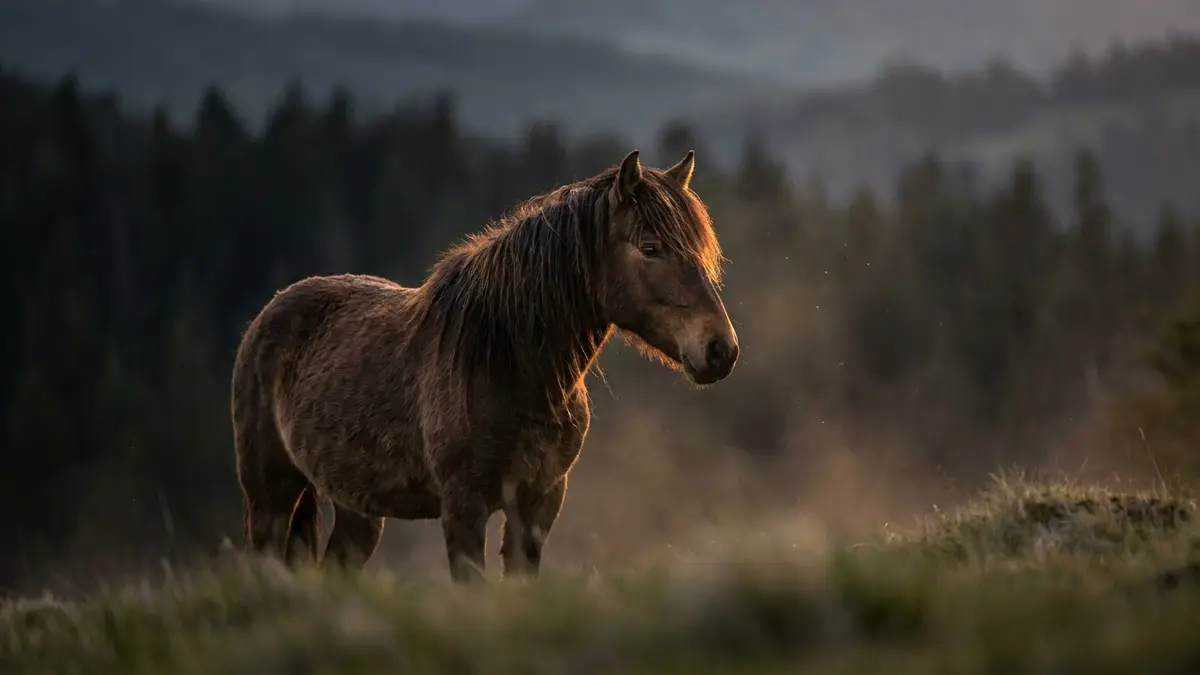
Dreaming of a horse usually points to raw energy, personal drive, or a craving that hasn't been satisfied in waking life. The exact meaning shifts with the scene: a wild horse running free signals a hunger for freedom, a saddled and bridled horse points to disciplined effort, and a horse in distress or bucking you off often reflects fear of loss or an old wound. Spiritually, the horse symbolizes willpower and endurance, the kind you draw on to push through a hard stretch of life.
An almanac
- Core message
- Raw energy, drive, or unmet desire
- In dreams
- Wild = freedom; saddled = duty
- Best qualities
- Willpower, endurance, momentum
- Watch for
- Panic, bucking, or a dead horse signal distress
- Cultural roots
- Sagittarius (West) & Year of the Horse (China)
- Totem for
- Pushing forward through hard times
- Color cue
- White=clarity; black=shadow; brown=stability
- Mythic guides
- Pegasus, Sleipnir, Epona, Surya
Horses have carried people across continents and through centuries of folklore, so it's no surprise they gallop into our sleeping minds with the same force. When a horse turns up in a dream, it's usually flagging raw energy, personal drive, or a hunger that hasn't been satisfied in waking life. The scene matters a lot: a horse thrown into a panic sends a very different message than one calmly grazing beside you, and a saddled, working horse means something else entirely than one running loose across open ground. The scenarios below cover the most common threads, along with the spiritual undertones many dreamers notice.
What It Means
At its simplest, a horse dream often reflects appetite — not just for food, but for movement, connection, and experience itself. If you went to sleep feeling short on something, whether that's rest, closeness, or opportunity, your mind may dress that craving up as a horse feeding contentedly nearby, with you standing right beside it enjoying the same meal.
Horses are also closely bound up with instinct and physical vitality. Because they're such fast, powerful animals, they often stand in for stamina, forward momentum, and the untamed parts of your personality that rarely get to surface during an ordinary day.
Pay close attention to what the horse is doing, and how you feel while it's happening, since those small details usually carry the dream's real point.
Common Horse Dream Scenarios
7 scenarios — tap the one you remember
Symbolism & Message
A few themes keep resurfacing across these scenarios. One is the tension between freedom and restraint: notice whether the horse in your dream is loose and running or harnessed and working, since that contrast usually mirrors how free or weighed down you feel in real life right now.
Another is desire and vulnerability, especially in dreams built around riding, falling, or close physical contact with the animal.
A third is momentum. Whether you're the one gripping the reins or just watching the animal from a distance, it's worth asking where in your life you feel like you're steering things forward, and where you feel like you're just being carried along.
Spiritual Meaning
Many dream interpreters treat the horse as a guide connected to willpower and endurance, a nudge to keep pushing through a rough stretch of life. An appearance from this animal is often read as encouragement to trust your own stamina, especially if you've been putting off something that calls for bold, decisive action.
There's also an astrological layer worth knowing. In Western astrology, the centaur, part human and part horse, is the emblem of Sagittarius, so a horse dream can occasionally tie back to someone born under that sign stepping into your life.
In Chinese astrology, an entire year belongs to the Horse, and dreaming of one may likewise point to a person born in a Horse year who is meaningfully involved in your story.
What the Horse's Color Might Mean
Once you've placed the scenario, the horse's coat can sharpen the reading further. A white horse tends to point toward purity, clarity, or a stretch of good fortune arriving after a murky patch, while a black horse leans toward mystery, a hidden fear, or a shadow side of yourself you haven't looked at directly yet.
A brown horse is usually the gentlest of the bunch, tied to steadiness, home, and relationships that feel dependable rather than dramatic. A gray horse often nudges you to focus less on how you get somewhere and more on simply arriving, and a chestnut or red-toned horse can flag passion or ambition that's currently running a little ahead of your judgment.
None of these color cues override the scene itself, though. A calm white horse grazing reads very differently than a white horse bolting in terror, so let the action set the tone and treat the color as a finishing touch.
Horses in World Mythology
The horse's dream symbolism has deep roots: for thousands of years, myths across cultures have cast the animal as a carrier of souls, gods, and heroes between worlds ordinary feet can't reach. In Greek mythology, Pegasus was a winged horse, usually pictured as a white stallion, sired by the sea-god Poseidon and born from the Gorgon Medusa; he came to stand for divine inspiration and the lift of imagination breaking free of the ground.
In Norse mythology, Odin rode Sleipnir, an eight-legged horse described as the finest of all horses, capable of carrying its rider down to the realm of the dead, Hel, and back again. That image, a horse strong and sure-footed enough to move between the world of the living and the underworld, is part of why so many cultures treat the animal as a guide rather than just transportation.
The Gallo-Roman goddess Epona offers a third thread: she was worshipped across the Roman Empire as protector of horses, ponies, and the people who worked with them, and doubled as a fertility and mother figure. In Hindu tradition, the sun god Surya is pictured riding a chariot pulled by seven horses, a detail often tied to the seven colors of light and the seven days of the week, casting the horse as something that pulls life-giving radiance across the sky.
Taken together, these traditions hint that a dream horse isn't only about your energy level. It may symbolize whatever is meant to carry you from where you are now to wherever you're actually headed.
A Note on Horses and the Plains Nations
If your dream horse felt tied to open land, freedom, or a whole way of life rather than to one specific worry, it's worth knowing the real history behind that association. Horses had been extinct in the Americas for thousands of years until Spanish colonizers reintroduced them beginning in the late 1400s and early 1500s. Within a couple of centuries, the animal had reshaped entire cultures: it became central to the lives of Native Americans, especially the Plains nations, who came to rely on horses as a source of wealth and used them for hunting, travel, and warfare.
That history is likely part of why a running, unbridled horse reads so strongly as a symbol of self-sufficiency and reclaimed freedom in Western dream interpretation today. It's a relatively young symbolic layer compared to Greek or Norse myth, but it runs just as deep in the modern imagination.
Frequently Asked Questions
Does dreaming about a horse always have a sexual meaning?
Not always. While riding scenarios, especially bareback ones, often carry an undertone of desire or vulnerability, plenty of horse dreams are really about vitality, freedom, or an unmet craving that has nothing to do with romance. Look at the full scene, and how you felt in it, before deciding what the dream is pointing toward.
What does it mean to dream about a dead horse?
A dead horse in a dream commonly reflects a sense that some plan, relationship, or effort has reached a dead end. It can be a gentle nudge from your subconscious to stop investing energy into something that won't come back to life, and to redirect that effort somewhere more promising instead.
Is there a connection between horse dreams and astrology?
There can be. Some dream interpreters link horse dreams to Sagittarius in Western astrology, since its symbol is a centaur, or to the Chinese zodiac's Year of the Horse. If someone born under either sign has been on your mind lately, that link might explain why a horse showed up in your dream.
What does it mean to dream about a herd or stampede of horses?
A stampede often reflects a feeling of being overwhelmed, swept along by forces bigger than you, or crowded out by other people's demands. A calmer herd, by contrast, can point to a sense of belonging or growing support gathering around something you care about, so pay attention to whether the group felt threatening or reassuring.
What does a flying or winged horse in a dream symbolize?
A flying horse usually signals that you're ready to rise above a limitation that's been holding you down, whether that's a practical obstacle or your own self-doubt. Because winged horses like Pegasus are tied to inspiration in Greek mythology, this image often shows up when a creative or ambitious idea is finally gaining lift.
Sources
Claims on this page were checked against these published sources.
- Sagittarius (astrology)
When represented as an archer, the star sign is classified as human; when represented as a centaur, he is nonhuman (bestial).
Read the source → - Horse (zodiac)
The Horse (⾺) is the seventh of the 12-year cycle of animals which appear in the Chinese zodiac related to the Chinese calendar.
Read the source → - Pegasus
Pegasus is a winged horse in Greek mythology, usually depicted as a white stallion. He was sired by Poseidon, in his role as horse-god, and foaled by the Gorgon Medusa.
Read the source → - Sleipnir
an eight-legged horse ridden by Odin ... It is described as the best of all horses, and is sometimes ridden to the location of Hel
Read the source → - Epona
In Gallo-Roman religion, Epona was the goddess of horses and ponies. She was also a fertility and mother goddess
Read the source → - Surya
The iconography of Surya is often depicted riding a chariot harnessed by horses, often seven in number
Read the source → - Horses in the United States
The horse became an integral part of the lives and culture of Native Americans, especially the Plains Indians, who viewed them as a source of wealth and used them for hunting, travel, and warfare.
Read the source →