Animal Dream Symbol
Koala Bear Dream Meaning: Dreams About Koala Bears Explained
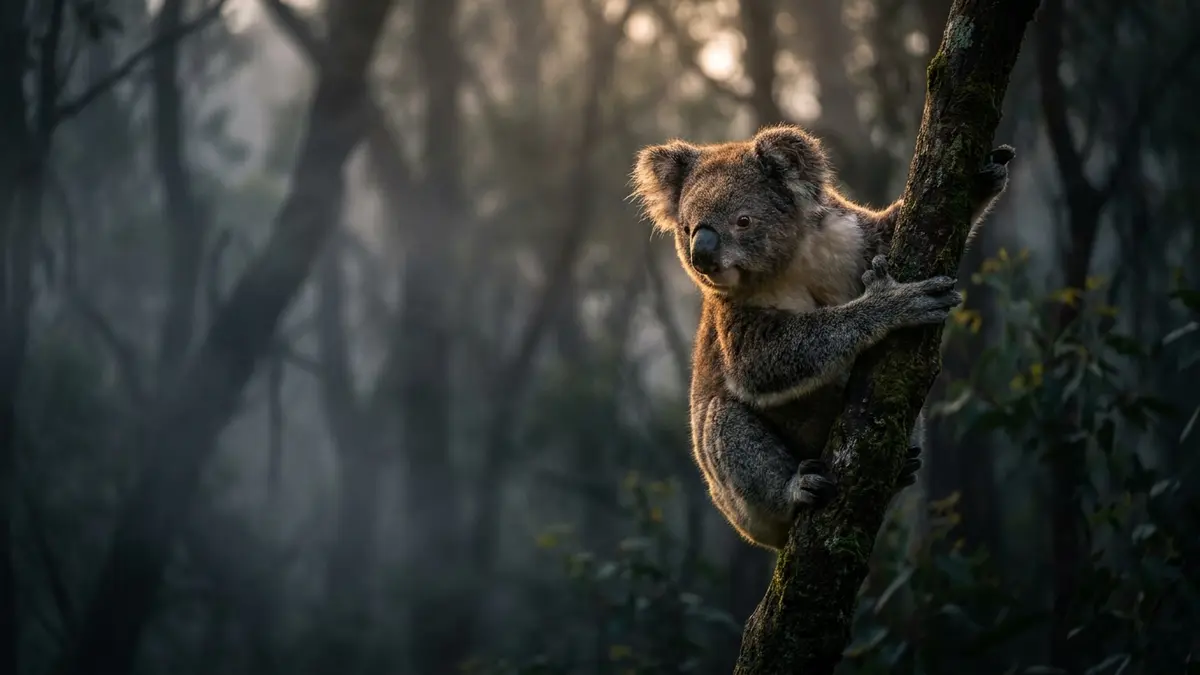
Dreaming of a koala bear usually points to a need for rest, comfort, or a gentler pace in your waking life, since these animals sleep most of the day to conserve energy. It can also reflect nurturing and protection, as koalas carry and shelter their young closely, which can prompt you to examine how much care you're giving versus receiving. Depending on the dream's mood, it may encourage you to slow down and recover, or nudge you toward more solitude and inward reflection.
An almanac
- Core message
- Rest as a form of self-preservation
- In dreams
- Need for rest, comfort, or a gentler pace
- Spirit animal
- Guide toward balance between activity and stillness
- Totem for
- Nurturing, protection, and caretaking
- Best qualities
- Gentle, unhurried, mildly curious
- Watch for
- Overgiving care or ignoring exhaustion
- Real-world sleep
- 18-22 hours a day
- Word origin
- Possibly Aboriginal Dharug for 'no drink' (disputed)
A koala showing up in your sleep almost always circles back to two things: rest and care. Few dream animals feel as instantly disarming as this drowsy, tree-dwelling marsupial, and that soft, harmless quality is the point. Your mind tends to reach for a koala when it wants to talk about slowing down, being looked after, or looking after someone else, and the specifics of the dream usually tell you which of those applies to you right now.
What It Means
There's a reason koalas top so many childhood wish lists: they read as gentle, unhurried, and endlessly easy to love. When one wanders into your dream, it's rarely a coincidence tied to fear or danger. Instead, it tends to reflect an unhurried, easygoing energy you're either embodying or craving.
Koalas spend their days moving slowly, chewing eucalyptus leaves, and dozing for the better part of every 24 hours, so a dream built around one often models a pace you'd benefit from adopting.
That slow, curious streak matters too. Watch a real koala for long enough and you'll notice it's not entirely passive: it investigates a new branch, sniffs at something unfamiliar, and generally shows a mild, unhurried interest in its surroundings. Dreaming about this animal can be a nudge to keep exploring your world with that same low-key curiosity, without letting it tip over into carelessness or distraction.
Common Koala Bear Dream Scenarios
8 scenarios — tap the one you remember
Symbolism & Message
The koala's dream symbolism keeps returning to rest as a form of self-preservation. Because these animals sleep for the majority of their lives to conserve the limited energy they get from a low-nutrient eucalyptus diet, they've become a natural stand-in for the idea that slowing down isn't laziness. It's survival.
If you've been pushing through exhaustion or ignoring your body's signals, a koala dream can be a fairly direct message to stop, recover, and recharge before you run yourself down.
The animal also carries a strong thread of nurturing and protection, largely because koalas are marsupials that carry and shelter their young close to the body for an extended period. That biological detail feeds directly into the dream symbolism: seeing a koala can prompt you to examine how much emotional caretaking you're giving out versus how much you're allowing yourself to receive.
That protective instinct has real biological backing. A koala joey spends around six to seven months tucked inside its mother's pouch, living on milk alone before it's gradually introduced to a specialized, partly-digested substance that primes its gut to handle tough eucalyptus leaves later on. It's a slow, deliberate handoff from total dependence to self-sufficiency, and a dream featuring a koala with its young can echo that same arc: a reminder that real nurturing means holding on sometimes, and knowing when to let someone build their own resilience.
Depending on the dream's mood, the message may encourage you to nurture more generously, or warn you that you've been pouring out care faster than you're refilling it.
Spiritual Meaning
The koala is often treated as a guide toward balance between activity and stillness. Its entire existence is built around long stretches of quiet paired with short, deliberate bursts of movement, and many dream traditions read this rhythm as a template worth mirroring: work with intention, then genuinely rest, rather than staying in a constant low simmer of half-effort and half-exhaustion.
There's also a quieter, more introspective layer to this symbol. Because koalas keep mostly to themselves, moving through life at their own unhurried pace and rarely seeking out company, they can represent a call toward solitude and inward reflection. If a koala appears during a particularly busy or overstimulating season of your life, consider it an invitation to step back from the noise, however briefly, and reconnect with your own needs before you're pulled back into everyone else's.
Worth noting for context: despite the common name, koalas aren't biologically related to bears at all. They're marsupials, closer kin to kangaroos and wombats. That distinction doesn't change the dream symbolism much, but it's a fun bit of trivia that often surprises people looking into what this animal represents.
The Koala in Aboriginal Dreaming
Long before koalas became shorthand for cuddles and naps, they carried real spiritual weight in Aboriginal Australia. For the Gumbaynggirr people of the New South Wales mid-north coast, one well-known Dreaming story tells of the Dunggirr Gagu, or Koala Brothers, whose long intestines were stretched into a bridge that reunited two peoples after rising seas threatened to cut them off from one another. Another widely told legend follows Koobor, a neglected boy who learned to live on gum leaves and, in some tellings, was said to hold power over the rains, which earned him a reputation as a drought-maker.
For groups such as the Birpai and Awabakal nations, the koala is also a totem animal, and that role came with genuine obligation: people connected to the koala totem were traditionally responsible for protecting the animal rather than harming it.
Even the English name may trace back to this heritage. Language historians link 'koala' to a Dharug-language word (recorded variously as koola, kulla, or gula). It's often repeated that this word meant 'no drink', a nod to how rarely koalas visit a waterhole, though etymologists note that specific translation isn't fully settled, so it's best treated as well-loved folklore rather than confirmed fact. None of this changes the modern dream symbolism much, but it adds real depth: long before dream dictionaries got involved, the koala was already tied to protection, responsibility, and stories worth taking seriously.
Frequently Asked Questions
What does it mean when you dream about a koala bear?
Dreaming about a koala usually points to a need for rest, comfort, or gentler pacing in your waking life. Because these animals sleep for most of the day and move at an unhurried speed, they often appear in dreams as a reminder to slow down, recover your energy, and approach whatever you're dealing with without rushing.
Does a koala dream always relate to sleep and tiredness?
Not always, though it's one of the most common threads. A koala can also represent nurturing and protectiveness, since these marsupials carry and care for their young closely. So the dream might be less about your energy levels and more about how much caretaking you're giving or receiving in a relationship.
What does it mean to dream about holding or cuddling a koala?
Cuddling a koala in a dream generally reflects a craving for affection, softness, or a simpler pace of life. It can also suggest that you're currently in, or wishing for, a relationship or situation where you feel genuinely cared for and safe.
How many hours a day do koalas actually sleep?
Koalas sleep for roughly 18 to 22 hours out of every 24, making them one of the most rest-heavy mammals in the world. That extreme schedule exists because their eucalyptus diet is low in calories and mildly toxic, so sleep works as a survival strategy rather than laziness. It's a big part of why koala dreams so consistently point toward rest and recovery instead of urgency or alarm.
Do koalas drink water, and does that matter for the dream symbolism?
Koalas are rarely seen drinking, since they get most of their hydration directly from the moisture in eucalyptus leaves rather than a waterhole. Symbolically, that quiet self-sufficiency adds another layer to the koala's message: you don't need rescuing, just enough patience to trust that what you need is already close by once you slow down enough to notice it.
What does it mean to dream about a dead koala?
A dead or dying koala tends to feel unsettling in a dream precisely because the animal is normally so gentle, and that shock is usually the point. It can reflect a fear that a source of comfort, rest, or nurturing has slipped away, or a worry that you've ignored your own need for care for so long that something in you feels depleted. Treat it as a nudge to check in on your energy rather than a literal warning.
Is dreaming about a koala considered a good sign?
Most interpretations lean positive, since koalas rarely show up in dreams tied to threat or danger. A calm, healthy koala is generally read as reassurance that rest, comfort, or a caring relationship is available to you, while a restless or distressed one can flag that you're overdue for the same. Your own gut reaction to the dream ultimately matters more than any general rule.
Sources
Claims on this page were checked against these published sources.
- Koala
Their low-energy diet limits their activity and they sleep 20 hours a day.
Read the source → - Interesting Facts
sleep for up to 18-20 hours each day
Read the source → - Koala, facts and photos
Koalas may sleep for 18 to 22 hours.
Read the source → - Koala (etymology)
Australian marsupial, 1808, from the Aboriginal name of the animal, variously given as koola, kulla, kula.
Read the source → - The Significance of Koalas for First Nations People
The term "koala" originates from the Dharug language, deriving from "gula" or "gulamany," meaning "no drink"—reflecting observations about koalas' minimal water needs.
Read the source →