Animal Dream Symbol
Peacock Dream Meaning: Dreams About Peacocks Explained
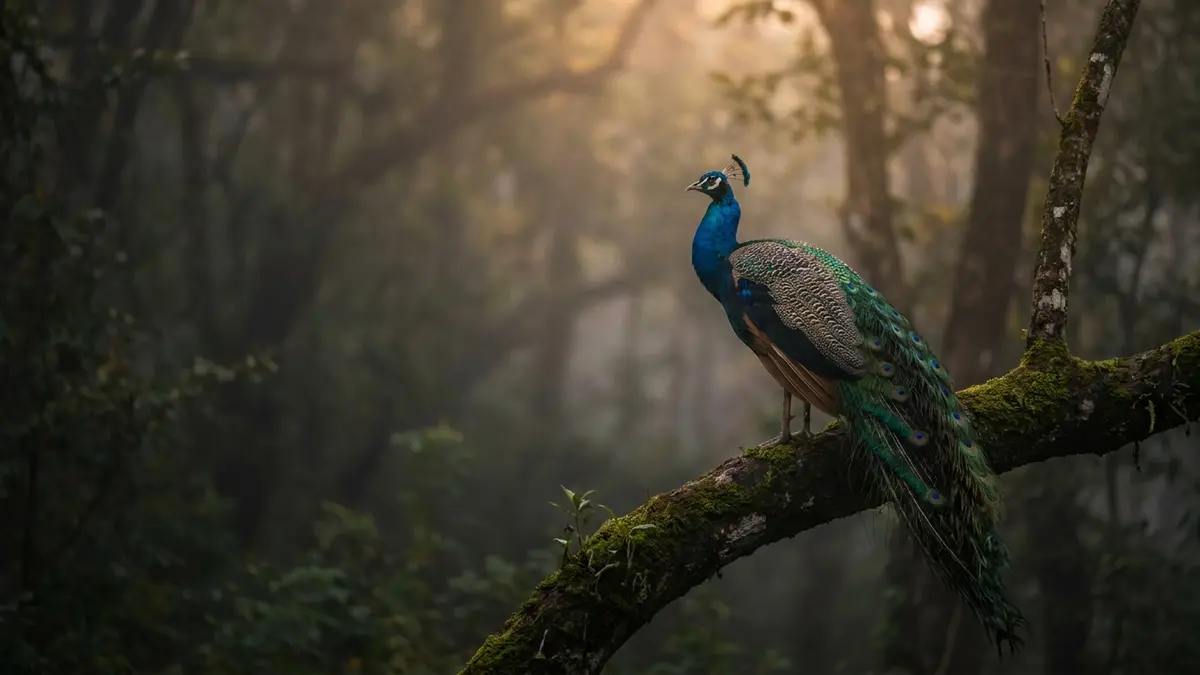
Dreaming of a peacock is usually a positive omen tied to confidence, self-worth, and creativity — it's often a nudge to stop shrinking and start showing what you're capable of, with poise rather than empty showing off. A calm or displaying peacock points to upcoming abundance, renewal, and good fortune, while an injured or frightened peacock signals anxiety about failure or self-sabotage.
An almanac
- Core message
- Own your worth, quietly and with grace
- In dreams
- Usually a positive omen; tone shifts if injured or frightened
- Best qualities
- Pride, dignity, self-assurance, inner calm
- Watch for
- Fear of the spotlight or self-sabotage
- Spiritual meaning
- Messenger of favorable change and rebirth
- Linked season
- Spring, renewal, and things lost coming back
- Sacred to
- Hera, Krishna, and Kartikeya across traditions
- Behind the display
- Only males grow the train; it's covert feathers, not a tail
You've probably heard someone called "proud as a peacock," and that phrase explains why this bird turns up so often in dreams. Few creatures announce confidence the way a peacock does, fanning its tail into a wall of shimmering color. When one struts through your dream, it's usually asking something about how you see yourself, and whether you're ready to let your best qualities show.
What It Means
Read a peacock dream as a nudge toward owning your worth. Many traditions link this bird to royalty and the divine, largely because of its poise and the slow, almost ceremonial way it moves. If the peacock stands in for some part of yourself, your subconscious may be telling you it's time to stop shrinking and start showing what you're capable of.
That's not a license to boast. The lesson leans toward quiet self-possession rather than showing off for its own sake: real confidence paired with grace, not empty swagger. A fanned peacock tail is also covered in eye-like markings, and many dreamers read that detail as a reminder that they're being watched or evaluated right now — worth keeping in mind as you decide how to carry yourself over the next few days.
Common Peacock Dream Scenarios
6 scenarios — tap the one you remember
Symbolism & Message
Peacocks carry a cluster of meanings that travel together: pride, dignity, self-assurance, and inner calm. When this bird enters a dream, it's often urging you to stand a little taller in waking life, to acknowledge your own value without needing to shout about it.
The bird's plumage also speaks to creativity and imagination. If you wake from a peacock dream feeling unusually inspired, that's worth listening to — it may be the right moment to write, paint, sew, decorate, or pick up whatever creative outlet has been calling to you but hasn't gotten your attention lately.
Beyond that, peacocks are tied to renewal and abundance. Because they're associated with springtime, a dream featuring one can point to events coming that season, or simply signal that a period of growth and good fortune is approaching, provided the dream itself feels positive rather than unsettling.
Spiritual Meaning
In a spiritual sense, the peacock is often treated as a messenger of favorable change. Its arrival in a dream is traditionally taken as a good omen — a hint that happiness, prosperity, or a stretch of ease is on its way, so long as the dream itself doesn't carry a fearful or painful tone.
Because the bird is also linked to regeneration and rebirth, its appearance can suggest that something you thought was gone for good — an opportunity, a relationship, a sense of confidence — might be finding its way back to you.
Think of the peacock as a nudge to trust that growth and good timing are on your side, even if you can't see the full picture yet.
Peacock Myths Across Cultures
The eye-like markings you noticed on the peacock's tail have a story behind them. In Greek myth, Argus Panoptes was a giant covered in a hundred watchful eyes, set by the goddess Hera to guard the priestess Io. When the messenger god Hermes lulled Argus to sleep and killed him to free her, Hera honored her faithful watchman by gathering his hundred eyes and setting them into the tail of the peacock, the bird she kept sacred and used to draw her chariot ever after. It's a fitting origin for a dream image so often tied to being seen and evaluated.
Hindu tradition ties the bird to more than one deity. Krishna is traditionally shown wearing a peacock feather in his crown as a mark of divine beauty, while the war god Kartikeya rides a peacock as his vahana, or sacred mount, won in the old stories after a defeated demon's tree split into a peacock and a rooster. Both traditions show the peacock carrying real spiritual weight, not just decoration.
Early Christian symbolism took a different angle. Because the bird's meat was widely believed to resist decay, the peacock became a folk emblem of resurrection and incorruptibility. The theologian Augustine of Hippo wrote that he tested this belief himself on a bird from Carthage, keeping a cooked slice of peacock breast for weeks and later a full year, and found it merely dried out rather than rotted — evidence, to him, that flesh could be preserved against all expectation. If your dream leans toward things once lost coming back, this piece of the symbol's history lines up with the renewal reading covered above.
The Real Bird Behind the Symbol
It helps to know a little biology when you're decoding the imagery your mind pulled from memory. Only the male bird is properly called a peacock; the female is a peahen, and together the species is peafowl. Only males grow the famous display — and technically it isn't a tail at all, but a train made of elongated upper tail-covert feathers that can stretch over five feet.
Those eye-shaped markings are called ocelli, and a mature male can carry well over a hundred of them, with the count generally rising as he ages. Research on the birds has found that females tend to choose mates with more ocelli in their train, since the display seems to broadcast a male's age, vigor, and status. Males perform their fanning courtship display at communal gathering grounds called leks, shaking the train to catch a passing female's attention.
Knowing this adds a layer to the dream: if the peacock in your sleep was clearly displaying to be chosen or judged, your subconscious may be echoing that real courtship dynamic — a part of you performing worth for an audience, rather than simply existing in it.
Frequently Asked Questions
Is dreaming about a peacock a good sign?
Generally, yes. A healthy peacock that's calm or displaying its tail is usually read as a positive omen tied to confidence, creativity, and good fortune ahead. The tone shifts only if the bird appears injured, distressed, or frightening, which points instead to fears about failure or self-sabotage.
What does it mean if the peacock in my dream is showing off its tail feathers?
A fully displayed tail is typically a call to embrace your own talents and let them be seen. Your subconscious may be pushing you to step into the spotlight with confidence and grace, instead of staying quiet about what you're capable of.
Why would I dream of a hurt or scared peacock?
An injured or frightened peacock often reflects anxiety about success, or a fear that you're not living up to your potential. It can be a signal to break old patterns of self-doubt and take steps that move you forward instead of holding you back.
Why do peacock feathers have eye-like markings?
Biologically, they're called ocelli, and they help males attract mates by signaling age and vigor. Mythologically, Greek legend traces them to Argus Panoptes, a hundred-eyed giant whose watchful eyes the goddess Hera preserved on the peacock's tail after his death. Either way, dreamers often read the markings as a reminder that they're being observed or evaluated.
What's the difference between a peacock and a peahen in a dream?
A peacock is the male bird with the famous fanned train; a peahen is the female, smaller and without the ornate display. If your dream specifically features a peahen rather than a peacock, it can point more toward quieter, private forms of self-worth rather than the public display and recognition a peacock dream usually suggests.
What does it mean to dream of a white peacock?
A white peacock is often read as an intensified version of the bird's usual message: purity, rare fortune, or an especially significant turning point, since its unusual coloring already stands out in waking life. Pay attention to whether the dream feels peaceful or unsettling, since that tone still decides whether the omen leans hopeful or cautionary.
Does the peacock have religious meaning beyond dream interpretation?
Yes. In Hinduism the bird is linked to Krishna, who is traditionally shown wearing a peacock feather in his crown, and to the god Kartikeya, who rides one. In early Christian tradition, the peacock became a folk symbol of resurrection because its flesh was believed to resist decay. These traditions echo the same themes of renewal and divine favor that show up in the dream symbolism.
Sources
Claims on this page were checked against these published sources.
- Peafowl
These feathers are marked with eyespots, best seen when a peacock fans his tail.
Read the source → - Argus Panoptes
Hera had Argus' hundred eyes preserved forever in a peacock's tail so as to immortalise her faithful watchman.
Read the source → - Kartikeya
Kartikeya used his vel to split the tree in half, with each half transforming into a peacock and a rooster, respectively. After Surapadma was killed, Kartikeya took the peacock as his vahana and the rooster as his pennant.
Read the source → - Krishna
Krishna is often depicted wearing a peacock-feather wreath or crown, and playing the bansuri (Indian flute).
Read the source → - City of God, Book XXI, Chapter IV
taking a suitable slice of flesh from its breast, I ordered it to be kept, and when it had been kept as many days as make any other flesh stinking, it was produced and set before me, and emitted no offensive smell.
Read the source → - Common Peafowl
A single male may display 'from 100-175 ocelli' on his fanned train... Females select mates based on the number of ocelli in their tail.
Read the source →