Animal Dream Symbol
Raccoon Dream Meaning: Dreams About Raccoons Explained
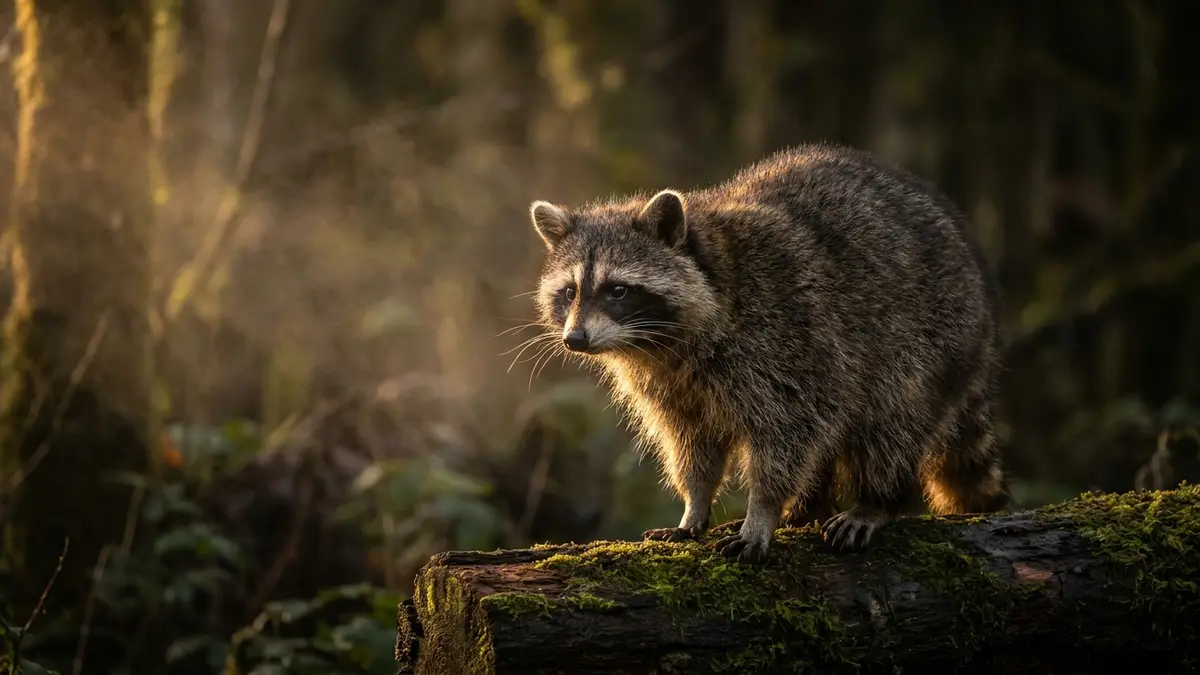
Dreaming of a raccoon usually points to a gap between appearances and reality. Either someone around you is showing a polished face that hides a different motive, or you're the one wearing a social mask that doesn't match who you really are. Often the dream carries both messages at once: a nudge to watch for two-faced behavior in others, and a push to embrace your own clever, adaptable, slightly mischievous side instead of hiding it. Raccoons are nocturnal, so the dream can also point toward a quieter kind of self-knowledge, the sort that only surfaces once you stop performing for an audience.
An almanac
- Core message
- Appearances vs. reality
- In dreams
- Hidden motives, disguised intentions
- Best qualities
- Cleverness, adaptability, resourcefulness
- Watch for
- Two-faced behavior, masked intentions
- Spiritual meaning
- Reclaiming your Shadow self
- Invites
- Authenticity over performance
- Word origin
- Powhatan for "he scratches with the hands"
- Folklore role
- Trickster spirit in Native traditions
A raccoon slipping into your sleeping mind rarely shows up by accident. This small, quick-fingered night-wanderer makes for an unusually layered dream symbol, since its most famous feature, the dark patch circling its eyes, works as both a literal costume and a loaded one. Dreaming of a raccoon usually raises questions of disguise, hidden intentions, and the gap between how someone presents themselves and what actually drives them underneath, whether that someone is a person in your circle or a part of yourself you haven't fully owned yet.
What It Means
The raccoon's dark eye-patch is impossible to separate from its dream meaning. That marking gives the animal a built-in disguise, something closer to a burglar's mask than ordinary fur, and dreams tend to lean hard into that visual. When a raccoon appears in your sleep, it's frequently a nudge to look more carefully at the people around you and what they're really after, rather than taking their surface behavior at face value.
That doesn't mean everyone nearby is secretly plotting against you. More often, the dream is pointing at a simple truth: what someone shows the world and what actually motivates them can be two very different things. You may be picking up on a mismatch you haven't consciously registered yet, a friend, coworker, or acquaintance whose polished exterior doesn't quite match their underlying agenda.
There's a gentler, more inward reading too. If the raccoon shows up wandering around in broad daylight, a real oddity since these animals are creatures of the night, the dream might be questioning why you're keeping up a front during your own "daylight hours," meaning your normal, everyday life.
Ask yourself honestly whether you've been performing a version of yourself that feels safer or more acceptable than the one underneath, and whether that performance is starting to wear on you.
Common Raccoon Dream Scenarios
12 scenarios — tap the one you remember
Symbolism & Message
The raccoon dream turns on appearances versus reality. Psychology has long drawn a line between the public self we present to the world and the private self we only reveal behind closed doors, and the raccoon's mask is close to a perfect illustration of that split.
A dream built around this creature is frequently asking you to notice where that line is being crossed, either by someone else's carefully managed image or by your own habit of performing rather than simply being.
The raccoon's reputation as a bit of a bandit matters here too, but it isn't purely negative. The same traits that make raccoons notorious for raiding bins and outsmarting locks, cunning, quick thinking, adaptability, also make them remarkably good at surviving whatever gets thrown at them. The dream may be highlighting the more useful side of mischief: the instinct for self-preservation, resourcefulness, and clever problem-solving that helps you get through difficult situations rather than simply causing trouble.
So the raccoon often works as a kind of dual signal, a warning to watch for two-faced behavior in others, and an invitation to embrace the clever, adaptable, slightly rule-bending parts of your own character instead of hiding them.
Spiritual Meaning
Many dream traditions treat the raccoon as a stand-in for the Shadow self, the collection of traits we tend to keep tucked out of view because they don't fit the tidy image we'd like others to see. Rather than treating this as something shameful, spiritual interpretations often frame the raccoon's arrival as a chance to reclaim the parts of yourself that are curious, a little mischievous, and unwilling to follow every rule handed to you.
There's also a strong current here about authenticity. A raccoon appearing in your dream life can be read as a call back to your roots, urging you to strip away whatever mask you've adopted to satisfy other people's expectations. Instead of constantly managing how you're perceived, the dream suggests there's more peace, and more power, in simply being who you actually are.
Because raccoons are nocturnal by nature, they're sometimes linked to insight that surfaces in darkness or quiet, the kind of self-knowledge that only shows up once you stop performing for an audience. If a raccoon dream leaves you feeling unsettled, it may simply be nudging you toward that quieter, more honest version of yourself rather than warning you of anything external at all.
Raccoon in Myth & Tradition
Even the raccoon's English name carries a clue about how people have read this creature for centuries. The word traces back to a Powhatan (Virginia Algonquian) term recorded by English colonists around 1600 as arahkun, rooted in arahkunem, meaning "he scratches with the hands." Long before anyone talked about masks or mischief, the animal was named simply for its restless, searching fingers, an origin that already points to the curious, hands-on quality the dream draws on.
Across a number of Native nations, the raccoon shows up as a full-fledged trickster spirit, most famously as Azeban in Abenaki storytelling, a raccoon whose overconfidence gets the better of him when he picks a shouting match with a waterfall and loses. The lesson in a tale like that one is less about cleverness being dangerous and more that cleverness without humility tends to trip over itself. Other nations wove the raccoon even deeper into their social fabric: the Muskogee Creek maintain a Raccoon Clan known as Wotkalgi, and the Chippewa have their own Raccoon Clan and totem, called Esiban.
None of this means your dream is channeling a specific myth. But it does explain why the raccoon has stayed such a durable symbol for quick wit paired with a warning label. When the animal turns up in your sleep, it's tapping into a long line of stories where being clever and being humble had to travel together, or the trickster ended up outsmarting himself.
Frequently Asked Questions
What does it mean to dream about a raccoon's mask specifically?
The raccoon's dark eye-patch is the most symbolically loaded part of this dream. It typically points to a gap between appearance and reality, either someone in your life showing you one face while hiding a different motive, or you wearing a social mask that doesn't match who you really are underneath.
Is a raccoon dream a warning about someone I know?
It can be, but not always in a dramatic way. Often the dream is simply asking you to look more carefully at the people around you, noticing if someone's polished surface doesn't quite line up with their real intentions, rather than predicting outright betrayal.
What does it mean if the raccoon in my dream feels friendly or fun rather than sneaky?
A playful or approachable raccoon often represents the clever, adaptable, slightly mischievous side of your own personality asking to be embraced rather than suppressed. It can be a sign that you're ready to stop hiding your quick wit or resourcefulness behind a more "acceptable" version of yourself.
Where does the word "raccoon" actually come from?
It comes from a Powhatan word, transcribed by early colonists as arahkun, built on a root meaning "he scratches with the hands." The name was never about the mask, it described the animal's restless, hands-on way of searching for food, which fits neatly with the dream's emphasis on hidden motives and constant maneuvering.
What does it mean to dream about a dead raccoon?
There's no fixed tradition tying a lifeless raccoon to one single meaning, so it's worth reading plainly. Since the raccoon in your dream life usually represents a mask, a hidden motive, or a mischievous trait you've been hiding, a dead one often marks the end of that particular disguise or deception, either someone's two-faced act finally collapsing, or your own need to keep performing finally running out of steam.
What does it mean to dream about a baby raccoon?
A baby or newborn raccoon tends to soften the dream's usual edge. Instead of a warning about deception, it more often points to an early, still-forming version of the raccoon's traits in you, curiosity, cleverness, or a willingness to bend the rules, that hasn't fully grown into confidence yet and may need protecting rather than suppressing.
Sources
Claims on this page were checked against these published sources.
- Raccoon
It is usually nocturnal and omnivorous, eating about 40% invertebrates, 33% plants, and 27% vertebrates.
Read the source → - Raccoon - Etymology, Origin & Meaning
also racoon, "small plantigrade carnivorous quadruped," common in the warmer parts of North America, c. 1600, arocoun, from an Algonquian (Powhatan) word variously transcribed arahkun, rahaughcum, rarowcun, arocoun, arroughcan, racoone, racowne, said to be from Algonquian *arahkunem "he scratches with the hands."
Read the source → - Native American Indian Raccoon Legends, Meaning and Symbolism from the Myths of Many Tribes
Raccoon is a trickster spirit in many North American tribes, particularly common in more light-hearted tales aimed at children. ... Abenaki Raccoon story in which the trickster loses a shouting match with a waterfall.
Read the source →