Animal Dream Symbol
Pegasus Dream Meaning: Dreams About Pegasus Explained
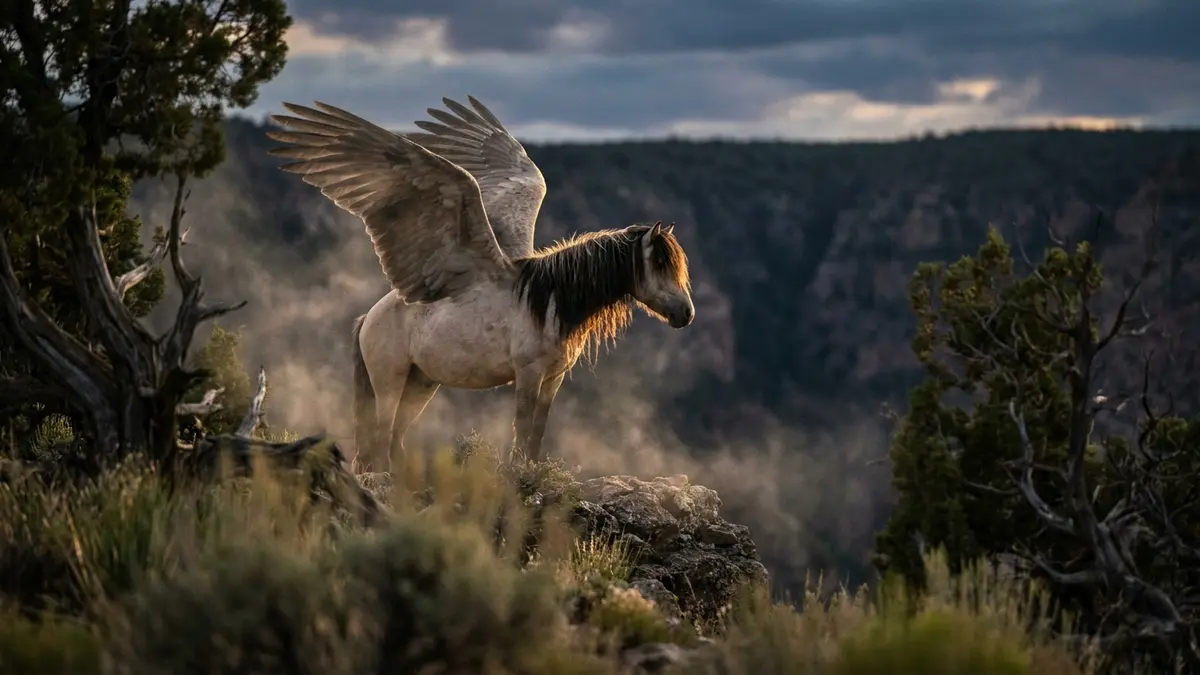
Dreaming about Pegasus generally signals that you're being invited to rise above a current struggle through wisdom, unexpected help, renewed inspiration, or a stronger romantic connection. The winged horse comes purely from Greek myth, so the dream carries an aspirational, hopeful tone rather than a literal one. A calm, soaring Pegasus suggests support is already on its way, while chasing or losing sight of it points to an opportunity that currently feels just out of reach.
An almanac
- Core message
- Rising above a struggle or limitation
- In dreams
- Wisdom, love, inspiration, or help arriving
- Best qualities
- Wisdom, romance, inspiration, unexpected aid
- Watch for
- Chasing it or losing it = opportunity feels out of reach
- Cultural roots
- Greek mythology (Perseus, Medusa, the Muses)
- Emotional tone
- Calm horse = support coming; fleeing horse = fear of missing out
- Name meaning
- Greek for "spring" — echoing the fountains said to burst from its hooves
- Celestial legacy
- Placed among the stars by Zeus as its own constellation
Few creatures in mythology carry the same sense of wonder as the great white winged horse that carried heroes across the sky in ancient Greek legend. When this soaring animal gallops into your sleeping mind, it rarely arrives with a negative message. Instead, it tends to show up during moments when you need a reminder that help, insight, or a shift toward something higher is closer than you think. So much of this creature's legend is wrapped up in stories of heroism, transformation, and divine assistance, and a dream featuring it tends to draw on all three.
What It Means
Dreaming of this mythical horse is almost always tied to a sense of elevation — rising above a problem, a mindset, or a limitation that has been holding you down. The creature is both a horse, an animal long associated with drive, freedom, and forward motion, and a winged being capable of flight. Put together, that points to power that finally has room to lift off instead of staying grounded in the ordinary.
The emotional tone of the dream matters quite a bit here. If the creature appears calm, majestic, or simply present without incident, the dream is often telling you to trust that support is on its way, even if you can't yet see where it's coming from.
If instead the dream involves chasing the animal, watching it flee, or struggling to catch it, that shift usually reflects a fear that opportunity, inspiration, or a chance at something greater might be slipping out of reach.
Because this figure comes entirely from myth rather than nature, dreams about it tend to skew symbolic and aspirational. Think of it as your subconscious reaching for the loftiest form of hope, assistance, or momentum it can find.
Common Pegasus Dream Scenarios
9 scenarios — tap the one you remember
Symbolism & Message
This particular dream figure draws its meaning heavily from the layered myths surrounding its birth and adventures. One well-known account ties its origin to the moment the hero Perseus defeated the gorgon Medusa, with the horse springing forth in what myth treats as an almost sacred act of creation.
That story echoes the birth of the goddess of wisdom, said to have emerged fully formed from Zeus's own head. That parallel is part of why the winged horse is so often read as a symbol of wisdom and sound judgment.
A dream featuring it might be a nudge to think more clearly before you act, or a sign that guidance you've recently received deserves your full attention.
Other versions of the myth link its parentage to the sea god Poseidon, whose watery, untamed domain gives the creature an undercurrent of raw, elemental power. Through this lens, the winged horse is a messenger of romance and affection, and its presence in a dream can hint that you're being called to soften toward someone, express your feelings more openly, or that a meaningful new connection may be approaching.
A separate strand of legend ties the creature to the nine Muses, the divine sources of artistic and intellectual inspiration: wherever its hooves touched the earth, a spring of creative water was said to burst forth. That makes the animal a natural symbol of sudden bursts of inspiration, and dreaming of it can be a hint that your own creative well is about to be refilled, or that it's time to actively seek out whatever refreshes your imagination.
Spiritual Meaning
In its most heroic role, this winged horse carried the hero Bellerophon into the sky to battle the fire-breathing chimera, and its speed and flight turned what should have been an impossible fight into a victory. In that context, its spiritual message centers on unlooked-for aid arriving exactly when it's needed.
If you're facing a challenge in waking life and this creature shows up in your dream, take it as a nudge to stay open to help you didn't ask for and may not have expected.
There's also a more intimate layer to this symbol: because it's a winged horse, the animal can carry meaning tied to romantic and physical closeness. A dream in which the creature is resting quietly may point toward a relationship that could use a little more warmth or honest conversation, while a dream of the animal in full flight often points toward a season of passion and heightened connection just ahead.
Taken together, the spiritual core of this dream figure is about rising above your current circumstances — lifting your thinking, your relationships, or your creative output to a level you hadn't quite reached before. Whether the message is about wisdom, love, inspiration, or timely help, all four point in the same direction: up.
Athena's Bridle: The Original Pegasus Dream
There's a detail in the old myths that feels almost too fitting for a page about dreaming of this creature: the hero Bellerophon didn't catch the winged horse through brute force or clever trapping. He caught it because of a dream.
According to the most widely told version of the story, Bellerophon slept a night in Athena's temple hoping for guidance on how to tame the wild, untouchable horse. The goddess of wisdom came to him as he slept and pressed a golden bridle into his hands. When he woke, the bridle was still there, solid and real, and he found the horse drinking calmly at a spring, ready to be caught and tamed with the gift he'd been given in sleep.
That's worth sitting with for a moment. In the oldest telling of this myth, a dream is exactly where the tool for taming something wild and unreachable first appears. If your own dream left you holding onto a feeling of having been given something — courage, clarity, a plan — rather than having earned it through struggle, that fits how this figure has always operated. Some gifts arrive fully formed, in sleep, before the waking mind has caught up.
The Fall of Bellerophon: A Cautionary Thread
Not every part of this legend ends in triumph, and the less celebrated half of the story carries its own quiet warning. After Bellerophon used the winged horse to defeat the Chimera, later myth says his pride got the better of him: he decided a mortal who had accomplished so much deserved a seat among the gods, and urged the horse to carry him up to Mount Olympus itself.
The attempt didn't go well. The horse bucked or was startled — accounts differ on the exact mechanism — and Bellerophon was thrown back down to earth, his glory ending in a hard fall rather than a welcome among the immortals. The horse, however, kept flying, and went on to serve Zeus directly, carrying his thunderbolts across the sky.
This second half of the myth pairs naturally with the more anxious version of this dream — the one where you're chasing the creature, or where it slips away just as you reach for it. Read alongside Bellerophon's story, that frustration can carry a gentler message than it first seems: perhaps the dream isn't punishing you for reaching. It might simply be telling you that some heights are meant to be approached with humility, not grabbed at outright. The horse itself was never the problem in the myth — the overreach was.
The Name Behind the Myth — and a Home Among the Stars
Even the creature's name is tangled up in water and light. One long-standing explanation, traced back to the poet Hesiod, ties the name to the Greek word for spring or fountain, a fitting echo of the legend that fresh water burst from the ground wherever the horse's hooves struck it. Scholars have also floated an older, competing theory: that the name may descend from a Luwian and Hittite storm-deity associated with thunder and lightning, which would tie neatly to the horse's later role carrying Zeus's own thunderbolts across the sky.
Whichever root is closer to the truth, both point toward the same idea at the heart of this dream symbol: something that connects water and sky, grounding and flight, quiet source and sudden power.
The myth doesn't end on earth, either. As a reward for the horse's loyal service, Zeus is said to have placed it permanently among the stars, and it remains one of the larger constellations visible in the night sky today, marked by a distinctive four-star pattern known as the Great Square. If your dream left you with a lingering sense of being watched over or held in mind rather than simply helped in the moment, that celestial ending to the myth is worth remembering — this figure's story doesn't stop at the ground.
Frequently Asked Questions
What does it generally mean to dream about Pegasus?
Dreaming of this legendary winged horse usually points to a sense of rising above a current struggle, whether through wisdom, unexpected help, renewed inspiration, or a stronger connection with someone you care about. The figure comes entirely from myth, so the dream tends to carry an aspirational, hopeful tone rather than a literal one. It's worth considering which area of your life feels ready to lift off.
Is it a bad sign if I can't catch or reach the horse in my dream?
Not necessarily. It often reflects a goal, opportunity, or source of support that currently feels just out of reach. Rather than reading it as a warning, treat it as a cue to look at what's standing between you and something you want. The dream is likely pointing at that gap, not predicting failure.
Why would I dream about a mythical creature instead of a real animal?
Dreams sometimes reach for legendary or fantastical imagery because ordinary symbols don't feel big enough for what your subconscious is trying to express. A creature drawn from myth, especially one tied to heroism, wisdom, and flight, tends to show up when your mind wants to communicate something bigger than everyday life: a major turning point, a burst of inspiration, or timely help arriving from an unexpected direction.
Where does the name "Pegasus" actually come from?
One long-standing explanation traces it to the Greek word for a spring or fountain, which echoes the myth that water burst from the earth wherever the horse's hooves landed. A separate scholarly theory suggests a much older root tied to a storm deity associated with thunder and lightning, which lines up with the horse's role carrying Zeus's thunderbolts. Either way, the name carries the same thread as the dream itself: a hidden source giving way to sudden power.
What happened to Bellerophon after he tamed the winged horse?
After his triumph over the Chimera, later myth says Bellerophon grew overconfident and tried to ride the horse all the way up to Mount Olympus to join the gods. He was thrown back down to earth for the attempt, while the horse continued on alone to serve Zeus. If your dream involves chasing or losing this creature, that second half of the story is a useful reminder: the frustration may be less about being denied and more about reaching too far, too fast.
Is Pegasus really up in the night sky somewhere?
Yes. In the myth, Zeus rewarded the horse's loyalty by placing it among the stars, and it remains one of the larger constellations visible today, marked by a distinctive four-star pattern known as the Great Square. A dream about this figure taking flight and never quite landing can echo that permanence, a sense that whatever it represents for you isn't a fleeting visit but something meant to stay lifted.
Sources
Claims on this page were checked against these published sources.
- Pegasus
He was sired by Poseidon, in his role as horse-god, and foaled by the Gorgon Medusa... they sprang from the blood issuing from Medusa's neck as Perseus was beheading her.
Read the source → - Athena
Athena leaped from Zeus's head, often fully grown and armed.
Read the source → - Pegasus - Etymology, Origin & Meaning of the Name
from Greek Pegasos, usually said to be from pege "fountain, spring; a well fed by a spring" ... the mythological figure of Pegasus carrying the lightning and thunderbolt of Zeus ... is likely to represent an avatar of the Luwian Storm-God
Read the source → - Pegasus Constellation
The Great Square of Pegasus represents the main body of Pegasus. It is a prominent asterism made up of three bright stars in Pegasus and Alpha Andromedae. ... Pegasus is the seventh largest constellation in the sky, occupying an area of 1121 square degrees.
Read the source →