Mammals · Spirit animal
Aardvark Spiritual Meaning & Symbolism
The night-digging earth-pig that teaches grounded independence, quiet courage, and the reward of digging past the surface.
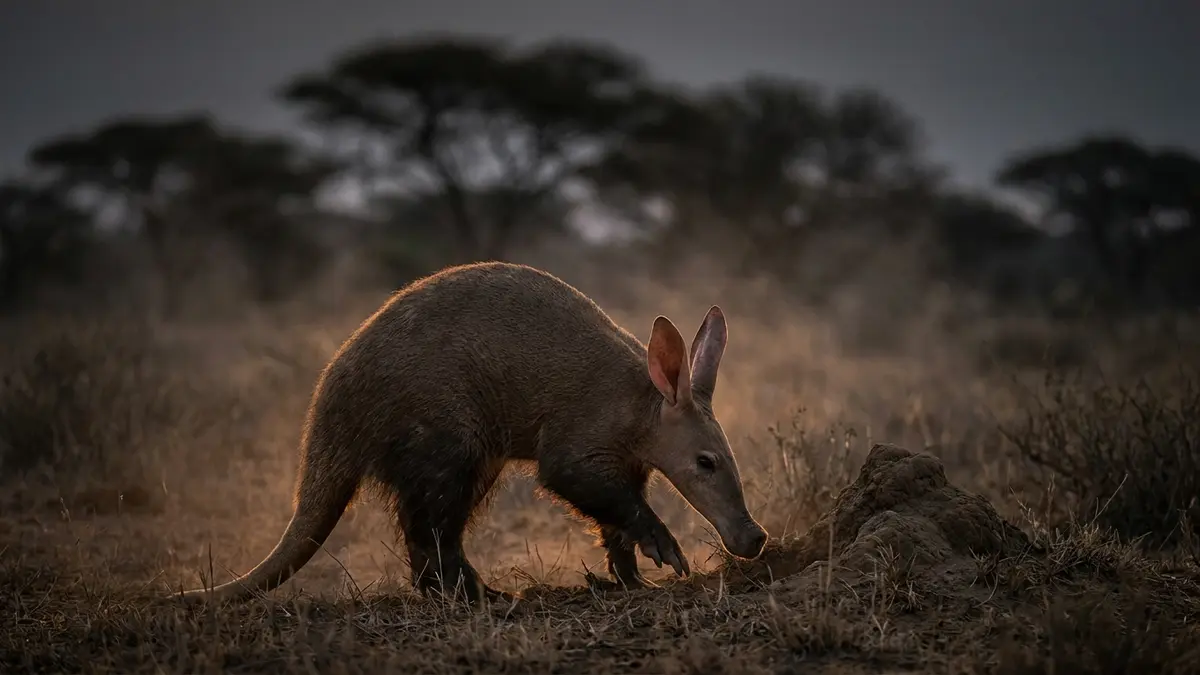
The spirit animal for the aardvark is grounded self-reliance. It encourages you to trust your senses and dig past surface appearances to find stability by staying connected with what lies beneath you. It brings themes of fast-tracked independence, uncovering hidden truths, renewal, and regeneration through its fast-growing teeth.
Dreams about an Aardvark usually indicate that the answer to something troubling already lives inside you; its actions—digging, eating, or roaming—often hint at how close you are to a goal.
An almanac
- Core message
- Grounded self-reliance
- Spirit animal
- Scrappy determination, rooting down
- Totem for
- Reflective, solitary, night-energized people
- Power animal
- Fearless digging for the truth
- In dreams
- The answer already lives inside you
- Cultural roots
- Hausa charm-making, African folklore
- Word origin
- Afrikaans for "earth pig"
- Signature sense
- 9 olfactory bulbs — most of any mammal
Few creatures wear their contradictions more easily than the Aardvark. Called an "African antbear" or a "Cape anteater", this nocturnal tunnel-dweller is shy and solitary, and spends its nights hoovering up termites, then retreating to its below-ground home in search of shade from the sun.
Its very name--roughly "earth-pig"--hints at a grounded working-class wisdom Aardvark may pass on as your spirit guide.
Aardvark Symbolism & Meaning
The Aardvark shares several traits with pigs: It digs in earth for sustenance; it tunnels through soil to create its home; and that connection carries over into its role on Earth. The rabbitlike features of its ears bring heightened hearing, while the tail evokes balance and defense even though these animals are related to neither. Although scientists concluded this mammal is the sole surviving member of its order, Tubulidentata, a similar superorder ties them together. They're largely solitary creatures, coming together only briefly to breed and raise their young before they strike out on their own. That pattern suggests an independent spirit.
Despite its appearances, however, genetics places it in the afrotherian clade alongside elephants, manatees, and hyraxes; small elephant shrews are actually its closest living kin.
In fact, the animal's unique nasal system contains nine separate olfactory bulbs for heightened scent-based awareness. Its teeth also reflect the cycles of life; unlike those of most mammals, they carry no enamel at all but instead continually regenerate bundles of hollow tubes that wear down and renew themselves. Aardvarks then abandon their burrows which other creatures can occupy; as a result, this animal is thought to provide hidden or buried resources to others without recognition.
Aardvark Spirit Animal
When the Aardvark Spirit Animal shows up, expect a surge of scrappy determination and a willingness to stand up for what genuinely matters to you. It thickens your emotional armor against unfair judgment and may nudge you to withdraw from noise and disorder for a while. That armor isn't only a metaphor — an Aardvark's actual hide is tough enough that termite bites and ant stings can't get through it, a literal reminder that the right boundaries let barbed comments land without leaving a mark.
Because it lives so close to the soil, Aardvark often arrives when you need to root down and reconnect with the Earth. It asks you to settle into your own version of a burrow and steady yourself there. It's also considered a lucky guide, so stay alert for small, fortunate coincidences and trust your intuitive "scent" for good opportunities.
Its heightened senses help you judge what truly serves your well-being and what to leave behind. Expect your inner clock to shift toward nighttime reflection, along with a rising energy that pushes past hesitation and moves you toward action on ideas that actually matter.
Does Aardvark fit you?
Tap the ones that sound like you — 6 traits, no right answer.
0 of 6 Nothing picked yet — start tapping.
Aardvark Totem Animal
People born under the Aardvark Totem are thoughtful by nature, weighing situations and relationships before committing themselves. Darkness energizes rather than unsettles them, while they prefer solitude and quiet to constant socializing. They recharge by spending time alone or in silent activities, letting their mind wander.
Professionally, Aardvark-totem people can excel at leadership and organization; they put themselves fully into projects they care about, then bring them to completion.
Aardvarks are also drawn to mystery and what's hidden from the light, having one foot in this world without ever letting go of their fascination with things beyond it.
Aardvark Power Animal
The Aardvark is a digging animal and a powerful ally to call upon when searching for answers. It brings a strong energy of determination with it, inspiring courage and perseverance in the face of resistance.
When people seek out this power animal, they often need help finding clarity. Maybe someone has been dodging confrontation at all costs or spinning their wheels so fast that no one can keep up. The Aardvark reminds them that their instincts are trying to tell them something.
With this energy around, people know how to trust themselves more, even in situations where they would usually shrink or run away. They become adept at evaluating the impact they want to have before acting. This is a big gift to people who prefer to think things over on their own and make a choice afterward.
Aardvark in African Symbolism
In African folklore, Aardvarks are admired for their persistence in searching out food and for their bravery in dealing with attacking soldier ants. For many generations, small pieces of them have been considered valuable when used to make charms. The Hausa people believed that such charms would protect against harm or bring about change.
Also, local legends held that a properly made Aardvark charm could allow its bearer to pass through solid walls unnoticed, or to watch someone at close quarters without being seen. Whether you take these stories literally or simply as a metaphor, they cast the Aardvark in a role closely connected with hidden movement, secrecy, and access to what is ordinarily invisible.
Aardvark Dreams
In a dream with an aardvark, what you want usually lives inside you. The closer the animal gets, the nearer you are to achieving your goal or wish. Some common dreams about the aardvark and their meanings follow.
- An aardvark digging: Whatever really nourishes you requires some effort.
- A fierce and intense digger: You're close to seeing rewards for being persistent and working honestly.
- An aardvark eating: Things are about to get better, your worries will lift, and good news is coming.
- Two aardvarks together: Something romantic or partnering-related may be happening, so go slow rather than rushing into it.
The Aardvark sometimes appears as an ancestral presence or old wisdom that's awakening something important inside you.
Aardvark Spiritual Meaning
If an Aardvark's spiritual message comes down to grounded self-reliance, it means the animal's spiritual lesson is about being firmly connected to the earth while relying on your own resources.
While an Aardvark might seem independent because it moves alone, its solitary habits aren't a rejection of others but rather a reminder that often renewal can happen. Yet even if the animal is independently going about its business, it leaves something for the next creature who needs shelter: a gentle nudge to keep working patiently while knowing that your quiet labor will be useful to people and animals after you.
Aardvark and the Egyptian God Set
For years, Egyptologists had wondered what Set looked like: he was supposed to be a god of chaos and disorder, but artists showed him with the head of some animal that they never could pin down. It's got a downward-curving snout, oversized square ears, a long forked tail. Scholars have floated all kinds of guesses about what this mystery animal might have been: jackals, donkeys, fennec foxes. They even thought it might be the Aardvark.
It lines up with the mystery animal's shape pretty well. It lives entirely by night and goes back underground each dawn. Maybe the Aardvark was meant to carry a bit of Set's energy.
Not just the energy that brings disorder, but also the courage you need to do necessary work for order when it comes — when you have to dig in the dark because nobody else can.
Aardvark Shadow Meaning
Every steady guide has a shadow side too, and the Aardvark shows that it can be easy to go overboard.
This can flip into its opposite: a fixation on security and possessions no matter what the cost, even if it means you should lean on other people instead. Old resentments, unsaid feelings—all get stuck like burrows that fill with rainwater.
So it's not about abandoning the helpful parts—it's letting a bit more air in. Share your worries and give others a chance to help, just by connecting.
Frequently Asked Questions
What does the Aardvark symbolize spiritually?
The aardvark is a symbol of grounding and self-reliance. They also represent renewal, since their teeth are constantly growing (and being worn away) but never stop working.
The aardvark's solitary life makes it a symbol of quietly benefitting others even when you're not in the spotlight.
What does it mean when an Aardvark appears in your dream?
If an Aardvark appears in your dream, it's because you know the answer to something that has been troubling you. You just need to be honest about how you feel about it. The details are important—digging suggests that you need to put effort into reaching a particular goal or desired result; eating points to relief from worry, anxiety, etc.; and two Aardvarks together can suggest the beginning of a slow-growing partnership.
What kind of person has the Aardvark as a totem animal?
Some people feel a special connection with the Aardvark as their spirit animal. This is called a "totem." People with this totem are thoughtful and self-reliant. They're energized by being alone at night rather than constantly going out with other people. They make great organizers, because they get fully involved in things that matter to them. At the same time, they stay curious about spiritual and mysterious ideas along with practical and everyday ones.
Is the Aardvark related to anteaters?
Aardvarks aren't closely related to anteaters. They are their own unique animal order, Tubulidentata, and their closest relatives are the tiny elephant shrews in the Afrotheria group of mammals that also includes elephants, manatees, and hyraxes.
What does a dead Aardvark in a dream mean?
In your dream, if the Aardvark is dead or dying, that might indicate some buried feelings of yours are finally demanding release. Or maybe you've been quietly working away at something by yourself and the effort has reached its natural end; it could be pointing toward a threshold in your life, when what you've been doing alone will surface for better or worse.
Aardvark also represents
- Other animals that represent freedom →Alongside Eagle, Horse, Hawk, Butterfly
- Other animals that represent rebirth and change →Alongside Butterfly, Snake, Dragonfly, Frog
- Other animals that represent protection →Alongside Bear, Wolf, Dog, Elephant
- Other animals that represent resilience →Alongside Cockroach, Camel, Salmon, Turtle
Sources
Claims on this page were checked against these published sources.
- Aardvark
The aardvark is sometimes colloquially called the 'African ant bear', 'anteater'... or the 'Cape anteater'.
Read the source → - Set (deity)
Hypothesized identities of the animal include the Saluki, aardvark, African wild dog, donkey, hyena, jackal, pig, antelope, giraffe, and fennec fox.
Read the source →