Mammals · Spirit animal
Llama & Alpaca Spiritual Meaning & Symbolism
Honest limits — carry what is fair, refuse what is not, and say so plainly.
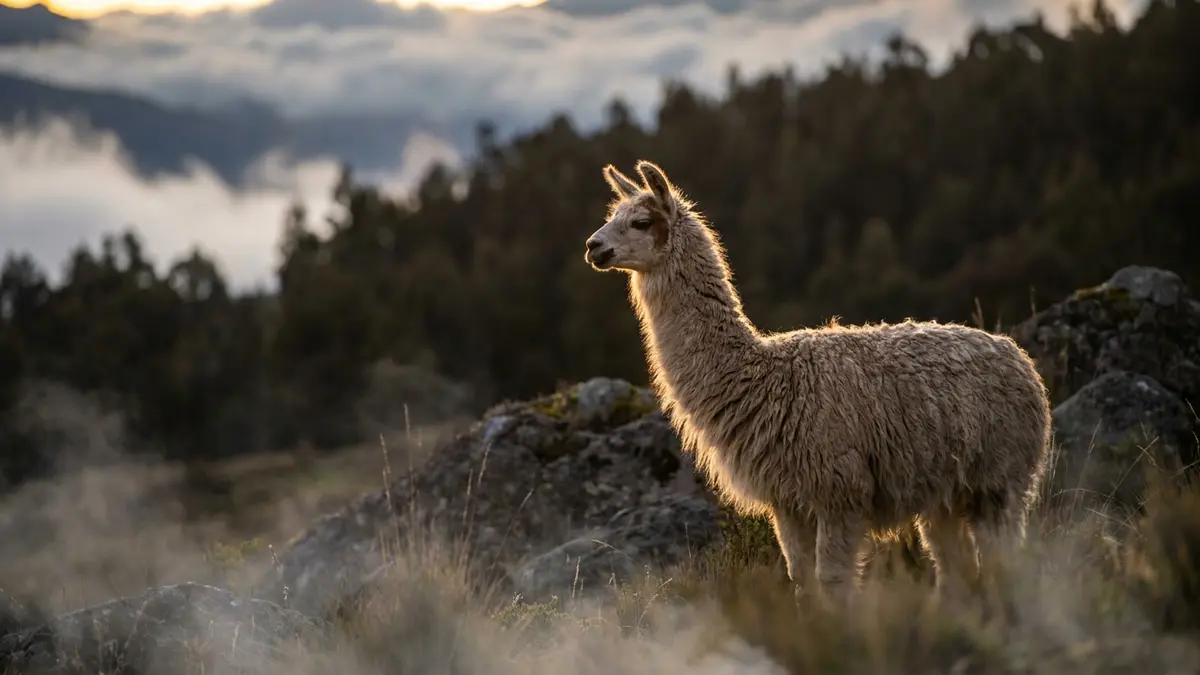
In spirit-animal form, llama and alpaca are truthful limits: standing up for what's fair, refusing what isn't, and talking plainly about carrying loads that get too heavy. It's hard, steady endurance, honesty, community, and self-respect that make a good pace: avoiding collapse by not pushing yourself beyond your limits. Your limits are where you should stand firm; when this animal shows up, it might be asking whether you're quietly carrying more than you should.
An almanac
- Core message
- Carry only what's fair
- Spirit animal
- Reveals overcommitment, teaches limits
- Totem for
- Reliable, loyal, protective people
- Power animal
- Builds stamina and boundaries
- In dreams
- Reflects burdens, confidence, or unrest
- Cultural roots
- Andes and Incan mythology
- Ancestor species
- Alpaca from vicuña, llama from guanaco
- Sacred color code
- White llamas honored Inti, brown honored Viracocha
The llama was a mainstay for ancient civilizations that didn't have the luxury of SUVs or well-paved roads. It carried them through tough, mountainous terrain. The related alpaca, meanwhile, stayed closer to home and was famous for its fleece.
Both types share the same lineage, though. They're known to carry endurance and honesty. In fact, they refuse to go past their limits or treat someone unfairly.
They're even quite dignified about it all.
Llama & Alpaca Symbolism & Meaning
Llamas were first domesticated in the Andes around 6,000 to 7,000 years ago. In other words, they were one of the very few animals that carried things for humans before Columbus showed up. As herd animals, both llamas and alpacas prefer to live with their family. There's usually a male at the front of the group leading the family and keeping an eye on everyone.
Back in ancient times, people sometimes mistook llamas for sheep, which adds an extra layer of meaning to those animal symbols. In North America, llamas actually appeared early on (though most of their myths and lore come from Peru), so they're connected with deep time and ancestors.
Llamas are pretty tough: they stand up well under tough conditions and that's why they have symbols for persistence and adaptability. They soak up hardship and just keep going.
These animals communicate by talking to each other in an honest and direct way. A llama that sees danger will tell its family by making a loud sound.
Llamas don't like getting overloaded. If you put too much weight on one, it'll stop moving until you fix the problem.
Fun story (not proven): the Spanish might have accidentally nicknamed the llama when they would ask "how does it call itself?" over and over as they tried to figure out what these animals were called.
Writers write about these animals using these symbols: balance, diligence (or responsibility), community (or good connections), courage, staying power (or ability to hang in there when things are hard).
Llama & Alpaca Spirit Animal
The llama and alpaca spirit animals tend to show up to help you find a balance between working hard and grinding yourself down. They may also turn up if you need help settling restless spirits or if you're looking for allies against harm.
When you're trying to find your limits, like how much you can accomplish while staying balanced, a llama or alpaca reminds you to pay close attention. Some activities sap energy without giving much back, and being aware of those activities is part of what it means to be wise.
These animals may also show up to remind you that humility doesn't mean letting people take advantage of you. And sometimes they come with advice about endurance: when a task feels like it's way too big, think about how you might complete it rather than charging in right away.
• quiet inner acceptance of more responsibility than one person should carry • respect for your own time and energy • the difference between charging into a task and keeping a long view
Does Llama & Alpaca fit you?
Tap the ones that sound like you — 6 traits, no right answer.
0 of 6 Nothing picked yet — start tapping.
Llama & Alpaca Totem Animal
The llama totem symbolizes a sense of reliability and responsibility that leads to endurance and quiet strength. People with this totem tend to be the kind of people who will readily lend a helping hand, who stay alert to change and are quick to navigate whatever task may come before them. They are easygoing except for one notable exception, which is if they feel like you're taking advantage of them. That relationship is effectively over as soon as one person allows themselves to be taken advantage of.
People who carry the llama totem are skilled at seeing whatever challenges lie before them and tackling them head-on, often equipped with a genuine optimism and a seemingly effortless self-belief. No matter the task, you can expect people with this totem to meet their challenges in a straightforward way: In money matters or in health, at home or in relationships, there will be no fussing around over the problem — these people tackle their issues directly.
The llama also suggests a nurturing caretaker nature: People with this totem tend to be warm and social, and good listeners.
Llamas are fiercely loyal but stand fast on fairness and should not be underestimated when it comes to "drawing the line." You'll probably find these people make natural leaders — confident in where they're going and having little trouble following through as they do.
While those with the llama as a personal symbol are not considered particularly anxiety-driven about their work, you can expect them nonetheless to move forward toward any challenge put before them with perseverance until they reach their goal. They don't "dwell" on any perceived setbacks but rise above any negativity directed at them by remaining in steady motion — walking onward rather than being bowed down by anyone's negativity.
Llama & Alpaca Power Animal
Reach for llama & alpaca if you feel tired, burnt out, or overburdened. These animals will help you determine where you can pull back and where you need to exert more effort — an important distinction between the two. They'll also give you a clear look at what you've accomplished and what still needs doing, as well as a good idea of what it's going to take to see your project through. Llama & alpaca energy is especially helpful when people are questioning your boundaries or second-guessing your self-confidence — even better if they're trying to trick you into taking on too much responsibility.
If you're comfortable with this energy, these helpers can tell the difference between a stress response and genuine burnout. They'll help you determine how much is too much, and how long is too long before taking steps to recharge. Instead of pushing through despite these signs, they'll let you stop, take a breather, and think about what really matters.
This energy also offers important self-care options for anyone who's holding emotional weight hostage or simply afraid to speak their truth. Think of llama & alpaca as your ultimate emotional backup plan: They'll help keep things calm while you negotiate out of the morass by asking for what you want.
Finally, these animals stand in solidarity with families everywhere. Their instinctive love and devotion make them ideal helpers when a family is feeling fragmented or isolated. Their strength also provides encouragement when someone in the group is sick, stressed out, or feeling pushed into risky situations without support.
Native American & Incan Symbolic Meanings
Across various Native traditions, this animal represents labor and protection on both the practical and spiritual planes. In the Inca world specifically, it carried royal status — herded for everyday use, yes, but also treated as sacred, sometimes buried alongside nobles to guard them in the afterlife.
The Incas honored a llama deity, Urcuchillay, described as multicolored and charged with watching over all animals; herders in particular paid him tribute, since his favor meant thriving flocks. A constellation was even named for the animal — a mother llama nursing her baby, called Yacana — with Alpha and Beta Centauri marking her eyes.
One story tells of two brothers in the high Andes who noticed their llamas fixated on the sky. When asked, the animals warned of a coming flood sent to punish a world that had turned away from the gods. The brothers gathered their family and fled uphill; as the waters rose, the mountain rose with them, until the flood finally receded and they returned to repopulate the valley below — while the llamas, wary of a repeat disaster, chose to remain in the mountains for good.
A closely related Peruvian version has a llama warning a lone man to climb with five days' provisions; when the sea eventually withdrew, he became father to a new people.
The color of the sacrificial animal itself carried its own theology. Llamas discovered at an Inca burial site in Peru were mostly white, a detail tied to the sun god Inti, the most important deity in the Inca pantheon, while brown llamas were reserved for the creator god Viracocha. Being selected as a sacrifice was no small honor either — among all animals, the llama's ritual value was second only to that of a human being.
Llama & Alpaca in Dreams
A dream llama is a sign that you're confident in the direction your life is taking, and that you should keep it up.
But be careful — if a llama is carrying a heavy load, it might be reminding you of older emotional baggage or obligations. It might be time to lighten the load.
And one spit on you? The llama could indicate that somebody in your waking life is angry with you, but spit doesn't mean it's permanent. Talk to people you disagree with.
When llamas are traveling together, it could be a sign of working toward a shared goal.
A llama might also appear in odd clothing or lying down. Maybe someone around you is acting foolishly or feels blocked from achieving goals. Llamas wearing white can symbolize prosperity or companionship for you or for somebody nearby.
Or maybe prosperity represents a new journey beginning. Black llamas can signify added comfort or renewed passion or enthusiasm.
If a llama appears with an elder or wise figure, that's another good omen: spiritual growth and clarity on your life path.
Spiritual Meaning of Llama & Alpaca
This spirit is about honest limits: carrying what's fair, refusing what isn't, and saying so plainly when something needs to change. It rewards patience with hardship but has zero tolerance for being taken for granted, and that combination is what makes it such a clear teacher of self-respect alongside endurance.
When it shows up, take stock of your current load, speak up about what no longer serves you, and trust that steady, unspectacular effort will carry you exactly as far as you need to go.
Llama vs. Alpaca: Two Faces of the Same Lineage
Llama and alpaca may look a lot alike, but each carries a different spiritual message. They come from different wild relatives: llamas are descended from the larger, stronger guanaco, while alpacas are descended from the smaller, finer-haired vicuña. Both were domesticated 5,000 to 6,000 years ago, and the ancestry shows in how they look: the llama is bigger and coarser with a longer face, while the alpaca is smaller with finer fleece.
The difference in their shape tells something about their character. The llama's job is to carry loads and guard the herd — it has a sturdy build. The alpaca stays small and quiet like its wild cousin, the vicuña — it's valued for warmth and comfort rather than its labor.
It's the same spiritual message carried at different volumes: slow down, get close to people, provide comfort. Same lineage, same care for boundaries — just different energies.
Alpaca Color Meanings
Animals come in a wide variety of colors, and it's not hard to see a connection between the color of an animal's coat and the traits the creature possesses. The same holds true for alpacas, who also vary in the color of their coats. This can be a very useful symbol if it appears to you in a dream or as a waking-life sign. Here's what some common alpaca colors mean.
- Gray. Animals with gray coats tend to be quiet and wise, their demeanor even-keeled. As for alpacas they tend toward those very qualities.
- Fawn. Alpacas with fawn-colored coats are gentle and sensitive, soft and quiet.
- Brown. Brown alpaca coats convey earthiness and stability, as well as a more solid temperament.
- Cream. Cream-colored alpacas bring warmth and comfort wherever they go.
Frequently Asked Questions
What does a llama or alpaca spirit animal mean?
If a llama or alpaca animal comes to you as a guide, you're probably overstretched and being spread too thin. You could be taking on more than you can handle. So you'll need to keep your dignity and protect yourself from being sucked dry. Use endurance and patience to keep things going until your commitments are fulfilled.
What does it mean to dream about a llama or alpaca?
The scene is important. Are the llamas or alpacas walking calmly? That suggests you have confidence in your life path. Are they struggling with a heavy load? It could mean you are still carrying around emotional baggage from your past. Are they spitting on one another? That's a sign that someone around you is angry and needs to talk to you.
Why is the llama connected to Incan mythology?
The Inca elevated the llama to a royal and sacred animal, linking it to the deity Urcuchillay and giving it a place among the constellations. To serve as a warning of coming disaster from the mountains, llamas were sometimes featured in flood myths.
What's the spiritual difference between a llama and an alpaca?
Llamas are descendants of guanacos, which are larger. Llamas carry the guardian part of the message. They offer endurance, protection, and the ability to stand firm under a heavy load. Alpacas are descendants of vicunas, which are smaller than guanacos. Alpacas carry the same discipline but in a gentler key. They provide warmth, comfort, and closeness rather than heavy labor. The same lineage of animals carries the same insistence on knowing your limits; their message is just delivered at a different volume.
What does dreaming about a baby alpaca mean?
Dreaming of a baby alpaca could mean you're in the process of changing — opening up to the spiritual side of yourself and seeing things with new clarity. A baby alpaca usually appears as you move through a genuine shift in perspective, which is why you see it at the beginning of new phases instead of the end.
Is seeing a llama or alpaca considered a good omen?
In general, yes. Llamas and alpacas are symbols of companionship, provision, and steady progress, much like their roles in Andean culture. They are animals that farmers depended on and lived alongside, not ones they feared.
Llama & Alpaca also represents
Sources
Claims on this page were checked against these published sources.
- Llama
The ancestors of llamas are thought to have originated on the Great Plains of North America about 40 million years ago and subsequently migrated to South America about three million years ago.
Read the source → - Inca mythology
the god of cattle and domestic animals. Urquchillay was worshipped mainly by Inca herders because he watched over animals and maintained the welfare of the herds and multiply their offspring.
Read the source → - Dark cloud constellation
Inca dark cloud constellations in the Mayu (Celestial River), or the Milky Way; Crux is above Yutu, while the eyes of the Llama are Alpha and Beta Centauri.
Read the source → - Inca Mythology
The llamas told the brothers that a great flood was coming. The brothers took their families and herds to high caves, and then rain fell for months
Read the source → - The Huarochirí Manuscript
A llama buck, knowing that the ocean would soon overflow, was depressed. When its human owner complained that it wouldn't eat, the llama told him that the flood would occur in five days and suggested they go to Villca Coto mountain with five days' food.
Read the source → - Alpaca
Both the alpaca and the llama are believed to have been domesticated and selectively bred from their wild counterparts — the smaller, fine-haired vicuña and the larger, stronger guanaco, respectively — at least 5,000 to 6,000 years ago.
Read the source → - Sacrificed Llamas Found in Peru Were Likely a Gift From the Inca
the Inca sacrificed brown llamas to the creator god Viracocha and white ones to the sun deity Inti, the most important god in the Inca pantheon.
Read the source →