Amphibians & Reptiles · Spirit animal
Lizard Spiritual Meaning & Symbolism
Renewal, release and quiet survival instinct
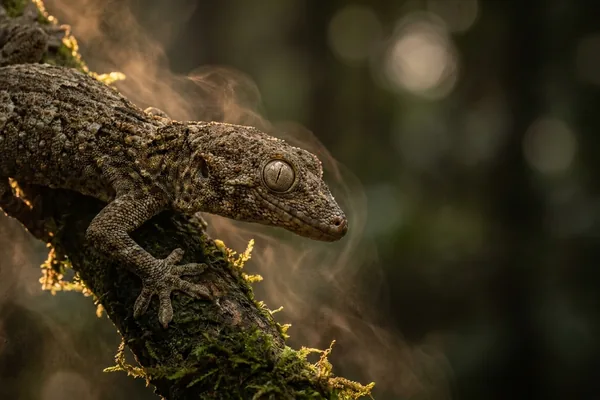
Lizard symbolizes renewal, release and quiet survival instinct: it sheds its skin and even sacrifices its own tail to escape danger, then regrows changed. As a spirit or totem animal, it tends to show up when you're creatively stuck, nudging you to let go of what's holding you back, trust your instincts, and adapt quickly while staying grounded. In dreams, Lizard usually points to a problem you can solve simply by looking at it from a new angle.
An almanac
- Core message
- Release the old to make room for renewal
- Spirit animal
- A quiet reset that unblocks creative stagnation
- Totem for
- Resilient people who bounce back fast
- Power animal
- Letting go of what drains or endangers you
- In dreams
- A problem solved by a new perspective
- Watch for
- Risk-taking beyond what's wise
- Element link
- Solar warmth and Fire energy
Few creatures embody quiet resilience the way the Lizard does. It sheds old skin, sacrifices its own tail to escape danger, and grows every part back changed, a living lesson in renewal, release and adaptability. When Lizard shows up as a spirit guide, it rarely announces itself with drama. Instead it nudges you toward the smaller, steadier shifts that let you survive and keep moving forward.
Lizard Symbolism & Meaning
Much of Lizard's symbolism comes straight from its body. Like the Snake, it periodically sheds its outer layer, clearing away parasites and making room for a bigger version of itself, a natural metaphor for outgrowing old habits or beliefs that no longer fit.
Lizard also has a startling backup plan: when a predator grabs hold, it can drop its own tail and slip free, later regrowing a new one that may come back shorter or a shade different.
That trick makes Lizard a symbol of survival, self-preservation and adaptability. Its defensive habits carry a lesson too: protecting your future sometimes means releasing a part of yourself, even a valued one, so the rest of you can keep going.
In Ancient Egypt, the Lizard hieroglyph doubled as the sign for the word 'numerous,' which tied the creature to ideas of abundance and wealth.
Lizard Colors & Their Meanings
Lizard's coloring adds another layer to its message. A brown Lizard channels the steadying influence of Earth, a sign to reconnect with whatever keeps you grounded. A blue Lizard, far rarer to spot, links to the Water element and the throat chakra and calls you to speak your truth and listen more closely to others.
Green, the most common shade, represents growth and stability. Much like a green traffic light, it signals it's safe to move forward on whatever you've been weighing. A red Lizard carries Fire energy and asks what truly excites you enough to act on it. Color-changing types such as the Chameleon aren't tied to one element but to all of them. They carry the gift of blending in, then stepping back out when the moment is right.
The Fire association isn't only symbolic. Lizards are ectotherms: they can't generate their own body heat and depend entirely on outside warmth to stay active, which is why basking in direct sun is such a defining lizard behavior. That need to seek out and soak in warmth is the real-world root of Lizard's long-standing link to the sun and to Fire energy: a creature literally powered by the light it exposes itself to.
Does Lizard fit you?
Tap the ones that sound like you — 6 traits, no right answer.
0 of 6 Nothing picked yet — start tapping.
Lizard Spirit Animal
When Lizard turns up as your spirit animal, expect a quiet reset. Old heaviness lifts, your thinking clears, and you reconnect with a steadier source of personal power, one that gives you more command over whatever has felt overwhelming lately.
Lizard tends to find people who are creative but currently stuck. It arrives to interrupt the stagnant pattern and open up a new angle on the problem.
Take any current setback as temporary; it is teaching you something you'll need for what comes next, and Lizard's presence is a quiet promise that an opportunity is on its way. It also sharpens your instincts, so you sense more clearly who and what to trust.
Stay open. The guidance you need right now may come through a hunch rather than hard evidence.
Lizard Totem Animal
If Lizard is your totem, you likely have an unusual gift for bouncing back. Situations that would flatten other people barely slow you down, though that same resilience can occasionally tempt you into bigger risks than you should take.
People with this totem also tend to move through pronounced emotional cycles, and learning to recognize which phase you're in becomes one of your best coping tools; it also makes you unusually attuned to what others are feeling.
You meet fear directly rather than avoiding it, which serves you well if you're drawn to inner journeying or working between different states of awareness. Grounded and observant, you often come back from these excursions with insight other people can use, and you carry that wisdom forward for later.
Because you may need to act fast when a real opportunity appears, you also need to look after your own energy through consistent self-care more than most people do.
Across cultures
2 traditions — pick one to read its take.
Native American Lizard Symbolism
Several Native American traditions connect Lizard with dreaming, healing and the will to survive. Some communities gave children small Lizard amulets, believed to grant protection and inner strength, and treated harming a Lizard as an act likely to bring misfortune.
Among peoples of the western coastline, Lizard appears in creation stories as the being who shaped humankind in its own likeness. Among the Navajo and other Southwestern peoples, the Gila Monster, a type of large desert lizard, appears as a powerful hero figure in traditional legends.
Lizard as a Celtic Symbol
Much of what circulates today as "Celtic lizard symbolism" (luck, safe travel, guidance into the spirit world) comes from modern totem-animal writing rather than documented ancient Celtic religion, so it's best treated as popular folklore rather than a verified historical tradition.
For the Celts, the creature's watchfulness made it a fitting guide for anyone stepping between the ordinary world and the unseen one: small, alert, and rarely caught off guard.
Lizard Power Animal
Lean on Lizard's power-animal energy whenever you need to let something go: a draining relationship, a habit that no longer serves you, or thought patterns keeping you small. Lizard's gift is knowing what to release and what to protect, so you keep the essentials intact even as you shed the rest.
It also strengthens your defenses. It gives you the instinct to reposition, retreat or disappear from view when someone works against you, and it holds that protective energy in place until it's safe to reappear. Perhaps its greatest use, though, is in reinvention: just as Lizard sheds skin and regrows a tail, it can help you drop an outdated version of yourself and step into how you actually want to be seen.
Lizard in Dreams
Lizard dreams often point to a problem you could solve simply by looking at it differently.
- A Lizard crossing your path suggests you've been buried in routine and need to make room for fun and connection again.
- A sleeping Lizard is a nudge to pay closer attention to what your dreams are already telling you.
- A Lizard changing color is a reminder that a situation isn't quite what it seems, so it's worth reconsidering before you decide.
- Catching a Lizard points to a personal life on the upswing, with love and commitment growing stronger.
- A large Lizard reflects an obstacle that feels bigger than it is; take the dream as a call to gather your courage and get ready, rather than freeze.
Lizard Spiritual Meaning
Lizard's message rests on trusting your own capacity to recover from what you lose. It shows that growth almost always requires releasing something, whether a habit, an old identity or a relationship, before the next version of you can fully form.
Lizard doesn't ask for grand gestures; it asks for the willingness to let go quietly, adapt quickly and keep your feet on solid ground while you do it. Follow its lead, and survival and renewal stop looking like opposites; they're two points on the same steady cycle.
Lizard in Māori Tradition
In Māori tradition, lizards, known as ngārara, karara or mokomoko depending on the region, hold a sacred, tapu status rather than being ordinary creatures. New Zealand's Department of Conservation describes them as spiritual kaitiaki, or caretakers, of the people, the water and the land, and notes they function as tohu, meaning-bearing signs whose presence and behavior are read as warnings or messages about the world around them.
That guardianship cut both ways. Communities placed lizards near the burial sites of loved ones and used them as talismans to protect important buildings, quiet protectors standing watch over what mattered most. Yet the same creature could just as easily be feared as a bad omen, since it was also associated with Whiro, the personification of darkness and death, a reminder that in Māori belief, as in much of Lizard's symbolism worldwide, the line between protector and warning sign is thin.
That dual nature fits neatly alongside Lizard's role elsewhere as a threshold-keeper: small, watchful, and equally at home guarding the living or standing between them and what lies beyond.
Frequently Asked Questions
What does the Lizard spirit animal mean?
The Lizard spirit animal represents renewal, adaptability and survival instinct. It tends to appear when you're stuck creatively, and it urges you to release what's holding you back and trust a fresh perspective.
What does it mean when a Lizard crosses your path?
Traditionally, a Lizard crossing your path is read as a lucky sign, often linked to a safe journey or a nudge that it's time to make a change you've been putting off.
What does dreaming about a Lizard mean?
Dreaming of a Lizard usually suggests you can resolve a current problem by viewing it from a new angle. Details matter: a color-changing Lizard hints things aren't as they appear, while catching one points to improvements in your personal life.
What does it mean when a lizard falls on you?
This belief comes from Hindu folk tradition, where a lizard falling on a person is read as an omen, fortunate or unfortunate depending on which part of the body it touches. Treat it as cultural folklore rather than a universal rule. The message underneath is the same one Lizard always carries: something unexpected wants your attention right now.
Where does the word 'lizard' come from?
Lizard traces back to the Latin lacerta, the same root behind the Old French laisarde and Anglo-French lusard that gave English its word by the late 1300s. That Latin root happens to be identical to lacertus, the word for the muscular part of the upper arm, much like 'muscle' comes from the Latin for 'little mouse.' Both suggest that people once saw a lizard's quick, rippling movement in their own flexed arm.
Why do lizards bask in the sun so much?
Lizards are ectotherms, so unlike warm-blooded animals they rely on outside heat sources to regulate their body temperature rather than generating it internally. Basking on a warm rock or in direct sun raises their internal temperature enough to move, hunt and digest efficiently, and that need for warmth is the practical root of Lizard's link to Fire and solar energy.
Lizard also represents
- Other animals that represent rebirth and change →Alongside Butterfly, Snake, Dragonfly, Frog
- Other animals that represent protection →Alongside Bear, Wolf, Dog, Elephant
- Other animals that represent resilience →Alongside Cockroach, Camel, Salmon, Turtle
- Other animals that represent healing →Alongside Snake, Deer, Dog, Bee
Sources
Claims on this page were checked against these published sources.
- Why bugs, tarantulas, and other creatures shed their skin
Shedding skin also rids animals of ectoparasites—organisms that live on the skin of the host.
Read the source → - Autotomy
Depending upon the species, the animal may be able to partially regenerate its tail, typically over a period of weeks or months. Though functional, the new tail section often is shorter and will contain cartilage rather than regenerated vertebrae of bone, and in color and texture the skin of the regenerated organ generally differs distinctly from its original appearance.
Read the source → - 𓆈 (lizard glyph)
Triliteral phonogram for ꜥšꜣ, as in ꜥšꜣ ("to be numerous").
Read the source → - Lizard Legends and Symbolism
In some Plains tribes, a newborn boy's umbilical cord was sewn into an amulet in the shape of a lizard to ensure his health and strength.
Read the source → - Lizards: cultural values and tīkanga — ngārara, karara and mokomoko
Ngārara are the spiritual kaitiaki, or caretakers, or the people, the water and the land... they are often used as guardians, and released near the burial sites of loved ones... they could also be feared and seen as a bad omen – representing Whiro (darkness and death). Lizards are therefore to be considered as sacred creatures, which have an important role for Māori.
Read the source → - lizard (n.)
late 14c., lusarde, from Anglo-French lusard, Old French laisarde... from Latin lacertus (fem. lacerta) 'lizard,' which is of unknown origin... identical to Latin lacertum 'upper arm, muscular part of the arm, from the shoulder to the elbow.'
Read the source → - Thermoregulation Strategies in Reptiles: Environmental and Physiological Perspectives
Reptiles rely on external environmental conditions to regulate their body temperatures... Basking in the sun... common mechanisms for controlling heat gain and loss.
Read the source →