Birds · Spirit animal
Bird of Paradise Spiritual Meaning & Symbolism
Unapologetic self-display in service of authentic connection, not vanity.
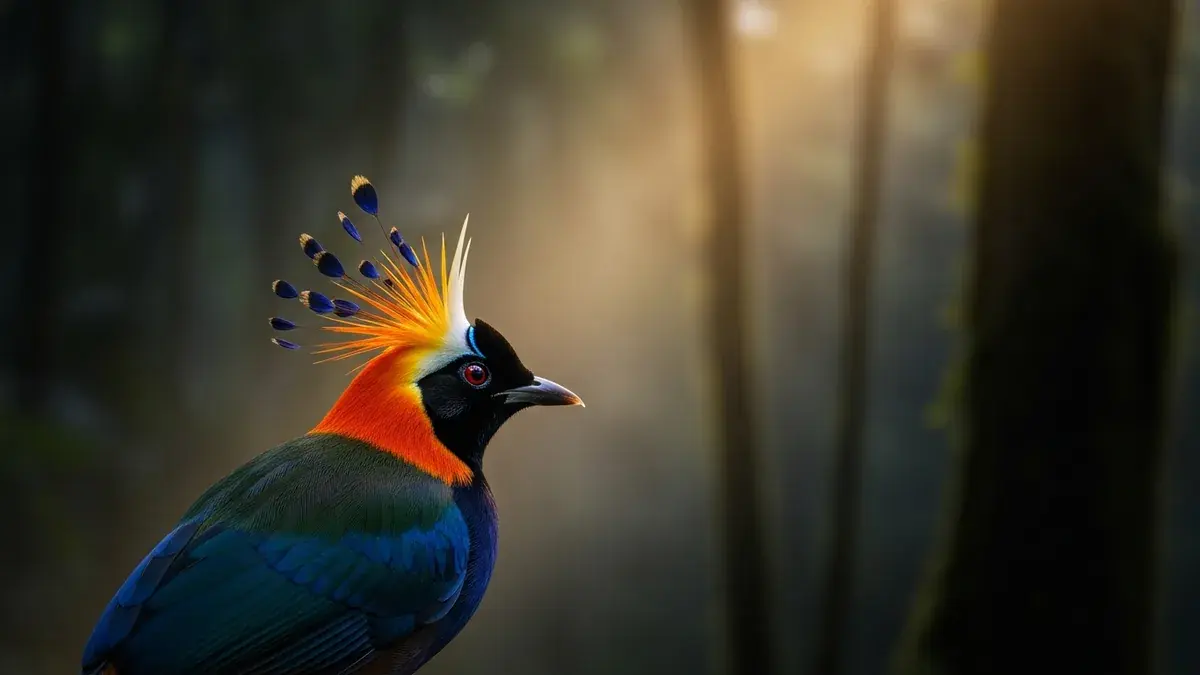
Bird of paradise spirit animals stand for showing one's true self with pride while staying true to tradition. They enjoy deep connection on terms of mutual respect and treat jealousy as an insurmountable barrier. This bird is likely to send encouraging dream signs during important life changes.
An almanac
- Core message
- Show your true colors without apology
- Spirit animal
- Vivid change, courage, and recognition
- Totem for
- Magnetic, artistic, non-possessive souls
- Power animal
- Blunt truth and spiritual clarity
- In dreams
- Growth, expansion, new love
- Cultural roots
- New Guinea's "Bird of God" folklore
- Courtship style
- Communal 'lek' dance grounds, not solo courting
The Brightly-colored Bird of Paradise commits entirely to whatever it is performing. It lives in the Rainforest of New Guinea and carries an entire Mythology inside itself. It only sees life through the lens of a single Idea: If there is something Remarkable inside you, then Show everyone! Acting as Spirit Animal, Totem animal, or Power Animal, the Bird of Paradise will push you towards Honest self-expression and Bold courtship, asking you to Maintain a healthy relationship with Tradition, all the while Warning against being reduced to merely Decorative.
Bird of Paradise Symbolism & Meaning
The Bird of Paradise, which lives in the forests of New Guinea, comes in an amazing variety of colors. Males can dress up in electric blue, scarlet, gold, and even emerald green to impress the female.
Some kinds of these birds only stay together during the mating season; others seem much more committed. Females in the long-term couples wear less colorful feathers. And even though these birds come in all sizes — their main difference is in the number and shape of their feathers!
People have believed for centuries that feathers mean something special. They connect people to spiritual things like wisdom instead of everyday problems, just like how people thought that the phoenix had a spiritual meaning, too.
Bird of Paradise Spirit Animal
The bird-of-paradise shows up as a symbol when life's routines suddenly stop feeling familiar, changing in some big way that's both exciting and challenging. When the bird-of-paradise shows up it's often an invitation to take charge like the males do, which involves navigating an environment where your presence or actions aren't always guaranteed to get noticed — much less understood.
This spirit's emergence also comes with words of caution about how others' perceptions might affect you: humans have long used the plumed feathers from this type of bird as ornamental decorations, even going so far as to hunt them at dangerously high levels.
Does Bird of Paradise fit you?
Tap the ones that sound like you — 6 traits, no right answer.
0 of 6 Nothing picked yet — start tapping.
Bird of Paradise Totem Animal
It's typical for the Bird of Paradise to enjoy loud voices and bright colors, especially in art. When we come across them out there in the world, however, their looks can be slightly intimidating, making us wonder if it's all just for show!
But we soon realize that what we witnessed wasn't really an act. Each person with the Bird of Paradise as a totem is creative at heart, with a special sort of flair. Instead of hiding behind elaborate facades, these people reveal themselves freely in whatever they choose to do — if it has meaning, their originality comes through unmistakably.
They don't pretend to know everything (the growing matters more than any fixed destination) and wouldn't try to hide being lost sometimes. Besides, they don't care how the world perceives them; they trust themselves deeply, which shows others they are safe, too.
Bird of Paradise totems aren't usually jealous of partners; in most cases, more than one loved one appeals to them. In all of their choices, they want to move forward together in meaningful harmony, not get caught up in someone else trying to control their decisions.
Bird of Paradise Power Animal
Call on Bird-of-Paradise when you're tempted to pretend things are better than they really are. This power animal is great at clearing away illusions. If it looks like honesty may get ugly, don't worry—once the muck clears out, you'll be left with a firm foundation for healing.
At times you might find yourself faced with a choice between material success and the love of someone special (or between more than one special someone). In deciding how to take the next step in your relationship with someone whom you care deeply about, call on Bird-of-Paradise for guidance. Your next move needs to be true to the spirit guiding each party to enter into your arrangement (which is why appetite or convenience don't count).
Bird-of-Paradise is also an excellent teacher about understanding the sacred nature of your life. Whenever you feel confused about which path to follow, call on Bird-of-Paradise for inspiration. If you feel that your spiritual quest needs a nudge back onto track after taking some setbacks, call upon it for reassurance. Your soul never forgets its purpose, and Bird-of-Paradise can help bring it back to light.
Bird of Paradise in New Guinea Folklore
Among the native people of New Guinea, the Bird of Paradise earned its nickname "Bird of God." Indigenous populations believe it floats endlessly above the clouds, glistening like gold when touched by light from Heaven. They also wear sacred mementos of the bird during important ceremonies where family heads hand over cherished accessories from one generation to the next. In Papua New Guinea, clan elders believe that certain individuals carry within their bodies a relative who has returned as a Bird of Paradise—a beautiful, living testament to eternal life.
One memorable story talks of a prisoner bird. After the bird hatched an egg while living alone in a cage, its youngling believed its prison was all there was. An older Bird of Paradise would visit and teach her lessons about the vastness of the world outside; encouraging her in small steps towards freedom until after a few failed attempts she escaped and found herself uplifted into glorious skies.
Bird of Paradise Dreams
> If a bird of paradise appears during our dreams, it signals something unusual but generally not negative. Dreaming about such a bird can indicate that better times are approaching, implying a chance to let loose and have fun. Seeing wings spread can represent positive change — this might signify breaking free from an undesirable pattern and moving into a more dynamic direction. Likewise, when two birds are seen in one dream, it indicates that romantic relationships will find new passion. In addition, three birds show us the possibility of opening up to alternative ways of thinking, which often result in freedom to express ourselves creatively.
Bird of Paradise Spiritual Meaning
Whatever its feathers look like, the symbolism of the bird-of-paradise tells us that true beauty comes not just from showing off who you are, but also respecting those who came before. Two qualities are most important here: openness and sharing—being truthful with others about ourselves and our feelings while also giving them the space to be themselves. Honesty creates lasting connections because it doesn't limit how each person lives their life; jealousy can hold you back if it causes you to try to possess someone instead of appreciating who they really are (to just "be" with them). Lastly, authenticity means being real—not putting up appearances—and ultimately leads toward understanding spirituality in everyday life rather than chasing perfection beyond reach.
The Lek: Why the Dance Matters as Much as the Feathers
In biology, biologists call places where male Bird of Paradise build their lives around a "lek," which refers to a public stage where several birds of paradise all congregate together, generation after generation. Male Birds of Paradise literally dance for the female visitors. Among at least eight species of Birds of Paradise, the best example might be of the entirely animated "Superb Birds of Paradise."
Male superb birds have been characterized as silly little creatures with very flashy apparel. Some think them amusing aliens which splash out brightly colored, eye-catching patterns over their bodies and glide around. In contrast, the female herself cannot help but to stare at these birds. These complex displays could be interpreted as signals of physical health.
Frequently Asked Questions
What does the Bird of Paradise symbolize spiritually?
A Bird of Paradise represents our soul's thirst for true self-expression and transcendence. And its colorful plumage echoes time-honored associations between feather and spirit, wisdom, and eternity.
Is the Bird of Paradise a warning sign or a positive omen?
Overall, bird-of-paradise sightings are positive symbols. However, given that these birds have been hunted for their colorful feathers, the bird-of-paradise may also appear to encourage us to question whether others truly appreciate us for who we really are or rather for the status that we appear to confer on them.
What does it mean to dream about a Bird of Paradise?
Generally, a Bird of Paradise in a dream means growth or expansion in your life is coming soon. If the bird seems happy, then better times lie ahead for you. If its wings are open, you're breaking away from an unpleasant situation.
If there are two birds in your dream, you have a strong, energized friendship with that person. Seeing a Bird of Paradise strut around in your dreams asks you: When will you start taking advantage of those gifts so many people see only in you?
Why were Bird of Paradise feathers hunted so heavily by humans?
The feathers on the male Bird of Paradise have made them such spectacular targets for human collectors and hunters—although, frankly, all that mattered to these people was the feathers, not the living birds. That much hunting damaged and almost wiped out many populations of this bird species.
Were bird of paradise feathers only used for fashion in the West?
No. Before Westerners started collecting them, many local cultures decorated ceremonial headdresses with these feathers. Only on those occasions did they join others to signify group membership, recent victories, and inherited rank.
Bird of Paradise also represents
Sources
Claims on this page were checked against these published sources.
- Bird-of-paradise
They are found mainly in New Guinea, as well as eastern Australia and the Moluccas.
Read the source → - Flag of Papua New Guinea
the upper triangle is red with a Raggiana bird-of-paradise in gold yellow
Read the source → - Lek
a communal area in which two or more males of a species perform courtship displays. Females visit the lek briefly to select mates and to copulate, but they do not form lasting pair bonds with the males.
Read the source → - New Bird-of-Paradise Slides Around Sporting a Bright-Blue Frown
super-black feather cape fans out into an oval, against which a fluorescent blue smiley face—really, the bird's chest and crown feathers—glows bright... The male hops back and forth on a log and snaps its wings to impress a female.
Read the source → - Plume hunting
By 1900, more than five million birds were being killed every year
Read the source → - Birds of paradise
Men from the Yonggom tribe were extremely knowledgeable about the birds and successfully hunted the Greater Birds of Paradise, using their feathers as adornment on ceremonial headdresses worn during ritual dances.
Read the source → - Papua New Guinea's Feathered Fashion
Every ornament carries meaning, announcing lineage, achievement, or spiritual connection.
Read the source →