Mammals · Spirit animal
Anteater Spiritual Meaning & Symbolism
The quiet forager who trusts instinct over eyesight and needs no company to feel complete
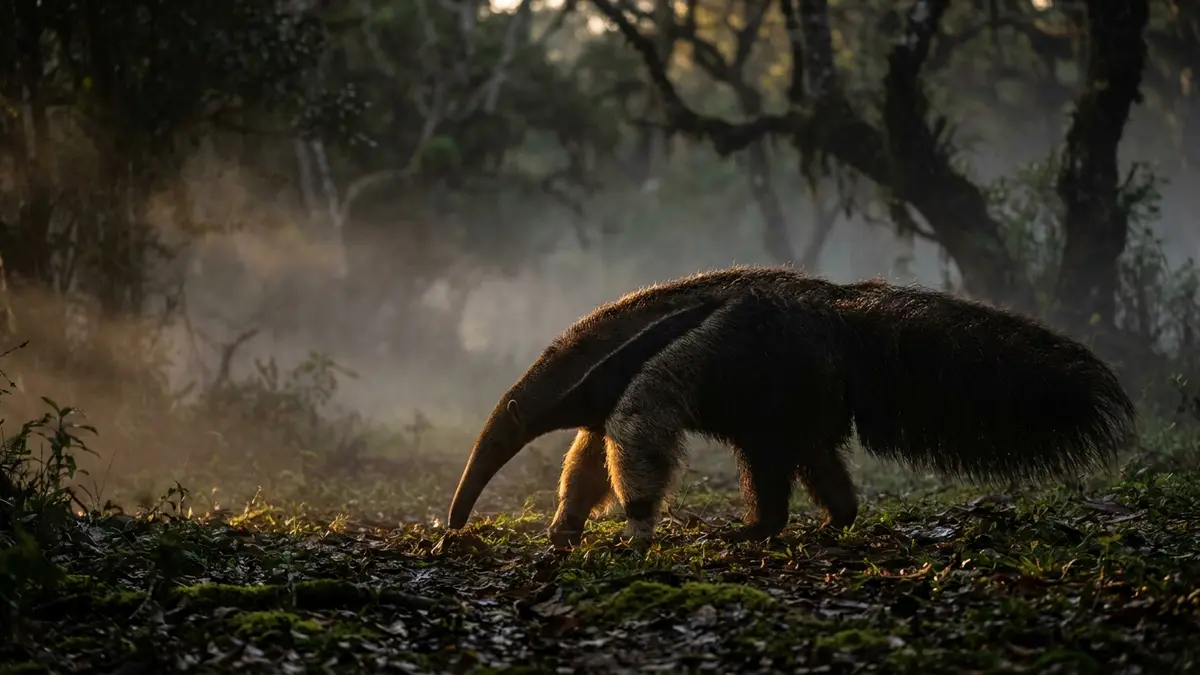
The anteater embodies patience and self-reliance, and shows us how to remove annoyances one at a time. As an animal guide, the anteater tells you to rely on your instincts instead of doubt yourself. To protect your boundaries without any apology is important as well. The true meaning behind this spirit being is not about speed or spectacle. It's really about endurance, solitude and persistence.
An almanac
- Core message
- Patient strength that clears troubles one step at a time
- Spirit animal
- Step back, trust instinct, defend your peace
- Totem for
- Independent loners who crave depth over crowds
- Power animal
- Grief, boundaries, and uncovering hidden truths
- In dreams
- Slow down before new commitments
- Cultural roots
- Central/South America, Maya-Aztec, Egypt, China
- Species
- 4 living kinds: Giant, Silky & two Tamanduas
- Conservation
- Giant Anteater = IUCN Vulnerable
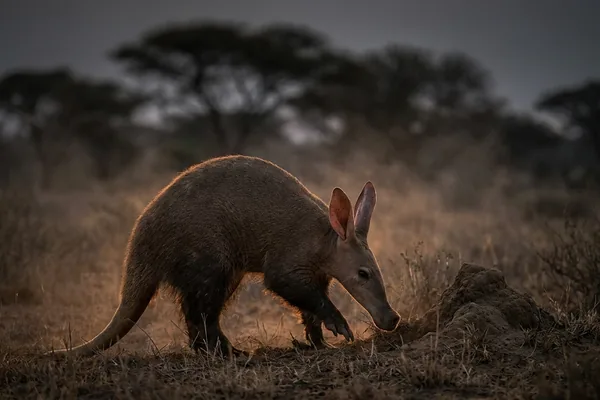
The Anteater is strange: It wears its strangeness like a badge. No other creature moves the way an anteater does—slowly, alone, masterfully. Its long tongue and big nose make it look almost alien. Symbolically speaking, anteaters are symbols of patience, self-reliance, and cleaning house.
Anteater Symbolism & Meaning
The anteater's most striking feature is its tongue, which stretches up to 2 feet long and moves constantly as it slurps up insects, covering thousands in a single day. This long snout works like a radar and pipeline at the same time, checking for mounds before its tongue ever gets to work.
Because of this combination, the anteater has been used as a symbol of banishing what silently drains you: all the little irritants that add up if left alone. People in some cultures believe that it symbolizes taking action on problems hidden from view. They also associate the anteater with isolation, which might be connected to how they watch them wandering alone under trees for hours.
Some people see a deeper message about resilience through discomfort when they notice how often an anteater endures chemical burns from the defensive secretions of their prey. This comes up in stories that link the Egyptian symbol known as Set with an animal called an aardvark — also from Africa, though unrelated to anteaters by evolution.
In addition to their 2-foot tongues and digestive systems adapted for insects — which they grind up by flicking their tongues into mounds until it's all mush — anteaters have much stronger noses than humans, making them even more sensitive to hidden problems. When threatened by a jaguar or another big cat, the anteater stands up on its hind legs and shows its strength: long claws strong enough to kill a feline predator. So even without teeth, you could say they've always had patience with a bite.
Anteater Spirit Animal
When an anteater shows up in your life as a spirit animal, it’s usually asking you to take some space for yourself. This creature is naturally solitary, and its appearance often signals that you need a little distance from other people. It won’t be forever. Just long enough to hear what you’re thinking before rejoining the crowd.
This guide invites you to trust your instincts instead of overthinking. The real-world anteater has poor eyesight but relies on smell and feel when navigating its environment; symbolically, it asks you to quit second-guessing yourself. If you have felt pushed onto the defensive or cornered lately, an anteater is there as a model: protect what’s yours without apology.
It also pushes you to focus on sharpening your senses of intuition, mood reading, and emotional insight. This takes time; don’t rush into it so that it doesn’t overwhelm you.
Does Anteater fit you?
Tap the ones that sound like you — 6 traits, no right answer.
0 of 6 Nothing picked yet — start tapping.
Anteater Totem Animal
People who carry the anteater symbol are genuine loners. They usually don't feel comfortable in crowded spaces, even with familiar faces around them. When looking for romantic partners, they focus on depth rather than convenience.
The people with this symbol often miss early signs of a danger, like an anteater's poor eyesight, but their sharp defense mechanisms come to the rescue once there is a real threat. They tend to avoid changes in their routine. They also try to reduce risks by keeping things clean and comfortable (e.g., long baths, unhurried mornings, marathon naps).
Also, these people often have a heightened sense of touch. Their skills include sensing meaning from physical sensations or objects.
Additionally, the anteater symbol is connected to an intuitive understanding of death and endings. A person with this symbol also likes small personal rituals for processing grief.
Anteater Power Animal
Ask an anteater to be your power animal any time you need to think about something alone and carefully, uninterrupted by other things. Or ask it to help you with grief when someone close dies (whether a person or pet) or because a chapter in life has come to an end. The anteater will give you strength whenever you have to set firm boundaries or defend your territory.
If your problem is about finding information that's buried, call on the anteater. Or if you need more psychic sensitivity or independence, then it can help with those goals too — it gives its attention to deliberate effort that takes a long time over quick fixes any day.
Anteater in World Folklore & Symbolism
There are stories from South America about the anteater that suggest he gets confused pretty easily. In one of them, he goes on a long walk after unknowingly smoking some tampered tobacco. This story is probably related to how his movements are slow and awkward.
Archaeologists have found ritual objects that may once have had hallucinogenic substances used for divination or to aid the shamans' travels into another world — a place where the animal's barely visible genitals could stand as a sign of balance between masculine and feminine.
In one story, the deer and jaguar each try to build a house by themselves without knowing the other is there. It turns out they have to share it because neither can finish building it on their own.
Then, when the jaguar kills one of the deer's kin, the deer asks the anteater for help against the jaguar, who supposedly insulted him. The anteater gets even and kills the jaguar. This leads the deer to leave forever, fearing that he will suffer the same fate if he stays around.
In other stories, giant anteaters show up as tricksters who fool their rivals. Once, they trick a jaguar out of his pelt. In these stories, this rivalry between the anteater and the jaguar is supposed to continue forever.
The Yarabara people wear masks shaped like these animals during naming ceremonies and initiation rites. The Bribri believe that when someone dies, the soul rides on the back of a giant anteater in order to go somewhere else afterward.
Far Eastern Anteater Symbolic Meanings
In Chinese legends, the antbear is a symbol for Leizhenzi, the son of the Thunder Dragon. When an egg was struck by lightning, it produced Leizhenzi, who first appeared in human form. Afterward he transformed into a green dragon with boar's tusks and the mouth of an anteater.
He was eventually taken in by a deity called Wen Wang, who raised him as his son; Lei Chen Tzu grew up to be a famous figure — lending the animal's unique nose a place in stories of transformation and unexpected heroics.
Anteater in Dreams
Dreaming of an Anteater usually warns that you may be rushing into something. Before committing yourself, you should pause and get all the facts so there are no surprises. Each scene gives a slightly different message:
- Anteater foraging — There is something bothering you deep down, which undermines your confidence. You need to find out what this problem is.
- Anteater digging in soil — Old advice or tradition may be trying to reach you through the dream, but you may not have heard it yet.
- Anteater finding nothing — Your new venture may lead toward harm. You'd better stop and think about whether it's really worth doing.
- Grey-coated Anteater — You're thinking a lot about death or the afterlife.
- Two Anteaters together — A new relationship may be on the way for you.
- An Anteater outside its natural habitat — You need to be more social and get out of your isolation.
- An Anteater napping after a meal — Your sense of harmony with nature.
- An Anteater at a zoo — You're being held captive by an emotion, a belief, or a habit.
- Anteater blocking your path — A warning against signing any deal without reading the fine print first. There might be hidden details which you would later regret.
- Anteater sensing danger before you do — Pay attention to any flickering sensation that something isn't right about someone before you can explain why.
Anteater Spiritual Meaning
Anteaters are strong, but they're no sprinters or show-offs, just quiet workers who dig things up piece by piece, whether bugs or problems. Anteater gives permission to stop rushing, trust your senses over doubt, and defend peace with no guilt.
When you see Anteater, it almost always means something less flashy than a call for bold action. More often, it's urging you to tend to what quietly troubles you and let steady work solve the problem.
The Four Faces of Anteater: Giant, Silky & Tamandua
Giant anteaters — the largest at up to six feet long, and the only ones to stay almost entirely on the ground — get symbolic attention for their slow and deliberate movements. But the other three species offer contrasting lessons in solitary habits. The silky anteater spends most daylight hours curled into a ball of golden-brown fur, emerging from its tree-top habitat mostly at night; the Northern and Southern tamanduas take a middle course by climbing well.
Altogether these different lifestyles teach that the qualities attributed to the anteater — solitude, endurance, flexibility, secrecy — aren't mutually exclusive.
Frequently Asked Questions
What does the Anteater symbolize spiritually?
The anteater symbolizes spiritual patience, resilience, and the ability to clear away small troubles one by one, while keeping faith in your instincts even when things look bad on the surface. It speaks of the importance of solitude and quiet thinking for gaining emotional clarity rather than relying on a flashy conversion experience.
What does it mean when Anteater is your spirit animal?
When you connect with the powerful energy of Anteater, that powerful energy urges you to seek solitude so that you can recalibrate and realign. This spirit animal also teaches you to trust your intuition, which is essential when dealing with stress or when other people are demanding something of you.
What does it mean to dream about an Anteater?
If you're dreaming about an anteater (a digger that eats ants), it probably means you shouldn't rush into something. Pay attention to details: digging might mean the message is coming from your ancestors; two anteaters suggest new romance and one in a zoo implies you feel trapped by habits or emotions.
Is the Anteater endangered?
The Giant Anteater is listed as Vulnerable. We call the anteater vulnerable because of habitat loss and road deaths. The Giant Anteater symbolizes strength built on patience and self-reliance.
Why doesn't the Anteater have any teeth?
Anteaters evolved completely without teeth; their main method of digestion is through their long tongue and muscular, grinding stomachs. This has sometimes been interpreted to mean that removal of the unnecessary components can make one stronger than before.
Anteater also represents
- Other animals that represent protection →Alongside Bear, Wolf, Dog, Elephant
- Other animals that represent resilience →Alongside Cockroach, Camel, Salmon, Turtle
- Other animals that represent patience →Alongside Turtle, Heron, Spider, Ant
- Other animals that represent intuition →Alongside Owl, Cat, Wolf, Raven
Sources
Claims on this page were checked against these published sources.
- Giant anteater
It has a length of around 60 cm (24 in) ... An anteater attacks up to 200 nests in one day ... and consumes a total of around 35,000 insects. ... The tongue has backward-curving papillae and is extremely moist due to the large salivary glands.
Read the source → - Lei Zhenzi
He was born from an egg that Lei Gong shattered open using one of his thunderbolts. ... He closely resembled his father, Leigong, having wings and a pointed bird beak. ... his hair turned red like cinnabar, his face turned indigo, and from his mouth sprouted tusks.
Read the source → - Anteater
Giant Anteater... about 1.8 m (5 ft 11 in) long including the tail... almost entirely terrestrial. Silky Anteater... about 35 cm (14 in) long... exclusively arboreal in its habits... Northern Tamandua... about 1.2 m (3 ft 11 in) long... Southern Tamandua... inhabits South America east of the Andes.
Read the source →