Birds · Spirit animal
Albatross Spiritual Meaning & Symbolism
The tireless voyager who trusts the wind to carry it home
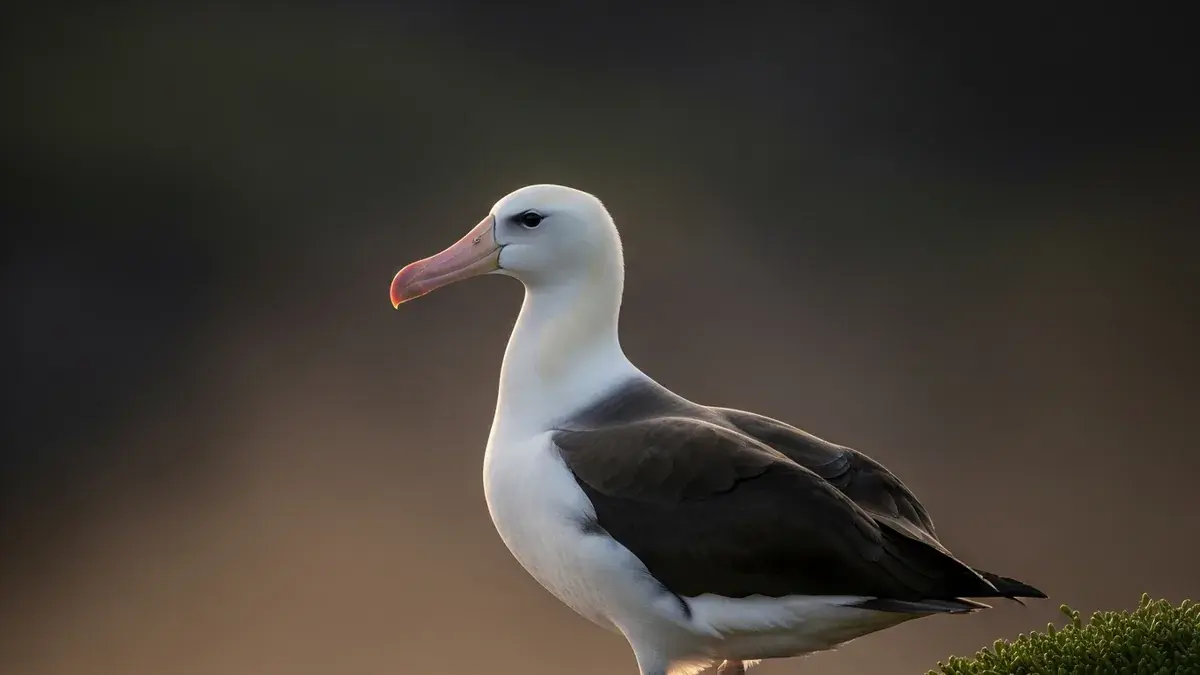
If an albatross is your spirit animal it symbolizes independence with commitment. In many coastal and seafaring cultures albatrosses are seen as good omens. As a spirit animal they urge you to trust the currents, to have faith that there's a clear path ahead even if it isn't visible yet.
In dreams of an albatross its symbolism depends on how calm and distant it looks. If it appears distressed the meaning is cautionary.
An almanac
- Core message
- Freedom and devotion can coexist
- Spirit animal
- Trust currents you cannot yet see
- Totem for
- Independent wanderers loyal to one partner
- Power animal
- Mending relationships, gaining perspective
- In dreams
- Mostly cautionary; meaning depends on details
- Element
- Air and Water
- Survival trick
- Drinks seawater, filters salt out through its beak
- Conservation
- 15 of 22 species now face extinction risk
Nobody else can fly like an Albatross. It stays in flight for weeks on end over the open sea, never needing to land. Sailors in olden times told tales about it and poets gave it a starring part in their stories. Pacific Islanders watched as they flew across the sky.
Albatross Symbolism & Meaning
The albatross is well known through The Rime of the Ancient Mariner. They have a natural ability to fly long distances and spend their entire lives at sea, just like the air and water elements.
Throughout its native range in the southern hemisphere, the albatross is respected as an oracle that brings fortune to coastal villages. Many people associate this large seabird with good luck.
People use an albatross like a weather report. The bird’s flight patterns hint at approaching storms roughly a day ahead of time. It is known for its instinctive grasp on ocean currents and natural wisdom.
The albatross is one of the far-travelling bird species; they can travel around the world in seven weeks, making round trips of ten thousand miles. People say that they sleep on their wings while flying. In old poetry a dead albatross was seen as either a burden or a curse, but to a sailor who sees one live over his head while at sea the sight represents protection for his life.
Although they can roam the whole planet (their wingspan is about three meters), albatrosses are monogamous. For years, these birds court one another through ritual bowing, clacking beaks, and squawking before mating for life.
Albatross Spirit Animal
Whenever you start feeling stuck — or circling around the same spot — trust that there is a current carrying you forward, though it may not be clear right now. The albatross is often your guide into that current. If a relationship feels too tight or restrictive, look for the opening past the horizon. It’s possible that you’re going to need to think outside the routine box and step outside of what seems comfortable right now in order to have perspective.
When it comes to your relationships — including your career and partnership with your life partner — take an honest inventory about whether or not there is a sense of alignment around values, dreams, and direction. If you are feeling unsettled about something, it’s good to know that this could be a sign that there is emotional exposure coming from some place where the fear of letting yourself fully open and connect with others can become a risk in your life.
If you are planning for travel or thinking of going on vacation, the albatross would make an excellent companion. If you do decide to work through your journey as the albatross teaches, you may even notice that this spirit guide comes to teach just by how they live and breathe freely and warmly into your life.
Does Albatross fit you?
Tap the ones that sound like you — 6 traits, no right answer.
0 of 6 Nothing picked yet — start tapping.
Albatross Totem Animal
Albatrosses represent independence and an ability to soar high in order to see clearly. They're also excellent judges of wind, wave, and weather patterns, making them especially gifted at finding their way home.
People born under this bird sign may be restless wanderers or deeply faithful partners. Their personalities are balanced; they can be measured and persuasive when talking but also relaxed and unflappable. A key to contentment is cultivating the ability to read one's emotions: When to act and when to wait, that sort of thing.
Albatrosses fly very high indeed, and people born under this sign may sense that same urge in themselves; sometimes those intuitions can lead them to prophecy or a deep desire to help others. While some are attracted to the mysteries of aeromancy — the art of weather interpretation — most will feel drawn to magic related to air and water.
People with an albatross totem tend toward naturalism rather than strict doctrine; they may find religious ceremonies too rigid or not in tune with their beliefs.
Those born under the albatross sign have an inner compass; you can often find your way back from confusion using this sense of direction. You may feel called to make a new path at some point in life. If so, prepare for challenges along the way: Your spiritual journey might be stormy, but as long as you stay true to yourself and your beliefs, it will lead you home.
Albatross Power Animal
Summon the Albatross Power Animal when conversations have broken down and the resulting distance feels impossible to close. If daily routine has grown stale or confining, this ally shows you how to reignite your sense of purpose and possibility.
This power animal supports genuine emotional freedom and the mending of strained relationships or an aching heart — devotion isn't out of reach for those who call on it. It also sharpens perspective, so you can step back and see the whole shape of a problem rather than just the piece in front of you.
When self-trust wavers or your values feel muddled, invite this energy to open your mind, widen your view, and hold steady until answers arrive on the next favorable wind. Setbacks will come and go, but you'll always find your way home.
Maori & Polynesian Albatross Symbolism
For Maori tribes, the Albatross has a deep significance. Chiefs wore their feathers or bones for ceremonial occasions, and everything about them was used. If you received an albatross feather from someone, they considered this a mark of respect.
According to legend, chiefs got strength during long journeys because the Albatross gave it to them. The bird's white plumage meant peace to many tribes, including Taranaki, who took a symbol of goodwill and cooperation. It wasn't just that: their association with albatross feathers was special across Polynesia.
The story says Awarua, a water spirit called taniwha, kept crashing while learning how to fly — they got help from an Albatross friend named Rereroa. And according to Hawaiian legends, the Albatross is something special because it can travel such long distances. They have their own bird called Laysan.
Far Eastern Albatross Symbolism
In parts of Japanese folk tradition, albatrosses earned an unflattering nickname: "foolish birds." Some say this is because they were easy for hunters to catch — an impression reinforced by their apparent indifference to approaching predators. Where Pacific island cultures elevated them almost to godlike status, however, the Far Eastern view offered a different kind of warning.
The albatross, said this tradition, could become so absorbed in flight that it ignored real threats close at hand. For anyone who admired the bird for soaring so high and far, the message was gentle: If we are too focused on daydreams or freedom to pay attention, those dangers may soon be upon us.
Albatross in Dreams
When you see an albatross in a dream, it tends to be symbolic of serious issues. Here are some interpretations that might help you figure out what your subconscious mind is trying to tell you:
- If the albatross screeches in your dream, this could indicate that someone close to you is being dishonest or deceitful.
- Seeing flocks of birds flying in your direction usually indicates the arrival of a very influential person into your life, whose influence might last for years to come.
- Dreaming about catching and then losing fish can sometimes be associated with negative news that will soon come your way.
Other common interpretations include:
- Flying overhead often suggests a steady growth in ambitions and personal improvement.
- An unusually large albatross could mean an abundant life of real freedom, purpose, and success.
- When the bird circles around your head, expect something unexpected to happen shortly. If you see it gliding or floating calmly on water, great news is nearby.
- Dreaming about an endless flight might indicate a major shift that's approaching (often career-related).
- If this majestic sea bird appears far away in your dream, pay more attention to protecting yourself from prying eyes and potential dangers.
- Finally, if you see this type of bird as dead within the context of your sleeping experience, be cautious before investing time or money into any new ventures or relationships; avoid committing further resources until you've obtained clearer signals regarding their outcomes.
In most cases where an albatross appears in dreams like these, it signifies some kind of warning about impending issues rather than purely positive energies. Thus, try to decipher how close/distant, calm/distressed these birds were in relation to yourself!
Albatross Spiritual Meaning
This bird spends every year proving its devotion, faithfully returning over and over to its one partner and the same landfalls, while also traveling farther; this distance doesn't separate them. In this way Albatross teaches us to look beyond every seeming opposition and embrace the unity that lies beneath, allowing each thing to serve both freedom and commitment equally.
Why We Say "An Albatross Around Your Neck"
Long before the bird became a symbol of freedom in wellness circles, it became a symbol of guilt in English literature. In Samuel Taylor Coleridge's 1798 poem The Rime of the Ancient Mariner, a sailor kills an albatross that had been guiding his ship through safe waters, and his crew forces him to wear its corpse as punishment: "Instead of the cross, the Albatross / About my neck was hung." From that single image, the English language inherited a lasting idiom: to have "an albatross around your neck" means to carry an inescapable burden, something you brought on yourself and now cannot set down.
It's worth sitting with the contrast this creates. The poem's curse comes only from harming the bird — the crime, not the creature, is what weighs the mariner down. Every tradition covered on this page reads the living Albatross the opposite way: as a blessing, a guide, a sign of favorable wind. If this idiom is the phrase that brought the bird into your awareness, let it point you toward the question underneath it rather than the guilt itself — what are you still carrying that you were only ever meant to release?
Why the Albatross Struggles to Leave the Ground
Albatrosses might glide gracefully through the sky, but they're famous for being awkward at landing. They have enormous wings, perfect for gliding around open ocean but not built for the kind of flapping needed to take off from a runway or a dock. The wind is what helps them leave land behind; when both the wind and the waves die down, albatrosses struggle to get airborne.
In message terms, this isn't your usual "bird's-eye view" on freedom; it's more like one of the rare occasions where things stop moving so suddenly that you're forced to stand still. If this feels like a rough start or a frustrating hold-up for you, an Albatross can tell you that your problem may not be with your ideas but with your timing: give yourself some space, and wait for conditions to shift before you push onward.
How the Albatross Survives at Sea
The albatross has two glands above each eye that filter excess salt out of its blood. The filtered water passes through grooves in the beak and comes out the nose. That explains why sailors thought them supernatural: this was an onboard desalination plant! And it really is, since the birds never need fresh water.
All twenty-two species are on our lists now; fifteen are endangered or threatened, due to being killed by longline fishing while far from shore.
Frequently Asked Questions
What does an Albatross symbolize spiritually?
The Albatross symbolizes freedom in spirit, oceanic understanding, and an ability to find your path in life when facing uncertainty. The Albatross has a strong association with the air and water, which are believed by some coastal and maritime cultures to be good omens.
What does it mean when an Albatross appears as your totem?
An albatross has the following symbolic meaning: it craves freedom; its communication is graceful; it finds inner calm in places that feel peaceful to us. It makes for a long-term partnership if any, rather than a series of relationships, and you may have a natural sensitivity to weather, rhythm, even prophetic dreams.
Is dreaming about an Albatross a good sign?
An Albatross flying smoothly over calm water would usually predict good news or personal growth, while a noisy, distant, or dead Albatross might suggest trouble with someone you know, an unpleasant surprise, or something falling through.
What does it mean to have "an albatross around your neck"?
To "have an albatross around your neck" is to be unable to escape an intolerable burden that you've brought upon yourself. The phrase originates in The Rime of the Ancient Mariner, where the eponymous mariner is forced by his fellow sailors to wear the body of a dead bird as punishment for killing it. People who study spiritual traditions read it as a curse that falls on an act—harming the albatross—not on the bird itself.
Can an Albatross take off from land?
Yes, but reluctantly. Because its wings aren't adapted for flapping flight, the albatross needs a strong headwind or running start to get airborne on land (as opposed to using the wind alone to fly). An albatross landing without a breeze looks almost comically clumsy compared to its gracefulness in open sky.
Albatross also represents
Sources
Claims on this page were checked against these published sources.
- Albatross
The wingspans of the largest great albatrosses (genus Diomedea) are the largest of any bird, exceeding 3.40 m (11.2 ft)
Read the source → - Short-tailed albatross
In Japanese tradition the short-tailed albatross is known as ahodori (阿呆鳥, idiot bird) ... due to its insular breeding habits making it trusting towards terrestrial predators, such as humans.
Read the source → - The albatross in the cupboard
White albatross feathers came to be a symbol of peace, particularly for Taranaki iwi. ... [toroa] comes from the name of a chief ... [who] wore clusters of snow white feathers on his shoulders.
Read the source → - The Meaning and Literary Origins of the Phrase 'To Have an Albatross Around Your Neck'
Instead of the cross, the Albatross / About my neck was hung.
Read the source → - Wandering albatrosses exert high take-off effort only when both wind and waves are gentle
take-off effort increased only when both wind and waves were gentle
Read the source → - How Do Seabirds Drink Salt Water?
The salt, along with any other excess minerals such as potassium and calcium, then drips out of the bird's nostrils as a goopy brine.
Read the source → - ACAP Education Resources
Of the world's 22 species of albatrosses, 15 are considered Critically Endangered, Endangered or Vulnerable according to the IUCN's 'Red-List' criteria.
Read the source →