Spirit Guides
How to Unleash Your Power Animal (Safely)
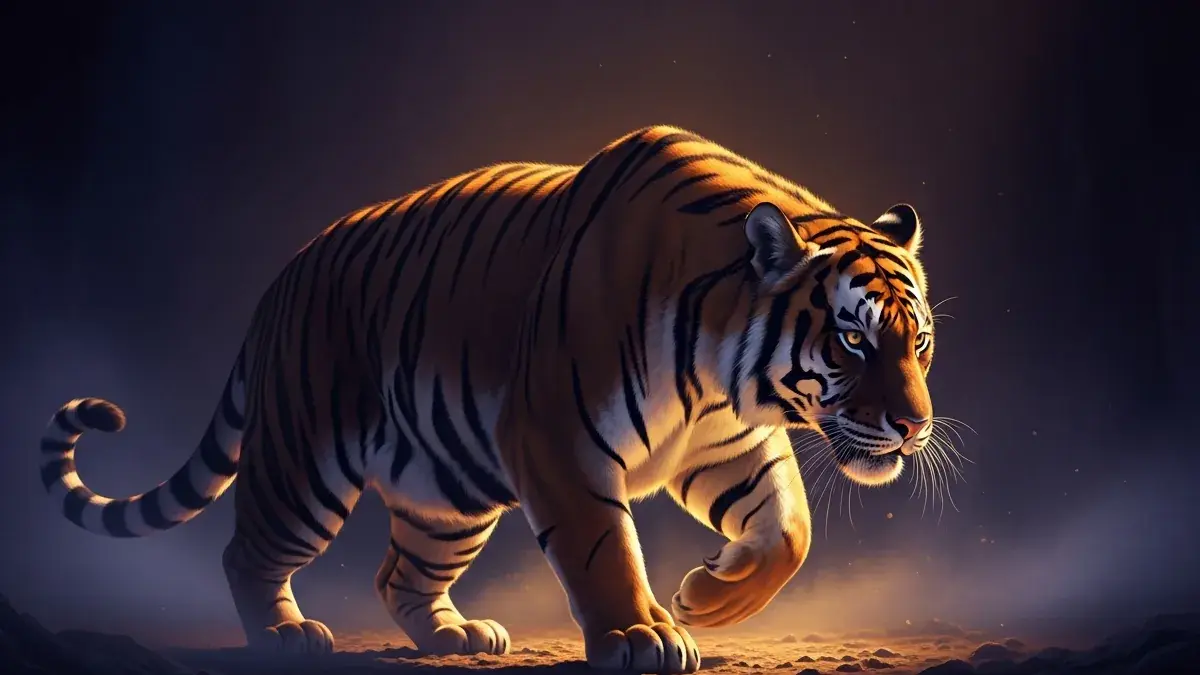
A power animal is the animal energy already inside you. 'Unleashing' it means deliberately calling up that instinct, courage, or calm through practice, instead of searching for it somewhere outside yourself. It's real, and it can shift your habits and relationships, so work up to it gradually rather than triggering it all at once. Four grounded exercises help: refusing victimhood, owning your inner apex predator, dropping the need to justify yourself, and asking for guidance patiently.
An almanac
- What it is
- Calling up animal energy already within you
- Key risk
- Can trigger a life-reshaping spiritual awakening
- How to approach it
- Slowly, with eyes open — not all at once
- Exercises to try
- 4: stop victimhood, own your power, drop justifying, ask for guidance
- Who stays in control
- You — the energy is a tool, not a takeover
- Traditional method
- Drum journey into the shamanic 'Lower World'
- Term origin
- 'Power animal' popularized by Michael Harner's core shamanism
A power animal isn't something living out in a forest, waiting to be found. It's the animal energy already inside you — a current of instinct, courage, or calm that lives in your own spirit and can be called up on purpose. The idea sounds strange at first, but it rests on something simple: everything in nature is linked at a fundamental level, so drawing on an animal's qualities isn't fantasy, just a recognition of a bond that already exists. When a teacher tells a student to 'become the tiger,' they aren't only speaking in metaphor. They're pointing you toward a real internal shift some people call shapeshifting — a change in how you carry yourself, think, and react that lets a particular animal's qualities take the wheel for a while. This guide covers what that shift looks like, why you might want to trigger it, and why you should approach it slowly, with your eyes open.
What 'Shapeshifting' Actually Looks Like
You've probably already witnessed this kind of transformation without naming it. Think about a person overtaken by rage — their features harden, their voice changes, and for a moment they look almost like a different creature entirely. Now think about the opposite: someone cold or guarded who melts the instant a puppy or kitten is placed in their arms. Their whole face softens. That's the same mechanism, just running in a gentler direction.
This is what's meant by shapeshifting in this context — not a literal physical change, but a full-body shift in energy, posture, and instinct that mirrors an animal's nature. People report the same sensation in dreams or deep meditation: waking up with the felt memory of soaring like a bird over mountains or diving deep like a whale, as if they'd briefly borrowed that creature's way of moving through the world.
In many traditional practices, a person goes searching specifically for this experience, setting out until they meet an animal ally and return changed by the encounter. The belief underneath all of this is that we have far more influence over our own inner state — and by extension our outer reality — than we usually give ourselves credit for.
Why You Might Want to Unleash a Power Animal
Before chasing the idea of 'power,' it helps to get specific about what you actually need more of. Ask yourself:
- Do you want a raise or a bigger opportunity but keep talking yourself out of asking for it?
- Do you know you need to slow down and enjoy life, but can't seem to switch off?
- Do you flinch or freeze around anger, even when you want to stay calm?
- Do you long for real, committed connection but keep ending up alone?
- Is jealousy or judgment quietly costing you friendships?
- Are you fighting a habit or dependency that feels bigger than your willpower?
- Do you struggle to feel patience or compassion for people who don't meet your standards?
Every one of those is a version of personal power that's gone missing or gotten buried. Unleashing a power animal is a way of reaching back down and reclaiming it — borrowing the steadiness, ferocity, or ease that a particular animal embodies until that quality becomes yours again too.
Why You Need to Be Careful With This Work
Here's the part that gets glossed over: most people are, at least partly, disconnected from their own basic animal nature — from that core fight-or-flight instinct every living creature carries. When you deliberately reconnect with it, you're not flipping on a light switch. You're waking something up that has real force behind it.
Consider someone under heavy pressure to follow a path they didn't choose, who has spent their life staying quiet to keep everyone else comfortable. If that person is finally forced to speak up for themselves, they may need to call on something like Big Cat energy — the courage to stand their ground and the instinct to know exactly when to roar.
Used well, that kind of energy can be the difference between staying silent forever and finally speaking a hard truth. But it needs to be worked up to, not summoned all at once. Don't just snap into an energy you've never practiced with and have no experience steering — you can end up scared of what you've unleashed.
The second caution matters even more: this work can genuinely trigger a spiritual awakening, and awakenings reshape lives, not just moods. The person who finally finds courage may find they no longer tolerate relationships built on their old silence. The person who breaks free of anger may find they no longer want to be around conflict, or around people who thrive on it.
Habits change, friendships shift, and situations that no longer fit the changed version of you can fall away fairly quickly. That's disorienting, even frightening, precisely because humans are creatures of habit. But it's worth knowing going in: the aim is to expect this shake-up rather than avoid it, so it doesn't blindside you.
And through it all, remember you stay the one steering — the animal energy is a tool you use, not a force taking you over.
Four Exercises to Practice Safely
- Stop playing the victim. This is the most important step of all. Feeling powerless in a situation or relationship keeps that situation in charge of you. Even animals that are natural prey — rabbits, rats, mice — aren't powerless; they simply adapted, multiplying and out-maneuvering their predators instead of overpowering them.
If you've been hurt, you're still standing, and that itself is evidence of strength, not proof of weakness. Stop narrating your life as something that happens to you.
- Recognize yourself as an apex predator. Plenty of people flinch at the word 'predator,' but reframe it: it simply means you're capable of going after exactly what you need with full focus. Have a test to pass or a job to land?
Pursue it the way a hungry hunter pursues a meal — with total commitment. Facing something painful, like visiting a sick relative? Borrow the loyalty of animals that never abandon their own in hard moments — that instinct to show up no matter the cost is a form of power too.
- Stop justifying your actions. Humans are unusual in how compulsively we explain and defend our choices to other people. A horse doesn't pause mid-stride to justify jumping a creek, and a dog doesn't agonize over whether you approve of its nap schedule.
Notice how much energy goes into over-explaining decisions that are genuinely yours to make, and practice simply making them instead.
- Ask for guidance and be patient. Sometimes the clearest path is to actively ask — through quiet reflection or meditation — which animal energy you need right now, and why. Don't expect instant clarity; it's common to need to revisit the question more than once before the answer feels obvious.
Trust that whatever comes back, even if it's an animal you wouldn't have picked yourself, is showing you something you actually need.
Power Animal, Totem, and Spirit Animal: Untangling the Terms
These three words get used interchangeably online, but they didn't start out meaning the same thing. A totem is the older, more specific idea: an animal, plant, or symbol that belongs to an entire family, clan, or lineage rather than to one person, often tied to a shared ancestor and inherited the way a surname is. The word comes from the Ojibwe doodem, an emblem that binds a whole kin group together — you don't pick your totem any more than you pick your last name.
A power animal, by contrast, is personal — sought out, not inherited. The term was popularized in the 1980s by the anthropologist-turned-practitioner Michael Harner, who used it for the animal guide an individual meets and works with directly through shamanic journeying, with no clan or inheritance involved.
Spirit animal is the loosest of the three — a modern, popular-culture catch-all that borrows the flavor of both older ideas without the specific rules attached to either. When this guide talks about 'unleashing your power animal,' it's using the term in Harner's sense: something personal that you call up and work with, not a badge you inherited from your family line.
How Shamans Traditionally Journey to Meet a Power Animal
Long before this became a phrase people search on the internet, meeting a power animal was a specific, structured practice. In core shamanism — the modern, cross-cultural distillation of shamanic technique that Harner taught — the classic method is the drum journey. A practitioner lies down, closes their eyes, and pictures a real opening they remember: an animal burrow, a hollow tree stump, a cave mouth, anything that leads down into the earth. They enter it and follow the tunnel down into what's called the Lower World, the realm where power animals and other guides are said to be found.
What makes the journey work, according to the Foundation for Shamanic Studies, is the drumbeat itself: a steady rhythm at roughly five beats per second, sustained for the length of the journey and then sped up sharply at the end as a signal to return to ordinary awareness. Some journeyers add movement, dancing out what they encounter rather than just visualizing it, since the physical shift in stance and rhythm can deepen the sense of borrowing an animal's way of moving.
You don't need a drum, a teacher, or a Lower World to do the exercises earlier in this guide — plenty of people call up power animal energy through quiet meditation alone. But if the idea of a more structured 'journey' appeals to you, this is the traditional shape it takes, and it's worth knowing the method has real history behind it rather than being an invention of modern wellness content.
Keeping the Bond Alive: Small Rituals of Reciprocity
Unleashing the energy once isn't the end of the relationship — most people who work with a power animal for any length of time describe it as something you keep tending, not a well you draw from once and walk away from. The simplest way to do that is reciprocity: treat the bond as a two-way exchange, not a one-way favor.
In practice this can be as small as pausing to say a quiet thank-you after you notice the animal's energy helped you through something, or as deliberate as setting aside a small object, image, or corner of a shelf that represents the animal and returning to it when you want to reconnect. Some people extend the gratitude outward: they learn about the real animal's habits and habitat, or support an effort that protects it in the wild. That honors the creature behind the symbol, not just the symbol itself.
None of this needs to be elaborate, or performed for anyone else. What matters is the reminder that the energy you're borrowing belongs to something real — a little consistent attention keeps the connection from going stale between the moments you actually need it.
Frequently Asked Questions
Is unleashing a power animal a literal physical transformation?
No. It refers to an internal shift in energy, instinct, and posture — the same kind of visible change you see when a furious person looks almost unrecognizable, or a guarded person softens completely around a small animal. The change is real and felt, but it's not physical shapeshifting in a literal sense.
Why does this practice need to be approached carefully?
Because most people are somewhat disconnected from their core survival instincts, and deliberately reawakening them can be intense. It can also trigger a broader spiritual awakening, which tends to reshape relationships and habits, not just your mood in the moment — so it's worth easing into rather than forcing all at once.
What's the first exercise to try if I'm new to this?
Start by refusing to see yourself as a victim in your current situation. Even animals that are frequent prey have survived by adapting rather than by overpowering everything around them. Recognize your own resourcefulness, not your powerlessness — that's the foundation everything else builds on.
What's the difference between a power animal, a totem animal, and a spirit animal?
A totem traditionally belongs to a whole family or clan and is inherited, not chosen. A power animal is personal — a term popularized by Michael Harner's core shamanism for the animal guide an individual meets and works with directly. Spirit animal is the loosest, most modern umbrella term and often gets used for either of the other two.
Is there a traditional method for journeying to meet a power animal, rather than just meditating?
Yes — in core shamanism, practitioners visualize entering a remembered opening in the earth (a burrow, cave, or hollow stump) and travel down into the 'Lower World,' guided by steady drumming at around five beats per second that speeds up at the end to signal the return. It's a structured practice with real history, though you don't need it to do the grounded exercises in this guide.
How would I know if I've drifted from my power animal or lost touch with that energy?
Shamanic teaching frames this less as losing an animal and more as losing 'power' generally — the Foundation for Shamanic Studies describes people who aren't spiritually power-filled as more prone to feeling run-down, unlucky, or knocked off course. If you notice that drained, flattened feeling creeping back in, it's often a sign to revisit the exercises rather than a sign anything is permanently gone.
More from Spirit Guides


Sources
Claims on this page were checked against these published sources.
- Rabbit
They reproduce quickly, having short pregnancies, large litters of four to twelve kits, and no particular mating season.
Read the source → - Totem
A totem (from Ojibwe: doodem) is a spirit being, sacred object, or symbol that serves as an emblem of a group of people, such as a family, clan, lineage, or tribe.
Read the source → - Core shamanism
One type of spirit that journeyers attempt to contact are animal tutelary spirits (called 'power animals' in Core Shamanism).
Read the source → - Shamanic Drumming
in a steady rhythm at approximately 5 beats per second
Read the source → - Power & Soul Retrieval Training
people who are not spiritually 'power-filled' are prone to illness, accidents, and misfortune
Read the source →
Not sure which animal is yours?
Consult the quiz