Spirit Guides
Mother-Daughter Spirit Animal Messages: How to Recognize

An animal sign between a mother and daughter tends to feel meaningful when it matches something specific about the person you lost, shows up at an emotionally significant moment, and stacks with other coincidences you can't easily explain. You can invite this kind of communication by acknowledging the connection, asking for a sign without dictating its form, and paying attention to your own reactions as much as the animal itself. Staying skeptical and staying open aren't opposites — you can question a sign and still let it mean something.
An almanac
- Why an animal
- Softer than direct contact from a loved one
- Sign match
- Animal tied to something specific about the person
- Timing clue
- Appears at an emotionally significant moment
- Stacked signs
- Multiple coincidences reinforcing one message
- Skepticism
- Okay to question a sign and still stay open
- Butterfly timing
- Monarchs return to Mexico each Nov, near Día de los Muertos
- Scent signs
- Smell links directly to the brain's emotion + memory center
If you've ever wondered whether a bird, a stray dog, or a sudden run of a particular creature crossing your path could actually be your mother or daughter reaching out, you're not alone. People grieving a parent or child often describe animals showing up in ways that feel too pointed to be random. Here's how that kind of communication tends to work, how to tell whether a sign is meant for you, and how to stay open without pressuring yourself to believe something before you're ready.
Why an Animal Often Becomes the Messenger
People who've passed on rarely show up as a voice in your ear or a figure at the foot of your bed — that kind of direct contact is a lot for the human mind and heart to handle.
An animal is different. You can rationalize it, admire it, or just enjoy it without having to immediately face the idea that someone you love is gone. That's part of why loved ones on the other side are believed to work through animal energies to reach us: it softens the message enough that you can actually take it in.
That softness matters even more in a close mother-daughter bond. Grief between a mother and daughter tends to be layered — there's the loss itself, plus guilt, unfinished conversations, and a desperate wish for reassurance that the other person is okay. An animal sign lets that reassurance land gently instead of overwhelming you.
How to Tell a Sign Is Actually Meant for You
Not every bird or stray dog is a message, but certain patterns make a sighting feel unmistakably personal:
- The animal matches something specific about the person you lost. A mother who adored horses showing up as horses crossing your path again and again. A relative who collected feathers appearing as a dove or bird you can't stop noticing.
- It shows up at an emotionally significant moment — right after a hard conversation, during a period of praying for a sign, or on a day you needed comfort most.
- You feel a pull you can't explain, like the stray dog you had no business adopting but somehow couldn't walk away from, especially if its eyes or mannerisms reminded you of someone specific.
- The timing is layered with other coincidences — for example, a sign appearing to you at the same time a similar sign appears to another family member who had no idea you were both thinking about the same person.
When two or three of these line up at once, it stops feeling like chance and starts feeling like contact.
Steps for Opening Yourself to a Message
You don't need any special training to invite this kind of communication — a little intention is enough:
- Acknowledge the connection out loud or silently. Speak to your mother or daughter directly, even if it feels strange at first, and let her know you're open to hearing from her.
- Ask for a sign, then let go of controlling what it looks like. Don't demand a specific animal — trust that whatever shows up will make sense once you see it.
- Pay attention to your own reactions, not just the animal itself. A wave of goosebumps, a sudden memory, or an unexplainable pull toward an object are all part of how these messages land.
- Give yourself permission to be skeptical. You can ask for proof, question the timing, and still remain open. Skepticism and openness aren't opposites — you can hold both.
- Share the experience with someone who won't dismiss it. Saying it out loud to another person who understands often confirms details you hadn't even noticed yourself.
When Signs Stack on Top of Each Other
Sometimes one sign leads to another, as if the message were arriving from more than one direction at once. It might look like this: an object shows up unexpectedly, carrying a written phrase or image that feels relevant, and shortly after, someone unconnected to your grief mentions the same name, symbol, or animal without knowing anything about your situation.
When this happens, resist the urge to explain it away too quickly. You don't need one single dramatic sign — a mother or daughter reaching from the other side often uses more than one channel, because she knows how much you need to feel certain.
It's Okay to Question It — That's Normal
If your first reaction to all of this is some version of "what exactly is a spirit animal supposed to be?" — that reaction makes sense. Grief makes people cautious about anything that sounds too good to be true, and metaphysical language can come across as vague or performative when you're not the one who's spiritually tuned into it.
You don't have to accept a sign as meaningful the moment it happens. Give yourself time to sit with it. Many people find that the deeper significance of a sign only becomes clear days or weeks later, once they've had space to process the loss itself.
Finding Support If You've Lost a Child or Parent
If you're grieving the loss of a daughter, mother, or any close family member, you don't have to process it alone — and you don't have to find a group that requires you to set aside your spiritual experiences to be taken seriously.
Look for bereavement support communities that are explicitly open to discussing signs, synchronicities, and evidence of an afterlife alongside the more practical grief work, rather than treating those experiences as off-limits.
The right support space will welcome people regardless of religious background, allow open conversation about what you've experienced, and won't ask you to prove anything to belong there.
What Specific Animals Have Traditionally Meant
Across cultures, not just modern grief communities, people have linked a specific animal to a specific person. In parts of Appalachia, folk belief holds that a cardinal appearing in winter is a visiting relative — fitting, since cardinals are among the few bright, territorial birds that stay put through the cold months instead of migrating away. In Mexico, the return of monarch butterflies to their overwintering grounds each late October has long been read as the souls of ancestors coming home. The timing lines up almost exactly with Día de los Muertos, and the belief predates the holiday's Catholic elements, rooted instead in Purépecha and Mazahua tradition.
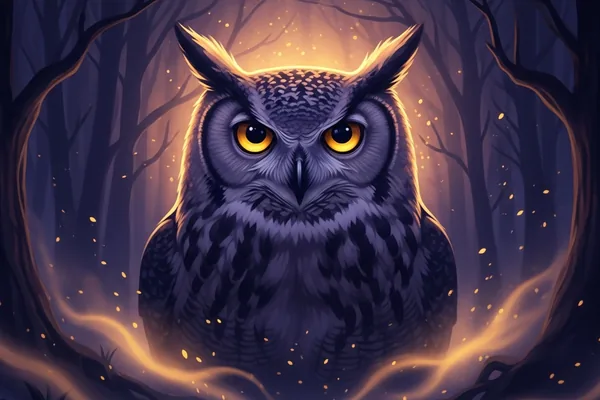
Other animals carry softer, more general associations rather than one culture's specific folklore: a dragonfly is often read as a sign of transformation, since its own life cycle involves shedding one form for another. An owl gets tied to quiet wisdom and watching over someone from a distance. A hummingbird, because it seems to hover rather than simply pass through, is often felt as a lingering, gentle check-in rather than a single quick visit. None of these associations are rules — they're patterns people have leaned on for comfort, and the only one that matters is the one that actually matches your mother or daughter.
The specific creature matters less than the specificity of the connection: a cardinal means something different to a family that always fed them in the backyard than to a family with no particular history with the bird at all.
When It's Your Own Cat or Dog, Not a Wild Animal
Not every sign shows up as something wild crossing your path. Sometimes it's the family cat suddenly curling up on a blanket that belonged to the person you lost, or a dog that won't stop staring at an empty corner of the room the way it used to watch that person move around the house.
This kind of sign is easy to dismiss because pets already act strange sometimes — that's part of having a pet. But what tends to make people pay attention is a break from the animal's own normal pattern: a cat that's never shown interest in a particular chair suddenly claiming it, or a dog that startles awake and looks toward a doorway at the exact time you were thinking hard about your mother or daughter.
If this happens with your own animal rather than one you encountered by chance, treat it the same way you'd treat any other sign — notice it, don't force meaning onto every odd nap, and let a pattern build over time rather than deciding based on one strange evening.
The Grounded Explanation Sitting Alongside the Spiritual One
You don't have to choose between believing a sign is real and understanding why your mind and body might be primed to notice it. Grief researchers describe something called continuing bonds — the idea that keeping an ongoing emotional connection to someone who died is a normal, healthy part of grieving rather than something you're supposed to grow out of. That connection often shows up through memories, imagined conversations, dreams, or exactly the kind of sensory experience an animal sighting provides.
Smell plays an outsized role here for a specific biological reason: the olfactory bulb, which processes scent, sits inside the brain's limbic system — the same region that handles emotion and memory. That's part of why a scent tied to your mother or daughter can surface a memory or feeling faster and more vividly than a photo or a song does, and why an unexplained smell often gets folded into the same category of "signs" as an animal sighting.
None of this makes a sign less real to you. It just means the part of your brain that's aching to feel connected to her is doing exactly what it's built to do — and an animal, a scent, or a dream are simply the channels it reaches for.
Frequently Asked Questions
How do I know if an animal sighting is really a message from my mother or daughter, or just a coincidence?
Look for a match between the animal and something distinct about the person — a favorite creature, a personality trait, or a shared memory — combined with timing that feels too precise to be random, such as the sign appearing right when you needed comfort most.
What if I don't believe in this kind of communication at all?
That's a normal starting point. You can stay skeptical and still pay attention to what shows up. Many people find that openness grows slowly, often after noticing more than one sign line up in a way they can't easily dismiss.
Is it necessary to work with a medium or spiritual practitioner to receive these signs?
No. While some people find it helpful to talk through an experience with someone experienced in this area, signs between a mother and daughter can and often do show up directly, without anyone else involved.
Why do people connect monarch butterflies specifically with the souls of the dead?
The belief traces back to Purépecha and Mazahua tradition in Mexico, where the monarchs' migration back to their overwintering grounds each late October happens to align almost exactly with Día de los Muertos. Because the timing is so consistent year after year, the butterflies became associated with ancestors returning home for the celebration, long before Catholic elements were folded into the holiday.
Is there a scientific reason a certain smell can suddenly bring my mother or daughter to mind?
Yes — the part of your brain that processes smell sits inside the limbic system, the same region responsible for emotion and memory, so scent can trigger a vivid memory faster than sight or sound. That's a biological explanation, not a spiritual one, but it doesn't cancel out the sign; it just explains why your mind is so quick to notice it.
What if the sign isn't a wild animal at all, just my own pet acting strange?
That counts just as much. A cat suddenly claiming a specific blanket or a dog staring at an empty spot it used to watch someone move through can carry the same weight as a bird or stray animal crossing your path — what matters is the break from that animal's normal behavior, not whether it's wild or familiar.
More from Spirit Guides





Sources
Claims on this page were checked against these published sources.
- Mexico's Monarchs Return for the Day of the Dead
the monarch butterflies came to be regarded as the souls of departed ancestors returning to Earth for their annual visit.
Read the source → - 10 Signs a Deceased Loved One Is Near: Folklore, Symbolism, and Grief Research
Cardinals in winter are visiting relatives
Read the source → - Smell and Memory
The olfactory bulb that recognizes smells is part of the limbic system, which is the part of the brain that deals with emotion, memory, and feelings.
Read the source → - Continuing bonds
Continuing bonds is a bereavement theory that suggests that maintaining a lasting connection with a deceased loved one is a common part of grieving, rather than a hindrance to 'moving on'.
Read the source →
Not sure which animal is yours?
Consult the quiz