Animal Facts
Dolphin Facts & Trivia: Fascinating Things to Know
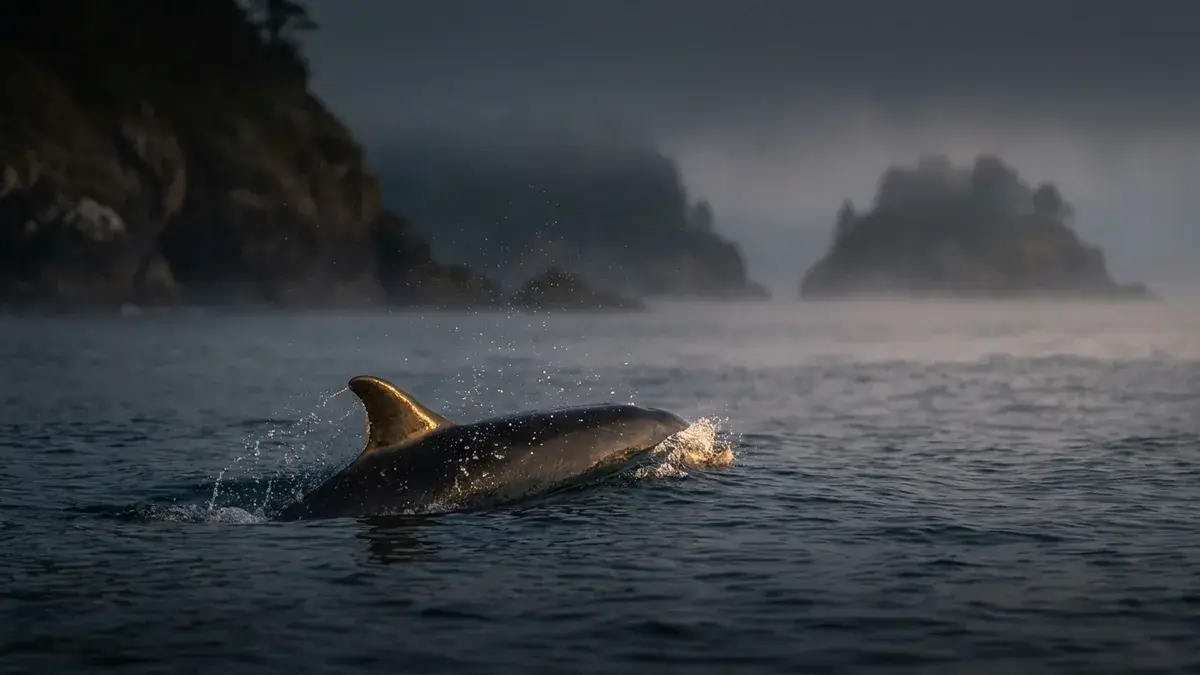
Dolphins navigate and hunt using echolocation, a biological sonar so precise that decades of research show it outperforming many human-made sonar systems, despite dolphins having no sense of smell at all. These social, playful mammals travel in pods, can recognize as many as 60 distinct words, and descended from a wolf-like land creature roughly 50 million years ago. Most live around 17 years, though some individuals have reached 50.
An almanac
- Species
- ~40 (most in family Delphinidae)
- Lifespan
- ~17 years (up to 50)
- Group name
- Pod (~12–16, sometimes 100+)
- Diet
- Fish, squid, crustaceans
- Dive time
- Up to 15 minutes
- Found in
- Oceans; some in rivers
Sleek, social, and startlingly smart, the dolphin has fascinated people for centuries — a sea-going mammal that hunts by sound and still finds time to play. It descended from a land-dwelling ancestor, lives in tight-knit pods, and has picked up enough screen credits over the decades to become a genuine pop-culture fixture.
Fascinating Dolphin Facts
Dolphins belong to the family Delphinidae, part of the order Cetacea, class Mammalia, phylum Chordata, and kingdom Animalia. About 40 species of dolphin are recognised worldwide, most of them in that family. As mammals, mothers nurse their calves on milk, and every dolphin surfaces to breathe air through a blowhole on top of its head rather than through gills.
That air-breathing habit traces back to dolphins' unlikely ancestor: a land-dwelling creature that resembled a wolf that lived around 50 million years ago, whose descendants eventually returned to the water.
Hunting is where dolphins really show off. Rather than relying on smell — a sense they lack entirely — they navigate and locate prey like fish, squid, and crustaceans using echolocation, a built-in biological sonar so precise that decades of research show it outperforming many human-made sonar systems.
That sonar doubles as a defense: when a shark threatens the group, dolphins have been known to team up and ram it hard enough to drive it off or kill it. Most species travel in pods of roughly a dozen to sixteen animals, though groups can swell past a hundred, and in rare cases into the thousands. Breeding activity tends to cluster in spring and fall, and pregnancy can last anywhere from nine to seventeen months depending on the species.
Some dolphins have been documented recognizing as many as 60 different words, and a single dive can last up to 15 minutes before they need to resurface for air. On average a dolphin lives around 17 years, though some have reached as old as 50.
The name comes from the Greek word delphys, meaning "womb." Unfortunately, their biggest threat isn't a predator at all: human fishing practices, especially large nets, claim significant numbers of dolphins every year.
- About 40 species of dolphin are recognised worldwide; most belong to the oceanic dolphin family Delphinidae, while river dolphins sit in separate families.
- Not every species lives in the ocean — river dolphins spend their lives in freshwater rivers.
- Dolphins breathe through a blowhole and nurse their calves with milk, just like other mammals.
- Their land-dwelling ancestor, alive some 50 million years ago, is thought to have looked like a wolf.
- Echolocation lets dolphins hunt fish, squid, and crustaceans without ever needing a sense of smell, which they don't have.
- Their natural sonar is precise enough that decades of research show it outperforming many human-made sonar systems.
- A dolphin can hold its breath and stay submerged for up to 15 minutes.
- Pods typically number roughly a dozen to sixteen dolphins, but can swell past a hundred.
- Mating peaks in spring and fall, with pregnancies lasting 9 to 17 months.
- Some dolphins can recognize up to 60 distinct words.
- Average lifespan runs about 17 years, though some individuals have lived to 50.
- The word "dolphin" descends from the Greek delphys, meaning "womb."
- Dolphins will ram sharks to fend off or kill them.
- Human fishing nets are the leading cause of dolphin deaths worldwide.
Dolphins in Movies, TV & Music
Dolphins have shown up on screen for decades. The original Flipper (1963) led the way, followed by the later show Dolphin Cove. More recent films kept dolphins in the picture: The Day of the Dolphin (1973), To Swim with Dolphins (1996), the documentary Dolphins (2000), Beneath the Blue (2010), Dolphin Tale (2011), and Dolphin Boy (2011).
Music has paid tribute too: the Flipper TV theme song was written by Henry Vars with lyrics by William D. Dunham, and Olivia Newton-John added "The Promise (The Dolphin Song)."
Famous Dolphins
Flipper, star of the film and show that share his name, is the best-known dolphin in pop culture. Snowflake made a memorable appearance in Ace Ventura: Pet Detective, and T.D. is the official mascot of the NFL's Miami Dolphins.
Frequently Asked Questions
How long can a dolphin hold its breath underwater?
A dolphin can typically stay submerged for up to 15 minutes before it needs to resurface and breathe through its blowhole.
How many species of dolphins are there?
There are about 40 recognized dolphin species worldwide. Most belong to the oceanic dolphin family Delphinidae and live in the ocean, while river dolphins live in freshwater rivers and sit in separate families.
Why don't dolphins rely on smell to find food?
Dolphins have no sense of smell at all. Instead, they use echolocation, a natural sonar system, to locate prey like fish, squid, and crustaceans.
More about the Dolphin
More from Animal Facts


Not sure which animal is yours?
Consult the quiz