Animal Facts
Beaver Facts & Trivia: Fascinating Things to Know
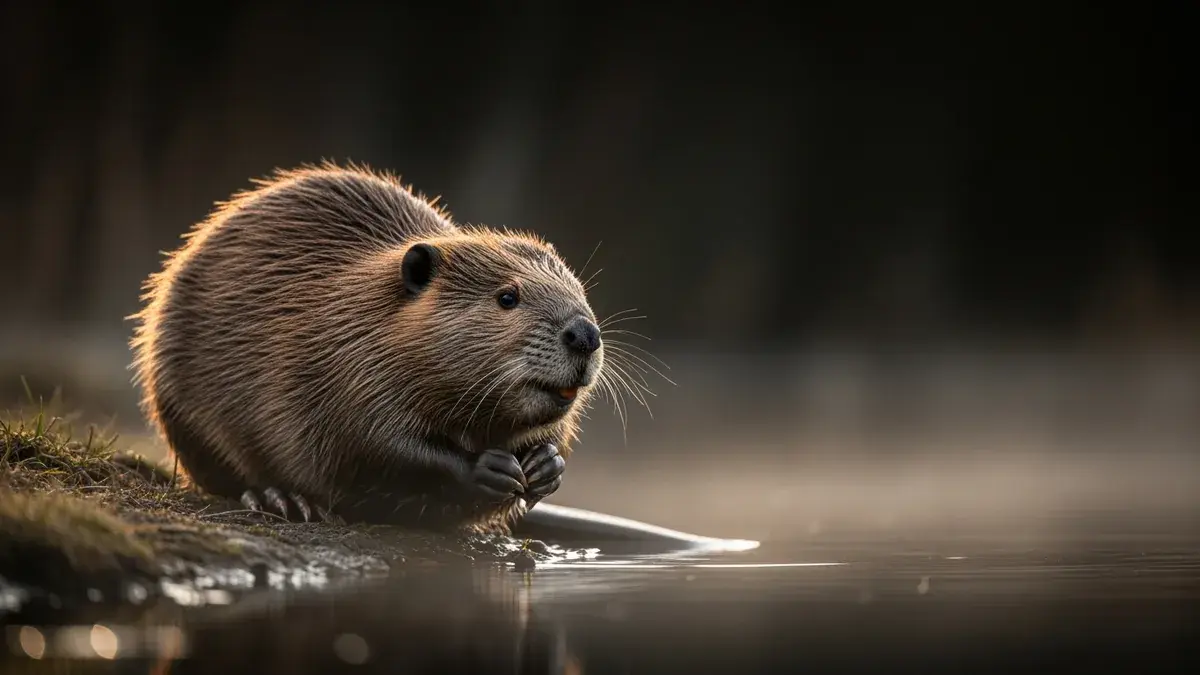
Beavers slap their broad, foot-long tails against the water to warn the colony of danger, then can stay submerged for up to 15 minutes at a stretch. They're nocturnal and pair up for life. Next to their Ice Age ancestors, which grew up to 8 feet long and weighed as much as 200 pounds, today's beavers look almost modest.
An almanac
- Size
- About 3 feet long
- Tail
- About 1 foot, flat, slaps water as alarm
- Dive time
- Up to 15 minutes underwater
- Group name
- Colony
- Ice Age ancestors
- Up to 8 feet, 200 lbs
- Mating
- Pairs for life
Few animals shape their surroundings like the beaver, nature's original engineer. Behind the dam-building reputation is a rodent with some genuinely surprising habits — and a long history of turning up in movies, songs, and folklore. What follows is the best beaver trivia, plus a look at the species' footprint in pop culture.
Fascinating Beaver Facts
A full-grown beaver typically stretches around three feet from nose to tail, and its broad, flat tail alone runs roughly a foot long. That tail isn't just for balance: when danger is near, a beaver smacks it against the water's surface, and the crack warns the rest of the colony to dive for cover.
Beavers are also creatures of the night, doing nearly all their gnawing, hauling, and dam-building after dark. Unlike many mammals, they pair up for life rather than switching mates. Underwater, they can hold their breath and stay submerged for up to 15 minutes at a stretch.
Go back far enough and beavers were far bigger than the ones we know today — during the Ice Age, some grew to eight feet long and weighed in at 200 pounds. And for centuries, a bizarre myth stuck around Europe: people believed that a cornered beaver would bite off its own testicles to escape hunters, a story that persisted well into the 1100s (it's not true, and physically it isn't even possible).
- Length: an adult beaver averages about 3 feet long
- Tail: roughly a foot long, flat, and used to slap the water as an alarm signal
- Active mostly at night, resting through the day
- Forms monogamous pairs rather than switching partners
- Can stay underwater for up to 15 minutes
- Ice Age beavers reached 8 feet long and 200 pounds
- A false belief that beavers self-castrate to evade hunters lasted until roughly the 12th century
- Taxonomy: Kingdom Animalia, Phylum Chordata, Class Mammalia, Order Rodentia, Family Castoridae, Genus Castor
Beavers in Movies, TV & Music
Beavers turn up now and then in entertainment. The 2011 drama The Beaver put the animal front and center in its title, while the 1988 short documentary Beavers gave audiences an up-close nature study of the species.
Their most beloved screen appearance, though, is probably in The Chronicles of Narnia: The Lion, the Witch and the Wardrobe (2005), where Mr. and Mrs. Beaver became fast fan favorites as helpful, talking guides. On television, the sitcom How I Met Your Mother even wrote its own novelty tune, "The Beaver Song." Musicians have borrowed the name plenty of times too — Neil Hamburger, Utah, The Mills Brothers, and John Neville have each released a track simply called "Beaver."
Famous Beavers
A handful of named beavers have stuck in the public imagination over the years:
- Mr. and Mrs. Beaver — the talking pair who help the Pevensie children in The Chronicles of Narnia: The Lion, the Witch and the Wardrobe
- Beaver — a supporting character from Disney's Lady and the Tramp
- Pudgy Beaver Mom — a memorable face from Ice Age 3
- Nice Beaver — the punchline behind a classic gag in The Naked Gun
- The Beaver — the title character of the 2011 film of the same name
- Theodore "Beaver" Cleaver — the boy at the heart of the show and films Leave It to Beaver
Frequently Asked Questions
How long can a beaver stay underwater?
A beaver can hold its breath and remain submerged for up to 15 minutes at a time.
Are beavers nocturnal?
Yes — beavers are most active at night, handling the bulk of their dam-building and foraging after dark.
How big did beavers get during the Ice Age?
Ice Age beavers were much larger than today's, reaching up to 8 feet long and weighing as much as 200 pounds.
More about the Beaver
More from Animal Facts


Not sure which animal is yours?
Consult the quiz